
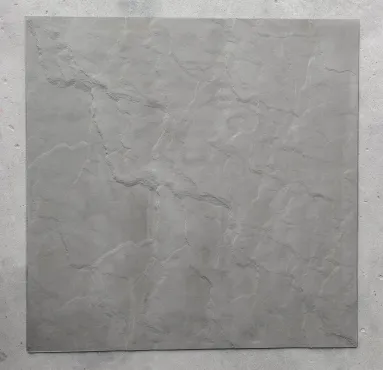
Natural stone cladding has been a hallmark of premium architecture for centuries. Its texture, depth, and timeless character are hard to argue with. But natural stone also brings real challenges: heavy weight, high cost, demanding installation, and ongoing maintenance. That is why a growing number of architects and builders are turning to engineered alternatives such as Epoch Stone, a flexible modified clay material that recreates the look of quarried stone without the practical drawbacks.
This guide compares Epoch Stone with natural stone cladding across the factors that matter most—appearance, weight, cost, installation, durability, maintenance, and sustainability—so you can choose the right solution for your project.
Epoch Stone is a flexible building material made from modified clay (MCM). It is produced by Coloria Group, a Foshan-based manufacturer specializing in MCM flexible stone for residential and commercial projects. The panels are molded from 3D scans of real quarried stone, capturing deep, multi-layered textures, then finished with layered pigments and hand-applied mineral veining for a natural, varied surface.
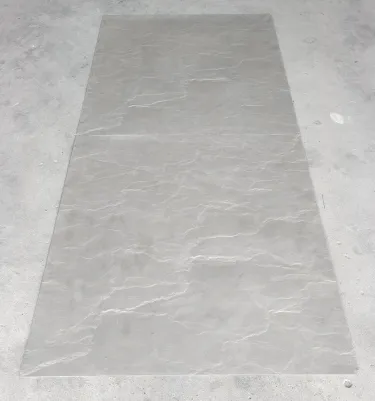
Because it is a flexible sheet rather than a rigid slab, Epoch Stone can be applied to curved walls, columns, and other surfaces where traditional stone is impractical. It is part of the MCM flexible stone product line, which also includes big slab boards, project boards, and 3D printing series.
| Factor | Epoch Stone | Natural Stone Cladding |
|---|---|---|
| Weight | Lightweight, flexible sheets | Heavy, typically 20–80 kg/m² |
| Cost | Lower material and labor cost | High material, transport, and labor cost |
| Installation | Simple, cut with basic tools | Requires skilled masons and heavy equipment |
| Maintenance | Minimal, easy to clean | Needs periodic sealing and repointing |
| Durability | Resists moisture and freeze-thaw | Durable but porous; some types crack in freeze-thaw |
| Appearance | Consistent, reproducible stone look | Unique, one-of-a-kind natural patterns |
| Sustainability | Low waste, efficient transport | Quarrying impacts landscape; heavy transport |
Natural stone is prized for its uniqueness—no two slabs are identical. That organic variation is part of its charm, and for many projects it is exactly what clients want.
Epoch Stone answers with a different kind of realism. Because the molds are created from 3D laser scans of actual quarried stone, the surface relief, grain, and texture closely match the original. Layered pigments and hand-finished veining create subtle color variation across panels, so a finished wall reads as natural rather than repetitive. For large projects, this consistency is actually an advantage: every panel matches, with no surprise color shifts between batches.
This is where the two materials diverge most sharply. Natural stone cladding is heavy—thin veneers start around 20 kg/m² and thick slabs can exceed 80 kg/m². That weight must be carried by the building structure, often requiring reinforced foundations, steel framing, or engineered anchoring systems.
Epoch Stone panels are dramatically lighter. The flexible sheets can be handled and carried by one person, and they impose little additional load on the structure. That makes them suitable for renovation projects where the existing walls cannot support the weight of real stone, and for high-rise facades where reducing dead load matters.
Natural stone carries three cost layers: the material itself, transport, and skilled labor. Quarried stone is expensive to extract and process, heavy to ship, and slow to install. Sealing and maintenance add to the lifetime cost.
Epoch Stone is significantly more economical. Material cost is lower, transport is cheaper because the panels are light and stack efficiently, and installation is faster, which reduces labor bills. For budget-conscious residential and commercial projects, the savings can be substantial.
Installing natural stone cladding is a skilled trade. Panels must be cut with diamond blades, lifted into place with equipment, and fixed with mechanical anchors or heavy adhesives. It is slow, dusty work that usually requires a professional crew.
Epoch Stone is designed for simplicity. The flexible sheets can be cut with a utility knife or jigsaw, bonded to the substrate with adhesive, and trimmed on site without special tools. Professional installation is quick, and confident DIYers can tackle smaller projects themselves. The material also flexes around corners and curves, reducing the need for special corner pieces.
Natural stone is durable, but not immune to the elements. Porous stones such as limestone and sandstone absorb moisture, and in cold climates that moisture can freeze and expand, causing spalling or cracking. Many natural stones need periodic sealing to stay protected.
Epoch Stone is engineered for weather resistance. The flexible modified clay material resists water absorption, so it does not suffer freeze-thaw damage the way porous stone can. It also handles thermal expansion and minor building movement without cracking, because the panels flex rather than fracture. The color is UV-stable, so facades keep their appearance over years of sun exposure.
Natural stone cladding requires ongoing care: annual cleaning with pH-neutral products, resealing every few years, and occasional repointing of mortar joints. In harsh climates, damaged panels may need replacement.
Epoch Stone is nearly maintenance-free. A rinse with water is usually enough to keep the surface clean. There is no sealing schedule, no repointing, and no special cleaning products required. For building owners, that translates into lower long-term upkeep.
Both materials can support green building goals, but they differ in impact. Natural stone is a natural product, and locally sourced stone has a relatively low embodied energy. However, quarrying disturbs the landscape, and the weight of the material makes transport energy-intensive.
Epoch Stone is manufactured from modified clay with efficient molding that uses nearly all of its raw material, minimizing waste. Its light weight means far more coverage per truckload, cutting transport emissions. For projects tracking LEED or similar certifications, the reduced transport and waste profile is a meaningful advantage.
Natural stone remains the better option in specific situations:
Epoch Stone is the stronger choice when:
Natural stone cladding and Epoch Stone both deliver the timeless appeal of stone, but they serve different priorities. Natural stone offers authenticity and uniqueness at a higher cost in weight, price, and upkeep. Epoch Stone offers the same visual language with lighter weight, lower cost, faster installation, and minimal maintenance.
For most modern residential and commercial projects, Epoch Stone provides a practical, cost-effective path to the stone aesthetic. To see the full range of finishes, visit the Epoch Stone product page or explore the MCM flexible stone series from Coloria Group. If you are planning a project and are not sure which material fits, request samples and compare them in your own light—the right choice is the one that balances your budget, structure, and design goals.
Recommend Products












