
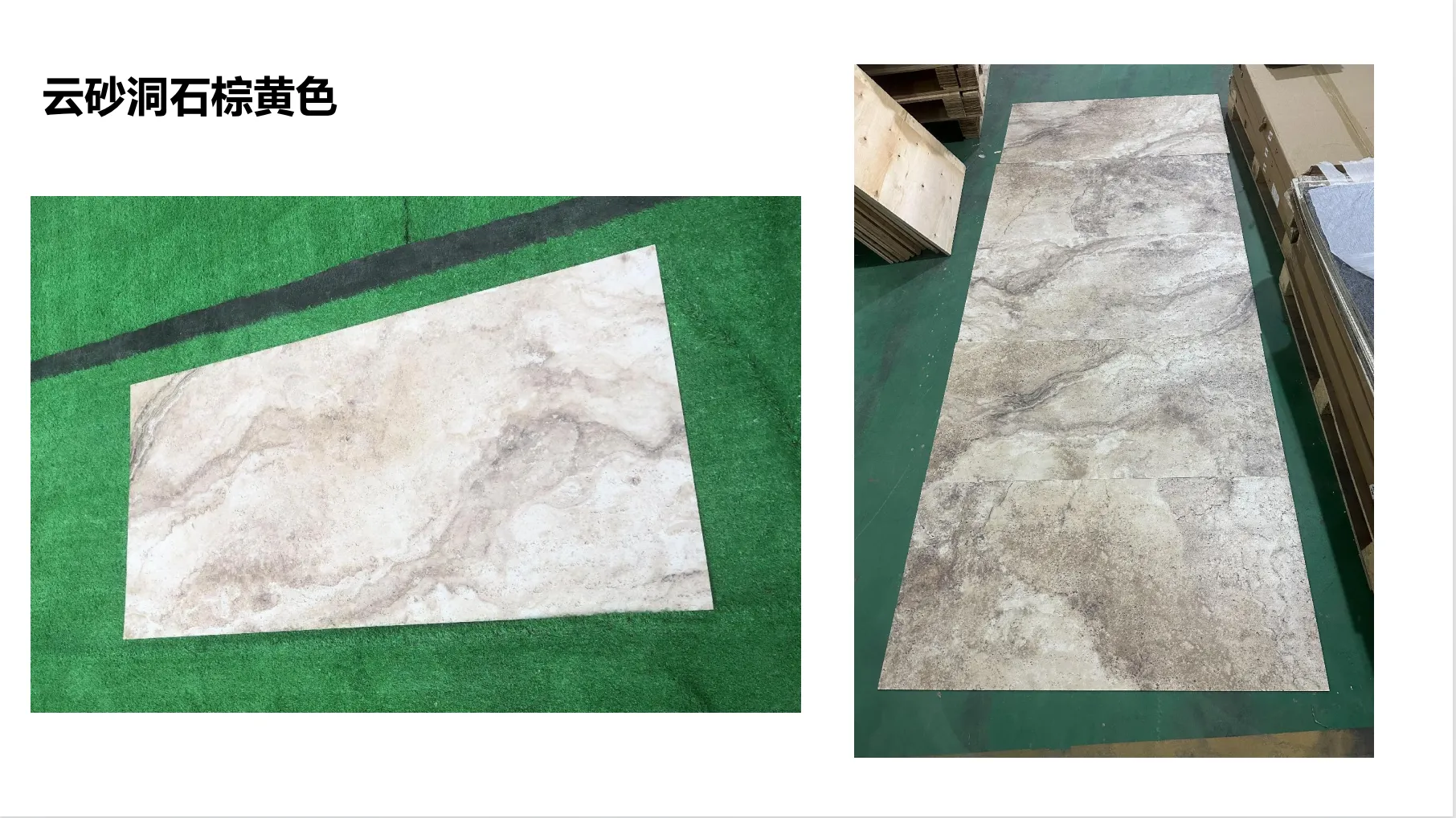
Construction sites are often bustling with activity, but beneath the hum of machinery and the shuffle of workers lies a quieter, pressing issue: waste. From quarried rock fragments left unused at extraction sites to off-cut slabs discarded during installation, the building industry generates millions of tons of waste annually. Much of this stems from rigid, heavy traditional materials that demand precise handling, tolerate little error, and degrade over time—forcing replacements that compound the problem. But what if there was a stone that challenged this cycle? Enter Dolomitic Travertine (Claybank), a material that's not just redefining aesthetics in architecture but also setting a new standard for sustainability by slashing waste at every stage of its lifecycle. Let's dive into how this innovative stone, alongside advancements like MCM flexible stone, is turning construction sites from waste hotspots into models of efficiency.
Before we explore Dolomitic Travertine (Claybank), it's crucial to understand why construction waste is more than just an eyesore. When a quarry extracts a block of granite, only 30-40% of that raw stone typically becomes usable slabs—the rest is rubble, dumped or left to erode. Transporting these heavy blocks? A single cracked slab due to rough handling means wasted fuel, labor, and material. On-site, cutting marble or traditional travertine to fit unique wall angles often leaves piles of off-cuts too small to reuse. And even after installation, porous stones like natural marble stain easily; a single coffee spill or harsh winter can necessitate full panel replacements, sending old materials to landfills. This isn't just environmental harm—it's financial waste too. Contractors lose money on discarded materials, and clients pay more for replacements. It's a lose-lose that Dolomitic Travertine (Claybank) was designed to fix.
Dolomitic Travertine (Claybank) isn't your average stone. Born from a blend of dolomite and travertine, it's engineered with waste reduction in mind—from the moment it's quarried to the day it adorns a building's facade. What makes it different? Let's break it down:
Traditional travertine or granite quarrying is a brute-force process. Explosives or heavy machinery blast through rock, often shattering more stone than they extract. Dolomitic Travertine (Claybank), however, forms in denser, more uniform deposits. Miners can extract larger, intact blocks with precision cutting tools, not dynamite—meaning up to 70% of quarried material becomes usable, compared to 30-40% for traditional granite. Even the "waste" from Dolomitic Travertine (Claybank) quarrying isn't truly wasted: smaller fragments are ground into powder and reused as a binding agent in its manufacturing process, closing the loop before the material even leaves the site.
Walk into a factory producing Dolomitic Travertine (Claybank) panels, and you'll notice something missing: mountains of discarded (scrap). Unlike natural marble, which requires painstaking polishing to remove flaws, Dolomitic Travertine (Claybank) leverages modern manufacturing to minimize waste. Its composition—dolomite for strength, travertine for texture—is mixed with polymers to create a composite that's both durable and moldable. This means panels can be cast into exact sizes and shapes in a controlled environment, with computer-aided design ensuring every inch of material is used. Even better, off-cuts from panel trimming are recycled back into the production line, reducing manufacturing waste by up to 80% compared to cutting natural stone slabs on-site.
Contrast this with, say, Boulder Slab (Vintage Silver), a stunning but heavy material. Quarrying Boulder Slab often yields irregular blocks, requiring massive saws to cut them into slabs—a process that generates thick, unusable sawdust and off-cuts. By the time a Boulder Slab reaches a construction site, nearly 25% of its original weight has been lost to manufacturing waste alone. Dolomitic Travertine (Claybank) skips this inefficiency, turning raw material into finished panels with minimal loss.
Imagine a truck carrying traditional travertine slabs: each slab weighs 80-100 kg, so the truck can only hold 20-30 before hitting weight limits. Now picture that same truck loaded with Dolomitic Travertine (Claybank) panels: at just 15-20 kg per panel, it can carry 100+ panels. Fewer trips mean less fuel burned, but the real waste saver? Durability during transit. Traditional stones are brittle; a pothole or sudden brake can crack a slab, rendering it useless. Dolomitic Travertine (Claybank)'s composite core is flexible—think of it as a stone with "give." It bends slightly under impact, reducing breakage by 90% compared to fragile materials like Travertine (Starry Blue), which, while beautiful, is prone to chipping during transport. Less breakage means fewer replacements, and fewer replacements mean less waste.
Ask any contractor about on-site waste, and they'll likely groan about "the cut list." Traditional stones require on-site cutting to fit unique wall heights, window frames, or curved surfaces. Each cut produces dust, off-cuts, and sometimes broken slabs—especially if the stone is as hard as granite portoro. Dolomitic Travertine (Claybank) flips this script. Panels are pre-cut to standard sizes (or custom sizes via factory orders), so installers spend less time cutting and more time attaching. Even better, its flexibility allows it to conform to minor wall irregularities without cracking, eliminating the need for "filler" cuts that generate waste. Compare this to Fair-faced Concrete, which demands perfect formwork—any misalignment means chipping away excess concrete, leaving piles of dust and chunks. With Dolomitic Travertine (Claybank), a typical 100 sqm installation generates less than 5 kg of waste, versus 20-30 kg for Fair-faced Concrete or natural travertine.
The most insidious form of construction waste isn't visible on day one—it's the waste of replacing materials that wear out too soon. Natural marble stains; traditional travertine etches with acid rain; even Fair-faced Concrete can crack under freeze-thaw cycles. Dolomitic Travertine (Claybank), though, is built to last. Its dolomite base resists acid, while the polymer composite repels water, preventing freeze-thaw damage. In accelerated aging tests, it withstands 50 years of harsh weather with minimal wear—compared to 20-25 years for natural marble. Fewer replacements mean less demolition waste (old panels, adhesives) and less demand for new quarrying. It's sustainability through longevity, and it's a game-changer.
To truly grasp the waste reduction, let's put Dolomitic Travertine (Claybank) head-to-head with three common alternatives: Traditional Granite, Natural Marble, and Fair-faced Concrete. The table below breaks down waste across key stages:
| Material | Waste During Quarrying | Manufacturing Waste | Transportation Waste (Breakage) | On-Site Installation Waste | Lifespan-Related Waste (Replacement Every...) |
|---|---|---|---|---|---|
| Dolomitic Travertine (Claybank) | 30% (30% of quarried material is waste; 70% usable) | 5% (Most off-cuts recycled) | 2% (Flexible composite resists breakage) | 5 kg per 100 sqm | 50+ years |
| Traditional Granite | 60-70% (Only 30-40% of quarried rock becomes slabs) | 15% (Sawing generates thick waste dust) | 8-10% (Heavy, brittle slabs crack easily) | 25-30 kg per 100 sqm (Frequent on-site cutting) | 40-45 years (Prone to chipping at edges) |
| Natural Marble | 50-60% (Soft stone fractures during extraction) | 20% (Polishing removes flawed layers) | 12-15% (Extremely porous; absorbs moisture and cracks in transit) | 30-35 kg per 100 sqm (Fragile, requires precise cutting) | 20-25 years (Stains and etches easily) |
| Fair-faced Concrete | N/A (Not quarried, but cement production emits CO2) | 10% (Formwork errors lead to excess concrete) | 5% (Heavy panels; minor breakage) | 20-25 kg per 100 sqm (Chipping to fix formwork misalignments) | 25-30 years (Cracks from freeze-thaw cycles) |
Numbers tell part of the story, but real projects bring it to life. Take the Riverbank Office Complex in Barcelona, which opted for Dolomitic Travertine (Claybank) for its 5,000 sqm facade in 2020. The contractors reported two key wins: first, during installation, they generated just 250 kg of waste—far below the 1,250-1,500 kg they'd expected with traditional granite. Second, when a storm hit mid-construction, only 3 panels were damaged (0.06% of total), compared to the 5-8% breakage they'd experienced with marble on a previous project. "We didn't just save on waste disposal fees," said project manager Maria Lopez. "We saved on time—less cutting meant we finished 2 weeks early. And the client loves that the stone still looks brand-new three years later, with no stains or chips."
Another example: the GreenHaven Mall in Dubai, which used Dolomitic Travertine (Claybank) alongside MCM flexible stone for its interior walls. MCM flexible stone, known for its lightweight and moldable properties, paired seamlessly with Dolomitic Travertine (Claybank)'s durability. Together, the materials reduced on-site waste by 65% compared to the mall's original plan to use natural travertine. "We had almost no off-cuts," noted lead architect Ahmed Hassan. "The pre-cut panels fit like puzzle pieces. Even the leftover adhesive was minimal because the panels are so lightweight—no need for thick mortar beds that crack and require rework."
Reducing construction waste with Dolomitic Travertine (Claybank) isn't just about saving money (though contractors and clients certainly appreciate that). It's about easing pressure on the planet. Quarrying less rock means preserving natural landscapes; recycling off-cuts means fewer landfills; fewer replacements mean less energy spent on extraction and manufacturing. And in a world where 30% of global waste comes from construction, every percentage point of reduction counts. Dolomitic Travertine (Claybank) proves that sustainability and beauty don't have to compete—they can collaborate. Its warm, earthy claybank hue adds warmth to facades and interiors, while its low-waste footprint adds peace of mind.
Construction will always require materials, but it doesn't have to require waste. Dolomitic Travertine (Claybank) is more than a stone—it's a mindset shift. It shows that by rethinking how we quarry, manufacture, transport, and install materials, we can turn construction sites from places of excess into places of efficiency. Whether paired with MCM flexible stone for a modern look or used alone for a timeless aesthetic, it's a material that respects both the architect's vision and the planet's limits. So the next time you walk past a building with a claybank-hued facade, take a closer look. It might just be Dolomitic Travertine (Claybank)—quietly proving that the most beautiful structures are those built to last, without leaving a trail of waste in their wake.
Recommend Products












