
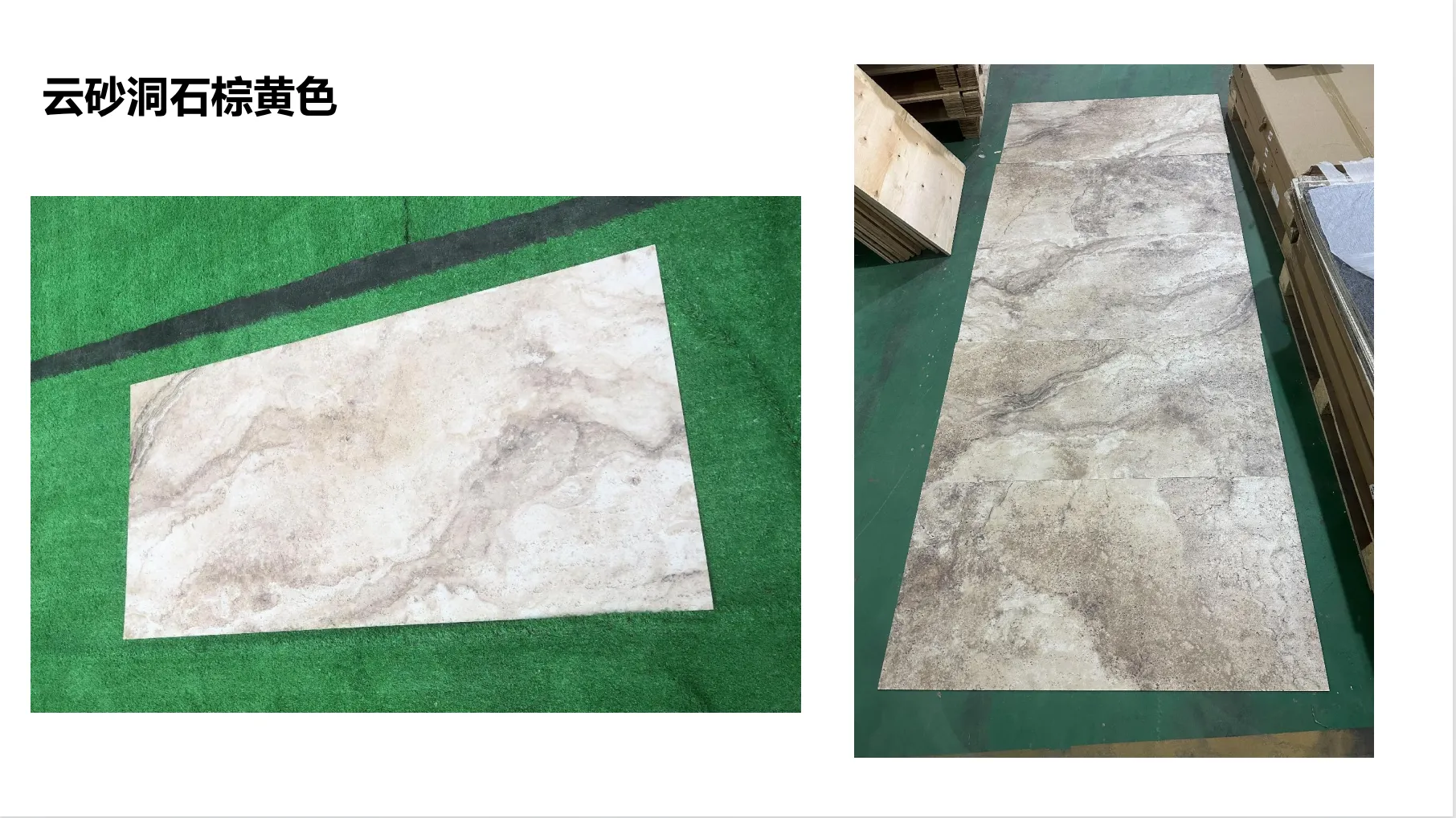
Walk into a building on a sweltering summer day, and the first thing you notice is whether it feels like an oven or a sanctuary. That difference? It often comes down to the materials chosen during construction. In a world where energy bills climb and sustainability isn't just a buzzword but a necessity, the quest for building materials that do more than look good has never been more urgent. Enter Dolomitic Travertine (Claybank) —a material that blends timeless beauty with a quiet superpower: energy efficiency. But it doesn't work alone. Paired with innovations like Ando Cement (Light Grey) and Foamed Aluminium Alloy Board (Vintage Silver) , it's redefining what it means to build smart. Let's dive into how this unassuming stone is helping architects and homeowners create spaces that are cooler in summer, warmer in winter, and gentler on both the planet and the wallet.
Before we talk about energy savings, let's get to know the star of the show. Dolomitic Travertine (Claybank) isn't your average building stone. Picture a material formed over millennia by mineral-rich hot springs, where layers of calcium carbonate and dolomite crystallize into a stone that's equal parts sturdy and porous. Its claybank hue—warm, earthy, with subtle variations—gives it a versatility that fits modern lofts, rustic cabins, and everything in between. But here's the kicker: those tiny pores and natural layers aren't just for show. They're the secret to its energy-smart magic.
Unlike dense concrete or synthetic cladding, Dolomitic Travertine (Claybank) has a texture that feels alive. Run your hand over it, and you'll notice a slight roughness, a reminder of its natural origins. This isn't just aesthetic; it's functional. Those pores act like a built-in buffer, regulating temperature and moisture in ways that man-made materials often struggle to replicate. And while it's easy to focus on its good looks—think feature walls, flooring, or exterior facades—its real value lies in how it works behind the scenes to keep buildings comfortable without over-reliance on heaters or AC.
Ever walked into a stone cottage on a cold winter day and felt that gentle warmth, even before the fire's lit? That's thermal mass at work. Dolomitic Travertine (Claybank) excels here. Its density allows it to absorb heat during the day—whether from sunlight streaming through windows or the ambient warmth of a room—and slowly release it as temperatures drop at night. It's like having a natural battery for heat, reducing the need to crank up the furnace or blast the air conditioning.
Let's put this in real terms. Imagine a home with Dolomitic Travertine (Claybank) walls in a region with hot days and cool nights. During the day, the stone soaks up the sun's heat, preventing the interior from turning into a greenhouse. As evening falls, it releases that stored heat, keeping the space cozy without extra energy. In summer, the reverse happens: the stone stays cool to the touch, absorbing indoor heat and releasing it outside when temperatures dip. Studies have shown that buildings with high thermal mass materials can reduce heating and cooling costs by up to 25% compared to those with lightweight, heat-conductive walls. That's not just savings on the utility bill—it's fewer carbon emissions, too.
Moisture is the silent enemy of energy efficiency. When walls trap humidity, mold grows, insulation degrades, and suddenly your HVAC system is working overtime to dehumidify the air. Dolomitic Travertine (Claybank) fights back with breathability. Those natural pores act like tiny lungs, allowing moisture to escape rather than getting trapped inside walls or under flooring. This isn't just about preventing musty smells; it's about maintaining healthy indoor air quality and reducing the load on your dehumidifier or AC.
Think about a bathroom renovation. Tile is a common choice, but many tiles are sealed so tightly that steam from showers gets trapped, leading to peeling paint or mold. Dolomitic Travertine (Claybank), when properly sealed (but not over-sealed), lets that moisture evaporate. The result? A space that stays drier, healthier, and requires less energy to keep comfortable. It's a small detail, but over time, those savings add up—especially in humid climates where dehumidifiers are constant companions.
Energy efficiency isn't just about how a building performs once it's built—it's about the energy used to construct it, too. Dolomitic Travertine (Claybank) checks this box with its surprisingly lightweight nature (for a stone, that is). Compared to traditional concrete blocks or solid granite, it's easier to transport and install, cutting down on fuel use during construction. And once it's in place? It's built to last. We're talking decades, even centuries, with minimal maintenance. Unlike synthetic sidings that need replacing every 15–20 years, or paint that fades and peels, Dolomitic Travertine (Claybank) ages gracefully, developing a patina that only adds to its charm. Less replacement means less energy spent on manufacturing new materials and hauling away old ones—a win for both your budget and the planet.
Dolomitic Travertine (Claybank) is a star, but even stars shine brighter with a supporting cast. Let's meet two materials that pair perfectly with it to create next-level energy-efficient designs: Ando Cement (Light Grey) and Foamed Aluminium Alloy Board (Vintage Silver) .
Named after the legendary architect Tadao Ando, who revolutionized concrete use, Ando Cement (Light Grey) is all about understated elegance and functionality. Its smooth, matte finish complements Dolomitic Travertine (Claybank)'s texture, creating a cohesive look in both interiors and exteriors. But beyond aesthetics, it shares the travertine's thermal mass properties, adding another layer of temperature regulation. When used in floors or ceilings alongside Dolomitic Travertine walls, it creates a unified thermal barrier that keeps spaces stable. Plus, its light color reflects sunlight, reducing heat absorption in exterior applications—perfect for sunny regions where overheating is a constant battle.
For exterior cladding, weight matters. Heavy materials require stronger support structures, which mean more energy in construction. Foamed Aluminium Alloy Board (Vintage Silver) solves this with its ultra-lightweight, high-strength composition. Made by infusing aluminum with tiny air bubbles, it's up to 70% lighter than solid aluminum but just as durable. When used as a rainscreen over Dolomitic Travertine (Claybank) walls, it adds an extra layer of insulation while protecting the stone from harsh weather. Its vintage silver finish reflects solar radiation, keeping the building cooler in summer, and its corrosion resistance ensures it won't need replacing for decades. It's the ideal partner for Dolomitic Travertine in high-rise buildings or coastal areas where wind and salt air are concerns.
| Material | Thermal Conductivity (W/m·K)* | Key Energy-Efficiency Feature | Best For |
|---|---|---|---|
| Dolomitic Travertine (Claybank) | 0.8–1.2 | High thermal mass; breathability | Interior walls, flooring, feature facades |
| Ando Cement (Light Grey) | 1.4–1.7 | Thermal mass; light reflectivity | Floors, ceilings, exterior cladding |
| Foamed Aluminium Alloy Board (Vintage Silver) | 0.15–0.3 | Low thermal conductivity; lightweight | Rainscreens, exterior accents, high-rise cladding |
*Lower values mean better insulation; higher values mean better heat retention (thermal mass).
A family in Portland, Oregon, wanted a home that could handle the city's rainy winters and mild, dry summers without relying heavily on heating or AC. Their architect recommended Dolomitic Travertine (Claybank) for interior walls and flooring, paired with Ando Cement (Light Grey) for the kitchen countertops and exterior patio. The result? Even during January's 40°F (4°C) days, the home stayed at a consistent 68°F (20°C) with minimal heat use, thanks to the travertine's thermal mass absorbing sunlight through south-facing windows. In summer, the breathable walls kept humidity low, and the Ando Cement patio stayed cool enough to walk on barefoot—no need for expensive outdoor cooling systems. After a year, the family reported a 30% drop in their energy bills compared to their previous home.
A 1970s office building in downtown Chicago was due for a sustainability upgrade. The goal? Reduce energy use by 40% while modernizing the facade. The solution: replacing the outdated brick cladding with a combination of Dolomitic Travertine (Claybank) and Foamed Aluminium Alloy Board (Vintage Silver). The travertine was used for lower-level walls, providing thermal mass to stabilize indoor temperatures, while the foamed aluminium panels clad the upper floors, reducing weight and reflecting solar heat. Inside, Ando Cement (Light Grey) floors replaced old carpet, improving thermal conductivity. Post-retrofit, the building's HVAC costs dropped by 35%, and tenant satisfaction scores soared—employees reported feeling more comfortable year-round, with fewer temperature fluctuations. The vintage silver aluminium panels also gave the building a sleek, modern look, boosting its market value.
Energy efficiency is a big part of the sustainability puzzle, but Dolomitic Travertine (Claybank) doesn't stop there. Its natural origins mean it has a lower carbon footprint than synthetic materials like PVC or fiber cement, which rely on fossil fuels for production. Many quarries now use eco-friendly mining practices, minimizing disruption to local ecosystems. And when a building using Dolomitic Travertine is eventually demolished (decades, if not centuries, from now), the stone can be repurposed as aggregate or decorative rock, diverting waste from landfills. It's a closed-loop cycle that aligns with the circular economy principles architects and builders are increasingly prioritizing.
At the end of the day, building materials should do more than fill space—they should enhance our lives. Dolomitic Travertine (Claybank) does just that, blending the warmth of natural stone with the practicality of energy efficiency. It's a material that understands that a comfortable home isn't just about square footage or fancy fixtures; it's about walls that breathe, floors that stay warm in winter, and a design that ages as gracefully as the people who live in it. Paired with Ando Cement (Light Grey) and Foamed Aluminium Alloy Board (Vintage Silver), it's part of a new generation of building materials that prove sustainability and beauty don't have to be enemies. So the next time you walk into a building that feels "just right," take a closer look at the walls. Chances are, there's a little (or a lot) of Dolomitic Travertine (Claybank) working quietly behind the scenes—saving energy, saving money, and making the world a little greener, one stone at a time.
Recommend Products












