

Walk into any modern home, boutique hotel, or corporate lobby, and you'll quickly realize: the materials that clothe our walls, floors, and surfaces do more than just "cover" space—they shape how we feel in it. A sleek, uniform texture might evoke calm; a rough, organic stone could whisper of history. In recent years, building materials have undergone a quiet revolution, with engineered solutions stepping into the spotlight alongside time-honored natural stones. Among these innovators is MCM flexible stone , a category that blends the beauty of natural materials with the practicality of modern engineering. Today, we're zeroing in on one standout in this space: Fine Line Stone (White) MCM . How does this engineered marvel stack up against the natural white stones we've loved for centuries—think marble, travertine, or limestone? Let's dive in.
First things first: how do they look? For many, this is the make-or-break factor. Natural white stones have captivated us for millennia with their one-of-a-kind charm. Take travertine (beige) or limestone(beige) , for example—these stones boast unique veining, subtle color shifts, and tiny pits or fossilized patterns that tell a story of millions of years underground. A slab of white marble might feature swirled grey veins that look like brushstrokes, while a piece of natural limestone could have soft, sandy beige undertones that warm up a room. These variations are part of their allure; no two slabs are identical, making each space feel truly "one-of-a-kind."
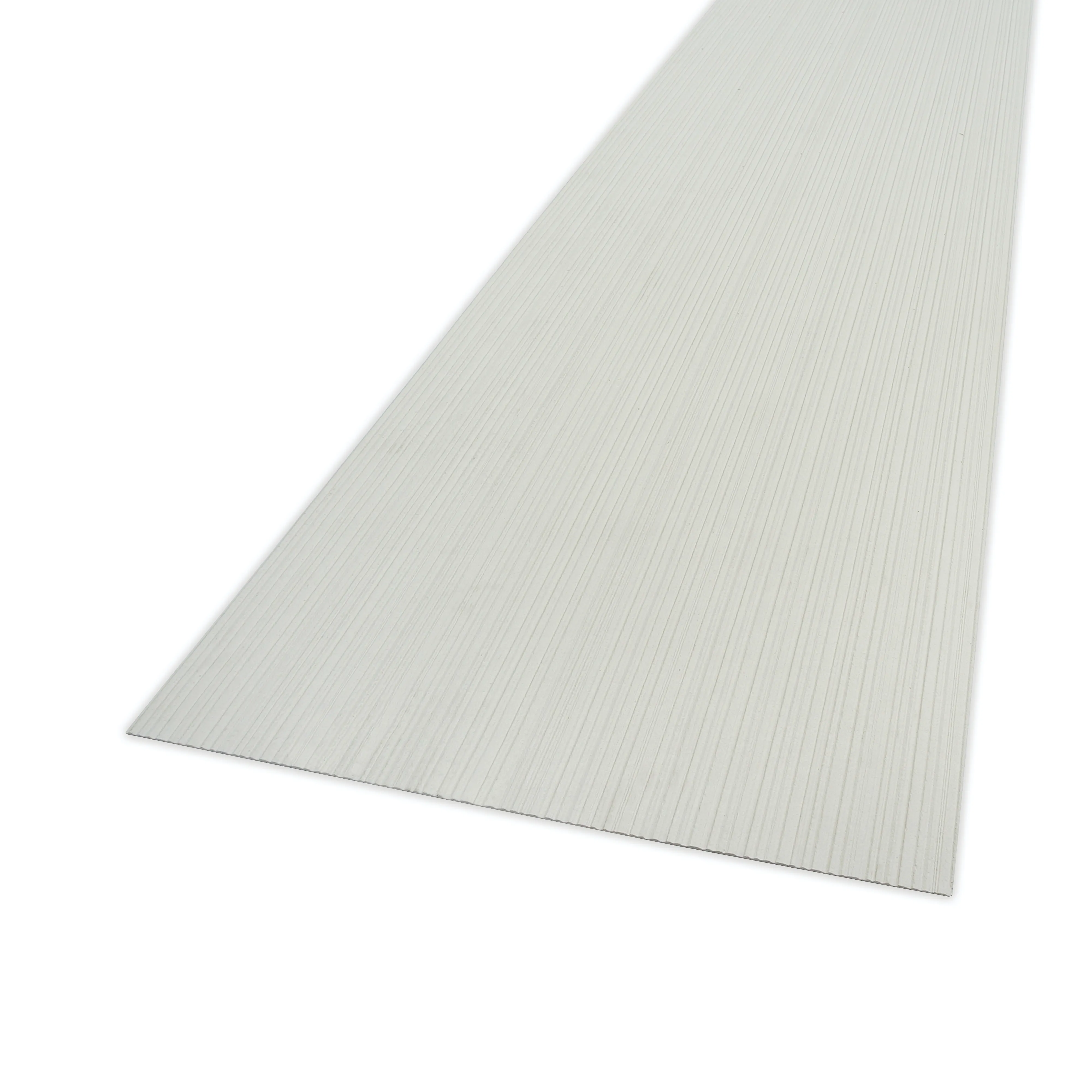
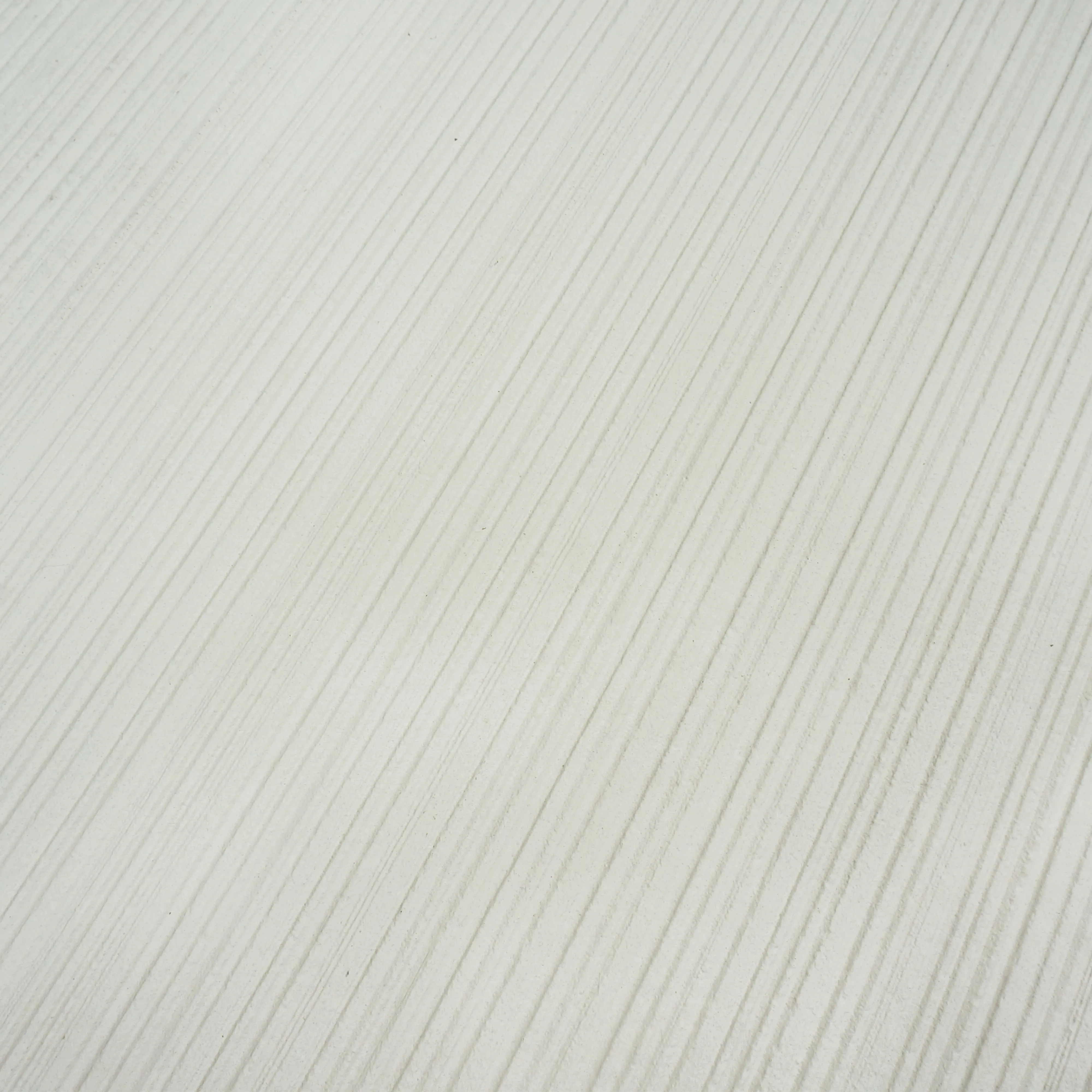
Fine Line Stone (White) MCM, on the other hand, leans into precision. As the name suggests, its defining feature is the fine, linear patterns that run across its surface—think delicate, parallel lines in soft whites and light greys, creating a sense of order and modernity. Unlike natural stone, which can surprise with random veining or color blips, this MCM variant offers near-perfect consistency. Every panel looks like the next, ensuring a seamless, uniform aesthetic across large surfaces. That's a big win for designers aiming for a sleek, contemporary vibe—no more worrying if the left wall will clash with the right because of a rogue vein.
But here's the twist: MCM doesn't just mimic natural stone—it elevates it. The "fine lines" in this stone are engineered to mimic the subtle striations found in natural materials like travertine, but with a level of control that nature can't match. Want the look of linear travertine but without the risk of uneven coloring? Fine Line Stone (White) MCM delivers. It's like having the best of both worlds: the organic texture we love, minus the unpredictability.
Beauty fades fast if it can't stand up to daily life. Let's talk about resilience—because when it comes to walls, floors, or countertops, "pretty" only matters if it lasts. Natural white stones, for all their elegance, have a Achilles' heel: porosity. Take marble, for instance. Its surface is dotted with tiny pores that act like sponges, soaking up spills, dirt, and even oils. A glass of red wine left unattended on a marble countertop? You'll likely be left with a permanent stain. Even something as simple as lemon juice (acidic) can etch its surface, leaving dull marks. Then there's travertine (beige) , which is even more porous—without regular sealing, it can absorb moisture and develop mold in humid spaces like bathrooms.
Fine Line Stone (White) MCM, being an engineered material, flips the script. Its core is made from a blend of natural minerals, resins, and fibers, compressed into a dense, non-porous panel. That means no pores to trap spills, no etching from acidic substances, and no mold growth in damp areas. Wipe up a coffee spill with a damp cloth, and it's like it never happened. Scratches? Thanks to its reinforced structure, it holds up better to daily wear and tear than softer natural stones. A stray chair leg scraping against a Fine Line Stone (White) floor? Chances are, you won't even notice a mark. Compare that to natural limestone, which can scratch if you drag a heavy piece of furniture across it.
Maintenance is another area where MCM shines. Natural white stones demand constant care: sealing every 6–12 months (a messy, time-consuming process), using special pH-neutral cleaners, and avoiding harsh scrubbers. Fine Line Stone (White) MCM? It's low-maintenance to the max. A quick wipe with mild soap and water is all it takes to keep it looking new. No sealing, no special products, no stress. For busy homeowners or commercial spaces with high foot traffic—think restaurants or retail stores—this is a game-changer.
Ever tried to move a slab of natural stone? Spoiler: it's not for the faint of heart. Natural white stones are heavy—marble, for example, can weigh up to 150 pounds per square foot. Installing it requires a team of strong workers, specialized equipment, and often, structural reinforcement to ensure walls or floors can support the weight. Curved surfaces? Forget it. Natural stone is rigid and brittle; bending it without cracking is nearly impossible. That limits where it can be used—no sweeping curves on accent walls, no creative shapes in furniture design.
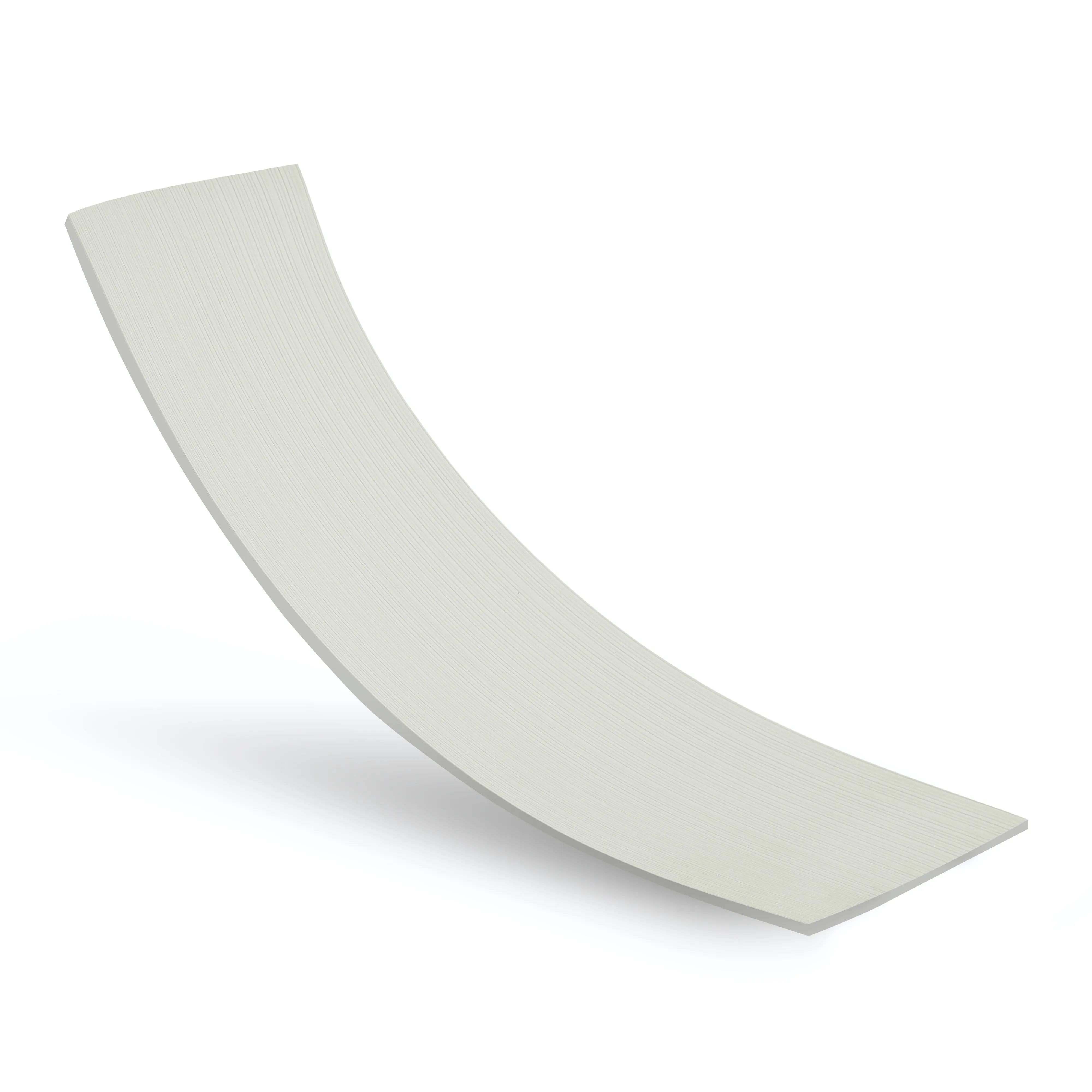
Fine Line Stone (White) MCM, by contrast, is a lightweight champion. Panels typically weigh 3–5 pounds per square foot—so light that a single person can carry and install them. This cuts down on labor costs and installation time (no need for a crew of five). But the real magic is its flexibility. Thanks to its composite structure, MCM panels can bend and curve—think rounded columns, archways, or even custom-shaped backsplashes. Want to clad a spiral staircase in Fine Line Stone (White)? It's doable. Natural stone? You'd need to cut it into tiny, wedge-shaped pieces and hope they don't crack during installation.
Versatility doesn't stop at shape, either. Fine Line Stone (White) MCM works indoors and out. Its resistance to UV rays means it won't fade in sunlight, making it perfect for outdoor patios or pool surrounds. Natural white stones, on the other hand, can discolor or weather when exposed to the elements—limestone, for example, can erode in rainy climates. MCM also adheres to almost any surface: drywall, concrete, wood, even metal. No need for expensive substrate preparation—just a clean, flat base, and you're good to go.
Sustainability isn't just a buzzword anymore—it's a priority for builders, homeowners, and brands alike. Let's talk about the planet. Natural white stones come from quarries, where massive machines dig up tons of rock, disrupting ecosystems, clearing forests, and consuming vast amounts of energy. The extraction process also generates a lot of waste—for every usable slab of marble, there's often twice as much stone discarded as rubble. Then there's transportation: hauling heavy stone from quarries (often in remote locations) to job sites burns fossil fuels, leaving a big carbon footprint.
MCM flexible stone, including Fine Line Stone (White), takes a greener approach. Most MCM panels are made using recycled materials—like leftover stone dust from quarries or post-consumer resins. The manufacturing process is also more energy-efficient, with less waste and lower emissions. Since the panels are lightweight, transporting them uses less fuel than hauling natural stone. Some MCM products even carry certifications like GREENGUARD, ensuring they emit low levels of volatile organic compounds (VOCs), which is better for indoor air quality. For eco-conscious builders or homeowners, this is a clear win: you get the look of stone without the environmental toll.
Let's get real: budget matters. Natural white stones have a reputation for being pricey, and for good reason. Quarrying, cutting, and transporting heavy slabs costs a lot—expect to pay anywhere from $80 to $200 per square foot for high-quality marble or travertine, not including installation. Then there's the hidden cost: maintenance. Sealing products, professional cleaning, and repairs (for chips or stains) add up over time. Over 10 years, the total cost of owning natural stone could easily double the initial price.
Fine Line Stone (White) MCM is often more budget-friendly upfront, with prices ranging from $30 to $60 per square foot. Installation costs are lower too, thanks to its lightweight design—no need for structural upgrades or heavy machinery. And since it requires minimal maintenance, there are no ongoing expenses for sealing or special cleaners. When you crunch the numbers, MCM often ends up being the more cost-effective choice over the long haul. For small businesses, homeowners on a budget, or large-scale projects (like hotel lobbies), that's a difference that can't be ignored.
| Feature | Fine Line Stone (White) MCM | Natural White Stone (e.g., Marble, Travertine) |
|---|---|---|
| Aesthetic | Uniform, fine linear patterns; consistent color and texture. | Unique veining, random variations, and natural imperfections. |
| Durability | Non-porous, scratch-resistant, and moisture-proof; no etching from acids. | Porous, prone to staining, scratching, and etching; requires sealing. |
| Installation | Lightweight (3–5 lbs/sq ft) and flexible; easy to cut, bend, and install on curved surfaces. | Heavy (up to 150 lbs/sq ft); rigid, requires structural support and specialized labor. |
| Environmental Impact | Made with recycled materials; lower energy use and carbon footprint. | Quarrying disrupts ecosystems; high energy use and waste. |
| Cost (Total Over 10 Years) | $30–$60/sq ft upfront + minimal maintenance = lower long-term cost. | $80–$200/sq ft upfront + high maintenance = higher long-term cost. |
Neither Fine Line Stone (White) MCM nor natural white stone is "better"—they're just better for different jobs. Natural stone still reigns supreme in spaces where "uniqueness" is the goal: historic renovations, luxury homes, or artisanal boutiques that want to showcase the "story" of the material. A marble fireplace in a 1920s mansion? It feels right at home.
MCM, though, is a workhorse for modern, high-traffic, or budget-conscious projects. Think: a coffee shop with curved walls clad in Fine Line Stone (White), where spills are inevitable and a uniform look keeps the space feeling clean. Or a hospital lobby, where durability and easy cleaning are priorities. It's also a favorite for outdoor spaces—pool decks, patios, or garden walls—thanks to its resistance to weather and UV rays.
At the end of the day, the choice between Fine Line Stone (White) MCM and natural white stone comes down to what matters most to you: the organic charm of natural materials, or the practicality, consistency, and affordability of engineered solutions. If you crave one-of-a-kind veining and don't mind the upkeep, natural stone might be your match. But if you want a sleek, durable, and budget-friendly material that works everywhere from kitchens to outdoor patios, Fine Line Stone (White) MCM is hard to beat.
In a world where design and functionality are equally important, MCM flexible stone isn't just a trend—it's a smart evolution. And Fine Line Stone (White)? It's proof that sometimes, the best materials aren't found in the earth—they're created by blending the best of nature with a little human ingenuity.
Recommend Products












