
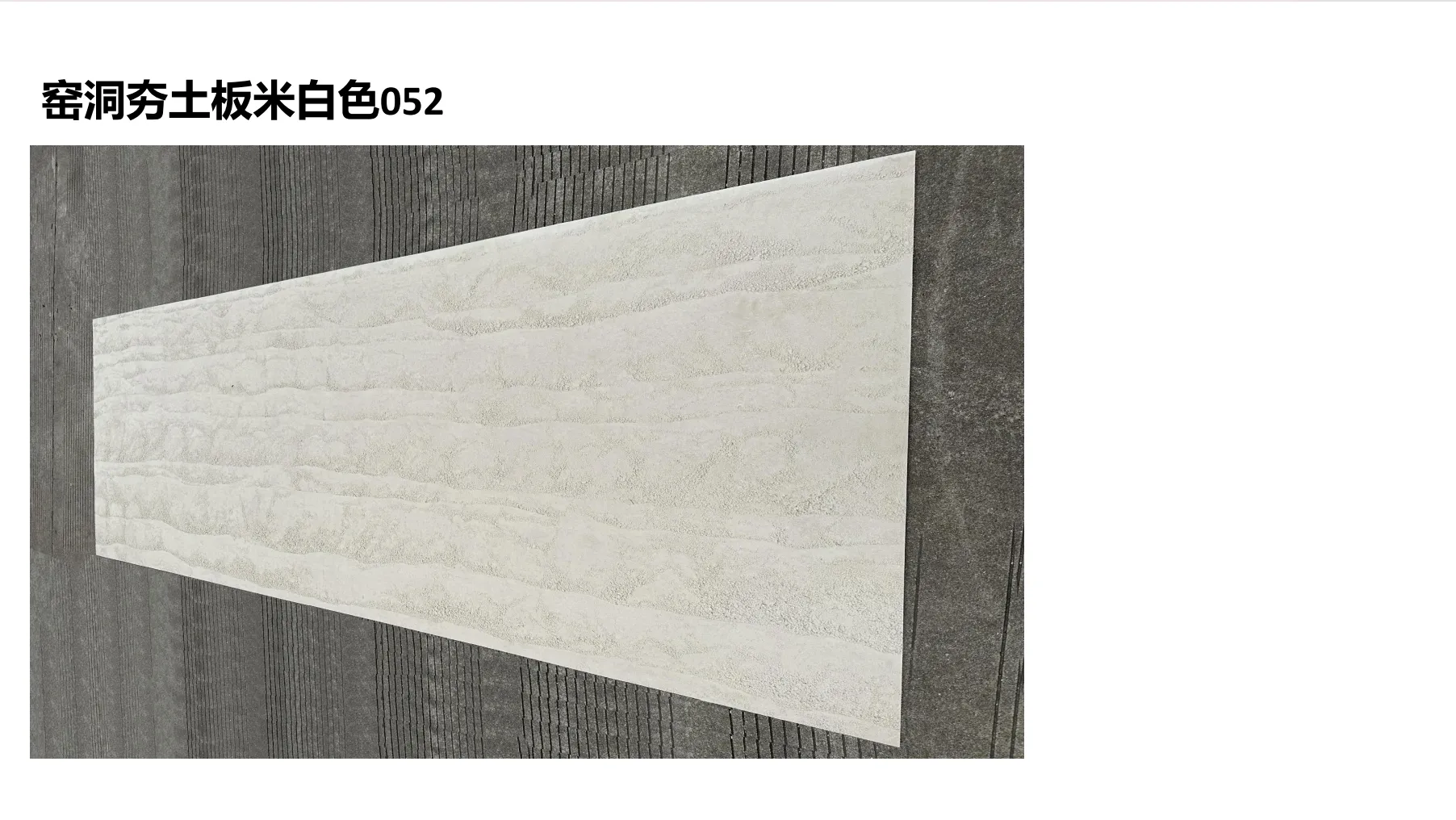
In the quiet hum of modern construction sites, where steel and glass often dominate the skyline, there's a quiet revolution unfolding—one that marries the wisdom of ancient building traditions with cutting-edge material science. It's the story of gradient color rammed earth boards, a material that doesn't just build walls, but weaves stories of earth and light into the spaces we call home. At the heart of this revolution is MCM (Modified Composite Material) technology, which has transformed humble rammed earth from a utilitarian staple into a canvas for architectural artistry. Today, we're pulling back the curtain to explore how these stunning gradient boards come to life, blending the tactile warmth of traditional rammed earth with the vibrant, flowing hues that define contemporary design.
Before we dive into gradients and MCM magic, let's take a moment to honor the roots. Rammed earth isn't new—it's as old as civilization itself. For millennia, cultures across the globe have packed moist soil, sand, and gravel into wooden forms, tamping it down layer by layer to create thick, sturdy walls that stand the test of time. From the Great Wall of China to the cliff dwellings of the American Southwest, rammed earth has proven its mettle, offering natural insulation, fire resistance, and a deep connection to the land. But for all its virtues, traditional rammed earth has long been limited by one thing: color. Typically earthy browns, beiges, and terracottas, it was a material of subtlety, not spectacle. That is, until gradient color rammed earth boards stepped onto the scene.
Imagine a wall that shifts from soft terracotta at the base to warm amber in the middle, fading into a delicate cream at the top—like a sunset frozen in stone. Or a facade that blends sage green into dusty rose, evoking the changing seasons. These aren't just design dreams; they're realities made possible by MCM technology. By modifying the traditional recipe with advanced binders and pigments, MCM flexible stone has unlocked a world of color for rammed earth, turning it into a material that speaks to both our longing for nature and our desire for self-expression.
At the core of gradient color rammed earth boards lies MCM modified cementitious material—a hybrid blend that retains the best of traditional rammed earth while addressing its historical limitations. Unlike pure earthen mixes, MCM formulations start with a base of high-quality aggregates, often including lime stone(beige) for its natural brightness and workability, combined with Portland cement (in small, strategic amounts) and proprietary additives. These additives are the secret sauce: they enhance flexibility, reduce cracking, and improve adhesion, making the material far more durable than its ancestors. Think of it as rammed earth with a superpower—still rooted in nature, but reinforced with modern engineering.
But what truly sets MCM apart is its compatibility with pigments. Traditional rammed earth relies on the natural color of the soil, which varies by region but offers little control. MCM, however, plays well with both organic and synthetic pigments, allowing for precise color matching and, crucially, gradient effects. This isn't just about adding dye to dirt; it's about creating a material that can hold a gradient—smooth, seamless, and stable—without bleeding or fading over time. It's a marriage of chemistry and artistry, and it all starts with the selection of raw materials.
Walk into the workshop where gradient rammed earth boards are born, and you'll find bins of aggregates that look like nature's own palette: crushed lime stone(beige) in varying grits, fine sand with a silken texture, and even recycled glass for a subtle shimmer. Each component is chosen for a specific role. The aggregates provide structure and texture, while the lime stone(beige) acts as a neutral base, letting pigments shine without interference. Then there's the MCM binder—a milky, viscous liquid that smells faintly of minerals. When mixed with water, it activates, turning the dry ingredients into a cohesive, moldable paste.
Pigments are selected with equal care. For gradient effects, natural iron oxides are often preferred for their richness and UV stability—think rusty reds, golden yellows, and deep umbers. Synthetic pigments, on the other hand, offer bolder, more saturated hues, like the vivid blues and greens that mimic ocean waves or forest canopies. The key is balance: too much pigment can weaken the mix, while too little results in washed-out colors. Experienced craftsmen, many of whom have worked with traditional earthen materials for decades, rely on both science and intuition here, often testing small batches to perfect the shade before scaling up.
Once the materials are selected, the mixing process begins. It's a dance of precision and patience. First, the aggregates—lime stone(beige), sand, and any additional fillers—are combined in a large drum mixer. The goal is to create a uniform base with just the right texture: not too coarse, not too fine. Then, the MCM binder is added, followed by water, in carefully measured amounts. Too much water, and the mix becomes soupy, leading to shrinkage and cracking; too little, and it won't bind properly. The mixer churns for several minutes, turning the dry ingredients into a damp, crumbly mixture that holds its shape when squeezed—what craftsmen call the "hand test."
But here's where the gradient magic starts: instead of adding pigment to the entire batch, the base mix is split into smaller portions, each destined for a different color in the gradient. For a sunrise-inspired board, you might have three batches: one deep orange, one soft pink, and one pale yellow. Each batch gets its own pigment, mixed in slowly to ensure even distribution. Craftsmen often use gloved hands to knead the pigment into the mix, feeling for streaks and adjusting until the color is consistent. It's a tactile process, rooted in touch—a reminder that even with technology, the human element remains irreplaceable.
Now comes the most artistic part: building the gradient. Imagine a wooden form, typically 2-4 inches thick, 4 feet wide, and 8 feet tall—this will be the mold for the board. The first layer of colored mix is added to the bottom of the form, about 4-6 inches deep. Then, using a tamper (a heavy tool with a flat base), the layer is compacted with steady, even pressure. This compaction is critical: it removes air pockets, increases density, and ensures the layer bonds to the next. Craftsmen often count the number of tamps per square inch, a ritual that ensures consistency across every board.
The next layer is where the gradient begins. Let's say we're moving from orange to pink. The pink mix is added on top of the compacted orange layer, but here's the trick: instead of a sharp line, the two colors overlap slightly. A skilled craftsman will feather the edge of the pink mix into the orange, using a rake or their hands to blend the boundary. It's similar to how a watercolor artist blends two hues on paper, but with the added challenge of working with a solid material. This overlapping zone—just a few inches thick—is where the magic happens. As the next layer is tamped, the pigments intermingle, creating a seamless transition from one color to the next. The process repeats, layer by layer, until the form is full: orange fading to pink, pink melting into yellow, each transition soft and natural.
For more complex gradients—say, a five-color shift from deep brown to cream—craftsmen might use thinner layers, overlapping each hue by a few inches. The result? A board that looks as if it was painted by the sun itself, with colors flowing into each other like a river of pigment. It's not just a wall; it's a landscape captured in stone.
Once the form is filled and fully compacted, the board isn't ready yet. It needs to cure—a slow, deliberate process that allows the MCM binder to set and the board to gain strength. The form is left in place for 24-48 hours to let the initial set occur. During this time, the workshop is kept at a steady temperature and humidity; too hot, and the board might dry too quickly, cracking; too cold, and the curing process stalls. It's a bit like caring for a newborn—constant attention, gentle conditions, and no rushing.
After the form is removed, the board is moved to a curing room, where it rests for another 7-14 days. Here, it's misted with water periodically to prevent drying shrinkage, allowing the cementitious components to hydrate fully. Craftsmen check on the boards daily, touching their surfaces to feel for moisture and looking for hairline cracks. If a crack appears, it's carefully filled with a matching mix, a testament to the commitment to perfection. By the end of the curing period, the board has transformed from a damp, fragile mixture into a hard, durable panel—ready to face the elements and the test of time.
The final step is finishing. Most gradient rammed earth boards are left with their natural, textured surface—the result of the tamping process, which leaves subtle indentations and variations that catch the light. For some applications, however, a smoother finish is desired. In these cases, the board is sanded lightly with fine-grit sandpaper, softening the texture while preserving the gradient. It's a delicate balance: too much sanding, and the color layers might be sanded away; too little, and the texture might be too rough for the design.
Finally, the board is sealed. A clear, breathable sealer is applied to protect against water absorption and UV damage, ensuring the gradient colors stay vibrant for decades. Some sealers add a slight sheen, enhancing the depth of the hues, while others leave a matte finish, emphasizing the natural, earthy quality of the material. The sealer is applied with a roller or brush, and again, the craftsman's eye is key—checking for drips, missed spots, and ensuring even coverage. With that, the gradient color rammed earth board is complete: a fusion of tradition and technology, earth and art.
| Aspect | Traditional Rammed Earth | MCM Gradient Rammed Earth Boards |
|---|---|---|
| Material Composition | Soil, sand, gravel, and minimal binder (often clay or lime) | Aggregates (e.g., lime stone(beige)), MCM modified cementitious binder, pigments |
| Color Range | Limited to natural soil hues (browns, beiges, terracottas) | Unlimited gradient colors, from soft pastels to bold neons |
| Flexibility | Prone to cracking under stress or temperature changes | Enhanced flexibility due to MCM additives, reducing cracking |
| Durability | Good in dry climates; less resistant to moisture and freeze-thaw cycles | Highly durable; resistant to moisture, UV rays, and temperature fluctuations |
| Application | Typically used for load-bearing walls in low-rise construction | Versatile: cladding, accent walls, furniture, both interior and exterior |
So, where do these stunning boards end up? Everywhere from cozy home interiors to grand public spaces. Imagine a boutique hotel lobby with a feature wall of gradient rammed earth, shifting from warm gold to soft cream, complemented by wooden accents and natural light. Or a residential living room where a gradient fireplace surround becomes the focal point, its colors echoing the changing light of day. In commercial settings, gradient boards add warmth to otherwise sterile office spaces, while in cultural centers, they evoke a sense of place—like the historical pathfinders stone project in a small town museum, where gradient boards in earthy tones were used to tell the story of the region's geological past.
One of the most compelling aspects of gradient rammed earth boards is their sustainability. Unlike synthetic cladding materials, they're made from natural aggregates and require minimal energy to produce. The pigments, too, are often low-VOC (volatile organic compounds), making them better for indoor air quality. And because they're durable, they reduce the need for frequent replacements—lowering the carbon footprint over the building's lifetime. It's a material that doesn't just look good; it does good, too.
Of course, creating gradient rammed earth boards isn't without its challenges. Color consistency across batches is a constant hurdle—even with precise measurements, natural pigments can vary slightly, and environmental factors like humidity can affect how colors dry. To combat this, MCM manufacturers use color-matching software, analyzing each batch with spectrophotometers to ensure the gradient matches the design specifications. It's a blend of art and science, where technology supports the craftsman's eye.
Weather resistance is another concern. Traditional rammed earth can erode in heavy rain, but MCM's binder and sealer address this. Extensive testing is done to ensure boards can withstand driving rain, freeze-thaw cycles, and intense sunlight without fading or deteriorating. Some manufacturers even subject boards to accelerated aging tests, simulating 20 years of weather in a matter of weeks, to ensure they'll stand the test of time.
As we look to the future, gradient color rammed earth boards are poised to play an even bigger role in architecture. With the rise of biophilic design—the idea that connecting people to nature improves well-being—materials that bring the outdoors in are more in demand than ever. Gradient rammed earth does just that, offering a visual link to natural landscapes while providing the performance modern buildings require.
MCM technology continues to evolve, too. Researchers are experimenting with new pigments derived from recycled materials, further reducing the environmental impact. There's also work being done to create more complex gradients—think ombre effects with five or more colors, or even marbled patterns that mimic natural stone like epoch stone or century stone. The possibilities are endless, limited only by the imagination of designers and the skill of the craftsmen who bring these visions to life.
At the end of the day, gradient color rammed earth boards are more than just building materials. They're a testament to human ingenuity—the ability to take something ancient and make it new again. They remind us that progress doesn't have to mean abandoning tradition; sometimes, the most innovative solutions are rooted in the past. Whether used in a cozy home or a towering commercial building, these boards bring warmth, color, and a sense of connection to the earth—qualities that never go out of style.
So the next time you walk past a wall that seems to glow with the soft hues of a sunset or the subtle shift of seasons, take a closer look. It might just be a gradient color rammed earth board—crafted by hand, enhanced by technology, and built to tell a story that spans centuries. In a world that often feels disconnected from nature, it's a reminder that the most beautiful things in life are still rooted in the earth beneath our feet.
Recommend Products












