
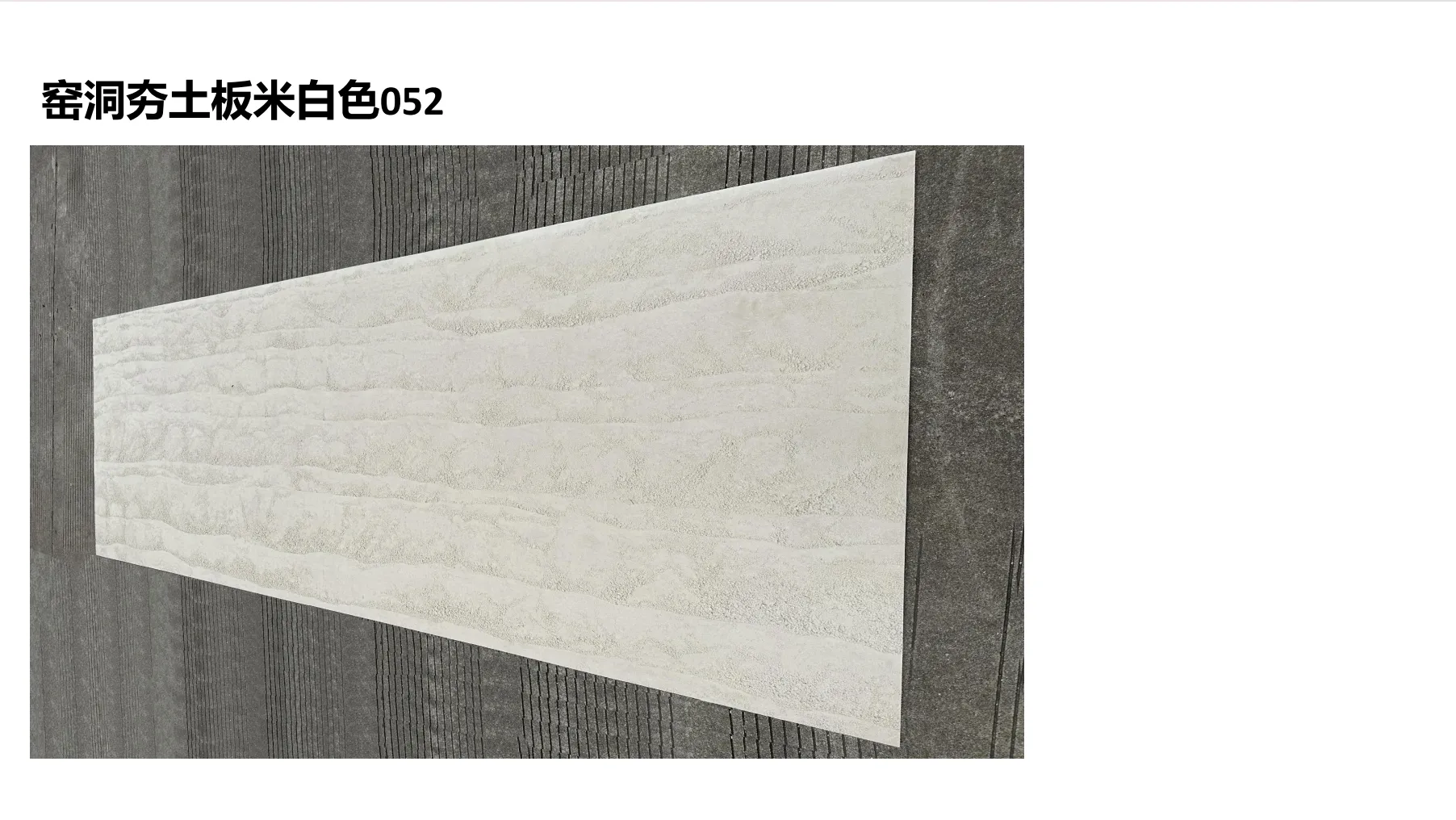
Have you ever walked into a room and immediately felt a shift in how you breathe? Not the sharp, artificial freshness of air fresheners, but a quiet, organic ease—as if the walls themselves were gently exhaling. That's the feeling many homeowners and designers are chasing today, as we wake up to a truth we've long overlooked: the air inside our homes matters just as much as the air outside. And in that quest for cleaner, healthier spaces, one material is emerging as a quiet hero: gradient color rammed earth boards.
I first encountered these boards last winter, during a visit to a friend's newly renovated cottage in the countryside. The living room walls were swathed in soft, shifting hues—warm terracottas blending into muted sage greens, like a landscape at dawn. "They're gradient color rammed earth boards," my friend explained, running a hand over the textured surface. "We chose them because my daughter has asthma, and we wanted something that wouldn't off-gas chemicals. But honestly? The best part is how the air feels. No more stuffy mornings, no more dry throats. It's like living in a room that breathes with you."
To understand their magic, let's start with the basics. Rammed earth itself is an ancient building technique, dating back centuries—think of the adobe walls of desert villages or the sturdy farmhouses of rural Europe. It's simple, honest stuff: a mix of natural materials like clay, sand, gravel, and sometimes straw, compacted layer by layer to form dense, durable walls. But gradient color rammed earth boards? They're a modern reimagining of that tradition, crafted to fit the needs of contemporary design while honoring the material's earthy roots.
Unlike traditional rammed earth, which is often monochromatic, these boards get their "gradient" effect from careful layering of colored clays and natural pigments. Imagine a painter blending watercolors on a palette—each layer of the board carries a slightly different hue, merging into a seamless transition that feels alive, not static. And while they're still made with the same core ingredients (no synthetic binders or toxic glues here), they're formed into lightweight, easy-to-install panels, making them accessible for everything from home renovations to commercial spaces.
So, how exactly do these boards enhance indoor air quality? Let's break it down—no chemistry degree required. First, it's all about the materials. Traditional building materials like vinyl siding, particleboard, or even some paints can release volatile organic compounds (VOCs) into the air for years after installation. These invisible gases—think formaldehyde, benzene, or toluene—are linked to headaches, allergies, and long-term respiratory issues. Gradient color rammed earth boards? They're made from 100% natural ingredients: clay dug from the earth, sand washed by rivers, pigments derived from minerals. No VOCs, no off-gassing, no hidden nasties. It's like building with the ground beneath your feet, not a lab-created cocktail.
But the real superpower is their breathability. Unlike plastic-based materials or even sealed drywall, rammed earth is porous by nature. That means it acts like a natural filter, absorbing excess moisture from the air when humidity spikes (hello, muggy summer days) and releasing it back when the air dries out (we're looking at you, winter heaters). This moisture regulation doesn't just prevent mold and mildew (which thrive in damp, stagnant air); it keeps the air feeling balanced—never too sticky, never too parched. "I used to wake up with a dry nose every morning," says Maria, a homeowner in Arizona who installed gradient rammed earth boards in her bedroom. "Now? It's like sleeping in a room that adjusts to me. The air just feels… right."
And let's not overlook the mental health angle. There's a reason we're drawn to natural materials: they ground us. Studies have shown that spaces filled with earthy textures and colors can reduce stress and anxiety, creating a sense of calm that's hard to replicate with synthetic surfaces. When you combine that with cleaner air, you're not just building a wall—you're crafting a sanctuary.
Let's be honest: even the healthiest material won't catch on if it's an eyesore. But gradient color rammed earth boards? They're a designer's dream. The gradient effect alone adds depth and movement to a room, turning a plain wall into a work of art. I visited a café in Seattle last month that used them in their dining area—the walls shifted from warm terracotta at the base to soft cream at the ceiling, mimicking the way sunlight fades throughout the day. "Customers say it feels like eating outdoors, even when it's pouring rain," the owner laughed. "And I've noticed they stay longer, too. People just want to be in a space that feels good."
But it's not just the color transitions. The texture of the boards—rough yet refined, with tiny flecks of sand and stone visible to the eye—adds a tactile quality that invites touch. Run your hand over them, and you'll feel the history of the earth itself. Compare that to the cold smoothness of fair-faced concrete (a popular industrial-chic choice) or the uniform pattern of wood grain board, and it's clear: gradient rammed earth boards offer something more human, more alive.
| Material | Air Quality Impact | Aesthetic Appeal | Sustainability |
|---|---|---|---|
| Gradient Color Rammed Earth Board | Natural materials, no VOCs, regulates moisture and humidity | Organic gradient colors, tactile texture, warm and inviting | Locally sourced ingredients, low-carbon production, recyclable |
| Fair-Faced Concrete | Durable but non-porous; may trap moisture if not sealed properly | Sleek, industrial look; limited color options | High carbon footprint in production; energy-intensive |
| Wood Grain Board | May contain formaldehyde-based adhesives; can harbor mold if wet | Warm, familiar wood look; uniform pattern | Dependent on sustainable forestry; often treated with chemicals |
It's one thing to talk about the science of air quality, but it's another to see these boards in action. Take the case of "Roots," a community yoga studio in Boulder, Colorado. When owner Lisa decided to expand, she wanted a space that felt "like a hug for the lungs." After researching materials, she settled on gradient color rammed earth boards for the main studio walls. "Our clients are here to de-stress and heal," she told me. "The last thing I wanted was for them to breathe in toxins while they meditated. Now, when people walk in, they immediately comment on how calm the room feels. Some even say their allergies act up less during class. That's the power of good air."
Or consider the office of a small marketing firm in Portland, Oregon, which replaced its generic drywall with gradient rammed earth boards last year. "We were tired of the sterile, corporate vibe," says lead designer Jake. "Now, the walls are this beautiful blend of soft grays and blues, like a misty morning in the mountains. Productivity's up, and people say they don't feel as drained at the end of the day. Coincidence? I don't think so."
I get it—natural materials can sound delicate. You might be wondering: Will they scratch? Stain? Fall apart in humid climates? Let's set the record straight. Rammed earth has been used for centuries in harsh environments, from desert heat to monsoon rains. When properly sealed (with a natural wax or mineral-based sealer, not toxic paints), gradient color rammed earth boards are surprisingly tough. They resist dents better than drywall, don't warp like wood, and can handle moisture as long as they're not submerged.
As for maintenance? It's refreshingly simple. A quick dusting with a dry cloth, or a wipe with a damp sponge for spills. No harsh cleaners, no special treatments. "I was worried about upkeep, being a busy parent," admits Sarah, the yoga instructor I mentioned earlier. "But honestly? They're easier to care for than our old painted walls. No chipping, no peeling—just this beautiful, evolving texture that gets better with time."
In a world where we spend 90% of our time indoors, the materials we choose to surround ourselves with aren't just about style—they're about survival. Gradient color rammed earth boards represent a shift in how we think about building: not just as a way to create walls, but as a way to nurture the people inside them. They remind us that health and beauty don't have to be enemies; in fact, they can dance together, creating spaces that feed both the body and the soul.
So, the next time you walk into a room and feel that quiet, organic ease—the sense that the space is breathing with you—take a closer look. Maybe it's not just good ventilation or lucky timing. Maybe it's the walls themselves, made from the earth, working silently to keep you healthy, happy, and at home.
After all, in the end, the best buildings aren't just structures—they're living, breathing extensions of ourselves. And gradient color rammed earth boards? They're the kind of building block that makes that possible.
Recommend Products












