
Let's start with a scene we've all witnessed: a construction site at dawn, where the air smells of fresh concrete and diesel, and piles of discarded bricks and plastic wrap grow taller by the hour. Last year, I stood on the edge of such a site in Lisbon, watching workers tear down an old warehouse to make way for a new apartment complex. What stuck with me wasn't the noise or the dust—it was the sheer volume of waste: broken tiles, chunks of fair-faced concrete, and splintered wood, all bound for landfills. Later, I learned that the construction industry is responsible for nearly 30% of global waste and 23% of carbon emissions. That's when I began wondering: What if our buildings could be part of the solution, not the problem?
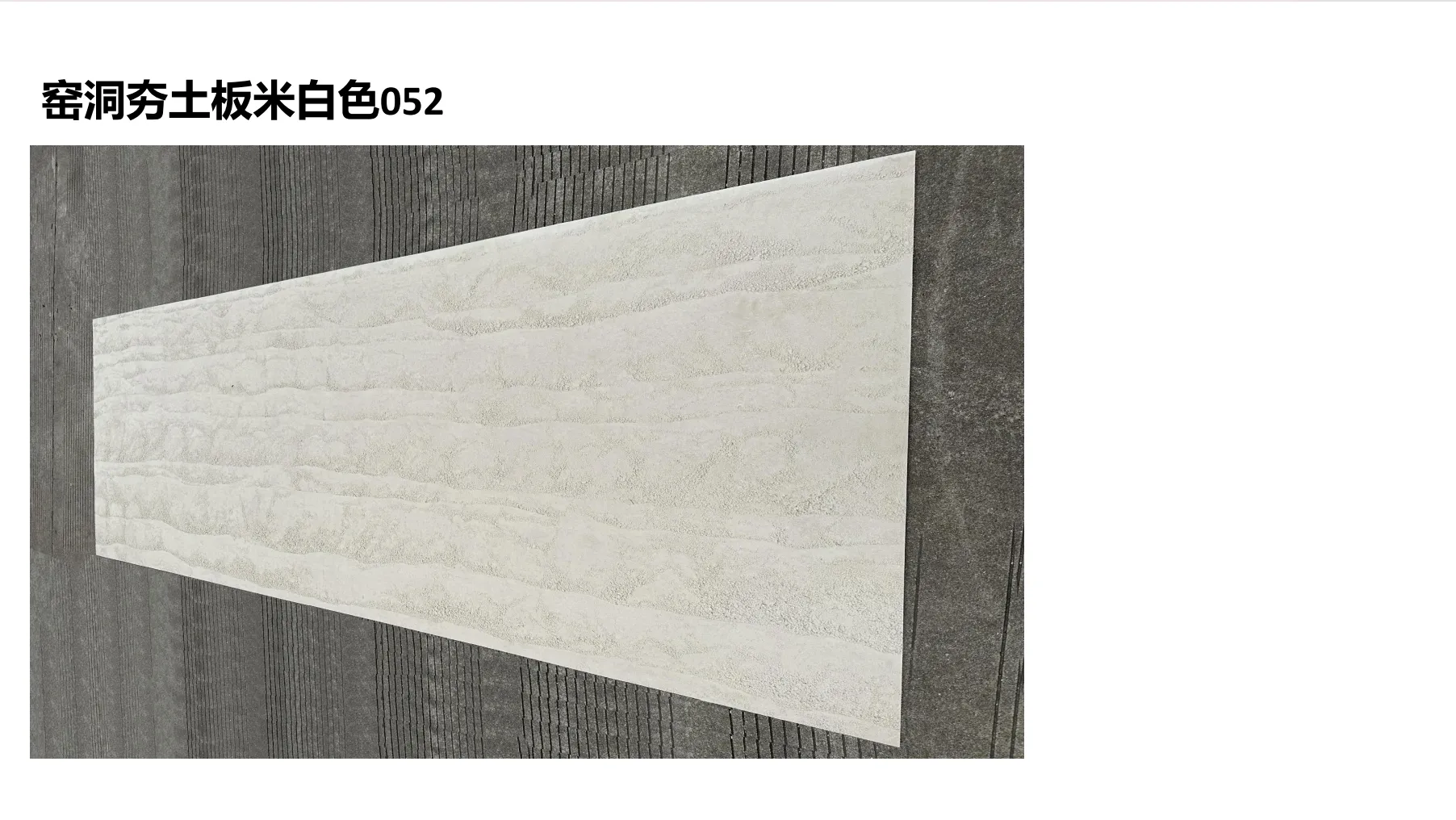
Enter gradient color rammed earth boards—a material that sounds like it belongs in a history book but is quietly revolutionizing modern construction. If you're picturing adobe huts in desert villages, think again. These boards are a marriage of ancient wisdom and cutting-edge engineering: layers of natural materials (clay, sand, gravel, and mineral pigments) compressed under high pressure, creating durable, lightweight panels with soft, shifting hues that mimic the look of sunset over mountains or storm clouds rolling in. Unlike the uniform gray of fair-faced concrete or the synthetic shine of vinyl siding, gradient rammed earth boards tell a story—each panel's color gradient is unique, like a fingerprint of the earth it came from.
But their beauty is more than skin deep. What makes these boards a game-changer is how they're made. Traditional rammed earth has been used for millennia, but modern manufacturers have refined the process: local sourcing of raw materials (cutting down on transportation emissions), minimal water usage, and pigments derived from natural oxides (no toxic dyes here). Even the production machinery is designed to run on renewable energy in many factories. The result? A material that's not just sustainable to use, but sustainable to make.
Before we dive into how gradient rammed earth boards fit into the circular economy, let's clarify what that term really means. It's simple: instead of the "take-make-waste" model (dig up resources, make a product, throw it away), circular economy aims to "reduce, reuse, recycle"—keeping materials in use for as long as possible, and then giving them new life. Think of it as a loop, not a line. And in construction, where materials like fair-faced concrete often end up in landfills after a building's lifespan, closing that loop is critical.
The first rule of circular economy is to reduce resource use—and gradient rammed earth boards excel here. Let's compare them to fair-faced concrete, a staple in construction. Concrete production requires mining limestone and burning it at high temperatures, releasing CO2. Then there's the water: a single cubic meter of concrete needs up to 300 liters of water, much of which is wasted during curing.
Gradient rammed earth boards, by contrast, thrive on efficiency. Take the Italian company TerraSostenibile, which sources 90% of its materials from within a 50-kilometer radius of its factory. Their clay comes from local riverbeds, their sand from abandoned quarries, and their pigments from iron oxide deposits in the Alps. No mining, no burning—just earth, reshaped. Water usage? A fraction of concrete's: the clay-sand mixture is moistened just enough to bind, then pressed into panels that dry naturally in the sun. The result? A production process that emits 70% less CO2 than concrete, according to a 2023 study by the European Green Building Council.
Circular economy isn't just about making things sustainably—it's about making things that last. I visited a renovation project in Barcelona last spring where a 1920s textile factory was being turned into a community arts center. The architects chose gradient rammed earth boards for the interior walls, and what struck me was how the panels felt like they'd always been there. "These boards don't just cover the old brickwork—they complement it," the lead architect, Maria, told me. "If we ever need to reconfigure the space, we can remove the panels, sand them down, and reinstall them. They're not disposable; they're adaptable."
That adaptability is key. Unlike fair-faced concrete, which cracks under stress and is nearly impossible to repair without major work, gradient rammed earth boards are flexible (thanks to their layered structure) and easy to maintain. A scratch can be buffed out with sandpaper; a chip can be filled with a mix of clay and water. In fact, some manufacturers offer a 50-year warranty on their panels—unheard of for most building materials. It's a far cry from the "tear it down and start over" mentality that dominates construction today.
Even the most durable materials eventually reach the end of their life. The question is: What happens then? For fair-faced concrete, the answer is usually a landfill, where it takes centuries to break down (if it ever does). For gradient rammed earth boards, the story is different. When a building using these panels is demolished, the boards can be crushed into gravel and reused as a base for new roads or mixed back into soil for landscaping. In one pilot project in Australia, old rammed earth panels were ground up and used to create new mcm flexible stone tiles—closing the loop entirely.
"It's like composting for buildings," says Dr. Leila Patel, a circular economy researcher at the University of Cape Town. "These materials are part of the earth's natural cycle. They don't introduce foreign chemicals into the environment when they break down. That's the future of construction: materials that give back, not just take."
| Metric | Gradient Color Rammed Earth Boards | Fair-Faced Concrete | Vinyl Siding |
|---|---|---|---|
| Carbon Footprint (per sq.m) | 8-12 kg CO2 | 45-55 kg CO2 | 18-22 kg CO2 |
| Water Usage (per sq.m) | 5-8 liters | 25-30 liters | 3-5 liters (but uses toxic chemicals) |
| Expected Lifespan | 50+ years | 20-30 years (before major repairs) | 15-20 years |
| End-of-Life Disposal | 100% recyclable/biodegradable | 90% ends up in landfills | Non-biodegradable; releases microplastics |
In rural Kenya, where building materials are scarce and waste management is limited, a primary school recently became the first in the region to use gradient rammed earth boards for its new classroom block. The project, led by a local NGO, sourced all materials from within 10 kilometers: clay from a nearby riverbed, sand from a dried-up lake, and pigments from crushed volcanic rocks. The panels were made on-site using a manual press (no electricity needed), and the students even helped mix the materials.
A year later, the headteacher, Mr. Owino, reported that the classrooms stay cooler in the hot sun (reducing the need for fans) and that the boards have held up to rain and termites better than the metal roofing they replaced. "We didn't just build a school—we built a lesson," he said. "The kids now ask where materials come from and where they go. They understand that buildings can be kind to the earth."
Let's not forget the "why" behind sustainable design: buildings should make us feel good. I've walked through offices with fair-faced concrete walls that felt cold and sterile, like hospitals. Gradient rammed earth boards are different. Their warm, earthy tones and subtle color shifts create spaces that feel alive. In a yoga studio I visited in Portland, the walls were made of panels with gradients of terracotta and sand, and students said the room felt "grounding" and "connected to nature."
Maria, the architect from Barcelona, put it best: "We don't just build with materials—we build with stories. A gradient rammed earth board isn't just a wall; it's a piece of the local landscape, a reminder of where we come from. When people feel that connection, they care more about the space, and they care more about preserving it. That's the real power of circular economy—it's not just about materials; it's about mindset."
Of course, gradient rammed earth boards aren't a magic bullet. They're still relatively unknown, and upfront costs can be higher than fair-faced concrete (though lower over the material's lifespan). There's also the issue of scalability: can manufacturers keep up with demand if more builders adopt them? But the tide is turning. In Europe, governments are offering tax incentives for circular construction materials. In the U.S., companies like EarthBuild are partnering with homebuilders to make gradient rammed earth boards more accessible. And in Asia, where urbanization is booming, developers are starting to see the value of materials that reduce both carbon footprints and waste.
As I left that Lisbon construction site last year, I noticed something I'd missed earlier: a small section of the new apartment complex was being built with rammed earth panels, their soft gradients peeking out from behind scaffolding. It was a tiny detail, but it felt like a promise. Our built world doesn't have to be a drain on the planet. With materials like gradient color rammed earth boards, we can build in a way that respects the earth's limits, honors its beauty, and leaves a legacy worth passing on. The circular economy isn't coming—it's here. We just have to choose to build it.
Recommend Products












