
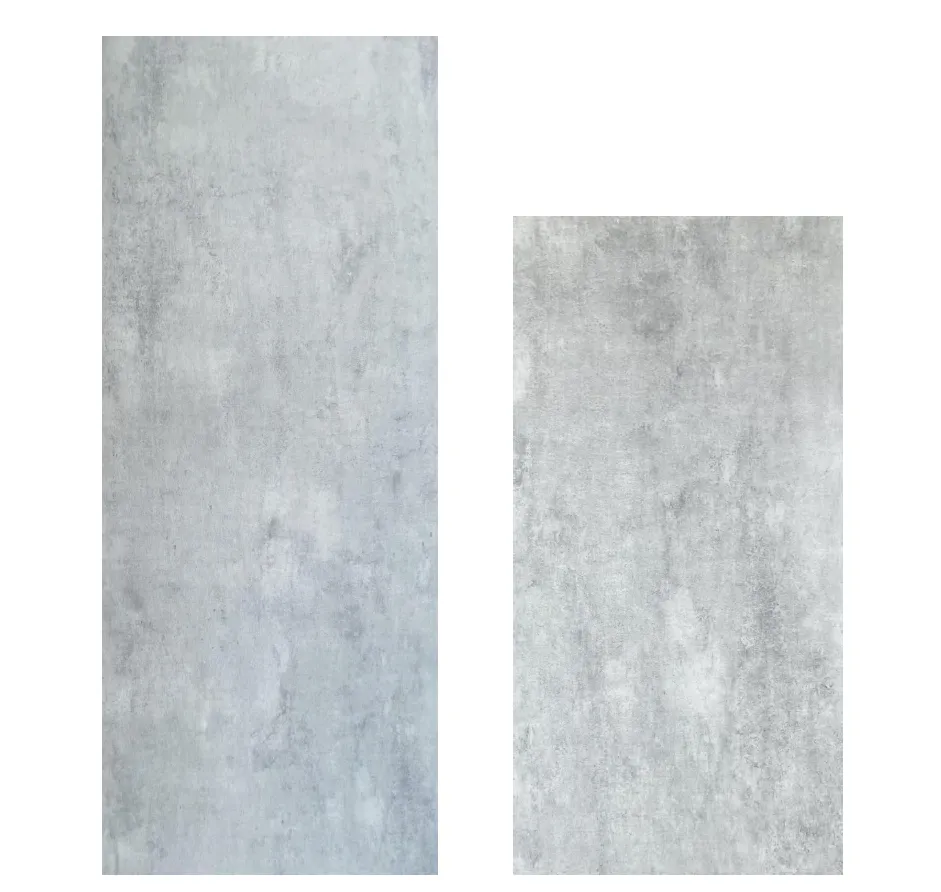
Walk into any modern boutique hotel, sleek office lobby, or trendy restaurant these days, and there's a good chance the walls, facade, or even the countertops are wrapped in a material that looks like polished marble but feels surprisingly light and flexible. That's Marble Concrete Board—one of the most transformative materials in contemporary architecture. And when it comes to redefining what's possible with this medium, MCM has been at the forefront, merging age-old stonecraft with 21st-century technology to create panels that don't just build spaces, but elevate them. Let's pull back the curtain and explore how these remarkable panels go from raw stone and cement to the stunning surfaces shaping our built world.
Before we dive into the "how," let's clarify the "what." Marble Concrete Board is a hybrid material that blends the elegance of natural marble with the durability and workability of engineered concrete. Unlike solid marble slabs (which are heavy, brittle, and expensive), MCM's version is lightweight, flexible, and customizable—making it ideal for everything from high-rise exteriors to cozy home interiors. And it's not just about looks: these panels are designed to stand up to harsh weather, resist scratches, and even contribute to energy efficiency by insulating buildings. Think of it as marble's smarter, more versatile cousin.
At the heart of this innovation is MCM's commitment to pushing boundaries—whether through their MCM 3D printing series for intricate designs or their MCM flexible stone technology that lets panels bend without breaking. But to truly appreciate the final product, we need to start at the very beginning: the raw materials.
Great panels start with great ingredients. MCM's Marble Concrete Board is a symphony of carefully selected components, each playing a specific role in the final product's strength, appearance, and performance. Here's what goes into the mix:
Before any mixing begins, every batch of raw materials undergoes rigorous testing. Marble aggregates are sifted to ensure uniform particle size, polymers are checked for purity, and cement is tested for strength. MCM's labs even analyze the pH levels and mineral content of water to avoid unexpected chemical reactions. It's meticulous work, but it's what ensures every panel meets the brand's high standards.
Imagine a giant, high-tech kitchen mixer, but instead of cookies, it's blending materials that will become part of a building's facade. MCM's mixing process is equal parts science and precision, with computer-controlled machines ensuring every batch is consistent. Here's how it works:
First, the dry ingredients—marble aggregates, cement, and fibers—are loaded into a rotating drum and mixed for 3-5 minutes to distribute everything evenly. Then, the wet ingredients (water, polymers, and additives) are slowly added while the drum continues to spin. The mixer's blades are designed to create a smooth, homogeneous paste—no lumps allowed! The goal? A mix that's thick enough to hold shape but fluid enough to flow into molds.
For specialized products, like those in the MCM 3D printing series , the mix is adjusted to have a slightly different viscosity—thicker to hold layers during printing, but still malleable enough for intricate details. It's a bit like adjusting a cake batter: the right consistency makes all the difference.
Now comes the fun part: turning that wet mix into a recognizable panel. MCM uses two main techniques here, depending on the design and application:
For standard panels with textures like wood grain board or linear travertine(claybank) , MCM uses flexible silicone or polyurethane molds. These molds are created from master patterns (often hand-carved by artisans) that capture every detail—from the knots in a wooden plank to the pockmarks of natural travertine. The mixed concrete is poured into the molds, then vibrated to release air bubbles (no one wants unsightly holes!) and smoothed with a trowel. The molds are then sealed and left to set for a few hours until the panel is firm enough to handle.
When architects want something truly unique—say, a facade with undulating waves or a wall with gobi panel textures that mimic desert dunes—MCM turns to their MCM 3D printing series . This isn't your average desktop 3D printer; these industrial machines extrude the concrete mix layer by layer, building up the panel from the ground up. The advantage? No need for molds, which means endless design possibilities and faster production for custom projects. It's like building with a robotic pastry bag, but instead of frosting, you're creating durable building panels.
Fun fact: MCM's 3D printers can even incorporate thread or other materials into the mix during printing, adding subtle texture or color accents that would be impossible with traditional molding.
You know how bread needs time to rise, or concrete needs to set before you walk on it? Curing is the panel's version of that—except it's way more controlled. After molding or 3D printing, the panels are moved to curing chambers where temperature and humidity are kept constant for 24-48 hours. This slow, steady setting allows the cement to hydrate fully, forming strong chemical bonds that give the panel its compressive strength.
MCM's curing chambers are like high-tech greenhouses: some use steam to keep humidity levels around 90%, while others use infrared heaters to maintain a steady 25°C (77°F). The goal? Prevent the panel from drying too quickly, which can cause shrinkage cracks. After the initial cure, panels are moved to a shaded area for another 7-14 days of air curing, where they continue to harden and stabilize. It's a patience game, but it's why MCM panels can withstand years of wear and tear.
Now that the panel is strong and stable, it's time to make it beautiful. MCM offers a dizzying array of finishes, from the industrial chic of fair-faced concrete to the luxe sheen of polished marble. Here's how they do it:
MCM doesn't just make panels—they make reliable panels. Before any panel leaves the factory, it undergoes a battery of tests to ensure it meets strict standards for strength, durability, and appearance. Here's what's checked:
Any panel that fails a test is rejected—no exceptions. It's this commitment to quality that has made MCM a trusted name in the industry, used by architects and builders worldwide.
Still wondering how MCM's panels stack up against traditional building materials? Let's break it down:
| Feature | Traditional Marble Slabs | MCM Marble Concrete Board |
|---|---|---|
| Weight (per sq.m) | 20-30 kg | 8-12 kg (up to 60% lighter!) |
| Flexibility | Brittle—prone to cracking under stress | Flexible (thanks to MCM flexible stone tech)—can bend up to 5° without breaking |
| Design Options | Limited by natural stone patterns | Endless—from 3D art concrete board to mosaic travertine |
| Installation | Requires heavy machinery and structural support | Lightweight—can be installed with basic tools; ideal for retrofits |
| Sustainability | High carbon footprint (quarrying, transportation) | Uses recycled marble; low-energy manufacturing; recyclable at end of life |
From skyscrapers to coffee shops, MCM's panels are everywhere. Here are just a few examples of how architects are using them:
So, what's next for MCM? The brand is constantly experimenting with new materials and technologies. Their MCM 3D printing series is already pushing boundaries with larger panels and more complex designs, and they're exploring bio-based polymers to make panels even more sustainable. There's also talk of integrating smart technology—like panels that can store heat or generate electricity from sunlight. The goal? To keep making building materials that are not just functional, but inspiring.
At the end of the day, MCM's Marble Concrete Board isn't just a building material—it's a blend of science, art, and sustainability that's shaping the way we design and build. From the careful selection of marble aggregates to the precision of 3D printing, every step in the process is a testament to MCM's commitment to quality and innovation. So the next time you walk past a building with a stunning stone facade, take a closer look—it might just be an MCM panel, quietly telling the story of how nature and technology can come together to create something extraordinary.
Recommend Products












