
Walk into any contemporary boutique hotel, a trendy restaurant, or even a thoughtfully designed home, and you'll likely encounter a material that feels both timeless and modern: Rock Cut Dolomitic Stone. With its earthy textures, rich color variations, and remarkable durability, it's no wonder this stone has become a staple in architecture and interior design. But have you ever paused to think about how it goes from a hidden geological formation deep underground to the stunning feature wall in your favorite space? Let's take a journey through the mines, quarries, and workshops where Rock Cut Dolomitic Stone is born, and uncover the intricate processes that turn raw rock into a design masterpiece.
Before a single stone is cut, geologists and mining experts embark on a months-long quest to find the perfect deposit. Rock Cut Dolomitic Stone isn't just any rock—it's a specific type of dolomite, a mineral formed over millions of years when calcium and magnesium carbonates crystallize and bind together in sedimentary layers. This process requires precise conditions: ancient seas or lagoons, slow evaporation, and immense pressure from overlying rock. So, teams don't just "stumble" upon these deposits; they map geological formations, study soil samples, and drill core samples to analyze the stone's composition, density, and color.
"We're looking for consistency," explains Maria Gonzalez, a senior geologist with a leading stone exploration firm. "A good dolomite deposit should have minimal fractures, uniform mineral distribution, and the right balance of hardness and workability. If the stone is too brittle, it'll crack during extraction; too soft, and it won't hold up in construction. It's a delicate balance."
Once a promising site is identified, environmental assessments follow. Quarrying can impact local ecosystems, so companies work with ecologists to ensure the site is sustainable—avoiding protected areas, minimizing deforestation, and planning for land reclamation post-mining. Only then does the real work begin.
Imagine arriving at a quarry for the first time: a vast, open expanse where the earth has been carefully peeled back to reveal layers of stone. But before this scene exists, there's a flurry of preparation. First, vegetation is cleared, but not haphazardly—trees are often replanted elsewhere, and topsoil is stockpiled for later use in reclamation. Then, roads are built to transport heavy machinery, and drainage systems are installed to prevent waterlogging, which could weaken the stone or create unsafe working conditions.
Next comes site leveling. Quarries are rarely flat, so bulldozers and graders reshape the terrain to create stable platforms for equipment. Drilling teams then move in, boring holes into the rock to map its internal structure. These holes—sometimes up to 50 feet deep—help engineers identify natural fault lines, which are crucial for guiding extraction. "Working with the stone's natural grain is key," says Juan Martinez, a quarry manager with 20 years of experience. "If you fight against it, you'll waste stone and risk damaging equipment. But if you follow those fault lines? It's like slicing a ripe melon—clean, efficient, and almost effortless."
Extracting Rock Cut Dolomitic Stone is a dance between power and precision. Gone are the days of reckless dynamite blasts that shattered stone into useless fragments. Today, quarrying is a high-tech affair, though traditional techniques still have their place in certain contexts.
The workhorse of modern quarries is the diamond wire saw. Picture a massive loop of steel cable embedded with industrial-grade diamonds—tiny, super-hard crystals that can slice through even the toughest dolomite. These saws are strung between two towers or mobile frames and guided along pre-marked lines. As the wire spins at high speed, the diamonds grind through the stone, creating clean, straight cuts. The result? Massive rectangular blocks, often 10 feet tall and 20 feet wide, weighing upwards of 50 tons each.
For smaller or more irregular deposits, hydraulic splitters are used. These tools look like metal wedges with expandable jaws; workers drill holes into the stone, insert the splitter, and pump hydraulic fluid to force the jaws apart. The pressure causes the stone to crack along its natural fault lines—a method that's gentler on the rock and reduces waste. "It's like using a chisel and hammer, but with 21st-century precision," Martinez laughs. "We can split a block within an inch of the desired size, which saves hours of processing later."
Once a block is free, the next challenge is moving it without damaging it. Enter the "stone doctors"—operators of massive cranes and forklifts equipped with soft, rubberized slings. These slings wrap around the block to distribute weight evenly, preventing cracks or chips. "A single mistake here can ruin weeks of work," says Gonzalez. "These blocks are worth tens of thousands of dollars, and they're irreplaceable. So we move slowly, double-checking every angle before lifting."
The blocks are then transported to a nearby processing facility—either by truck (for short distances) or rail (for longer hauls). Along the way, they're covered with tarps to shield them from rain, which could stain the stone, or extreme heat, which might cause expansion and cracking.
At the processing plant, the rough blocks of Rock Cut Dolomitic Stone undergo a transformation. Here, they're cut, shaped, and finished into the slabs, tiles, and custom pieces that architects and designers specify. Let's break down this journey:
First, the blocks are trimmed using gang saws—large machines with multiple blades that can cut through stone like butter. These saws use water to cool the blades and reduce dust, and they can slice a block into 2-inch-thick slabs in under an hour. For projects requiring larger formats—like the MCM Big Slab Board Series, which features extra-large panels for seamless walls—specialized bridge saws are used. These computer-controlled tools can cut slabs up to 12 feet long with pinpoint accuracy.
One of the joys of Rock Cut Dolomitic Stone is its versatility, and much of that comes from the finishing process. Depending on the desired look, slabs are sandblasted, honed, polished, or brushed. Sandblasting uses high-pressure sand to etch the surface, creating a rough, natural texture—perfect for exterior cladding. Honing smooths the stone but leaves it matte, while polishing brings out a glossy sheen, ideal for countertops or floors.
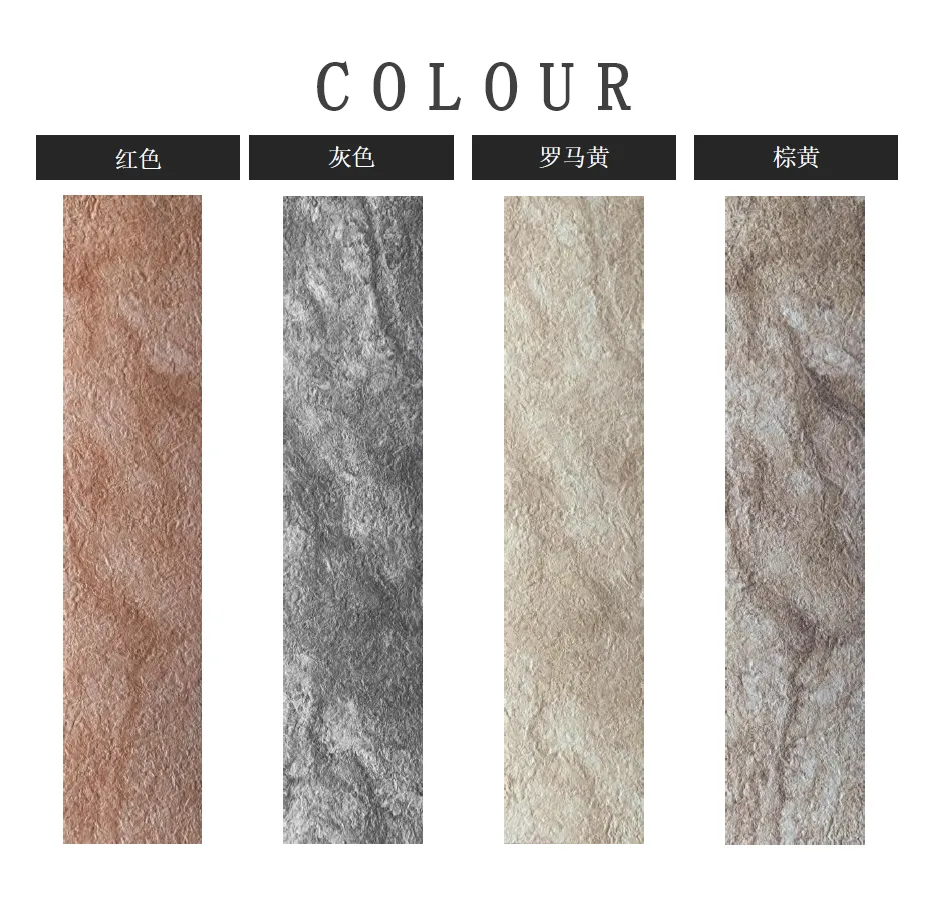
This is also where variants like Dolomitic Travertine (dark grey) and Dolomitic Travertine (claybank) are born. Dark grey dolomite gets its moody hue from higher concentrations of iron and manganese oxides, which oxidize over time to create deep, charcoal-like tones. Claybank, on the other hand, has warmer, earthier notes—think terracotta or sandstone—thanks to clay minerals trapped in the stone's pores. "These colors aren't dyed or artificial," notes Gonzalez. "They're a fingerprint of the earth where the stone formed. A quarry in the mountains might yield more dark grey, while one near a riverbed could produce claybank. It's nature's artwork."
| Variant | Color Profile | Texture Options | Best For | Maintenance Tips |
|---|---|---|---|---|
| Dolomitic Travertine (dark grey) | Deep charcoal with silver or white veining | Sandblasted, honed, polished | Modern interiors, accent walls, fireplace surrounds | Seal annually to prevent staining; avoid harsh cleaners |
| Dolomitic Travertine (claybank) | Warm beige to terracotta with subtle brown streaks | Brushed, honed, tumbled | Rustic kitchens, outdoor patios, Mediterranean-style exteriors | Sweep regularly; hose off outdoor installations to remove dirt |
Table: Comparing two popular Dolomitic Travertine variants derived from Rock Cut Dolomitic Stone.
Before any slab leaves the facility, it undergoes rigorous testing. Inspectors check for cracks, uneven coloring, and porosity—tiny holes that could absorb water and lead to damage. Samples are also tested for compressive strength (how much weight they can bear) and abrasion resistance (how well they stand up to foot traffic). "We reject about 5-10% of slabs," says Martinez. "It's tough, but our clients expect the best. A single flaw in a feature wall can ruin an entire project."
Rock Cut Dolomitic Stone isn't just stuck in traditional forms. Today, it's being integrated into cutting-edge products like MCM Flexible Stone—a lightweight, bendable cladding material that's revolutionizing construction. MCM (Modified Composite Material) Flexible Stone combines crushed dolomite with polymer resins, creating thin, flexible sheets that can adhere to curved walls, ceilings, or even furniture. "It's like taking the beauty of natural stone and giving it superpowers," jokes Gonzalez. "Suddenly, you can use dolomite in places you never could before—think rounded columns, wavy accent walls, or even custom-shaped backsplashes."
The process starts with grinding Rock Cut Dolomitic Stone into a fine powder, which is then mixed with resins and pigments (though many MCM products use the stone's natural color). The mixture is pressed into molds, baked to cure, and then cut into sheets. The result? A material that weighs 70% less than solid stone but retains its durability and aesthetic appeal.
Mining has a reputation for being hard on the environment, but the stone industry is evolving. Modern quarries now prioritize sustainability in every step: using electric machinery to reduce emissions, recycling water from cutting processes, and replanting native vegetation post-mining. "We don't just take from the earth—we give back," says Martinez. "A quarry that's been exhausted can become a lake, a park, or even farmland. It's our responsibility to leave the land better than we found it."
Additionally, the rise of products like MCM Flexible Stone reduces waste by using smaller pieces of stone that might otherwise be discarded. "Instead of throwing away a cracked slab, we grind it up and turn it into flexible panels," notes Gonzalez. "It's a win-win: less waste, more innovation."
Once processed and approved, Rock Cut Dolomitic Stone slabs are packed into crates lined with foam to prevent chipping and shipped to distributors, showrooms, or directly to construction sites. Architects and designers then select the perfect pieces, considering color, texture, and size to bring their vision to life. And when the stone is finally installed—whether as a kitchen countertop, a hotel lobby wall, or a backyard patio—it carries with it the story of the earth, the skill of miners and craftsmen, and the promise of durability for generations to come.
The next time you touch a wall of Rock Cut Dolomitic Stone, remember: it's not just a building material. It's a piece of the planet's history, shaped by time, pressure, and human ingenuity. From the geologists who mapped its location to the workers who cut it with care, every hand that touches this stone contributes to its legacy. And as innovations like MCM Flexible Stone and sustainable mining practices continue to evolve, Rock Cut Dolomitic Stone will undoubtedly remain a cornerstone of design—connecting us to the earth while building the spaces of tomorrow.
Recommend Products












