
Walk into a historic villa in Tuscany, run your hand along the walls of a modern boutique hotel, or pause before the grand steps of an ancient Roman amphitheater—chances are, you're touching travertine. This stone, with its warm, earthy palette and uniquely pitted texture, has been a cornerstone of human design for millennia. But beyond its beauty lies a story written in water, minerals, and time—a story that turns ordinary elements into something extraordinary. Let's uncover the magic behind travertine's creation, and explore the diverse family of travertine varieties that continue to captivate architects and designers today.
Travertine doesn't form just anywhere. It's a child of specific geological conditions, born in places where water and rock engage in a slow, ancient conversation. Think hot springs bubbling in Yellowstone, mineral-rich streams cascading through limestone caves, or geothermal vents hidden deep underground. These are the nurseries of travertine, where the stage is set for a chemical transformation that takes centuries—sometimes millennia—to complete.
At the heart of this process is water, but not just any water. Travertine forms from groundwater saturated with calcium carbonate (CaCO₃), a mineral dissolved from limestone rocks as water percolates through the earth. As this mineral-rich water rises to the surface—whether through a hot spring, a cave spring, or a geyser—it undergoes a subtle but critical change: it loses carbon dioxide (CO₂). This loss is triggered by pressure drops, temperature shifts, or simply exposure to air, and it's the catalyst that sets travertine's creation in motion.
When CO₂ escapes, the water can no longer hold all its dissolved calcium carbonate. The excess mineral begins to precipitate, or "fall out," of the water, like sugar crystals forming at the bottom of a oversweetened tea. These tiny calcium carbonate particles don't just drift away, though. They cling to surfaces—rocks, twigs, even the edges of a spring—and start to build. Layer upon layer, year after year, they accumulate, forming the porous, banded stone we know as travertine.
If you've ever held a piece of travertine, you've probably noticed its texture: pitted, almost sponge-like, with holes and grooves that tell a story of how it grew. Those holes? They're not flaws—they're windows into the stone's past. As calcium carbonate precipitates, it often traps bubbles of gas or pockets of water, which leave behind voids as the stone hardens. The speed of water flow matters, too: fast-moving water creates rough, layered textures, while calm, still water results in smoother, more uniform surfaces. Even the tiniest impurities—bits of sediment, algae, or trace minerals—get woven into the stone, adding unique patterns and colors that make each slab one-of-a-kind.
This process isn't quick. A single centimeter of travertine might take decades to form, and a thick deposit—like the ones quarried for construction—can take tens of thousands of years. That's why travertine feels so "alive" underfoot or in hand: it's a material that carries the weight of time, each layer a snapshot of the environment in which it was born.
Travertine isn't a one-note stone. Its color palette is as diverse as the environments that create it, with hues ranging from soft beiges to bold reds, and even subtle metallic sheens. These variations come from the minerals and impurities present during formation, turning ordinary calcium carbonate into something uniquely expressive. Let's meet a few members of the travertine family:
| Variety | Color Palette | Unique Features | Environmental Story |
|---|---|---|---|
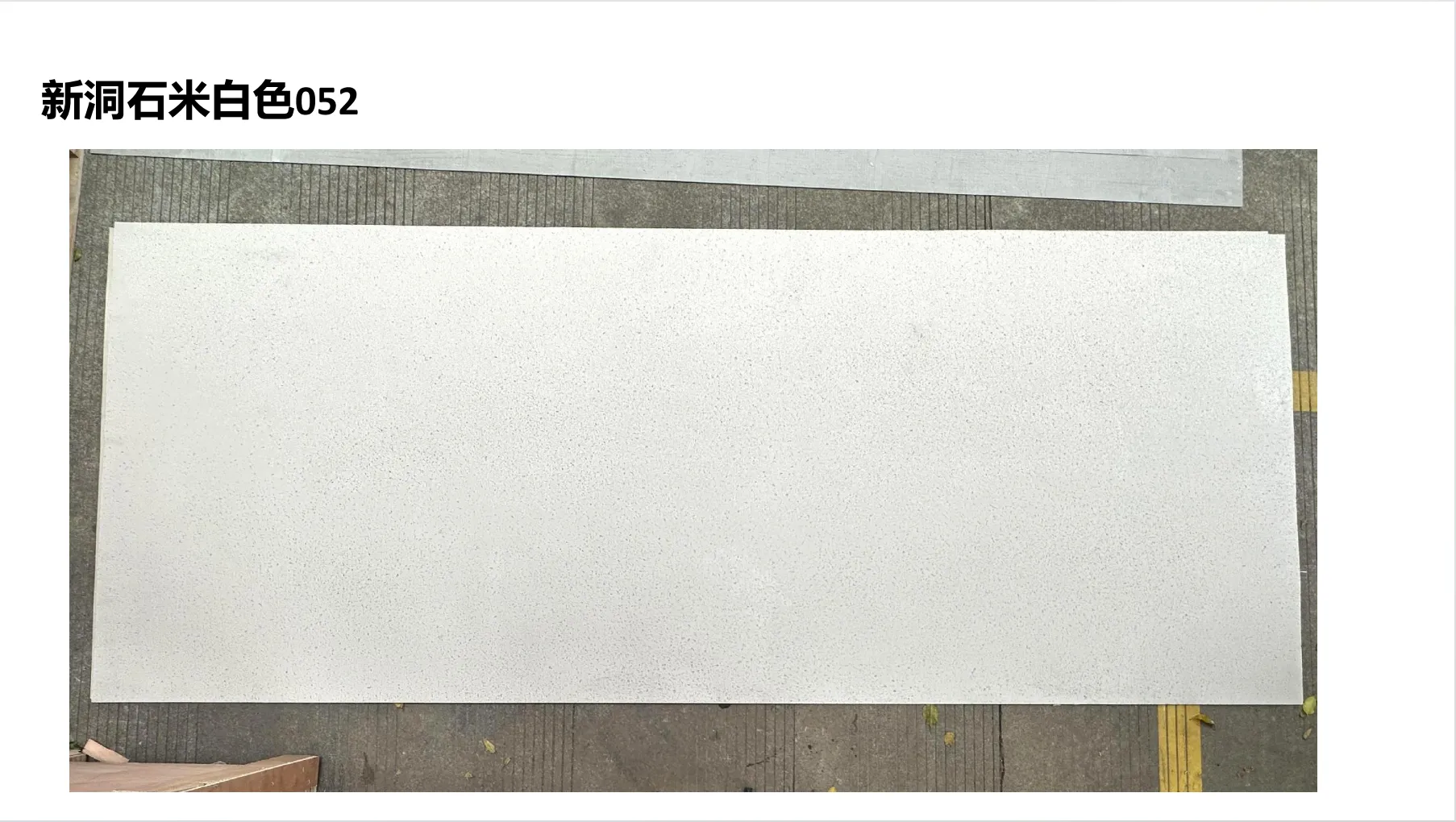
| Travertine (beige) | Warm ivory to soft sand | Classic pitted texture, creamy undertones | Formed in calm, mineral-poor springs; pure calcium carbonate gives its neutral hue |
| Travertine (starry green) | Deep mossy green with flecks of silver | Subtle "starry" sparkles from copper or magnesium deposits | Born in springs with trace metals; the green comes from copper-rich groundwater |
| Travertine (vintage silver) | Pale gray with a metallic sheen | Smooth, almost luminescent surface; hints of silver-gray | Formed in cool, slow-moving caves; manganese impurities lend its silvery tone |
| Travertine (starry red) | Rustic terracotta with red speckles | Vibrant "star" patterns from iron oxide (rust) deposits | Born in iron-rich environments, like mineral springs near volcanic areas |
Take travertine (starry green) , for example. Its deep, forest-like hue isn't just for show—it's a clue to its origins. This variety forms in springs where groundwater picks up copper or magnesium as it flows through bedrock. As the calcium carbonate precipitates, these metals get trapped in the stone, creating tiny green flecks that catch the light like stars in a night sky. Similarly, travertine (starry red) owes its warm, fiery tones to iron oxides—nature's way of painting with rust. Even the subtle shimmer of travertine (vintage silver) tells a tale: it forms in cool, cave-like environments where manganese deposits lend a silvery, almost frosty sheen to the stone's surface.
What makes travertine more than just a pretty stone? Its durability and versatility. For centuries, humans have recognized its strength—after all, it's weathered millennia of rain, wind, and foot traffic in structures like Rome's Colosseum and the Trevi Fountain. Today, it's equally at home in modern kitchens (as countertops), bathroom walls (as sleek tiles), or outdoor patios (as slip-resistant pavers). And with varieties like travertine (beige) offering a timeless, earthy vibe, or travertine (vintage silver) adding a contemporary edge, there's a travertine for every design vision.
Designers often seek out travertine real photos to capture its unique character before specifying it for a project. These images reveal the stone's organic patterns—no two slabs are identical—and its ability to warm up a space with texture and color. Whether paired with minimalist furniture or traditional decor, travertine bridges the gap between the ancient and the modern, reminding us that the most enduring materials are those shaped by time itself.
Travertine is more than a building material. It's a record of Earth's history, a collaboration between water and rock, and a testament to patience. Each pit, each color variation, each shimmering fleck is a chapter in a story that began long before humans walked the planet—and will continue long after we're gone. So the next time you touch a travertine surface, take a moment to appreciate it: you're not just feeling stone. You're feeling the slow, steady rhythm of the earth, frozen in time.
From the classic travertine (beige) that lines ancient temples to the modern allure of travertine (vintage silver) in boutique hotels, this stone remains a favorite for one simple reason: it's alive with the energy of its origins. And as long as water flows and minerals precipitate, the earth will keep crafting new chapters of the travertine story—one layer, one century, one masterpiece at a time.
Recommend Products












