
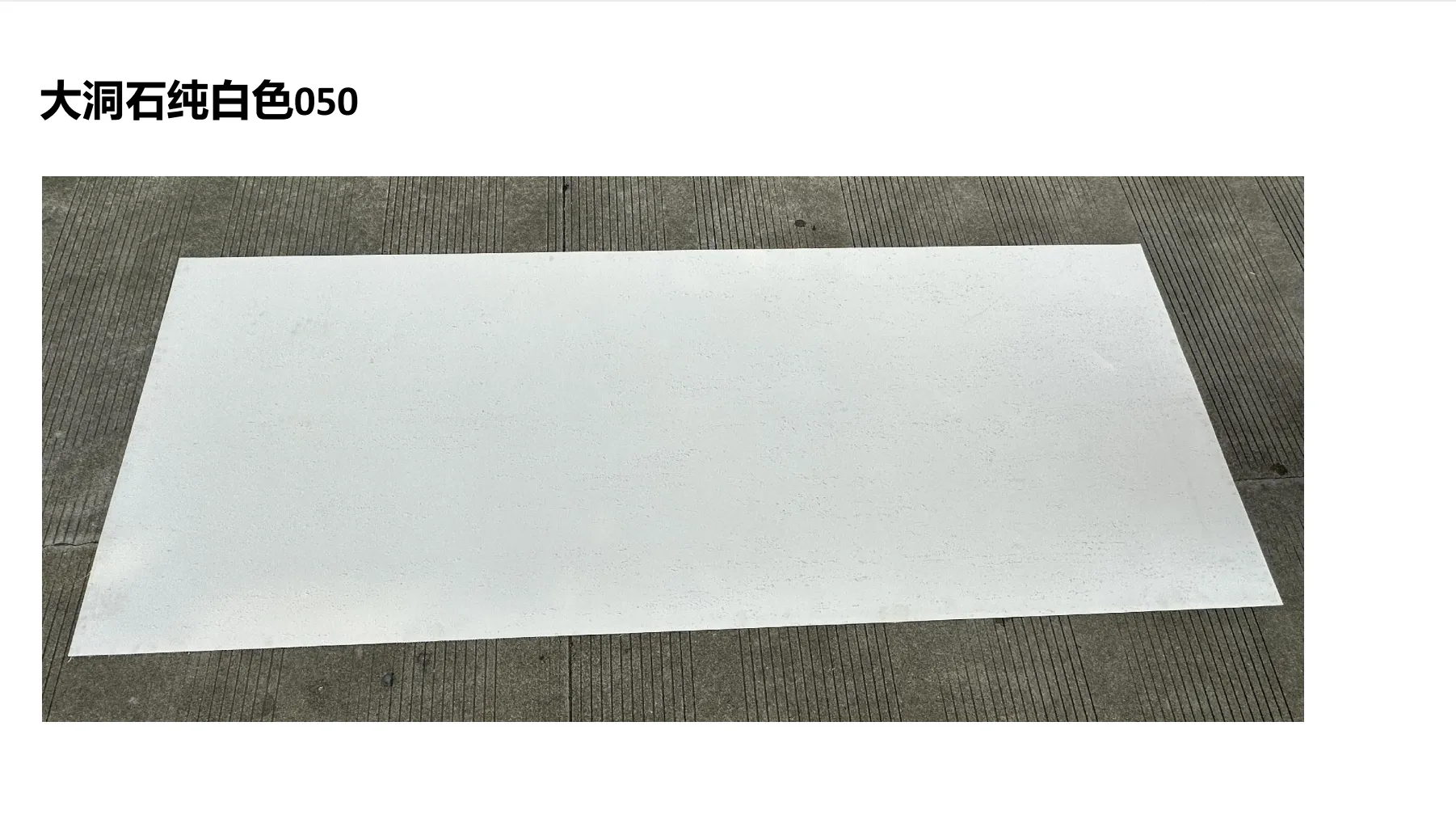
Redefining what's possible when beauty meets practicality in modern architecture
Imagine standing in front of a grand commercial building—its facade glows with the warm, organic texture of travertine, the kind that makes you reach out to trace its honeycomb-like pores. Now, picture this: that "stone" isn't weighing down the structure like traditional marble or granite. In fact, it's so lightweight that installers can lift it with minimal equipment, reducing construction time and costs. This isn't a fantasy—it's the reality of huge travertine MCM , a game-changer in the world of building materials.
For architects and builders, the struggle has long been real: how do you marry the timeless elegance of natural stone with the practical demands of modern construction? Heavy materials mean reinforced structures, higher (transportation) costs, and longer installation timelines. But MCM—Modified Composite Material—flips that script. And when it comes to making a statement, few variants do it like huge travertine MCM. Let's dive into why this material is winning over the industry, starting with its most talked-about feature: weight.
Traditional travertine, quarried from the earth, is dense and heavy—typically weighing 20-25 kg per square meter for a 20mm slab. That might not sound like much until you multiply it by thousands of square meters on a high-rise. Suddenly, you're looking at structural reinforcements, specialized lifting gear, and a construction timeline that creeps into months. Huge travertine MCM, on the other hand, weighs in at a mere 4-6 kg per square meter for panels up to 1200x2400mm. How is that possible?
It all comes down to MCM's innovative composition. At its core, it's a blend of natural stone aggregates (like crushed travertine) and a lightweight, high-strength polymer matrix. This "sandwich" structure retains the authentic look and feel of natural travertine—those characteristic voids, the soft color gradients, the subtle veining—while slashing weight by up to 80%. Think of it as nature's beauty, reimagined with engineering smarts.
| Material | Weight (kg/m²) | Typical Thickness | Key Challenge |
|---|---|---|---|
| Huge Travertine MCM | 4-6 kg | 3-5mm | None—lightweight & strong |
| Natural Travertine | 20-25 kg | 20-30mm | Structural reinforcement needed |
| Fair-Faced Concrete | 18-22 kg | 50-100mm | Limited design flexibility |
| Lunar Peak Silvery (MCM) | 3-5 kg | 3-4mm | None—versatile & lightweight |
*Data based on standard industry measurements for facade applications
This drastic weight reduction isn't just about convenience—it's a safety and sustainability win, too. Lighter materials mean less strain on a building's foundation, reducing the risk of structural fatigue over time. And during transportation, fewer trucks are needed, cutting carbon emissions. For a project aiming for LEED certification, that's a checkbox worth celebrating.
Lightweight alone doesn't make a material great—ask anyone who's tried to use flimsy siding in a storm. But huge travertine MCM brings more to the table: it's tough, flexible, and surprisingly adaptable. Let's break down its structural superpowers.
Don't let its lightness fool you—this material is built to last. The polymer matrix acts as a shield, making MCM resistant to water, UV rays, and temperature fluctuations. Unlike natural travertine, which can absorb moisture and crack in freeze-thaw cycles, huge travertine MCM repels water, preventing mold growth and structural damage. Architects in coastal areas, where saltwater and humidity are constant threats, are especially fond of this feature.
Ever walked past a building with a stunning curved facade and wondered, "How did they do that with stone?" Chances are, they didn't use real stone—they used MCM. Huge travertine MCM panels can be bent to a radius as tight as 300mm, making it possible to create flowing, organic shapes that would be nearly impossible (or astronomically expensive) with natural stone. This flexibility opens up a world of design possibilities, from undulating museum exteriors to rounded residential entryways.
Time is money in construction, and huge travertine MCM saves plenty of both. Traditional stone installation often requires a team of skilled masons to cut, fit, and seal each slab. MCM panels, though, come pre-cut to size and can be installed using a simple dry-back method—no messy mortar needed. A crew can cover 30-40 square meters in a day, compared to 10-15 with natural stone. For tight deadlines, this difference is a lifesaver.
Huge travertine MCM is just one star in the MCM universe. The MCM big slab board series includes other showstoppers like lunar peak silvery —a sleek, metallic-hued panel that shimmers like moonlight on water—and rust square line stone , which mimics the weathered charm of industrial metal. Mix and match these with huge travertine, and you've got a facade that's both cohesive and visually dynamic. Imagine a hotel lobby where warm travertine walls meet cool lunar peak silvery accents—it's modern luxury, no compromises.
Enough theory—let's talk about projects that have already embraced this material. Take the "Ethereal Heights" office tower in downtown Chicago. Its architects wanted a facade that felt both grand and approachable, using natural stone to soften the building's modern lines. But with 25 floors, traditional travertine was out of the question due to weight. Enter huge travertine MCM: 12,000 square meters of panels in travertine (starry blue) and lunar peak black , installed in just 10 weeks. Today, tenants rave about the building's warm, inviting exterior, and the developers saved 15% on construction costs.
Then there's the renovation of a 1920s theater in Barcelona. The historic facade needed to be restored to its original glory, but the crumbling natural travertine was too fragile to reuse. The solution? Huge travertine MCM panels that matched the original stone's texture and color exactly. Now, the theater looks timeless, but its new "skin" is lightweight and weatherproof—ensuring it stands for another century.
"We used to think, 'Either we have beauty, or we have practicality.' MCM changed that. With huge travertine panels, we can design buildings that make people stop and stare—without worrying about the structure groaning under the weight. It's like giving architects a new set of crayons."
— Maria Gonzalez, Lead Architect, Barcelona Heritage Restoration Project
Huge travertine MCM isn't just a trend—it's a glimpse into the future of architecture. As cities grow taller and design aspirations soar, materials that blend beauty, strength, and sustainability will become non-negotiable. Whether you're designing a skyscraper, a boutique hotel, or a home that feels like a work of art, this material lets you dream bigger—without the heavy consequences.
So, the next time you pass a building with a stunning stone facade, take a closer look. It might just be MCM—proving that in architecture, as in life, the best things really do come in light packages.
Recommend Products












