
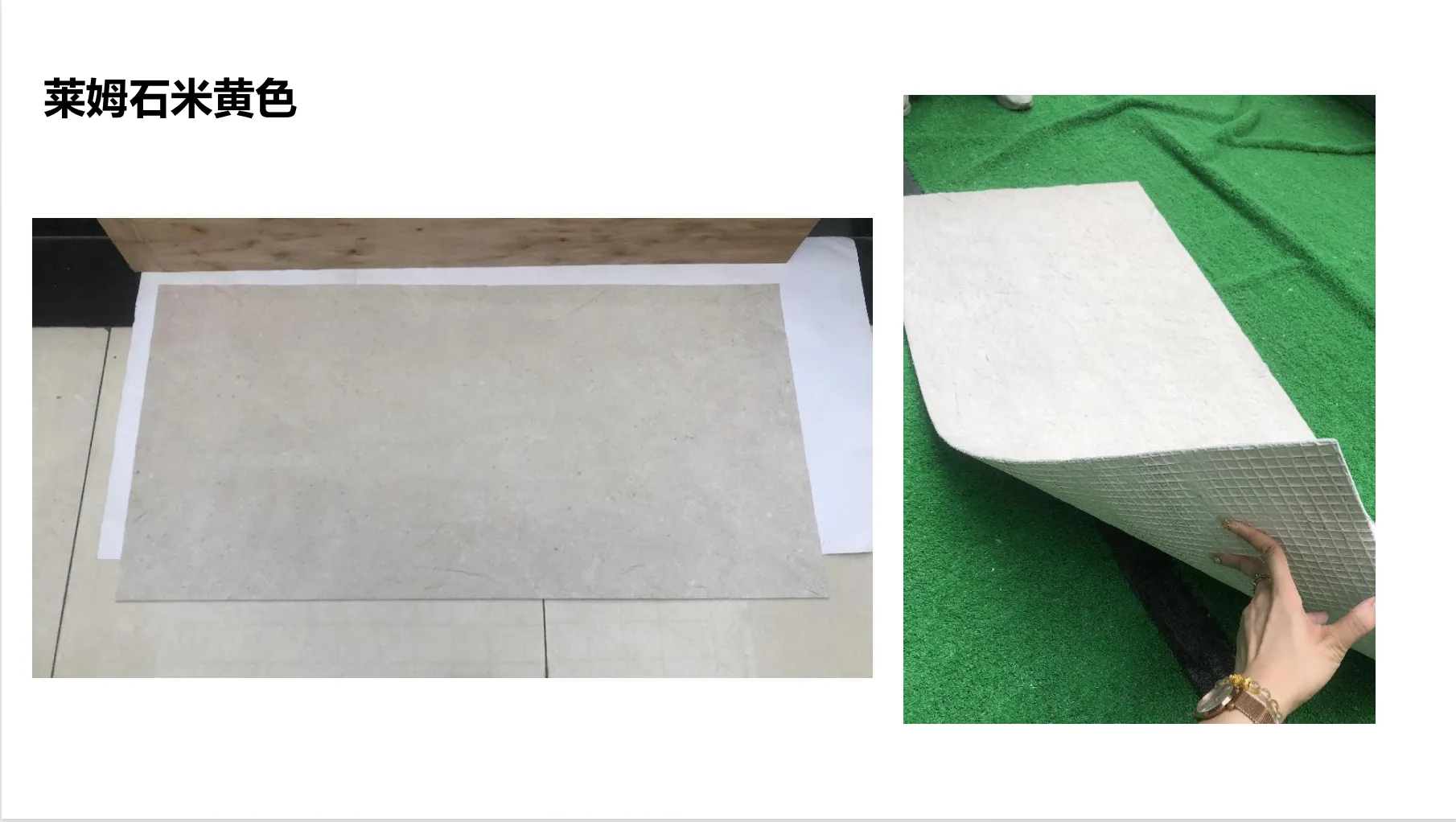
In the world of architecture, every line drawn, every material chosen, and every texture selected tells a story. But for architects, the greatest challenge often isn't creating that story—it's making sure clients, contractors, and even fellow designers can see it too. Enter lime stone real photos: more than just snapshots, these images are powerful tools that bridge the gap between abstract design and tangible reality. Let's dive into why these photos matter, how they transform the design process, and why they've become indispensable for architects aiming to turn vision into buildings that breathe.
Ask any architect about their biggest frustration, and you'll likely hear some version of the same complaint: "Clients just can't visualize it." For decades, the industry has relied on a patchwork of tools to solve this problem: tiny stone samples the size of a postcard, glossy renderings that look more like fantasy than reality, and 3D models that struggle to capture the subtleties of light and texture. But here's the truth: a 2x2 inch lime stone (beige) sample can't convey how sunlight will dance across a 30-foot lobby wall. A rendering might show the color, but it can't replicate the feel of the stone's surface—whether it's rough to the touch, with tiny pits that catch dust, or smooth enough to reflect the lobby chandelier.
This gap isn't just about aesthetics; it's about trust. When a client approves a design based on a rendering that later looks nothing like the finished material, relationships fray. When a contractor misinterprets a sample and installs lime stone with a polished finish instead of the honed texture the architect specified, budgets balloon. And when a designer can't articulate how travertine (starry blue) will complement mcm flexible stone accents in a retail space, opportunities for innovation are lost. The visualization gap isn't just a creative hurdle—it's a business risk.
Let's start with the obvious: samples are small. A lime stone (beige) sample might fit in your palm, but the actual wall it represents will span meters. That small sample can't show you how the stone's color shifts when hit by morning vs. afternoon light, or how its natural veining patterns repeat (or don't) across a large surface. Renderings, on the other hand, are often over-saturated or overly uniform. Software can't yet replicate the organic inconsistencies that make natural stone beautiful—the slight variations in hue, the randomness of a fossil embedded in lime stone, or the way mcm flexible stone's flexibility allows it to wrap around curved surfaces without cracking. Renderings are perfect for showing layout, but they fail at the details that make a space feel human.
Real photos, though? They don't lie. A high-resolution image of lime stone taken in natural light, from multiple angles, and at full scale, captures all those nuances. It shows the way the stone's beige tones warm up in direct sunlight and cool down in shade. It highlights the texture—whether it's the smooth, almost buttery finish of polished lime stone or the rough, tactile surface of a split-faced variety. And when paired with other materials like travertine (starry red) or wood grain board, real photos let architects and clients see how colors and textures interact in a way that samples or renderings never could.
Take, for example, a recent project where an architect was designing a boutique hotel lobby. The client wanted a "warm, earthy feel" but couldn't decide between lime stone (beige) and a darker travertine (vintage black). The architect ordered samples of both, but the client struggled to imagine them at scale. Then, the architect shared real photos: one of a lime stone wall in a similar hotel, bathed in afternoon light, paired with wooden accents; another of travertine (vintage black) in a restaurant, where its dark tones made the space feel intimate. The client chose the lime stone immediately—not because the sample was better, but because the photo showed context . It showed how the stone would live in the space, how it would interact with light and other materials, and how it would make guests feel.
Every design starts with a spark. For many architects, that spark comes from nature, travel, or even other buildings. But how do you translate the feeling of a sunlit canyon (with its layers of stone and shifting shadows) into a hotel facade? Lime stone real photos act as a bridge between inspiration and concept. An architect might stumble upon a photo of lime stone cliffs in Italy, with their weathered texture and warm beige hues, and suddenly see how that same texture could work on a commercial building's exterior. The photo doesn't just show the stone—it captures the mood, the light, and the way the material interacts with its environment. That mood becomes the foundation of the design.
Without real photos, this process is slower and less precise. An architect might describe the texture as "rough, with visible grain," but words are subjective. A photo, though, is objective. It shows exactly what "rough" means—whether it's tiny pits, deep grooves, or a surface that looks like it was carved by wind. This clarity speeds up the conceptual phase, ensuring the entire design team is on the same page from day one.
Clients aren't architects. They don't speak the language of elevations, sections, or material specifications. They speak the language of feeling: "Will this make the space feel welcoming?" "Does this stone look expensive enough for our brand?" "Will it age well over time?" Answering these questions with samples or renderings often leads to follow-up questions: "But what if it's too light?" "What if the texture is too rough?" Real photos eliminate that doubt.
Imagine a client who's hesitant about using lime stone (beige) for their office lobby. They worry it will look "too plain" or "like a hospital." Now, show them a real photo of a lime stone lobby with integrated lighting, where the beige tones complement the fair-faced concrete floors and the mcm flexible stone accents add subtle contrast. The photo shows the space in use: people walking across it, sunlight streaming through windows, shadows creating depth. Suddenly, "plain" becomes "timeless," and "hospital-like" becomes "serene." The client doesn't just see the stone—they see their vision come to life. And when clients see their vision, they approve designs faster and with more confidence.
Architects rarely choose materials in a vacuum. A lobby might feature lime stone walls, travertine (starry blue) accents, and wood grain board ceilings. Each material has to work with the others, not against them. But comparing samples of lime stone, travertine, and wood grain board is like comparing paint swatches in a dark room—you can see the colors, but not how they'll look together in natural light.
Real photos solve this by showing materials in context. An architect can pull up photos of lime stone (beige) paired with travertine (starry blue) in a previous project, or wood grain board next to lime stone in a residential space. These photos show how the colors interact—whether the blue in the travertine makes the lime stone look warmer or cooler, or whether the wood tones complement the beige. They also highlight potential issues: maybe the lime stone's texture clashes with the smoothness of the wood grain board, or the travertine's starry pattern is too busy next to the lime stone's simplicity. By seeing these interactions in photos, architects can make more informed choices, avoiding costly mistakes during construction.
Even the best designs can go off the rails during construction. A contractor might misinterpret a specification, using a polished lime stone when the architect wanted honed, or installing the stone with the wrong orientation (showing the smooth side instead of the textured one). When this happens, the result is a space that looks nothing like the design—and fixing it means delays and extra costs.
Real photos act as a quality control tool during construction. The architect can share photos of the desired lime stone texture, color, and installation method with the contractor, who can then reference them on-site. If the stone delivered doesn't match the photo, the issue is caught early. If the installer is laying the stone incorrectly, the photo provides a clear reference for correction. This not only ensures the final space matches the design but also reduces friction between architects, contractors, and clients. Everyone is working from the same visual playbook.
A building's story doesn't end when the last nail is hammered. Architects often use completed projects as case studies, sharing their work with future clients or publishing it in design magazines. Real photos of lime stone (and other materials) become part of that story. They show how the stone aged over time, how it held up to foot traffic or weather, and how it continued to interact with light and other materials. These photos become a resource for other architects, inspiring new designs and proving the value of thoughtful material selection.
In 2023, a team of architects was tasked with renovating a historic retail space in downtown Chicago. The client wanted to preserve the building's original character while updating it with modern materials. The design called for lime stone (beige) on the exterior facade, paired with mcm flexible stone accents and wood line details. However, the client was hesitant: they worried the lime stone would make the building look "too new," clashing with its historic brickwork.
The architect's solution? Real photos. They compiled a portfolio of images: lime stone (beige) facades on other historic buildings, showing how the stone's warm tones complemented brick; close-ups of the stone's texture, highlighting its natural pits and veining (which echoed the brick's roughness); and photos of the stone in different lighting conditions, from dawn to dusk. They also included photos of the mcm flexible stone accents, showing how their flexibility allowed them to follow the building's curved cornices without compromising the historic design.
The client was sold. "The photos didn't just show me the stone—they showed me how it would belong ," they later said. During construction, the contractor referenced the photos to ensure the lime stone was installed with the correct texture and orientation. The finished building won a local design award, with judges praising how "the lime stone facade respects the building's past while embracing its future." None of this would have been possible without real photos that turned doubt into confidence.
To truly understand the value of lime stone real photos, it helps to compare them to other visualization tools architects commonly use. Below is a breakdown of how they stack up:
| Visualization Method | Pros | Cons | Best For |
|---|---|---|---|
| Physical Samples | Tangible (can touch/feel texture); shows color accurately in hand. | Too small to show scale; doesn't capture light interaction; hard to compare with other materials. | Initial material screening; texture testing. |
| 3D Renderings | Shows layout and spatial relationships; can be customized with lighting. | Often oversaturated; struggles with texture detail; can look artificial. | Conceptual layouts; client presentations (when paired with photos). |
| Lime Stone Real Photos | Captures scale, texture, and light interaction; shows material in context; builds client confidence. | Requires access to high-quality images; may not show custom colors (if not photographed). | Material selection; client approvals; construction oversight; post-project documentation. |
| Virtual Reality (VR) | Immersive; allows clients to "walk through" spaces. | Expensive; texture and color accuracy still limited; requires technical setup. | Large-scale projects; high-end clients willing to invest in tech. |
As the table shows, no single tool is perfect, but real photos offer a unique combination of accuracy, context, and accessibility that makes them indispensable. They're not a replacement for samples or renderings—they're a complement. When used together, these tools create a visualization process that's both precise and persuasive.
As technology advances, some might assume that renderings or VR will replace real photos. But the opposite is happening: architects are relying more than ever on high-quality material photography. Why? Because as clients become more design-savvy, they demand authenticity. They don't want to see a "perfect" rendering—they want to see the real thing. They want to know that the lime stone (beige) on their building will look as good on a cloudy day as it does in a photo, and that the travertine (starry orange) accents will age gracefully, developing a patina that adds character over time.
Material suppliers are catching on, too. Companies like MCM (which specializes in flexible stone and big slab board series) now offer extensive photo libraries of their products, taken in real-world settings. These libraries include not just lime stone, but also materials like lunar peak silvery, foamed aluminium alloy board (vintage gold), and even gradient color rammed earth board. Architects can browse these photos, download them, and integrate them into presentations—saving time and ensuring accuracy.
Looking ahead, we'll likely see even more innovation in material photography: 360-degree images that let clients "explore" a stone wall from all angles, time-lapse photos that show how materials change with light and weather, and AI-enhanced photos that let architects "test" different materials in a space before construction. But no matter how advanced the technology gets, the core value of real photos will remain: they connect people to materials, and materials to spaces, in a way that feels honest and human.
Architecture is more than just buildings—it's about creating spaces that inspire, function, and tell stories. To do that, architects need tools that bridge the gap between vision and reality. Lime stone real photos are more than just tools, though—they're storytellers. They show clients not just what a material is, but what it can be. They help contractors build with confidence, knowing they're replicating the architect's vision. And they remind us all that the beauty of architecture lies in the details—the way light hits a lime stone wall, the texture of a surface under our hands, the way materials work together to create something greater than the sum of their parts.
So the next time you're in a design meeting, flipping through samples or staring at a rendering, ask yourself: Would this conversation be easier with a real photo? The answer, more often than not, is yes. Because in architecture, as in life, seeing isn't just believing—it's creating.
Recommend Products












