
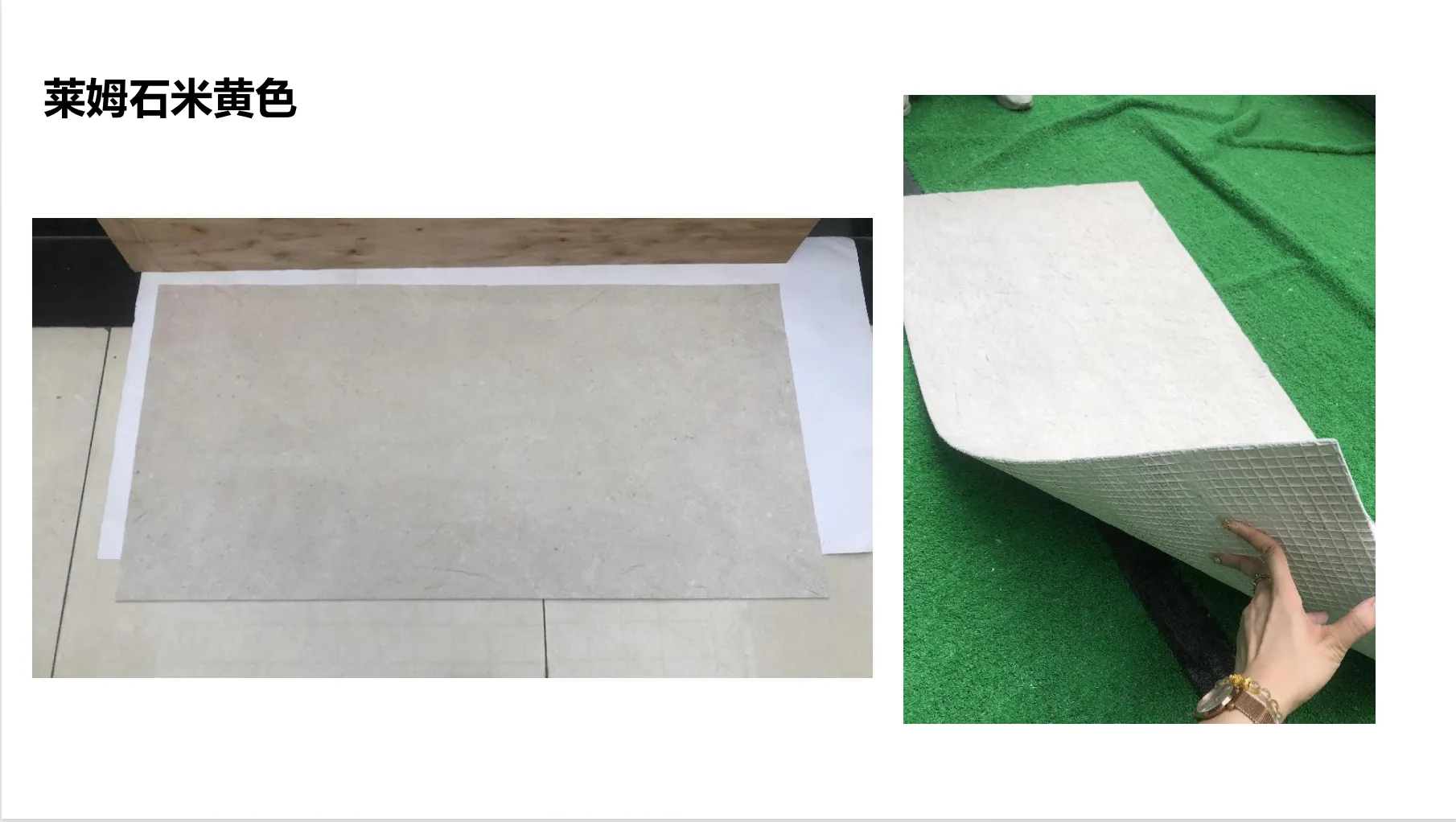
Walk into any modern sustainable building today, and you'll likely feel it before you see it—the warmth of a space that doesn't just exist, but breathes. Behind that feeling often lies a careful choice of materials: ones that honor the planet, age gracefully, and tell a story. In the world of green building materials, few have risen to prominence quite like lime stone(beige) . Its soft, earthy tones and subtle textures have made it a favorite for architects aiming to blend aesthetics with eco-consciousness. But here's the thing: choosing the right material is only half the battle. To truly align with sustainable goals, the entire journey—from design to construction—needs clarity. That's where real photos come in.
Imagine an architect sitting with a client, trying to describe the difference between rough granite stone (medium grey) and lime stone(beige) without visual aids. Words like "porous" or "matte" can only go so far. Physical samples? They're heavy, resource-intensive to transport, and often fail to capture the full range of a stone's natural variation. Real photos, though—they bridge that gap. They let clients see how lime stone(beige) catches the light at dawn, how its surface interacts with moisture, or how it complements other materials like fair-faced concrete in a wall panel. In doing so, they reduce guesswork, minimize waste from misordered materials, and keep projects on track—all while keeping sustainability at the forefront.
Before diving into why real photos matter, let's take a moment to appreciate lime stone(beige) itself. This sedimentary rock forms over millions of years from the accumulation of marine organisms, making it a product of nature's own slow, sustainable processes. Unlike synthetic materials that rely on fossil fuels, limestone requires minimal processing—quarrying, cutting, and finishing with low-energy methods. Its porous structure even helps regulate humidity, reducing the need for energy-guzzling dehumidifiers in buildings. And when a structure reaches the end of its life? Limestone can be crushed and reused as aggregate, closing the loop on waste.
But what truly sets lime stone(beige) apart is its versatility. It works as a cladding for commercial facades, a flooring material in homes, or even as a decorative element in outdoor spaces. Its neutral palette—think soft creams, warm taupes, and gentle beiges—complements both modern and traditional designs. Architects often rave about how it "ages like fine wine": small scratches or weathering only add character, eliminating the need for frequent replacements. In a world where sustainability is as much about longevity as it is about initial impact, that's a game-changer.
Sustainability isn't just about choosing eco-friendly materials; it's about efficiency. Every misstep in the design phase—ordering too much material, choosing a stone that doesn't perform as expected—wastes resources, time, and money. Real photos of lime stone(beige) (and other materials like travertine (starry green) or muretto stone (light grey) ) act as a truth-teller, ensuring everyone involved is on the same page.
Take, for example, a recent project in Barcelona where the design team initially specified fair-faced concrete for the exterior. The client, however, had envisioned something softer. By sharing high-resolution real photos of lime stone(beige) panels—close-ups of their texture, shots of how they looked under different lighting—the architect was able to pivot the design without a single physical sample. The result? A 30% reduction in material waste (no more shipping and discarding concrete samples) and a client who felt confident in their choice. "It's not just about saving time," says Maria Lopez, the project's lead architect. "It's about respecting the planet by making intentional decisions."
Real photos also play a critical role in education. Many clients new to sustainable building don't realize that "natural" doesn't mean "low-maintenance." A photo of lime stone(beige) showing its natural pores can spark a conversation about sealing needs, preventing future disappointment (and unnecessary repairs). Similarly, comparing photos of lime stone(beige) with epoch stone (a durable, engineered alternative) helps teams weigh trade-offs: Is the slightly higher cost of limestone offset by its lower environmental impact? Photos make those abstract questions tangible.
Sustainability in construction isn't confined to the building site—it starts at the source. When architects and contractors can view real photos of lime stone(beige) quarries, they can assess whether the supplier adheres to responsible mining practices. Does the stone come from a quarry that reclaims land post-extraction? Are workers paid fairly? These details matter, and photos (paired with transparency reports) help verify them. A photo of a quarry with overgrown edges or polluted runoff is a red flag; one showing replanted trees and clean water is a sign of commitment.
Even during transportation, real photos streamline the process. A logistics team can use photos of lime stone(beige) slabs to plan loading, ensuring no space is wasted on trucks—cutting down on fuel use and emissions. On-site, construction crews can reference photos to confirm they've received the correct batch, avoiding delays that lead to idle machinery (another sustainability culprit). In short, real photos turn the supply chain from a black box into a transparent, collaborative process.
Let's zoom in on a project that brings this all to life: the GreenHaven Community Center in Portland, Oregon. The goal was to build a space that served the neighborhood while achieving LEED Platinum certification. The design team had narrowed their exterior cladding options to three: lime stone(beige) , travertine (vintage gold) , and fair-faced concrete . The problem? The community board, made up of local residents with no background in construction, was split. Some wanted something "modern" (leaning toward concrete), others wanted "natural" (pulling for travertine or limestone).
Instead of ordering samples, the architect compiled a digital portfolio of real photos. There were close-ups of lime stone(beige) showing its fossilized shell fragments (a hit with the kids in the community). There were shots of travertine (vintage gold) in direct sunlight, highlighting its metallic sheen (which some worried would be too flashy). And there were photos of fair-faced concrete walls after 10 years of weathering, showing cracks that would require maintenance. The kicker? A side-by-side photo comparison of the three materials' carbon footprints, with lime stone(beige) coming out on top (thanks to its low processing needs).
The result? The community voted unanimously for lime stone(beige) . "Seeing the photos made it real," says local resident and board member James Chen. "We could picture our kids running their hands over that stone, or seniors sitting on the patio, and we knew it was the right choice—not just for the planet, but for our community's future." The project was completed under budget (no wasted samples!) and on time, with the limestone walls now serving as a backdrop for everything from farmers' markets to yoga classes.
| Material | Carbon Footprint (kg CO2/m²) | Maintenance Needs | End-of-Life recyclability | Best For |
|---|---|---|---|---|
| Lime stone(beige) | 8-12 | Low (seal every 5-7 years) | High (crushed for aggregate) | Warm, humid climates; community spaces |
| Fair-faced concrete | 25-30 | Medium (repairs for cracks) | Medium (recycled as base material) | Industrial, high-traffic areas |
| Travertine (vintage gold) | 15-18 | Medium (seal every 3-5 years) | High (repolished or crushed) | Luxury residential, accent walls |
| Rough granite stone (medium grey) | 20-22 | Low (virtually no sealing) | Medium (crushed for aggregate) | Outdoor pathways, high-wear floors |
This table, paired with real photos of each material in use, becomes a powerful tool for decision-making. For the GreenHaven project, it was clear: lime stone(beige) balanced low environmental impact with the community's desire for warmth.
As technology evolves, so too will the role of real photos. Imagine 360-degree virtual tours of lime stone(beige) quarries, or AI-powered tools that analyze photos to predict how a stone will age over 50 years. Already, some companies are using drone photos to monitor quarry rehabilitation, giving clients real-time updates on sustainability efforts. The key, though, will always be authenticity. A filtered or doctored photo defeats the purpose; sustainability thrives on truth.
For architects, builders, and clients alike, the message is clear: lime stone(beige) and other natural materials are more than just building blocks—they're partners in creating a greener future. And real photos? They're the bridge that turns that partnership into reality. They reduce waste, foster transparency, and ensure that every choice aligns with the goal we all share: leaving the planet better than we found it.
So the next time you walk into a sustainable building and feel that intangible warmth, take a closer look at the walls. Chances are, there's a lime stone(beige) slab there, its story told not just through its texture, but through the real photos that helped bring it to life. And in that story, you'll find the heart of sustainable construction: intention, clarity, and respect for the world around us.
Recommend Products












