
When the sun sets, a city's architecture undergoes a breathtaking transformation. The solid forms of the day dissolve into a new reality sculpted by light. This nocturnal identity is where a building truly speaks, revealing a character and a soul that daylight often conceals. It's in this interplay of shadow and illumination that true architectural mastery is displayed, turning a simple structure into a landmark.
For decades, architects and designers have chased the perfect canvas for this nightly performance. A surface that doesn't just reflect light, but interacts with it, absorbs it, and shapes it. Enter Lunar Peak Black, a revolutionary finish from COLORIA GROUP's advanced MCM material collection. It's far more than a simple coat of black paint; it's a meticulously engineered surface designed to be a dynamic partner to artificial lighting, unlocking a new dimension of nighttime aesthetics. This is not about flooding a building with light, but about painting with it, using the deep, rich void of Lunar Peak Black as the ultimate backdrop. It's about creating drama, elegance, and an unforgettable presence that lingers long after dark.
To truly appreciate what makes Lunar Peak Black so special, we first need to understand the material it's born from: MCM, or Modified Cementitious Material. Think of it as the next evolution in building cladding. Developed by COLORIA GROUP through years of research, MCM is a composite material primarily made from natural minerals, clays, and powders. Through a unique, low-temperature firing process, these elements are transformed into a material that is incredibly versatile. It's lightweight, reducing structural load; it's flexible, allowing it to wrap around curves and complex shapes; and it's remarkably durable, standing up to the harshest weather conditions. Crucially, its production process is environmentally friendly, consuming far less energy than traditional ceramics or stone quarrying.
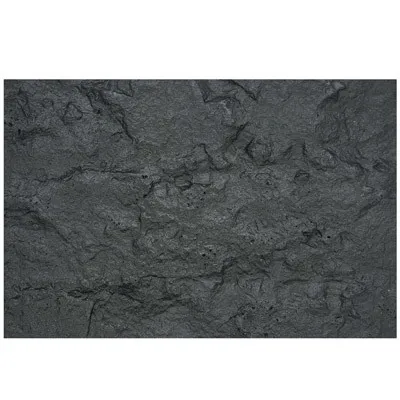
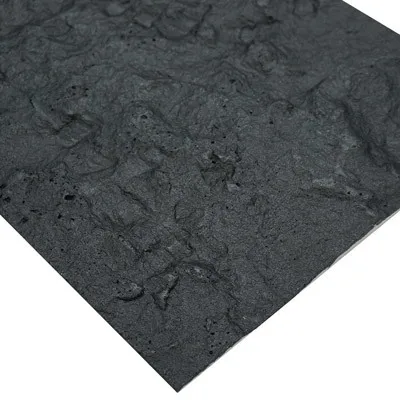
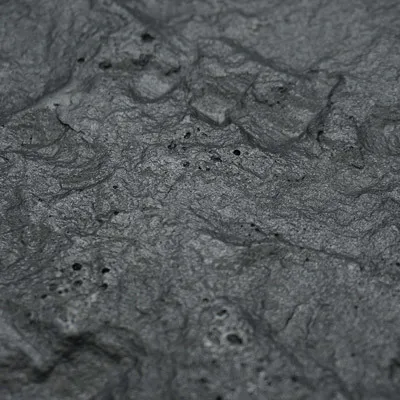
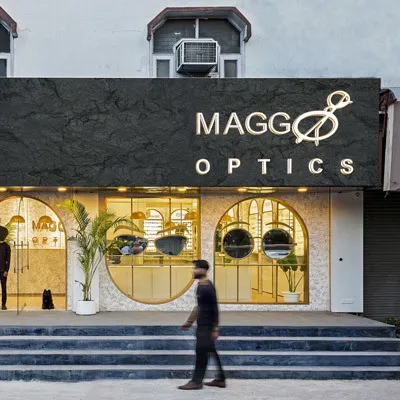
Lunar Peak Black is the pinnacle of this material science, applied as a specific finish within the MCM family. So, what exactly is it? It's a deep, non-reflective matte black that seems to drink in the light. But look closer, and you'll see it's not a flat, lifeless surface. Embedded within the material are microscopic crystalline particles. These particles are not glittery or reflective in a conventional sense. Instead, they possess a unique quality: they catch and hold light at a sub-perceptual level, creating an almost imperceptible 'glow from within' under direct illumination. This prevents the surface from looking like a flat, painted black and instead gives it a profound depth, reminiscent of a clear, moonless night sky.
The texture is another critical component. The standard Lunar Peak Black finish has a subtle, velvety micro-texture. It's almost like the surface of honed slate or fine-grain leather. This texture is key to its interaction with light, especially when light is cast across its surface at a low angle. Instead of a harsh glare, you get a soft diffusion of light and shadow that traces the material's surface, revealing its tactile quality even from a distance.
COLORIA GROUP offers this phenomenal finish across several of its product lines to give architects maximum design freedom. For grand, imposing structures that demand a seamless, monolithic appearance, it's available in the **MCM Big Slab Board Series**. These large-format panels minimize joint lines, creating vast, uninterrupted black canvases that can make a skyscraper or a museum appear as if it were carved from a single block of obsidian. The sheer scale and uniformity achievable with these boards provide a powerful foundation for any nighttime lighting scheme.
Light and shadow are the oldest tools of architecture. They dictate our perception of space, volume, and texture. In the daytime, the sun's movement creates a slow, predictable dance of shadows that define a building's form. At night, however, the architect takes control. With artificial lighting, they become the sun, choosing what to reveal and what to conceal, crafting a very specific emotional response.
This is where the choice of facade material becomes paramount. A light-colored, reflective surface acts like a movie screen—it bounces light back, illuminating the building and its surroundings. This is useful for safety and general visibility. A dark, absorbent surface like Lunar Peak Black, however, acts like a stage. It absorbs stray, ambient light, creating a zone of profound darkness that makes any intentional lighting appear more dramatic, more focused, and more vibrant. It's the difference between a brightly lit cafeteria and a theatrically lit stage; one is for seeing, the other is for feeling.
"By providing a deep, non-reflective canvas, Lunar Peak Black allows light to be the 'subject' rather than just the 'illuminator.' The building itself becomes a medium for an entirely new artistic expression after dark."
Using a dark facade allows for the creation of "negative space" in the nighttime cityscape. A building clad in Lunar Peak Black can recede into the darkness, making its illuminated windows or highlighted features float with an ethereal quality. This selective revelation can generate a sense of mystery and sophistication. Instead of shouting for attention with overall brightness, the building whispers, drawing the viewer in with carefully composed points of interest. This approach respects the darkness of the night, contributing to a more nuanced and less visually cluttered urban environment, and can even support "dark sky" initiatives by minimizing upward light spill and general glare. The matte finish of Lunar Peak Black is instrumental in this, as it prevents the harsh reflections that contribute to light pollution.
The theoretical advantages of Lunar Peak Black are compelling, but its true potential is unlocked through the practical application of specific lighting techniques. Each method interacts with its unique surface in a different way, producing a distinct aesthetic effect. Let's explore the most effective strategies.
Grazing involves placing light fixtures very close to the facade and directing the beam parallel to the surface, either from above (down-grazing) or below (up-grazing). This is arguably the most dramatic technique for Lunar Peak Black. The tight angle of the light catches the peaks of the material's micro-texture while casting elongated micro-shadows in the valleys. This transforms the flat wall into a deeply textured, dynamic surface. The effect is a rich tapestry of subtle highlights and deep shadows that shifts as the viewer moves. It emphasizes the quality and tactile nature of the material, creating a sense of luxury and fine craftsmanship. It's perfect for entranceways, feature walls, and columns where you want to make a powerful, up-close impression.
Wall washing is the opposite of grazing. Here, fixtures are placed further from the wall to cast a wide, even sheet of light across the surface. On a conventional material, this creates a flat, bright plane. On Lunar Peak Black, the effect is magical. Because the surface is so absorbent and non-reflective, it doesn't bounce the light back. Instead, it soaks it up, resulting in a soft, even glow that seems to emanate from the material itself. The facade becomes a smooth, velvety canvas of pure, deep color. This technique is ideal for making a building appear monumental and solid. It can create a serene, calming effect, turning a large wall into a tranquil, contemplative surface against the busy backdrop of the city.
This is where the "negative space" created by the dark facade truly shines. Accent lighting uses narrow-beam spotlights to pick out specific details: the elegant line of a roof, the frame of a window, a structural column, or a unique architectural flourish. Against the deep black of the facade, these illuminated elements appear to float, detached from the main structure. This creates a powerful sense of visual hierarchy and composition. It's here that the versatility of COLORIA GROUP's offerings can be combined. Imagine a large facade constructed from the **MCM Big Slab Board Series** in Lunar Peak Black. Inset into this monolithic wall could be a bespoke sculptural element, a company logo, or an intricate pattern created with the **MCM 3D Printing Series**. By using focused accent lights, only these 3D-printed details are illuminated at night, creating a stunning, high-contrast feature that is completely hidden during the day and revealed as a surprise after sunset. This ability to print custom, three-dimensional designs and integrate them seamlessly into a facade opens up endless creative possibilities for branded environments and public art.
A black surface is the perfect canvas for colored light. Unlike a white or colored wall that will tint and desaturate the projected light, Lunar Peak Black provides a neutral, dark base. This means that when you project colored light onto it, the colors appear incredibly rich, pure, and saturated. An RGBW (Red, Green, Blue, White) lighting system can be used to wash the facade in dynamic, slowly changing colors, creating a mood that can evolve throughout the night or change for special events. The deep black background prevents colors from looking washed out, making them pop with incredible vibrancy. The effect is less about illuminating the building and more about turning the building itself into a low-resolution light installation—a subtle, sophisticated, and captivating spectacle.
| Lighting Technique | Effect on Lunar Peak Black | Best For |
|---|---|---|
| Grazing | Creates strong highlights and shadows, emphasizing the micro-texture and producing a deep, tactile appearance. | Feature walls, columns, entranceways, surfaces meant to be viewed up-close. |
| Wall Washing | Produces a smooth, even, velvety glow. The surface appears as a solid, monumental void of deep color. | Large, uninterrupted facades; creating a serene and minimalist aesthetic. |
| Accent Lighting | Makes illuminated features (windows, logos, 3D elements) pop and appear to float against the dark background. | Highlighting specific architectural details, creating visual hierarchy, revealing custom patterns. |
| Colored Lighting (RGBW) | Renders projected colors with extreme saturation and purity, turning the facade into a dynamic canvas. | Creating ambient moods, event-specific lighting, architectural-scale media displays. |
Let's visualize how Lunar Peak Black could transform different architectural typologies, showcasing the synergy between material and light.
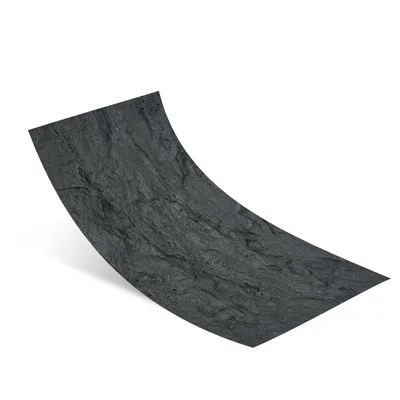
Picture the entrance to a five-star boutique hotel. The architect wants to create an immediate sense of exclusive luxury and drama. The design features a sweeping, curved porte-cochère supported by large, round columns. This is a perfect application for COLORIA GROUP's **MCM Flexible Stone** in the Lunar Peak Black finish. This product combines the deep, rich appearance of our feature color with incredible flexibility, allowing it to be wrapped seamlessly around the curved columns without any awkward cuts or joints. At night, narrow-beam uplights are placed at the base of each column. The light grazes up the curved surface, catching the subtle texture and creating a beautiful play of light and shadow that accentuates their roundness and height. The result is an entrance that feels both monumental and intimately detailed, welcoming guests with a theatrical and unforgettable first impression. The surrounding walls are left dark, focusing all attention on the glowing columns and the brightly lit hotel lobby beyond.
A new contemporary art museum aims for an iconic, minimalist statement. Its main facade is a vast, imposing rectangle, intended to be a piece of art in itself. The architect specifies the **MCM Big Slab Board Series** in Lunar Peak Black to achieve this vision. The large panels create a near-seamless, monolithic surface that, during the day, is a powerful, silent form. At night, the strategy is one of subtlety. A soft, even wall wash from concealed fixtures bathes the entire facade in a low level of neutral white light. It doesn't look 'lit up'; it simply glows with a quiet, dignified energy, like a block of unpolished jet. However, flanking the main entrance is a towering vertical section created using the **MCM 3D Printing Series**. This section features a deep, abstract geometric pattern, also in Lunar Peak Black. A series of precision grazing lights are aimed only at this textured strip. The light dissects the 3D pattern, creating a complex, intricate cascade of highlights and shadows. This single, dramatic gesture provides a focal point and hints at the creativity housed within the museum, all while maintaining the building's minimalist integrity.
While the aesthetic benefits are clear, choosing Lunar Peak Black is also a statement of environmental responsibility. The underlying MCM technology from COLORIA GROUP is inherently sustainable. Its raw materials are abundant natural soils and minerals, and its low-energy production process significantly reduces its carbon footprint compared to traditional cladding like fired terracotta, metal panels, or quarried stone. The material is lightweight, which means less energy is expended on transportation and a less substantial support structure is required, further reducing the overall material consumption of a project.
This sustainable ethos extends to its use in nighttime design. As mentioned, the light-absorbent nature of Lunar Peak Black is a powerful tool in combating light pollution. By allowing for highly targeted and lower-intensity lighting schemes, it reduces upward light spill, glare, and skyglow. This creates a more pleasant urban environment for people and is less disruptive to nocturnal ecosystems. When paired with energy-efficient LED fixtures, a facade clad in Lunar Peak Black can achieve a stunning nighttime identity with a fraction of the energy consumption of a conventionally floodlit building. Its exceptional durability and resistance to fading also mean it requires minimal maintenance and won't need to be replaced for many decades, making it a truly long-term, sustainable investment.
In essence, Lunar Peak Black is more than a design choice; it's a holistic solution that marries breathtaking aesthetics with a deep commitment to performance and planetary well-being.
In conclusion, the night offers a second life to architecture, a chance to tell a different story. COLORIA GROUP's Lunar Peak Black is not just another building material; it's a key that unlocks that narrative. By providing a deep, textured, and light-absorbent canvas, it challenges architects and designers to move beyond mere illumination and to start painting with light itself. It empowers the creation of buildings that are dynamic, emotionally resonant, and environmentally conscious. It is the silent, dark stage upon which the most brilliant architectural performances of the night can unfold.
Recommend Products












