
In the world of modern architecture and construction, the conversation has shifted dramatically. It's no longer just about creating structures that are visually striking or purely functional. Today, the defining challenge—and opportunity—is sustainability. Architects, developers, and builders are increasingly measured by their ability to deliver projects that are not only beautiful and durable but also environmentally responsible. This is where green building certifications like LEED (Leadership in Energy and Environmental Design) and BREEAM (Building Research Establishment Environmental Assessment Method) come into play. They aren't just badges of honor; they are comprehensive frameworks that guide the creation of healthier, more efficient, and resource-conscious buildings.
Achieving these prestigious certifications requires a meticulous approach to every facet of a project, from site selection and energy systems to the very materials used for construction. The choice of materials is particularly critical, as it directly impacts a building's embodied carbon, indoor air quality, waste generation, and overall life cycle performance. The market is flooded with options, but finding a material that ticks all the boxes—aesthetics, performance, and sustainability—can feel like a monumental task. Traditional materials like quarried stone, while beautiful, come with a heavy environmental price tag in terms of extraction, transportation, and processing.
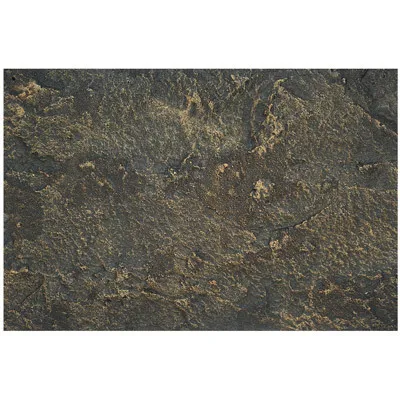
This is the challenge that innovative companies like COLORIA GROUP have embraced. As a one-stop solution provider in the building materials sector, COLORIA GROUP has focused its decades of experience on pioneering materials that answer the call for a greener future. At the heart of this mission is their groundbreaking MCM (Modified Cementitious Material) product line. And within this impressive portfolio, one product stands out as a prime example of this philosophy in action: the Lunar Peak Golden MCM. This article will take a deep dive into how this specific material is not just a stunning finish but a strategic tool for project teams aiming to achieve the highest levels of LEED and BREEAM certification.
We'll explore the nuts and bolts of these green building standards and connect them directly to the tangible, measurable benefits of using COLORIA GROUP's Lunar Peak Golden MCM. From its raw material composition to its performance in a finished building, we'll see how this innovative material is helping to shape the sustainable buildings of tomorrow.
Before we connect the dots to our feature material, it's crucial to understand what these certifications truly represent. They are far more than simple checklists; they are holistic systems for evaluating a building's environmental and human health performance.
LEED, developed by the U.S. Green Building Council (USGBC), is arguably the most recognized green building certification system globally. It provides a framework for healthy, highly efficient, and cost-saving green buildings. LEED certification is a globally recognized symbol of sustainability achievement. The system is organized into several key credit categories, with projects earning points for satisfying specific criteria within each:
Projects are awarded one of four certification levels (Certified, Silver, Gold, or Platinum) based on the total number of points achieved.
BREEAM, which originated in the UK, is the world's longest-established method of assessing, rating, and certifying the sustainability of buildings. Like LEED, it's a comprehensive system that uses a set of established benchmarks to evaluate a building's specification, design, construction, and use. The assessment covers a wide range of categories, which are weighted based on their environmental impact:
Based on the performance against these criteria, a building receives a rating: Pass, Good, Very Good, Excellent, or Outstanding.
Now, let's turn our attention to the solution. What exactly is this material that holds so much promise for green construction? To understand the benefits of Lunar Peak Golden MCM, we first need to understand the technology behind MCM itself.
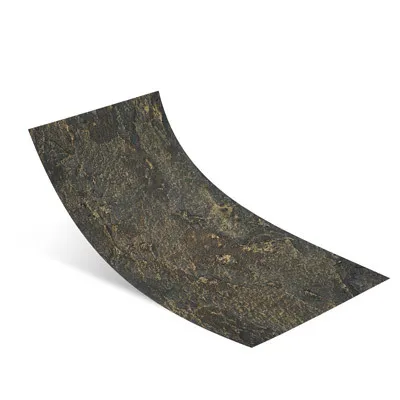
Forget everything you think you know about traditional cement or stone. MCM, or Modified Cementitious Material, is an innovative composite material developed by COLORIA GROUP through extensive research and development. It's crafted from a base of natural raw materials, primarily modified clay and mineral powders, which are abundant and sustainably sourced. Through a unique, low-temperature manufacturing process, these raw materials are transformed into a material that is incredibly versatile. It's lightweight, thin, and remarkably flexible, yet it retains the strength and durability expected of a high-performance building material. It's this unique combination of properties that sets it apart.
Unlike natural stone which must be quarried from the earth in massive, heavy blocks, or ceramic tiles which require firing at extremely high temperatures (over 1200°C), the production of MCM is a low-energy affair. The curing process happens at temperatures below 150°C, drastically reducing the embodied energy and carbon footprint. This makes it one of the most compelling green building materials available today.
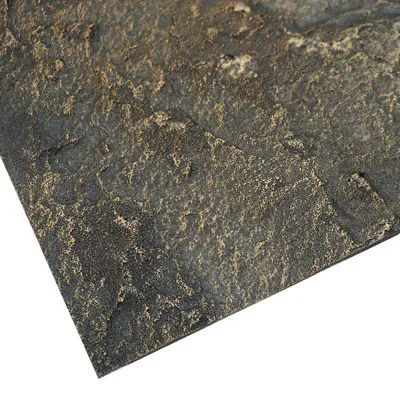
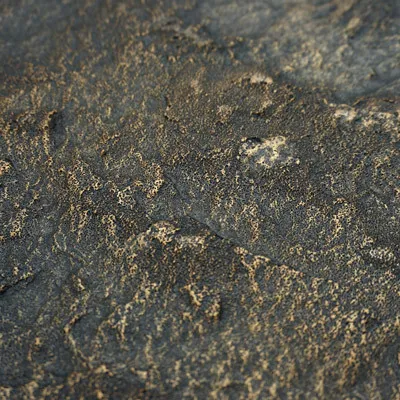
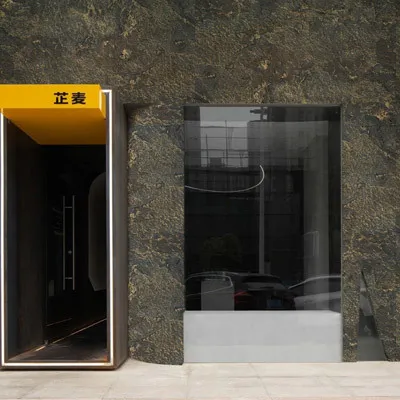
Within COLORIA GROUP's extensive MCM portfolio—which includes the MCM Big Slab Board Series and MCM 3D Printing Series—the Lunar Peak Golden stands out. It's part of the MCM Flexible Stone series, designed to replicate the luxurious and timeless appeal of natural golden-veined marble or quartzite. It captures the intricate patterns and warm, lustrous tones of precious stone, delivering a high-end aesthetic that architects and designers covet.
However, its beauty is more than skin deep. Where a slab of natural "golden peak" stone would be incredibly heavy, brittle, and environmentally costly to extract and transport, the Lunar Peak Golden MCM offers the same visual impact in a sheet that is just 2.5-4mm thick and weighs a fraction of the real thing. This isn't just a cost-saving measure; it's a fundamental shift in how we can achieve luxury aesthetics in a sustainable manner. It proves that green design doesn't mean compromising on visual ambition.
So, how does choosing Lunar Peak Golden MCM for your project translate into actual LEED points? Let's break it down by credit category.
This is where MCM technology truly shines and contributes most significantly to a project's LEED score.
The story is just as compelling when viewed through the lens of BREEAM. The core benefits of MCM technology align perfectly with the principles underpinning BREEAM's assessment categories.
Similar to LEED's MR category, this is a major area of contribution for Lunar Peak Golden MCM.
| Certification & Category | Specific Credit/Issue | How Lunar Peak Golden MCM Contributes |
|---|---|---|
| LEED v4.1 | MR: Building Product Disclosure & Optimization | Made from sustainably sourced raw materials (modified clay); product ingredient transparency (low-toxicity); potential for recycled content. |
| MR: Construction Waste Management | Lightweight and durable (less breakage); custom sizing reduces off-cuts; recyclable scraps. | |
| EQ: Low-Emitting Materials | Inherently low-to-zero VOC emissions, improving indoor air quality. | |
| BREEAM | Mat 01: Life Cycle Impacts | Low embodied energy from low-temperature production; favorable EPD results compared to traditional materials. |
| Mat 03: Responsible Sourcing | Utilizes abundant, responsibly sourced mineral powders, avoiding destructive quarrying. | |
| Hea 02: Indoor Air Quality | Negligible VOC content helps meet strict indoor air quality benchmarks. | |
| Wst 01: Construction Waste Management | Minimizes on-site waste through durability, flexibility, and pre-fabrication potential. |
While achieving points for LEED and BREEAM is a primary driver, the value of choosing a material like Lunar Peak Golden MCM extends far beyond the certification scorecard. It represents a more intelligent and holistic approach to design and construction.
The incredible design freedom is a major factor. Architects are no longer forced to choose between a "green" aesthetic and a high-end luxury look. With MCM technology, they can have both. The material can be curved, bent, and shaped to fit complex architectural forms that would be impossible or prohibitively expensive with natural stone. This opens up a new world of creative possibilities without environmental compromise.
Furthermore, its durability and resistance to fading, fire, and moisture mean a longer lifespan for the building's facade and interior finishes. A material that doesn't need to be frequently repaired or replaced is inherently more sustainable, saving resources and money over the building's entire life. By partnering with a solutions provider like COLORIA GROUP, project teams gain access not just to a product, but to a wealth of expertise in implementing these advanced materials to maximize both aesthetic impact and sustainability goals.
In the final analysis, COLORIA GROUP's Lunar Peak Golden MCM is far more than just another building finish. It is a powerful, multifaceted tool for the modern, sustainability-conscious architect and builder. Its contributions to green building certifications are clear and significant, offering a direct path to earning crucial credits in both the LEED and BREEAM systems.
From its low-impact manufacturing process and responsibly sourced ingredients to its role in reducing construction waste and improving indoor air quality, it addresses the core tenets of sustainable design. By providing the stunning aesthetic of natural stone without the associated environmental baggage, it elegantly resolves the long-standing conflict between luxury and responsibility. For any project team aiming for the pinnacle of green building achievement, specifying a forward-thinking material like Lunar Peak Golden MCM is not just a good choice—it's a strategic one that paves the way for a more beautiful and sustainable built environment.
Recommend Products












