
On a crisp autumn morning in Millfield, a small town nestled between rolling hills, the local elementary school's playground sits empty—temporarily closed, not for repairs, but because the adjacent construction site has spilled debris onto the grass. Nearby, 8-year-old Mia kicks at a crumpled piece of plastic sheeting, her nose wrinkled at the dust in the air. "Why does building have to make such a mess?" she asks her dad, who's picking her up from school. It's a question that lingers in the minds of communities worldwide: as we build and grow, how do we stop leaving a trail of waste in our wake?
Construction waste is a silent crisis. According to the World Green Building Council, the industry is responsible for 30% of global waste, with up to 15% of materials delivered to a site ending up in landfills unused. From shattered tiles to off-cut stone slabs, the cost—environmental and financial—adds up. But what if there was a material that didn't just build better, but built smarter? Enter Marble Concrete Board , a product that's redefining eco-friendly construction by putting waste reduction at its core. Let's dive into how this innovative material is turning building sites from wastelands into examples of sustainability.
In recent years, "green building" has shifted from a buzzword to a necessity. Homeowners, architects, and developers are no longer just asking, "Will this material look good?" but "What impact will it have on the planet?" Traditional options like raw stone or standard concrete often fall short: mining stone disrupts ecosystems, and mixing concrete on-site leads to excess that hardens into waste. That's where Marble Concrete Board comes in—a blend of durability, aesthetics, and eco-conscious engineering that's part of a new wave of green building materials designed to heal, not harm.
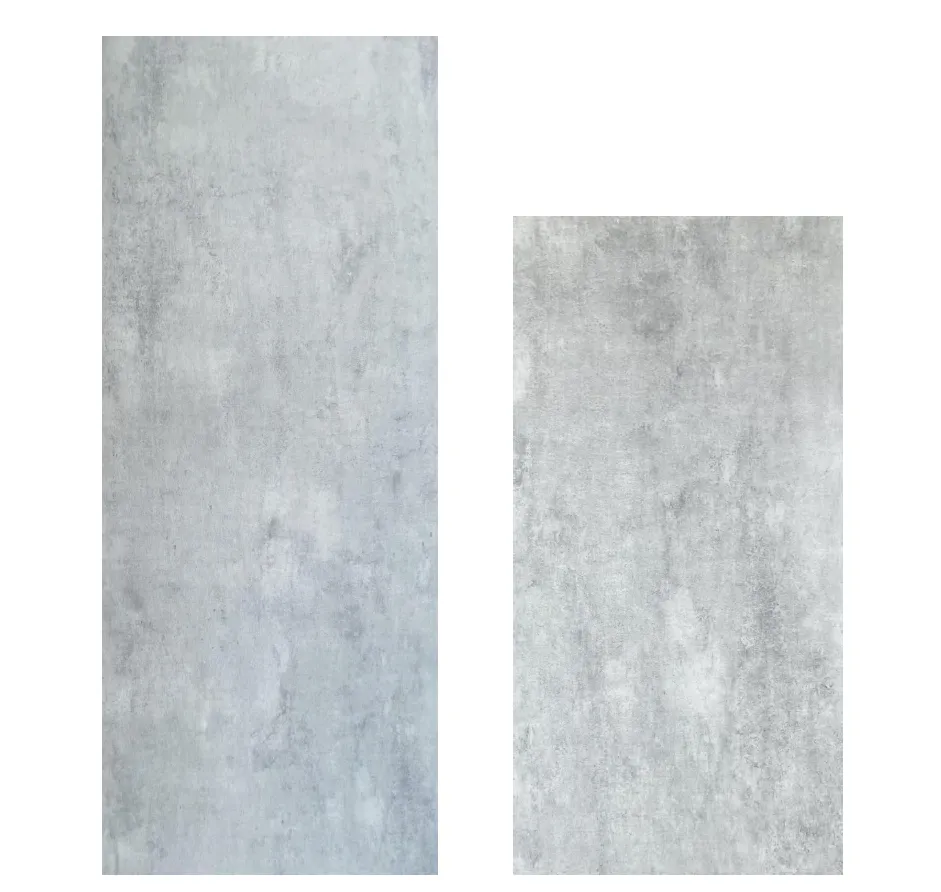
But what exactly is Marble Concrete Board? Imagine the elegance of marble, the strength of concrete, and the precision of modern manufacturing—all rolled into one. Unlike traditional marble, which requires extensive quarrying and cutting (often resulting in 20-30% of the stone being discarded as scrap), Marble Concrete Board is crafted using prefabricated mcm panel systems . These panels are engineered in controlled factory settings, where measurements are precise, materials are optimized, and waste is minimized from the start. It's a small shift in process, but the impact on waste reduction is monumental.
Take it from James, a project manager who switched to Marble Concrete Board three years ago. "On my first big job with traditional travertine, we ordered 10% extra to account for breakage and cutting mistakes—and still ran short because so much cracked during installation," he recalls. "Last month, we used Marble Concrete Board for a hotel lobby. The pre-cut panels arrived labeled with exact measurements, and we had less than 2% waste. The crew was shocked—we didn't even fill a small dumpster."
Waste in construction isn't just about leftover materials; it's a chain reaction. From manufacturing to installation to eventual replacement, every step can contribute to the problem. Marble Concrete Board disrupts that chain. Here's how:
Traditional construction often treats waste as inevitable. When you cut stone or concrete on-site, measurements are approximate, tools are imperfect, and human error leads to missteps. A 1-inch miscalculation on a marble slab means the entire piece is scrap. But prefabricated mcm panel systems change the game. Marble Concrete Board panels are cut by computerized machines in factories, where blueprints are digitized and materials are measured to the millimeter. This precision reduces manufacturing waste by up to 80% compared to traditional stone cutting, according to a 2024 study by the Sustainable Building Institute.
"It's like baking with a recipe vs. winging it," says Elena, a materials engineer who specializes in sustainable construction. "In a factory, we know exactly how much 'dough' we need for each 'cookie'—no extra batter thrown away. On-site, you're always estimating, and estimates lead to excess."
Waste isn't just about what's thrown away during building—it's about what's thrown away years later. Traditional materials like painted drywall or thin stone veneers chip, fade, or waterlog, requiring replacement every 10-15 years. Each replacement cycle means more demolition waste, more manufacturing, and more transportation emissions. Marble Concrete Board, however, is built to last. Its composite structure resists cracks, moisture, and UV damage, with a lifespan of 50+ years. That's decades of avoiding the waste of tear-out and reinstallation.
Consider a commercial building facade. A traditional fair-faced concrete facade might need repairs every 20 years, generating tons of debris. A Marble Concrete Board facade, by contrast, stays intact, reducing long-term waste by up to 60%. "We installed Marble Concrete Board on a restaurant in 2010," says Mark, a maintenance supervisor. "Ten years later, we pressure-washed it, and it looked brand new. No repainting, no patching—just a little soap and water. That's waste we never had to create."
Builders often over-order materials to cover design changes or last-minute aesthetic choices. "What if the client hates the beige? Better order extra gray, just in case," is a common thought process. This "just-in-case" mindset leads to warehouses full of unused materials that end up expired or obsolete. Marble Concrete Board solves this with its versatility. Available in textures mimicking marble, wood, or even flexible stone cladding panels , it adapts to design shifts without requiring new material orders. A single panel can be repurposed from a kitchen backsplash to a bathroom accent wall, cutting down on the "just-in-case" waste.
Sarah, an interior designer, shares: "I once had a client flip-flop between 'modern industrial' and 'rustic chic' halfway through a project. With traditional materials, that would've meant scrapping $5,000 worth of tiles. But with Marble Concrete Board, we just chose a different finish—same panels, new look. The client was thrilled, and we avoided a dumpster full of perfectly good but 'wrong style' materials."
To put the impact in perspective, let's compare traditional building materials with Marble Concrete Board across key stages of a project. The table below, based on data from the Construction Waste Reduction Network, shows average waste percentages for a 1,000 sq. ft. wall installation:
| Stage of Construction | Traditional Materials (e.g., Natural Stone, Standard Concrete) | Marble Concrete Board | Waste Reduction |
|---|---|---|---|
| Manufacturing Waste | 15-20% of raw materials | 2-3% of raw materials | 85-90% |
| On-Site Installation Waste | 10-15% of delivered materials | 1-2% of delivered materials | 87-93% |
| Waste From Replacement (Over 20 Years) | 100% (full replacement) | 0% (no replacement needed) | 100% |
| Total Estimated Waste Reduction | - | - | 70-80% |
These numbers tell a clear story: for every 1,000 sq. ft. project, Marble Concrete Board diverts approximately 2.5 tons of waste from landfills compared to traditional materials. Scale that to a city's worth of construction, and the impact is staggering. In 2023, the city of Portland, Oregon, mandated the use of prefabricated eco-materials like Marble Concrete Board in municipal projects. Within a year, construction waste in the city dropped by 22%—a direct result of materials that prioritize precision and longevity.
Marble Concrete Board isn't just a "green" choice—it's a good choice, period. Its beauty and versatility make it a favorite among architects and homeowners, which in turn drives adoption of sustainable practices. Let's explore how it's changing more than just waste levels:
Gone are the days when "eco-friendly" meant sacrificing style. Marble Concrete Board mimics the look of luxury materials—think veined marble, weathered wood, or even travertine (starry green) —without the environmental cost. Its smooth finish or textured surfaces (like wave panel designs) add depth to spaces, making it a hit in both residential and commercial projects. "Clients used to say, 'I want something sustainable, but not… boring,'" laughs architect Raj. "Now I show them Marble Concrete Board in a lunar peak silvery finish, and they forget it's eco-friendly—it's just stunning ."
Construction waste isn't just an eyesore—it's a health hazard. Dust from demolished materials triggers asthma, and debris attracts pests. Marble Concrete Board reduces on-site cutting, which means less dust in the air. For communities near construction zones, this is life-changing. In Millfield (the town from our opening scene), the elementary school playground reopened six weeks early after the construction site switched to Marble Concrete Board. "The dust settled, the debris was gone, and the kids could play again," says Mia's mom, Lila. "It wasn't just a building project anymore—it was a project that cared about us ."
Waste isn't just bad for the planet—it's bad for budgets. Hauling debris to landfills costs $30-$50 per ton, and excess materials tie up cash flow. Marble Concrete Board's waste reduction translates to real savings. A 2023 survey of contractors found that those using prefabricated eco-materials like Marble Concrete Board saved an average of 12% on project costs, thanks to lower waste disposal fees and reduced material over-ordering. "We used to budget $2,000 for waste removal on a mid-sized home," says contractor Jake. "Now it's $200. That money goes back into better fixtures or lower prices for clients—it's a win-win."
Marble Concrete Board isn't just a product—it's part of a larger shift toward construction that respects the planet. As more builders, architects, and homeowners demand sustainable options, materials like this are pushing the industry to innovate. "Ten years ago, eco-friendly materials were niche," says Elena, the materials engineer. "Now, they're table stakes. Clients ask for waste reports before they ask for color samples. That's how we'll reach net-zero construction waste by 2050—one Marble Concrete Board panel at a time."
And it's not stopping with Marble Concrete Board. The success of mcm project board series (which includes Marble Concrete Board) has spurred development of other low-waste materials, from foamed aluminium alloy board (vintage silver) to bamboo mat board . Each new product builds on the idea that sustainability and functionality can coexist.
Back in Millfield, the construction site is now a community center. Mia and her friends play on the playground daily, and the building's facade—clad in Marble Concrete Board—shines in the sun. "It's pretty," Mia says, tracing a thread pattern in the paneling. "And my dad says it didn't make the ground all yucky. That's cool."
Cool, indeed. Because building shouldn't be about taking from the planet—it should be about building with it. Marble Concrete Board proves that when we prioritize waste reduction, we don't just build better structures; we build better futures.
Construction waste is a problem we've accepted for too long. But as Mia's story shows, it doesn't have to be that way. Marble Concrete Board is more than a material—it's a reminder that innovation and empathy can transform even the most wasteful industries. By prioritizing precision, durability, and design, it reduces waste by up to 80%, protects community health, and saves money. It's not just building smarter; it's building with intention.
So the next time you walk past a construction site, or dream of your own home renovation, ask: What if we built with the planet in mind? With materials like Marble Concrete Board, that future isn't just possible—it's already being built. And for Mia, and kids everywhere, that's the best foundation we can lay.
Recommend Products












