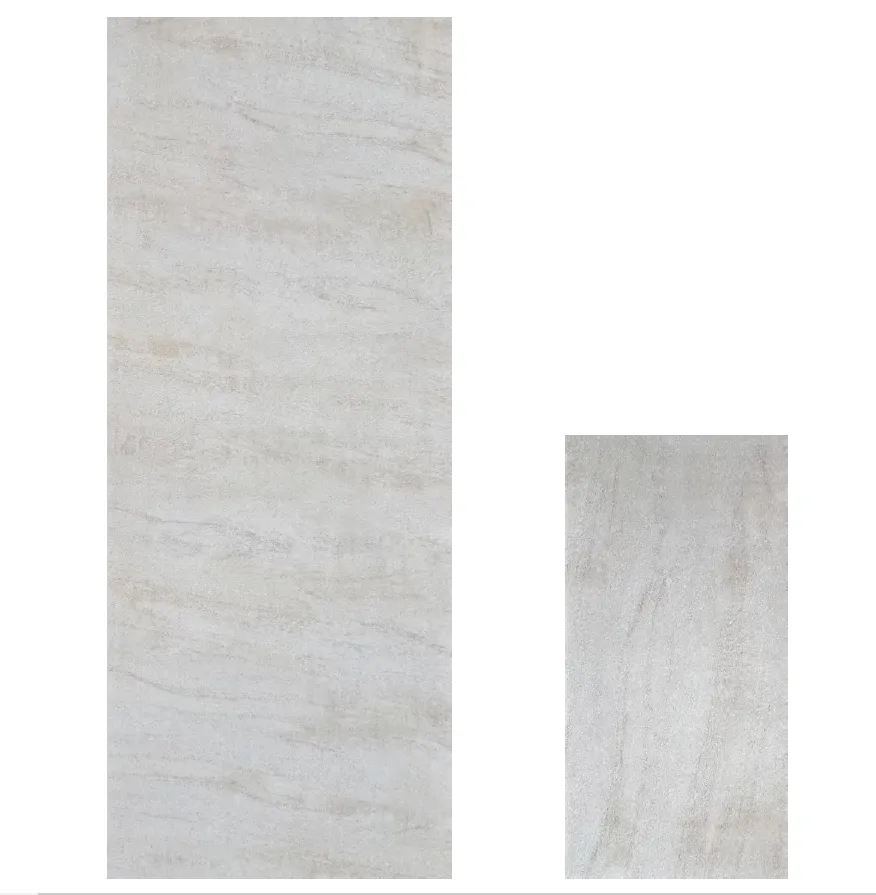
Creating Marble Stream Stone is a dance between art and science—a process that starts with raw materials and ends with a product that feels both handcrafted and high-tech. Here's how it all happens:
Step 1: Material Selection – The Foundation of Quality
The journey begins with choosing the right ingredients. Unlike traditional marble, which is mined from quarries, Marble Stream Stone starts with a blend of natural mineral powders (think calcium carbonate, silica) and recycled polymers. These minerals are sourced from ethical suppliers who prioritize minimal environmental impact—many are byproducts of other industries, giving new life to materials that might otherwise end up in landfills.
The team at MCM tests hundreds of mineral combinations to find the perfect balance of strength, flexibility, and texture. For Marble Stream Stone, they focus on minerals that, when mixed, mimic the density and feel of natural travertine or marble. "It's like baking a cake," jokes Marco, a production supervisor. "Too much of one ingredient, and the texture is off. We tweak ratios until it feels 'right'—not just on paper, but to the touch."
Step 2: Mixing – Where Science Meets Artistry
Once the minerals and polymers are selected, they're mixed in giant, climate-controlled vats. The key here is precision: the mixture must be consistent to ensure every panel of Marble Stream Stone looks and performs the same. Sensors monitor temperature, humidity, and viscosity in real time, adjusting the mix if even a tiny variation is detected.
But this isn't just a mechanical process. To create the signature "stream" effect, colorants and veining agents are added by hand in some batches. These artisans—many with backgrounds in traditional stone carving—use tools similar to paintbrushes to swirl pigments into the mixture, creating patterns that mimic the random, organic flow of water over rock. "No two panels are identical," Elena explains. "That's the beauty of it. We want the material to feel alive, not machine-made."
Step 3: Molding – Shaping the Vision
The mixed material is then poured into molds designed to replicate the texture of natural stone. These molds are 3D-printed using data from laser scans of real marble slabs, capturing every ridge, pit, and vein with microscopic accuracy. MCM's
3D printing series
technology allows for unparalleled detail—even the subtle "pockmarks" in travertine, formed by gas bubbles escaping ancient limestone, are recreated here.
For Marble Stream Stone, the molds are designed to create long, flowing patterns that evoke movement. The material is poured slowly to avoid air bubbles, then pressed gently to ensure it fills every crevice of the mold. This step is critical: any gap or imperfection here would show up in the final product.
Step 4: Curing – Building Strength, Not Just Looks
After molding, the panels enter a curing chamber where temperature and humidity are carefully controlled. Unlike natural stone, which takes millions of years to form, Marble Stream Stone cures in just 24–48 hours. During this time, the polymers bond with the minerals, creating a matrix that's both strong and flexible. "Curing is like letting dough rise," Marco says. "Rush it, and the structure is weak. Take too long, and production lags. We've perfected the timing through years of trial and error."
The result? A panel that can bend up to 30 degrees without cracking—ideal for curved walls or custom designs. Compare that to traditional marble, which shatters under even slight flexing, and you see why designers love MCM materials for innovative projects.
Step 5: Finishing – Adding the Final Touch of Luxury
Once cured, the panels are removed from the molds and sent to the finishing line. Here, artisans sand away any rough edges, then apply a protective coating that enhances the color and texture while adding resistance to stains, UV rays, and moisture. For Marble Stream Stone, the finish is semi-matte—just enough sheen to catch the light like water, but not so glossy that it feels artificial.
Some panels also receive a "patina" treatment, where subtle variations in color are added to mimic the way natural stone ages. This step is done by hand, with artisans using sponges and brushes to dab on tinted sealers, creating depth that makes the stone look like it's been part of a space for decades, not days.
Step 6: Quality Control – The Last Line of Defense
Before leaving the factory, every panel of Marble Stream Stone undergoes rigorous testing. Inspectors check for thickness consistency, color uniformity, and structural integrity—dropping panels from waist height to test impact resistance, exposing them to extreme temperatures to ensure they don't warp, and even spilling coffee or wine on them to verify stain resistance.
"We're tougher on our products than any customer ever could be," says Maria, head of quality control. "If a panel has a blemish we can't fix, it gets recycled into new material. We never compromise on quality—because a designer's reputation depends on the materials they choose."