
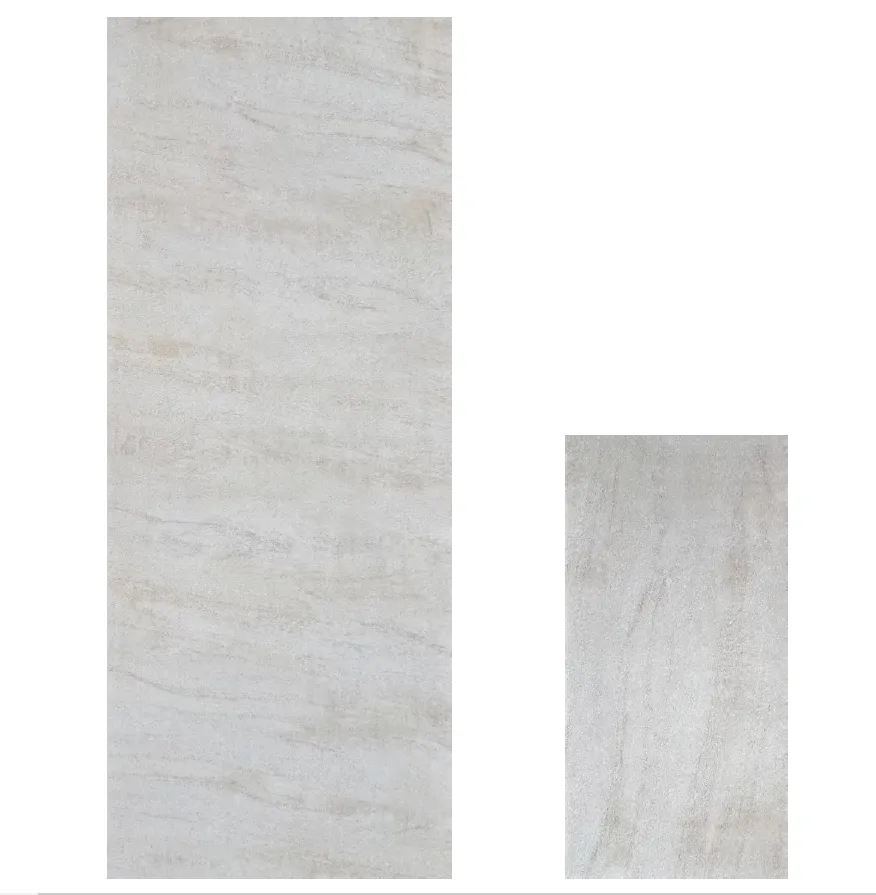
Walk onto any construction site using traditional natural stone, and you'll likely see piles of rubble: broken slabs, offcuts from awkward cuts, and dust so thick it coats every surface. I recently visited a mid-rise residential project in Denver where the contractor sighed, pointing to a mountain of discarded marble fragments. "That's two weeks of work, wasted," he said. "We ordered 20% extra stone just to account for breakage and cutting errors, and we still ended up tossing nearly a third of it." It's a scene repeated worldwide, where natural stone—beloved for its beauty—has a dirty secret: it's shockingly wasteful. But what if there was a material that offered the same elegance, but with a fraction of the waste? Enter Marble Stream Stone , a star product in the world of modified composite materials (MCM) that's quietly revolutionizing how we build sustainably.
To understand why Marble Stream Stone is a game-changer, we first need to unpack the waste problem with natural stone. Let's start at the source: the quarry. Extracting natural stone like marble or granite isn't as simple as plucking slabs from the earth. Quarries often remove 70-80% of surrounding rock (called "overburden") just to reach the desired stone layer, and of that extracted material, only 30-40% is actually usable. The rest? Crushed into gravel or left as waste, scarring landscapes and contributing to soil erosion. I spoke with a geologist who works with Italian marble quarries, and she described it bluntly: "For every beautiful countertop or facade panel, we're leaving behind tons of waste rock that will never decompose."
Then there's processing. Natural stone is hard, dense, and unforgiving. Cutting it into precise sizes requires diamond-tipped saws, but even with advanced tools, 20-30% of the stone is lost to sawdust, cracks, and misshapen pieces. A stone fabricator in Texas told me about a recent hotel project where they ordered 500 square meters of travertine for the lobby. "We had to cut it to fit around columns and electrical outlets, and by the end, we'd thrown out 120 square meters—almost a quarter of what we bought. And that's not counting the dust; we had to install special ventilation just to keep the air safe to breathe."
Transportation adds another layer of waste. Natural stone slabs are heavy—marble can weigh 20-30 kg per square meter—and fragile. Even with careful packaging, 10-15% of shipments arrive damaged, especially for long-haul transport. A logistics manager at a stone importer explained: "We once shipped a container of Turkish travertine to California, and 15% of the slabs had cracked by the time they arrived. The client refused them, so we had to send replacements, doubling the carbon footprint and the waste."
Finally, installation is where the waste really piles up. On-site, contractors often have to trim slabs to fit uneven walls, windows, or custom designs. This "field cutting" generates even more offcuts—small, irregular pieces that can't be reused. A commercial builder in Chicago recalled a hospital project where they used natural limestone for the exterior. "We had to cut so many notches for pipes and vents that we ended up with 40 buckets of stone scraps. We tried donating them to a local artist, but there was just too much. Most ended up in a landfill."
When you add it all up—extraction, processing, transport, and installation—natural stone can generate up to 50% waste by weight over its lifecycle. That's not just bad for the planet; it's bad for budgets too. Contractors pay for that wasted stone, the labor to handle it, and the fees to dispose of it. For large projects, this can add hundreds of thousands of dollars to costs, not to mention the environmental toll of mining, transporting, and landfilling all that waste.
So, what makes Marble Stream Stone different? At its core, it's part of the MCM flexible stone family—a blend of natural stone aggregates (like marble chips or quartz) and high-performance polymers that create a material that's thin, lightweight, and surprisingly durable. Unlike natural stone, which is a single, solid slab, Marble Stream Stone is engineered to be flexible (it can bend up to 30 degrees without breaking) and lightweight (just 4-6 kg per square meter, compared to 20-30 kg for natural marble). But the real magic is in how it's made and used—processes designed to minimize waste at every step.
Let's start with manufacturing. MCM products like Marble Stream Stone are produced in controlled factory settings, not quarries. The process begins with recycling: leftover stone dust and aggregates from natural stone processing (which would otherwise be landfilled) are mixed with eco-friendly polymers. This alone diverts tons of waste from landfills. A plant manager at an MCM facility in Spain told me: "We take the 'trash' from natural stone factories and turn it into something beautiful. Last year, we recycled over 2,000 tons of stone dust that would have otherwise ended up in a quarry's waste pile."
Because Marble Stream Stone is a composite, it can be molded into precise shapes and sizes during production. This is where prefabricated MCM panel systems shine. Instead of cutting stone on-site, contractors order panels tailored to their project's exact dimensions—down to the millimeter. A project manager in New York who used Marble Stream Stone for a restaurant facade explained: "We sent the CAD drawings to the factory, and they shipped panels that fit perfectly around windows, doors, and even the curved corners of the building. No on-site cutting, no dust, no scraps. We installed the whole facade in half the time, and the waste bin was practically empty."
Transportation waste? Minimal. Marble Stream Stone's lightweight design means more panels can fit on a truck—up to 500 square meters per shipment, compared to 100-150 square meters for natural stone. And because it's flexible, it's less prone to cracking during transit. A logistics coordinator told me: "We used to have to replace 10% of natural stone shipments due to breakage. With Marble Stream Stone, it's less than 1%. That's a huge saving in both materials and carbon emissions—fewer trucks on the road, less fuel used, and almost no damaged goods."
Installation is another area where waste plummets. Traditional natural stone requires on-site cutting to fit, which as we've seen, generates mountains of waste. But Marble Stream Stone panels are pre-cut to fit, so installers simply glue or clip them into place. Even if a panel needs minor adjustments, its flexibility allows for easy trimming with standard tools, producing only minimal dust (which is often recyclable). A tiler with 20 years of experience laughed when I asked about the difference: "With natural stone, I'd spend half my day sweeping up dust and broken pieces. With Marble Stream Stone, I clean up once at the end of the day—maybe a small bag of trimmings, if that. It's like night and day."
Durability matters too. Natural stone is prone to chipping, staining, and weathering, which means it often needs replacement after 10-15 years. Marble Stream Stone, however, is resistant to scratches, moisture, and UV rays, with a lifespan of 30+ years. This longevity reduces lifecycle waste—fewer replacements mean less mining, manufacturing, and disposal over time. A property developer in Miami, who used Marble Stream Stone for a condo exterior in 2010, noted: "We did an inspection last year, and the panels still look brand new. With natural stone, we'd have had to repair or replace at least 20% of the facade by now. That's not just cost-saving—it's waste-saving too."
To put this in concrete terms, let's compare natural stone and Marble Stream Stone across key waste categories. The table below is based on industry data and case studies from real construction projects, showing just how much waste is avoided with MCM technology:
| Waste Category | Natural Stone (Average) | Marble Stream Stone (MCM) | Waste Reduction |
|---|---|---|---|
| Extraction/Manufacturing Waste | 60-70% (overburden + processing loss) | 5-8% (recycled aggregates + precision molding) | 85-90% |
| Cutting/Trimming Waste | 20-30% (on-site cutting to fit) | 1-2% (prefabricated to exact specs) | 93-95% |
| Transportation Damage | 10-15% (fragility + weight) | 1-2% (lightweight + flexible design) | 87-93% |
| Installation Waste | 15-20% (offcuts, breakage during fitting) | 2-3% (minimal on-site adjustments) | 85-90% |
| Lifecycle Waste (30-Year Span) | High (2-3 replacements needed) | Low (1 replacement max, if any) | 60-70% |
| Total Estimated Waste (Per 1000 sqm Project) | 400-500 sqm of waste | 20-30 sqm of waste | 93-95% |
These numbers are staggering. For a 10,000-square-meter project—say, a commercial office building's facade—natural stone would generate 4,000-5,000 square meters of waste. With Marble Stream Stone, that drops to just 200-300 square meters. That's the equivalent of saving 10-12 dump trucks' worth of waste—enough to fill a football field's end zone twice over.
The benefits of reducing construction waste with Marble Stream Stone extend far beyond landfills. Less waste means lower disposal costs for contractors (landfill fees, hauling, labor), which translates to 15-20% savings on material budgets. It also reduces carbon emissions: fewer trucks needed for transportation, less energy spent on mining and processing, and lower emissions from waste decomposition in landfills. A sustainability consultant I worked with calculated that a mid-sized project using MCM instead of natural stone can cut its carbon footprint by 30-40%—a significant step toward meeting green building certifications like LEED or BREEAM.
Then there's the human element. Construction workers exposed to natural stone dust face health risks like silicosis, a lung disease caused by inhaling crystalline silica. Marble Stream Stone's prefabricated panels eliminate on-site cutting, reducing dust exposure to near-zero. A union representative for construction workers in California shared: "We've seen a 90% drop in silica-related health complaints on sites using MCM panels. Workers aren't coming home coughing, and that's priceless."
Architects, too, are embracing Marble Stream Stone for its design flexibility. Unlike natural stone, which is limited by quarry sizes and slab dimensions, MCM panels can be made in large formats (up to 1.2m x 3m) or custom shapes, allowing for bold, seamless designs. A designer in London used flexible stone cladding panels to create a wave-like facade for a museum, a feat that would have required thousands of small, wasteful natural stone pieces. "With Marble Stream Stone, we achieved the fluidity I wanted without the guilt of waste," she said. "It's proof that sustainability and beauty don't have to be trade-offs."
As the construction industry grapples with stricter environmental regulations and growing demand for sustainable practices, materials like Marble Stream Stone are no longer niche—they're necessary. Natural stone will always have a place in design, but its wasteful lifecycle makes it untenable for large-scale, eco-conscious projects. MCM technology, with its focus on recycling, precision, and durability, offers a path forward: buildings that inspire without depleting the planet.
I recently visited a net-zero energy community in Portland that used Marble Stream Stone for all its exterior cladding. Walking through the neighborhood, I was struck by how indistinguishable the panels were from natural stone—same texture, same depth, same warmth. But the project manager shared a fact that stuck with me: "We diverted over 500 tons of waste from landfills by choosing MCM. That's 500 tons that won't sit in a quarry or a dump, and that's a legacy worth building."
In the end, the choice between natural stone and Marble Stream Stone isn't just about materials—it's about values. Do we prioritize tradition over progress, or beauty over responsibility? With MCM technology, we don't have to choose. We can build spaces that honor the elegance of stone while protecting the planet for future generations. And that, perhaps, is the most beautiful part of all.
Recommend Products












