
It's 9 AM on a Tuesday, and Maya, an architect at a mid-sized firm, is staring at her BIM screen, frustration creeping in. She's been working on a luxury hotel lobby design for weeks, and while the spatial layout is locked in, the material representations feel flat. The generic "white marble" texture in her BIM library looks more like a pixelated cloud than the elegant, veined surface she envisioned. Her client, a developer with a keen eye for detail, wants to see exactly how the space will feel—*not just the dimensions, but the soul* of the materials. That's when her colleague mentions Marble Veil White, a material she'd heard of but never deeply explored. An hour later, as she imports the high-resolution texture into her BIM model, something shifts: the walls come alive. The soft, grey veining of Marble Veil White isn't just a color overlay anymore; it's a story, a texture that seems to breathe. In that moment, Maya realizes: the right material doesn't just fill a space—it transforms how we design, collaborate, and ultimately, build.
For all its power, BIM has long grappled with a quiet hurdle: making digital materials feel *real*. Architects and designers spend hours refining spatial relationships, structural integrity, and energy efficiency, but when it comes to the surfaces that define a space—marble, wood, stone—generic textures often fall short. A client flipping through BIM renders might squint and say, "It looks nice, but will the marble *actually* look like that?" A contractor might misinterpret a "white marble" specification, sourcing a slab with bold, chaotic veining instead of the subtle flow the design intended. These disconnects aren't just about aesthetics; they lead to rework, delays, and missed opportunities to inspire. BIM is supposed to bridge the gap between vision and reality, but without materials that feel tangible, that bridge remains incomplete.
Enter Marble Veil White—a material that, in many ways, was designed for the digital age. Part of MCM's innovative lineup, it's not just a stone; it's a solution to BIM's material representation problem. To understand why, we need to look beyond its surface (stunning as it is) and dive into what makes it unique: its texture, its flexibility, and how it integrates with cutting-edge technologies like 3D printing. Let's start with the basics: what *is* Marble Veil White, and why does it matter in a BIM context?
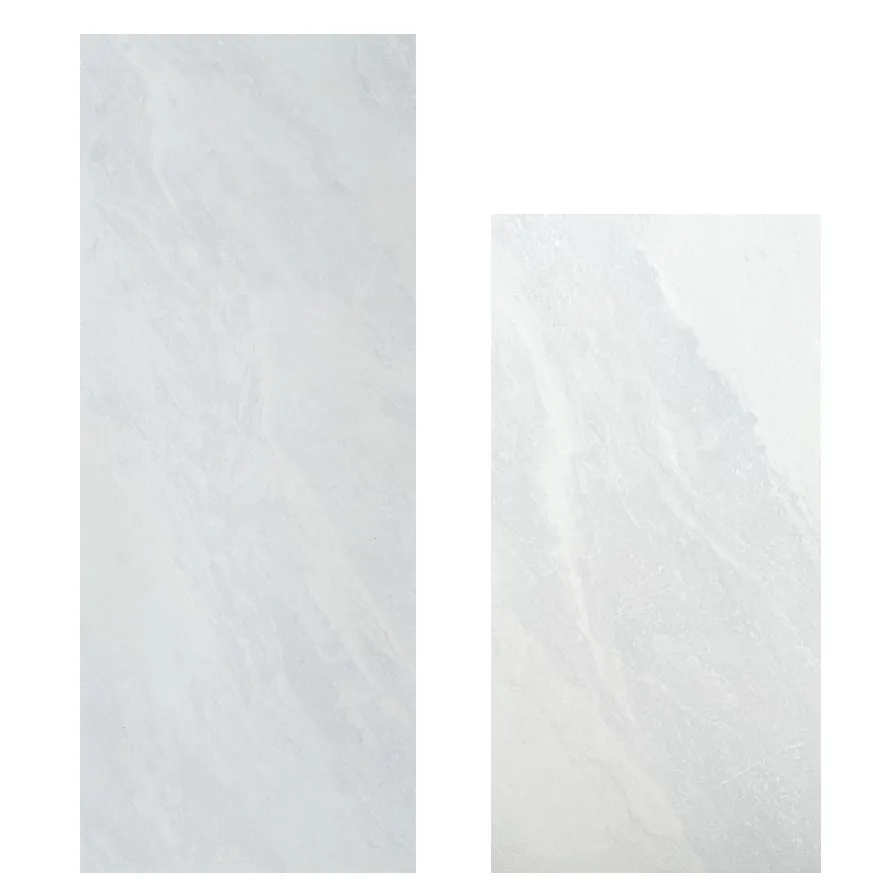
At first glance, Marble Veil White captivates with its understated elegance. Imagine a canvas of soft, creamy white, brushed with delicate veins of light and medium grey—like smoke gently curling through fog. Unlike some marbles that demand attention with bold patterns, its beauty lies in subtlety. This makes it versatile: it can anchor a minimalist bathroom, add warmth to a corporate lobby, or complement vibrant accents in a retail space. But in BIM, versatility alone isn't enough. What truly sets Marble Veil White apart is how its texture translates *digitally*—a quality rooted in how it's made.
Marble Veil White is part of MCM's flexible stone series, a line of modified composite materials that reimagine traditional stone. Unlike natural marble, which is heavy, brittle, and prone to variation, MCM flexible stone is lightweight, durable, and—true to its name—flexible. It's crafted by combining natural stone aggregates with a polymer matrix, resulting in thin, adaptable panels that can bend to follow curves, wrap columns, or even climb walls. For architects, this flexibility opens up design possibilities; for BIM, it simplifies the challenge of representing complex geometries. When you model a curved wall in BIM, you don't have to worry about "cheating" the material's behavior—Marble Veil White's flexibility is built into its digital profile, ensuring the model reflects real-world performance.
But let's circle back to that texture. The veins in Marble Veil White aren't random; they're engineered to be consistent yet organic. MCM's manufacturing process controls the flow of the veining, ensuring that while no two panels are identical (preserving that natural stone charm), the overall pattern remains predictable enough to model accurately. This consistency is a game-changer for BIM. Instead of using a generic "marble" texture that looks slightly different every time you rotate the model, you can import high-fidelity scans of Marble Veil White's actual veining. Suddenly, the BIM render isn't just a guess—it's a preview. "Clients used to ask for physical samples because they didn't trust the screen," says Raj, a BIM manager at a global design firm. "With Marble Veil White, we can zoom into the model, show them the exact vein pattern wrapping around a reception desk, and they say, 'That's it—that's what I want.' It's like handing them a piece of the building before we break ground."
If MCM flexible stone gives Marble Veil White its adaptability, the 3D printing series gives it its digital precision. MCM's 3D printing technology isn't just for prototyping physical panels (though it does that brilliantly); it's for creating hyper-accurate digital assets that live in BIM libraries. Here's how it works: MCM uses 3D scanners to capture every nuance of Marble Veil White's surface—every ridge, every dip, every subtle shift in color. These scans are then converted into 3D texture maps, which can be imported directly into BIM software like Revit or ArchiCAD. The result? A model that doesn't just *look* like Marble Veil White—it *feels* like it.
Let's break down why this matters. In traditional BIM workflows, material textures are often 2D images "wrapped" around 3D surfaces. While this works for basic visualization, it fails to capture depth. Shine a virtual light on a 2D-wrapped marble texture, and the shadows might look off; the veins might appear flat, lacking the dimensionality of real stone. With 3D-printed texture maps, the BIM software recognizes the texture's topography. Light bounces off raised veins, creating soft shadows that mimic how the sun would hit the actual panel. Walk through a virtual lobby with Marble Veil White walls, and you'll notice how the light shifts as you move—just like it would in real life. This level of realism isn't just impressive; it's functional. Engineers can run lighting simulations to ensure the marble doesn't create glare in conference rooms. Interior designers can test furniture placements, knowing how the marble's texture will interact with fabrics and finishes. Clients can "stand" in the space and get a visceral sense of its atmosphere.
"We recently used Marble Veil White in a museum project," recalls Priya, an interior designer. "The client wanted the walls to feel 'timeless but modern,' and they were skeptical that BIM could convey that. We imported the 3D-printed texture map, set up a virtual walkthrough with natural lighting, and let them navigate the space. When they reached the main hall, they stopped and said, 'That's the quiet grandeur I imagined.' They signed off on the spot. Without that 3D detail, we'd probably still be arguing over paint swatches."
BIM is a team sport. Architects, engineers, contractors, clients, and suppliers all need to read from the same playbook—and that playbook includes materials. One of the quietest frustrations in construction is miscommunication around material specs. A contractor might interpret "veined marble" as "bold veining," while the architect meant "subtle." A supplier might substitute a similar-looking stone that's cheaper but less durable, not realizing the original material was chosen for its strength. Marble Veil White, with its standardized digital profile, helps eliminate these misunderstandings.
MCM provides detailed BIM objects for Marble Veil White, complete with technical data: panel dimensions, weight per square meter, fire ratings, installation methods, and even sustainability metrics. These objects aren't just pretty pictures; they're data-rich assets that integrate seamlessly into the BIM model. When a structural engineer checks the load on a wall, they can pull up Marble Veil White's weight data directly from the model, ensuring the structure is sized correctly. When a contractor orders materials, they can reference the BIM object's specifications, knowing exactly what to source. And when a client asks, "Is this marble eco-friendly?" the BIM model can spit out MCM's sustainability report: recycled content, low VOC emissions, and a lifespan that reduces replacement needs.
This shared data creates a common language. "Before, we'd have meetings where the contractor would hold up a sample and say, 'This is what we can get,' and the client would say, 'But that's not what I saw in the render,'" explains Maria, a project manager. "Now, everyone can pull up the Marble Veil White BIM object. The contractor sees the exact panel dimensions and texture code; the client sees the render with the 3D texture; the engineer sees the weight and fire rating. No more guesswork. It's like we're all looking at the same puzzle, not different pieces."
In today's design world, sustainability isn't an afterthought—it's a core requirement. BIM models now include lifecycle assessment (LCA) tools that calculate a building's environmental impact, from construction to demolition. Materials play a huge role in these assessments, and Marble Veil White shines here, too. As part of MCM's flexible stone line, it's designed to be eco-friendly: the panels are made with up to 80% recycled stone aggregates, reducing the need for quarrying. They're also lightweight, which cuts down on transportation emissions. And because they're durable, they last longer, reducing waste from replacements.
For BIM, this sustainability data is gold. When you add Marble Veil White to your model, you're not just adding a texture—you're adding a material with a known carbon footprint, recycled content percentage, and longevity. The LCA tool can factor these in, showing clients and regulators how the material contributes to green building certifications like LEED or BREEAM. "We had a client who wanted their office to be net-zero," says Tom, a sustainability consultant. "By using Marble Veil White, we were able to reduce the embodied carbon of the cladding by 30% compared to natural marble. The BIM model crunched the numbers, and the client could see exactly how that choice helped them hit their sustainability goals. It wasn't just 'greenwashing'—it was data-driven."
Even better, MCM's 3D printing series reduces waste in the design phase. Instead of ordering multiple physical samples to test different veining patterns, architects can tweak the digital texture in BIM, print a small 3D prototype if needed, and finalize the design before production. This "digital-first" approach cuts down on material waste, aligning with BIM's goal of efficiency.
At the end of the day, BIM is about turning digital ideas into physical buildings. Marble Veil White doesn't just enhance the model—it ensures that the model translates smoothly to construction. Because the BIM object includes precise panel dimensions and installation guidelines, contractors can prefabricate the panels off-site, reducing on-site labor and errors. The 3D-printed texture maps also help with quality control: when the panels arrive on-site, workers can compare them to the BIM model's texture scan, ensuring they match the design intent.
Maya, the architect we met earlier, experienced this firsthand. Her hotel lobby project used Marble Veil White for the reception desk and accent walls. "The contractor was nervous about wrapping the marble around the curved desk," she says. "But because the BIM model included the panel's flexibility data, they could pre-bend the panels in their shop and test the fit before bringing them to site. When they installed it, it slid into place like a puzzle piece. The client walked in, looked at the desk, then at the BIM render on my laptop, and said, 'It's exactly the same.' That's the magic of it—Marble Veil White closes the loop between what we imagine and what we build."
Marble Veil White isn't just a material—it's a reminder of why we design. Buildings aren't just structures; they're experiences, shaped by the textures we touch, the light we see, and the stories we tell. BIM, at its best, is a tool for telling those stories more clearly, more collaboratively, and more accurately. By combining MCM's flexible stone technology, 3D printing precision, and sustainable design, Marble Veil White turns BIM models from static blueprints into dynamic narratives—narratives that clients, contractors, and communities can believe in.
So the next time you're staring at a BIM model, asking, "Does this material feel real?" remember Marble Veil White. It's not just enhancing the model—it's redefining what's possible when digital precision meets natural beauty. In a world where we build first with pixels and then with stone, that's a partnership worth celebrating.
Recommend Products












