
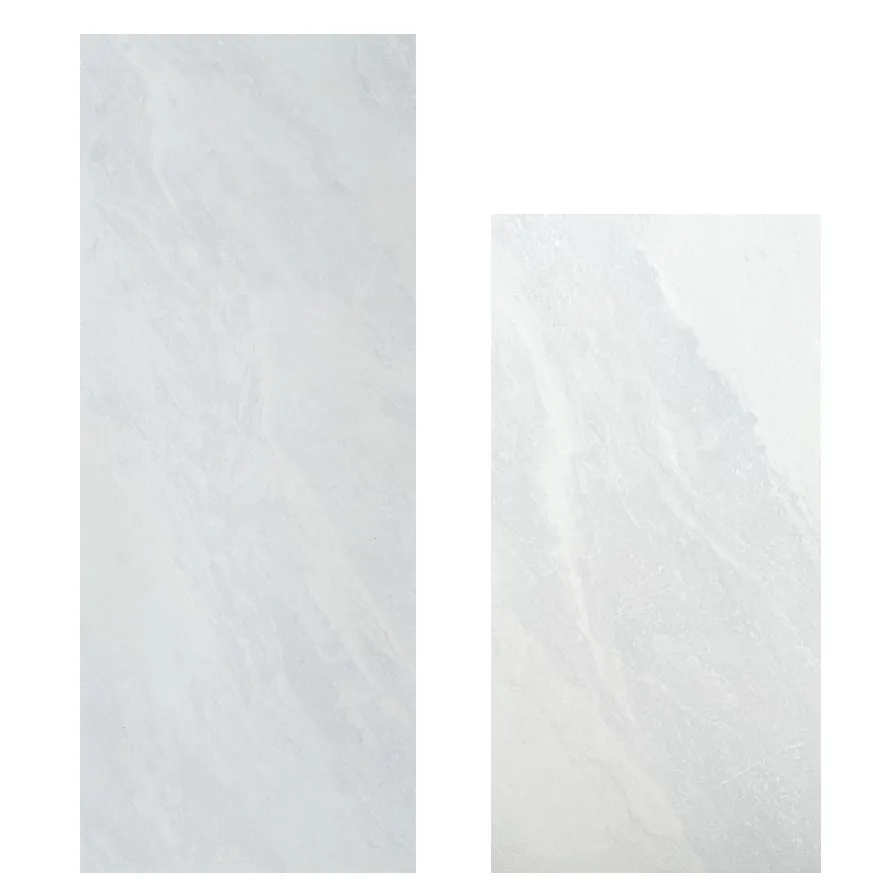
In the bustling world of construction, where every beam, brick, and panel shapes the spaces we live and work in, there's a quiet crisis hiding in plain sight: waste. From leftover materials dumped in landfills to offcuts discarded during installation, the construction industry generates a staggering amount of debris—debris that scars landscapes, strains resources, and leaves a heavy footprint on our planet. But what if there was a material that didn't just build better spaces, but built them more thoughtfully? Enter Marble Veil White —a star in MCM's lineup of innovative building solutions, designed not only to elevate aesthetics but to rewrite the rules of sustainable construction. Let's dive into how this remarkable material, alongside other MCM classics like MCM flexible stone and MCM big slab board series , is turning the tide on construction waste.
Before we talk about solutions, let's ground ourselves in the problem. Imagine a construction site at the end of a workday: piles of broken tiles, half-used bags of mortar, chunks of stone chiseled down to "the right size," and sheets of material that didn't quite fit the blueprint. It's a common scene, but its impact is anything but trivial. According to industry reports, up to 30% of all materials delivered to a construction site end up as waste. That's not just dollars down the drain—it's quarried stone, mined metals, and processed polymers that will sit in landfills for decades, if not centuries. For builders, architects, and even homeowners, this waste isn't just an environmental concern; it's a logistical headache, driving up costs, delaying timelines, and leaving projects feeling less intentional than they could be.
But here's the thing: much of this waste is avoidable. Traditional building materials often force waste into the process—think of natural stone slabs that crack during transport, or rigid panels that require on-site cutting to fit odd angles, leaving behind useless scraps. This is where Marble Veil White and MCM's broader family of products step in. They're not just materials; they're a rethink of how we build—prioritizing precision, adaptability, and longevity to cut waste at every stage.
Let's start with the basics: Marble Veil White isn't your average marble. It's a engineered composite material, part of MCM's (Modified Composite Material) innovative lineup, designed to mimic the timeless beauty of natural marble while packing in 21st-century functionality. Picture this: the soft, ethereal veining of white marble, the kind that makes classic buildings feel both grand and serene, but with a twist—it's lighter, more durable, and infinitely more versatile than its natural counterpart. It's the kind of material that makes architects smile when they sketch, and contractors breathe easier when they install.
But Marble Veil White isn't alone in this mission. It's part of a larger ecosystem of MCM products, including the MCM project board series (ideal for large-scale commercial projects), MCM flexible stone (perfect for curved surfaces and intricate designs), and MCM big slab board series (for seamless, bold statements). Together, these materials share a core philosophy: to deliver the look and feel of natural stone, wood, or metal without the wasteful baggage of traditional options.
So, how exactly does Marble Veil White reduce waste? Let's break it down into tangible, on-the-ground benefits that anyone involved in a build—from the architect drafting plans to the installer fitting panels—can appreciate.
One of the biggest culprits of construction waste is on-site cutting. Traditional marble or stone slabs are heavy, rigid, and often require trimming to fit specific dimensions. This process leaves behind piles of dust, chips, and offcuts—material that's too small to reuse and too costly to repurpose. Marble Veil White flips this script with prefabrication . MCM's manufacturing facilities cut panels to exact blueprint specifications before they ever hit the truck. Want a 10-foot-tall panel with a custom curve? It arrives ready to install. Need a set of matching tiles for a backsplash? They're pre-cut to the millimeter, so there's no guesswork, no last-minute adjustments, and no scraps cluttering the site.
Take the MCM project board series , for example. Designed for large commercial builds like hotels or office lobbies, these boards are produced in standardized yet customizable sizes, ensuring that every panel fits the project's layout like a puzzle piece. Builders report up to 80% less on-site waste when using prefabricated MCM products compared to traditional stone—a number that translates to cleaner job sites, faster installations, and happier crews.
Natural marble is stunning, but it's also fragile. A single wrong bump during transport can crack a slab, rendering it useless. Heavier materials also mean more fuel for transportation, more workers needed to lift them, and a higher risk of damage during installation—all of which contribute to waste. Marble Veil White solves this with its lightweight, flexible core. Made from a blend of mineral powders and high-performance polymers, it weighs up to 70% less than natural marble, making it easier to transport, handle, and install.
Imagine a team installing wall panels on the 15th floor of a high-rise. With traditional stone, they'd need cranes, heavy rigging, and extra hands to avoid drops and cracks. With Marble Veil White, two workers can carry a 4x8-foot panel with ease, reducing the risk of accidents and breakage. And because it's flexible, it can bend slightly to fit uneven surfaces—no need to chisel away at the wall or the panel to make it "work." This adaptability cuts down on both material waste and labor hours, turning tight deadlines into manageable milestones.
Even MCM's foamed aluminium alloy board (vintage silver) and foamed aluminium alloy board (vintage gold) follow this lightweight ethos. These metallic options, popular for modern facades, offer the luster of metal without the weight, ensuring installations are smoother and less wasteful from start to finish.
Waste isn't just about what's thrown away during construction—it's also about what's thrown away years later. A natural stone countertop that chips after a few years, or a wall panel that fades in the sun, will need to be replaced, creating a cycle of waste that compounds over time. Marble Veil White is built to break that cycle. Its engineered composition makes it resistant to scratches, stains, UV rays, and moisture—so it stays looking fresh for decades, not just years.
Think about a busy restaurant kitchen: spills, heat, and constant foot traffic would wear down natural marble quickly. But with Marble Veil White, the countertops stay pristine, reducing the need for repairs or replacements. The same goes for exterior cladding: while natural limestone might erode in harsh weather, Marble Veil White holds strong, meaning fewer repairs and less material waste over the building's lifetime. It's a long-term investment in sustainability—one that pays off for both the environment and the project's bottom line.
This durability extends across MCM's range. Take fair-faced concrete , a rugged, industrial-chic option that mimics raw concrete but resists cracking and weathering. Or lunar peak silvery and lunar peak golden , which capture the otherworldly texture of mountain stone without the fragility. These materials aren't just "good enough for now"—they're built to outlast the trends, ensuring that the spaces we build today don't become tomorrow's demolition waste.
Sustainable construction starts long before materials arrive on-site—it starts in the factory. MCM's manufacturing process for Marble Veil White and other products is designed to squeeze every drop of value from raw materials, leaving almost no waste behind. Unlike natural stone quarries, which blast and cut massive blocks only to discard up to 50% as "waste rock," MCM's production uses precise ratios of mineral powders, recycled polymers, and colorants, ensuring that every ingredient contributes to the final product.
Even better: any excess material from one production run is recycled back into the next batch. Scraps from cutting Marble Veil White panels? They're ground down and reused in MCM flexible stone or MCM project board series products. This closed-loop system means MCM's factories generate up to 90% less waste than traditional stone processing facilities. For architects and builders who care about the full lifecycle of their materials, this transparency is a game-changer—it's not just about what happens on-site, but how the material was born, too.
Ever seen a beautiful design derailed by a material that couldn't keep up? Maybe a curved wall that required so many small stone tiles, the grout lines overwhelmed the look, or a custom pattern that needed dozens of cuts, each leaving a tiny scrap. Design constraints often lead to waste, as materials are forced into shapes they weren't meant to take. Marble Veil White, though, is a designer's dream—it bends, curves, and adapts to even the most ambitious visions, reducing the need for excessive cutting or compromising on design.
Take wave panels or semicircle boards , two MCM favorites for creating dynamic, organic spaces. With traditional stone, these shapes would require painstaking (and wasteful) cutting. With Marble Veil White, they're pre-molded into flowing curves or precise semicircles, ensuring the design stays intact without the scraps. Even intricate patterns, like rust mosaic stone or thread textures, are printed onto the material with pinpoint accuracy, eliminating the need for hand-cutting tiny pieces that often end up as waste.
For homeowners, this means more personalized spaces—say, a bathroom with a Marble Veil White accent wall that follows the curve of a freestanding tub. For businesses, it means storefronts that stand out, like a café with a bamboo mat board facade paired with Marble Veil White panels, no waste included. When design and sustainability go hand in hand, everyone wins.
Numbers and features tell part of the story, but real change happens on the ground. Let's hear from people who've built with Marble Veil White and felt the difference firsthand.
Take Maria, a project manager for a boutique hotel renovation in Barcelona. "We were restoring a 1920s building, and the original marble floors were beyond repair—cracked, stained, and impossible to match with new natural stone. We chose Marble Veil White for the lobby and guest rooms, and the difference was night and day. The pre-cut panels fit perfectly around the building's quirky angles, and we had maybe two small scraps left at the end of the project. With natural marble, we would've had a dumpster full. Plus, the guests can't tell it's not real marble—they keep commenting on how 'timeless' the space feels. For us, it wasn't just about waste; it was about respecting the building's history while building for the future."
Then there's Raj, a contractor specializing in eco-friendly homes in Portland. "I used to dread installing stone countertops—so much dust, so many broken pieces. Now, with Marble Veil White, I can carry a full slab up a flight of stairs by myself, no crane needed. Last month, I installed a kitchen with waterfall edges using the MCM big slab board series —one continuous piece, no seams, no waste. The homeowner was thrilled, and my crew finished in half the time. It's not just better for the planet; it's better for our business."
These stories aren't anomalies—they're the new norm for MCM users. From residential kitchens to commercial skyscrapers, Marble Veil White and its siblings are proving that sustainability doesn't have to mean sacrificing beauty or functionality. In fact, it often enhances them.
While Marble Veil White is a standout, it's part of a larger MCM family that's redefining sustainable construction. Let's shine a light on a few other stars:
| Product | Why It Reduces Waste | Best For |
|---|---|---|
| MCM Flexible Stone | Thin, bendable sheets that wrap around columns, arches, or curved walls without cutting. | Historic building restorations, curved facades. |
| MCM Big Slab Board Series | Oversized panels (up to 12ft x 5ft) mean fewer seams and less installation waste. | Commercial lobbies, high-rise exteriors. |
| Foamed Aluminium Alloy Board (Vintage Silver/Gold) | Lightweight metal panels with pre-finished surfaces, eliminating on-site painting/waste. | Modern retail spaces, accent walls. |
| Fair-Faced Concrete | Engineered to mimic raw concrete but with precise dimensions, reducing on-site mixing waste. | Industrial-chic homes, office interiors. |
| Travertine (Starry Green/Red/Blue) | Pre-printed starry patterns eliminate the need for hand-placing tiny decorative stones. | Feature walls, hotel spas. |
Together, these products form a toolkit for builders who refuse to choose between beauty and sustainability. Whether you're building a cozy home or a sprawling campus, there's an MCM solution that cuts waste without cutting corners.
At the end of the day, construction isn't just about bricks and boards—it's about creating spaces that matter. Spaces where families gather, where businesses thrive, where communities connect. But those spaces shouldn't come at the cost of our planet. Marble Veil White and MCM's lineup remind us that sustainability and beauty aren't opposites; they're partners. They prove that we can build boldly, creatively, and thoughtfully .
So the next time you walk into a building and pause to admire its walls—maybe a sleek Marble Veil White lobby or a rustic wood grain board accent wall—take a moment to appreciate the unseen story: the reduced landfill waste, the saved resources, the workers who went home with cleaner job sites and lighter consciences. That's the power of MCM: it doesn't just build better spaces—it builds a better way to build.
For architects, contractors, and homeowners ready to make a difference, the message is clear: choose materials that care as much about the planet as they do about aesthetics. Choose Marble Veil White. Choose MCM. Because the best buildings aren't just built to last—they're built to leave the world better than they found it.
Recommend Products












