
Stand beneath the archways of Rome's Colosseum, and you'll feel it—the quiet power of travertine. For millennia, this sedimentary stone has been the backbone of architectural grandeur, its warm, honeyed tones and porous texture telling stories of emperors, gladiators, and the rise of an empire. From the Pantheon's domed ceiling to the sprawling forums, travertine wasn't just a building material; it was a statement of endurance, beauty, and human ingenuity. But as we step into the 21st century, the question arises: How do we honor that legacy while embracing modern needs? Enter MCM Big Slab Board Series—a collection that doesn't just mimic Roman travertine, but reimagines it for today's world, blending ancient allure with cutting-edge innovation.
To understand the magic of MCM's replication, we first need to revisit the original. Roman travertine, quarried from the Tivoli region just east of Rome, is celebrated for its unique character. Its palette ranges from soft beiges to deep golds, with veins of cream and grey weaving through like ancient rivers frozen in stone. The surface, pitted with tiny pores (a result of carbon dioxide bubbles escaping during formation), gives it a tactile quality—rough yet inviting, as if it holds the warmth of the sun it's absorbed over centuries. In structures like the Trevi Fountain, this texture catches light and shadow, creating a dance of depth that no smooth, uniform material can replicate.
But Roman travertine isn't just about looks. Its durability is legendary; the Colosseum's travertine blocks, laid nearly 2,000 years ago, still stand strong against weather and time. Yet, for all its virtues, natural travertine comes with modern challenges: it's heavy (a single slab can weigh hundreds of pounds), expensive to quarry and transport, and its porous nature requires constant sealing to resist stains. For architects and designers dreaming of Roman-inspired spaces today, these hurdles often feel insurmountable—until now.
MCM Big Slab Board Series isn't just another building material; it's a love letter to Roman craftsmanship. Engineered using modified composite materials, these slabs are designed to capture every nuance of natural travertine—from the color gradients to the microscopic texture—while addressing the flaws that make natural stone impractical for modern use. Lightweight (up to 70% lighter than natural travertine), easy to install, and resistant to moisture and wear, they're a solution that doesn't compromise on aesthetics.
At the heart of this replication is innovation. Drawing from the MCM 3D Printing Series, manufacturers use advanced 3D scanning and printing technologies to map the surface of ancient travertine blocks, then recreate those patterns with pinpoint accuracy on the MCM slabs. The result? A texture that's indistinguishable from the real thing to the touch—rough where it should be, smooth in the subtle, weathered way that only centuries of exposure can create.
What makes MCM Big Slab Boards so convincing as a stand-in for Roman travertine? Let's dive into the details that bring the ancient aesthetic to life:
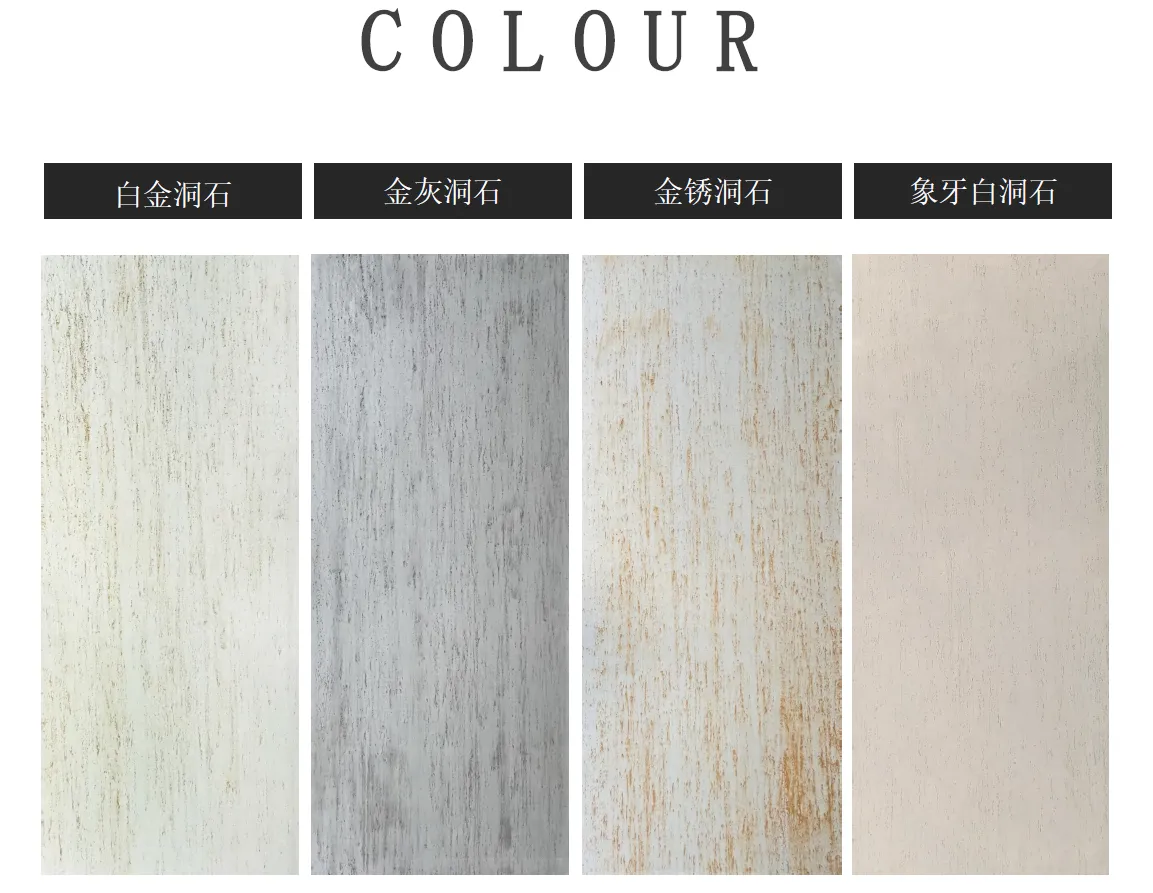
Roman travertine is famous for its warm, earthy palette, and the MCM Big Slab Board Series doesn't shy away from honoring that. Shades like Epoch Stone and Century Stone mimic the classic beige and gold tones of the Colosseum, while Travertine (Vintage Gold) adds a touch of opulence, evoking the gilded accents of Roman villas. For those seeking something bolder, there are the Starry variants— Travertine (Starry Green) , with its flecks of emerald that recall moss growing on ancient stone, or Travertine (Starry Blue) , which channels the depth of the Mediterranean Sea. Even modern twists like Lunar Peak Silvery and Lunar Peak Golden pay homage to travertine's natural variation, offering a metallic sheen that feels both ancient and futuristic.
Texture is where MCM truly shines. Natural travertine's surface is a study in imperfection—pitted with small holes (called vugs), grooved by water flow, and worn smooth in high-traffic areas. The MCM Big Slab Board Series replicates this with stunning precision. Take Dolomitic Travertine (Dark Grey) , for example: its surface features the same irregular veining and subtle indentations as the dolomite-rich travertine found in Roman quarries. Wood Grain Board adds another layer of authenticity, mimicking the way wood beams once pressed into wet travertine during ancient construction, leaving faint, organic patterns behind.
Roman travertine's patterns are as unique as a fingerprint, shaped by centuries of geological activity. MCM captures this randomness with designs like Linear Travertine (Claybank) , which mimics the horizontal layering of sedimentary stone, or Dolomitic Travertine (Claybank) , with its swirling, cloud-like veining. Even the Thread pattern, a delicate network of fine lines, echoes the cracks and crevices that form in natural travertine over time, adding a sense of history to any space.
Roman architecture was all about scale, and MCM Big Slab Boards embrace that legacy. Available in sizes up to 1200x2400mm, these slabs can cover large surfaces without the need for unsightly seams, just like the massive travertine blocks used in the Colosseum's facade. This grand scale not only enhances the aesthetic but also simplifies installation—a win for both designers and builders.
| Feature | Roman Travertine | MCM Big Slab Board Series |
|---|---|---|
| Color Range | Beige, gold, cream, subtle grey | Classic beige/gold (Epoch Stone), vintage hues (Travertine Vintage Gold), starry variants (Starry Green), modern metallics (Lunar Peak Silvery) |
| Texture Depth | Irregular pores, natural grooves, weathered surface | 3D-printed replication of pores and grooves; Dolomitic Travertine (Dark Grey) offers deep, authentic veining |
| Weight | Heavy (20-30kg per sq.m) | Lightweight (6-8kg per sq.m) |
| Sustainability | Quarrying impacts ecosystems; limited supply | Recycled materials, low carbon footprint, no quarrying needed |
| Durability | Durable but porous (prone to staining) | Waterproof, stain-resistant, fade-proof |
One of the most striking aspects of Roman architecture is its scale, and MCM Big Slab Boards rise to the occasion. Unlike natural travertine, which is limited by quarry size, MCM slabs can be produced in massive dimensions—think Boulder Slab variants, which mimic the look of giant, uncut stone blocks, perfect for creating statement walls in modern commercial spaces. Even smaller options, like Linear Travertine (Claybank) , are designed to be laid in long, continuous strips, evoking the seamless expanse of Roman roads.
MCM Big Slab Boards aren't just for recreating historical sites—they're versatile enough to fit into any design vision, from classic to contemporary. Imagine a residential kitchen with Wood Grain Board countertops, their warm tones and organic texture echoing the hearths of Roman homes. Or a hotel lobby clad in Fair-Faced Concrete and Travertine (Starry Red) , where the contrast between industrial chic and ancient grandeur creates a space that feels both timeless and cutting-edge.
For heritage restoration projects, MCM is a game-changer. When restoring a 19th-century villa modeled after Roman architecture, Dolomitic Travertine (Dark Grey) can replace damaged natural stone without altering the building's historic character. And in new builds, Foamed Aluminium Alloy Board (Vintage Silver) paired with Travertine (Vintage Black) offers a sleek, modern take on Roman opulence, proving that the aesthetic legacy of travertine isn't stuck in the past.
Roman architects valued durability, but they couldn't have foreseen the environmental impact of quarrying travertine on a global scale. MCM Big Slab Board Series addresses this by prioritizing sustainability. Made from recycled materials and produced with energy-efficient processes, these slabs reduce the need for mining, lowering carbon footprints and preserving natural resources. Even better, their lightweight nature cuts down on transportation emissions—a small but meaningful step toward a greener future.
The MCM Big Slab Board Series isn't just about copying Roman travertine—it's about carrying its spirit forward. In a world where modern design often prioritizes function over feeling, these slabs remind us that beauty and history matter. They let us build spaces that feel rooted in the past while embracing the innovation of today, whether it's through the celestial sparkle of Travertine (Starry Green) or the understated elegance of Fair-Faced Concrete .
As we walk through a lobby clad in MCM Big Slab Boards, or run our hands over a countertop that feels like it was hewn from ancient stone, we're not just touching a material—we're touching history. And in that touch, the legacy of Roman travertine lives on, reimagined for a new era.
Recommend Products












