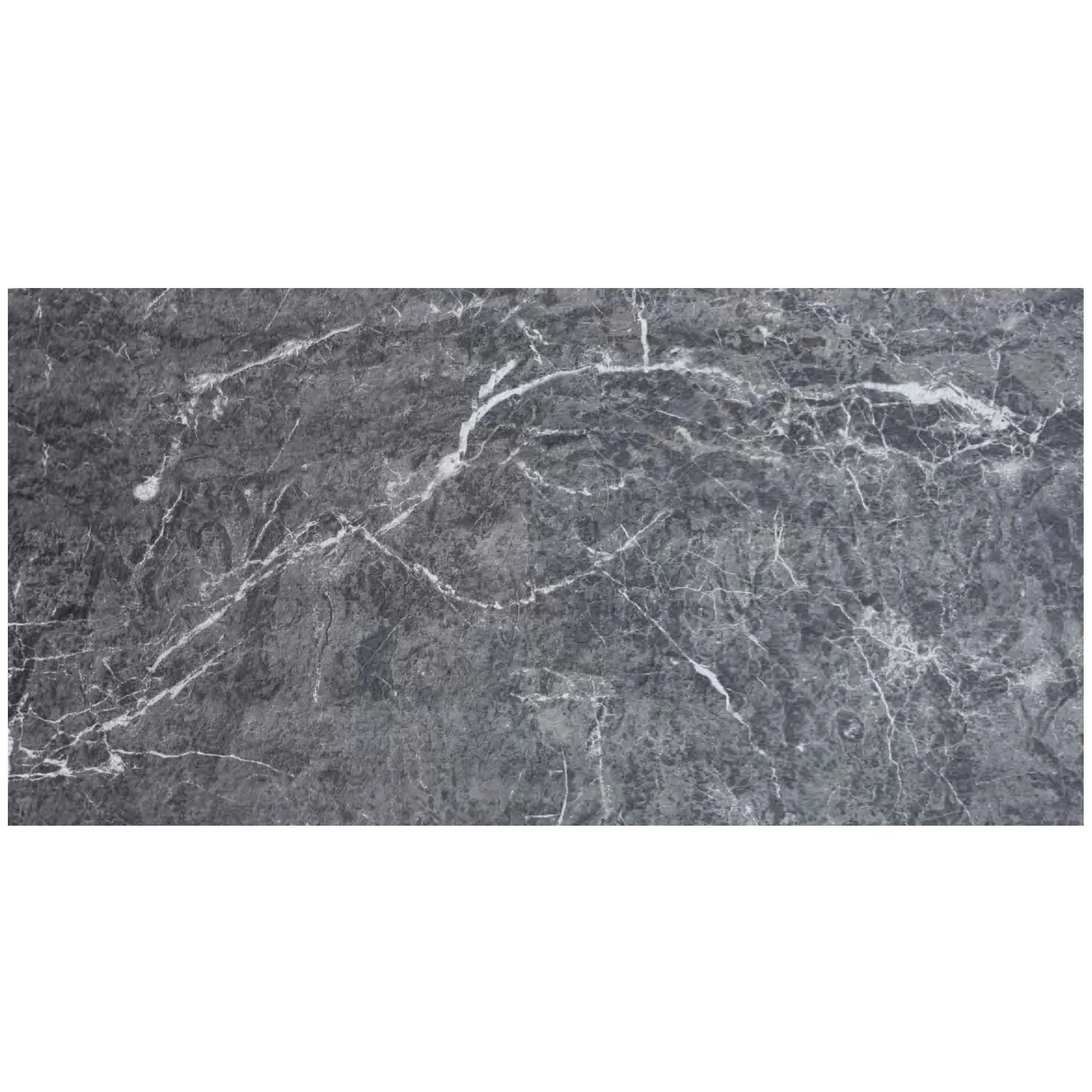
Walk into a luxury hotel lobby, a high-end restaurant, or a meticulously designed home, and there's a good chance you'll find yourself drawn to a specific kind of stone—one that exudes timeless elegance with its deep, velvety black base, flecked with shimmering gold and silver mineral deposits that catch the light like stardust. That's
Granite Nero Margiua, a natural stone celebrated for its dramatic contrast and organic beauty. For decades, architects and designers have coveted it for its ability to turn ordinary spaces into something extraordinary. But here's the catch: as stunning as it is, natural
Granite Nero Margiua comes with a heavy price tag—literally and figuratively. Its weight makes installation a logistical nightmare, its rarity drives up costs, and its fragility limits where it can be used. Enter MCM modified cementitious material, a revolutionary composite that's changing the game. This isn't just a cheap imitation; it's a masterful reimagining that captures the soul of Nero Margiua while solving the headaches that come with natural stone. Let's dive into how MCM pulls off this remarkable feat, and why it's quickly becoming the go-to choice for those who refuse to compromise on beauty or practicality.
Before we talk about mimicry, let's first appreciate the real thing.
Granite Nero Margiua isn't just a stone; it's a story written in minerals. Formed deep within the Earth over millions of years, its signature black hue comes from feldspar and quartz, while the golden and silver specks are traces of mica and other minerals that crystallized under intense heat and pressure. When polished, it becomes a canvas of contrasts—dark enough to feel intimate, yet lively enough to avoid feeling somber. It's no wonder it's been a staple in luxury design, from ancient Roman villas (yes, even then!) to modern skyscrapers.
But for all its beauty, natural Nero Margiua is a diva. First, there's the weight: a single slab can weigh hundreds of pounds, requiring reinforced structures and specialized equipment to transport and install. That limits it to large, commercial projects or homes with deep pockets—most residential spaces simply can't support the load. Then there's the cost: because it's quarried in limited regions (notably parts of Italy and Brazil), scarcity drives prices through the roof. A single square foot can cost upwards of $150, and that's before installation. And let's not forget durability: while granite is tough, it's not invincible. It can chip if hit with heavy objects, stain if spills aren't cleaned immediately, and even fade under prolonged sunlight. For designers dreaming of using Nero Margiua on exterior facades or high-traffic areas, these flaws are deal-breakers.
This is where MCM modified cementitious material steps in. Think of it as nature's beauty, reimagined with modern engineering. MCM, short for Modified Cementitious Material, is a composite made from a blend of cement, fiberglass, natural minerals, and polymers. It's lightweight (up to 80% lighter than natural stone), flexible, and designed to mimic the look and feel of natural materials—including, you guessed it,
Granite Nero Margiua. But how does a man-made material capture the essence of something forged by the Earth over millennia? Let's break it down.
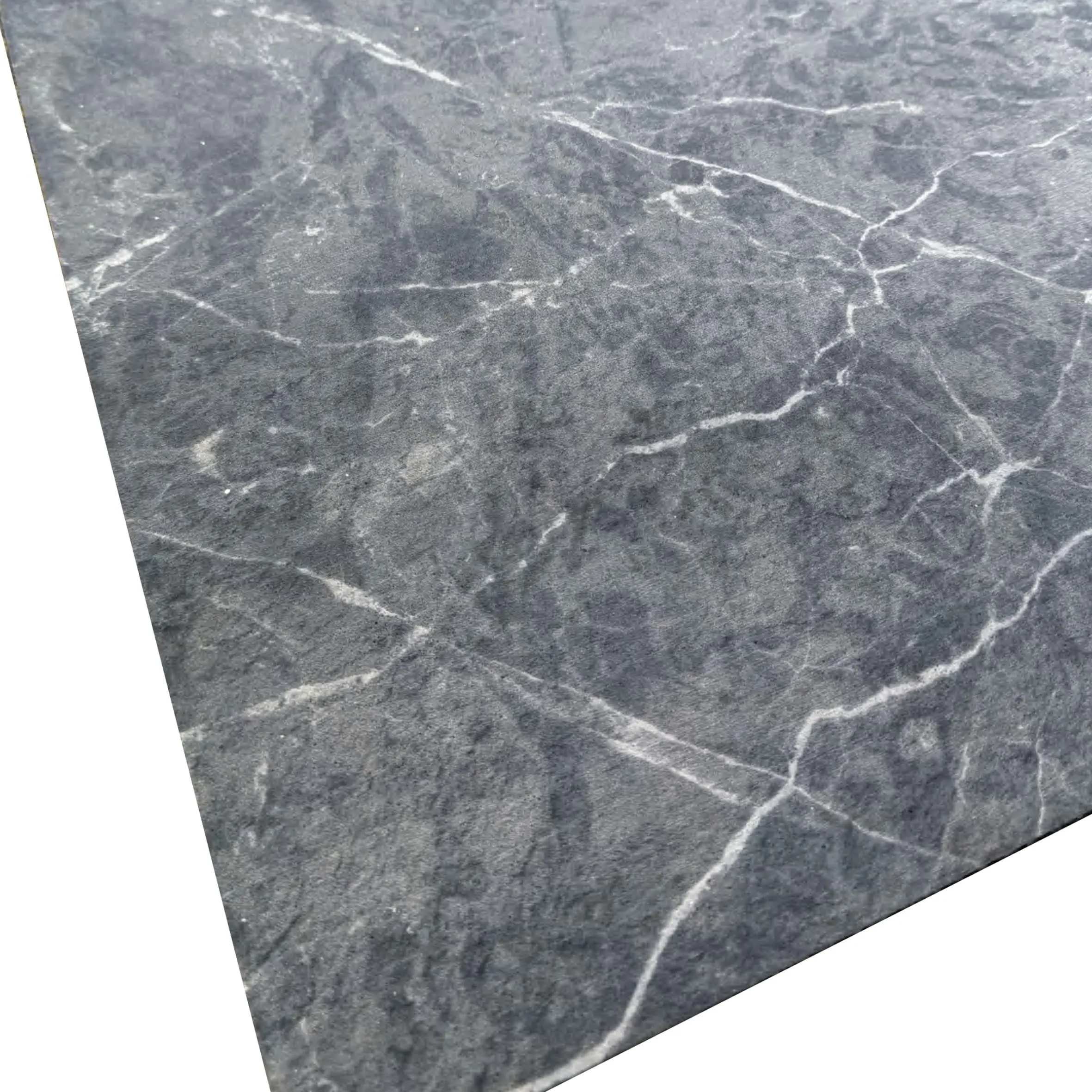
MCM's Secret Sauce: Capturing Texture, Color, and Depth
Texture: The "Feel" of Authenticity
Run your hand over a slab of natural
Granite Nero Margiua, and you'll notice something special: it's not perfectly smooth. There's a subtle, almost imperceptible grain—a result of the stone's crystalline structure—that gives it a tactile quality. MCM doesn't just replicate this visually; its it physically. Using advanced 3D scanning technology, manufacturers can capture the exact texture of a premium Nero Margiua slab, down to the tiniest mineral deposit and micro-crease. This data is then used to create molds that stamp the texture onto MCM panels, resulting in a surface that feels just as authentic as the real thing. Run your hand over an MCM Nero Margiua panel, and you'll feel that same gentle grain—no plastic-y smoothness, no artificial uniformity. It's the kind of detail that makes guests do a double-take: "Is this real stone?"
Color: The Art of Mimicking Nature's Palette
Granite Nero Margiua's most striking feature is its color: that deep, inky black base with gold and silver flecks that seem to dance when the light shifts. Replicating this isn't just about mixing black and gold paint—it's about capturing the complexity of natural mineral deposits. MCM manufacturers use a combination of natural pigments and advanced coloring techniques to achieve this. They start with a base of carbon black pigments to mimic Nero Margiua's depth, then add microscopic particles of metallic oxides (think iron for gold, titanium for silver) that replicate the way minerals reflect light in natural stone. The result? A color that isn't flat or one-dimensional. In bright light, the gold flecks shimmer; in softer light, the black takes on a richer, more velvety tone. It's the same chameleon-like quality that makes natural Nero Margiua so captivating.
What's more, MCM allows for consistency that natural stone can't match. Natural Nero Margiua slabs vary—some have more gold flecks, others more silver; some are darker, some lighter. For large projects where uniformity is key (like a hotel facade or a commercial lobby), this variability can be a headache. MCM, on the other hand, is produced in batches, ensuring that every panel matches perfectly. No more "oops, this slab is slightly lighter than the last one" moments. It's nature's beauty, but with the reliability of modern manufacturing.
Depth: Creating the Illusion of "Living" Stone
Natural stone has depth—a quality that makes it feel "alive." Look closely at Nero Margiua, and you'll see layers: the black base, the flecks of mineral, and even tiny, almost invisible veins that tell the story of its formation. MCM replicates this depth using a multi-layered manufacturing process. First, a base layer of cement and fiberglass provides strength. Then, a colored layer is applied, followed by a texture layer that adds the grain and mineral flecks. Finally, a clear protective coating is added to enhance depth and durability. The result is a panel that doesn't just look like stone—it looks like stone with history. It has that same three-dimensional quality that makes natural Nero Margiua feel like a window into the Earth's past.
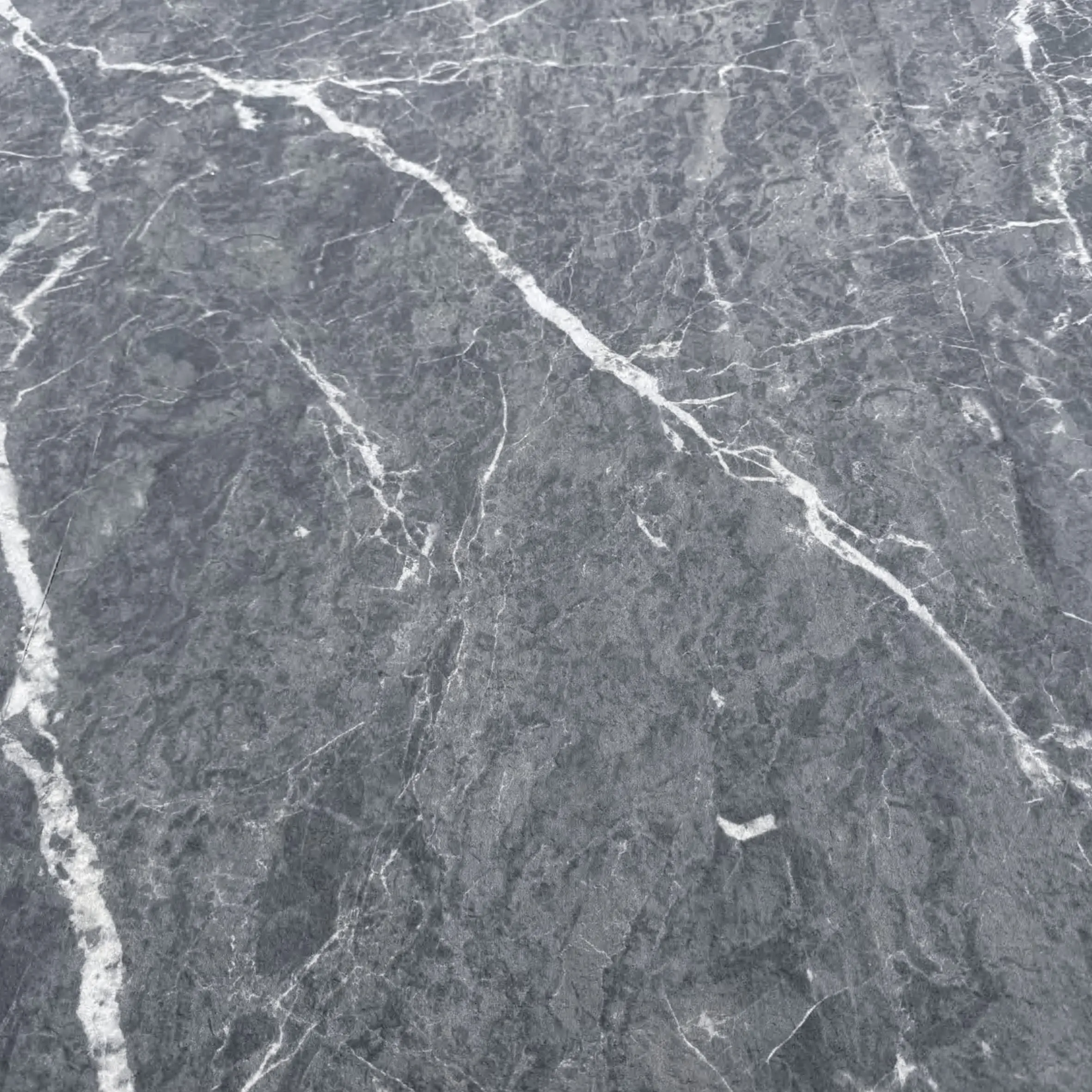
Beyond Looks: MCM's Practical Edge Over Natural Stone
Mimicking beauty is one thing; outperforming the original is another. MCM doesn't just look like
Granite Nero Margiua—it's often better suited for real-world use. Let's compare the two side by side:
|
Feature
|
Natural Granite Nero Margiua
|
MCM Modified Cementitious Material
|
|
Weight
|
Heavy (80-100 lbs per sq ft)
|
Lightweight (10-15 lbs per sq ft)
|
|
Installation
|
Requires reinforced structures and specialized labor
|
Can be installed with standard tools; no structural reinforcement needed
|
|
Cost
|
$150-$200 per sq ft (material + installation)
|
$40-$60 per sq ft (material + installation)
|
|
Durability
|
Prone to chipping, staining, and fading
|
Scratch-resistant, stain-proof, and UV-stable
|
|
Flexibility
|
Only suitable for flat, load-bearing surfaces
|
Can bend to fit curved surfaces (e.g., columns, arches)
|
|
Sustainability
|
Quarrying disrupts ecosystems; high carbon footprint from transportation
|
Made with recycled materials; low transportation emissions due to light weight
|
The difference is clear: MCM takes the best of Nero Margiua and leaves the rest behind. Take installation, for example. A team of two can install MCM panels on an entire wall in a day, using nothing more than basic tools. With natural stone, you'd need a crew of specialists, cranes, and possibly even structural engineers. And cost? MCM cuts the total expense by more than half, making the look of Nero Margiua accessible to projects of all sizes—from a small home accent wall to a sprawling commercial complex.
Sustainability: Beauty Without the Guilt
In today's world, sustainability isn't just a buzzword—it's a priority. Natural stone quarrying is notoriously hard on the environment, disrupting ecosystems, depleting natural resources, and contributing to carbon emissions. MCM, by contrast, is a eco-friendly alternative. Most MCM panels are made with recycled materials (like crushed stone and reclaimed fiberglass), and their lightweight nature reduces transportation emissions. Plus, because MCM is so durable, it lasts for decades, reducing the need for replacement and further environmental impact. It's beauty that doesn't come at the planet's expense—a win-win for designers and the Earth.
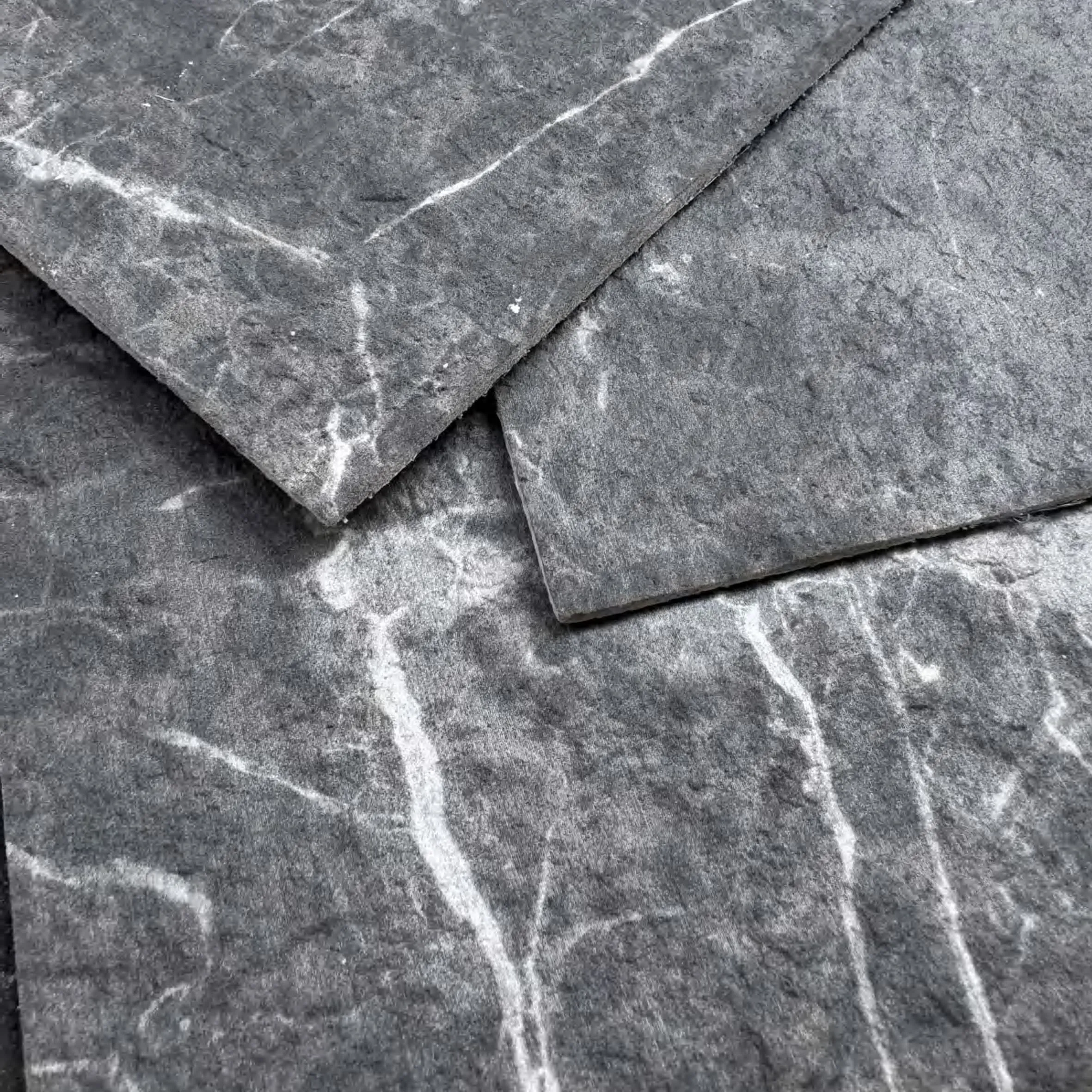
From Theory to Practice: MCM Nero Margiua in Action
So, where can you actually see MCM's Nero Margiua mimicry in action? The answer is: almost anywhere. Thanks to its versatility, MCM panels are being used in ways natural stone never could. Here are a few standout examples:
Residential Spaces: Luxury on a Budget
Imagine a homeowner in a mid-sized apartment who's always dreamed of a Nero Margiua backsplash in their kitchen. With natural stone, it's impossible—the walls can't support the weight, and the cost is prohibitive. With MCM, it's a reality. MCM panels are lightweight enough to install on standard drywall, and the cost is manageable. One homeowner in Chicago recently transformed their kitchen with MCM Nero Margiua panels, paired with gold fixtures and white cabinetry. The result? A space that looks like it belongs in a design magazine, without breaking the bank. "Guests still can't believe it's not real stone," they. "I just tell them it's the future of design."
Commercial Exteriors: Beauty That Braves the Elements
Natural
Granite Nero Margiua is rarely used on exteriors—it fades in sunlight, stains in rain, and can crack in freezing temperatures. MCM, however, is built to withstand the elements. A boutique hotel in Miami recently clad its entire facade in MCM Nero Margiua panels, and the results are stunning. Even after two hurricane seasons, the panels look as vibrant as the day they were installed—no fading, no water damage, no cracks. "We wanted the drama of Nero Margiua, but we needed something that could handle Miami's weather," says the hotel's architect. "MCM delivered—on both beauty and performance."
Curved Surfaces: Pushing Design Boundaries
One of MCM's most exciting features is its flexibility. Unlike rigid natural stone, MCM panels can bend to fit curved surfaces, opening up a world of design possibilities. A recent project in New York City used MCM Nero Margiua panels to clad the curved columns of a museum lobby, creating a seamless, sculptural effect that would have been impossible with natural stone. "The columns look like they're carved from a single piece of Nero Margiua," says the designer. "But MCM let us achieve that look without the weight or cost."
MCM vs. Other Alternatives: Why It Stands Out
MCM isn't the only material trying to mimic natural stone. There's
fair-faced concrete, for example—a raw, industrial look that's popular in modern design. But
fair-faced concrete lacks the depth and luxury of Nero Margiua. It's monochromatic, flat, and can feel cold in residential spaces. Then there's porcelain tile, which can print realistic stone patterns but often looks "off" up close, with a glossy finish that screams "fake." MCM, by contrast, doesn't just look like stone—it behaves like it, too. Its texture, color depth, and durability set it apart from other imitators. It's the difference between a photograph of a sunset and standing outside watching the real thing—one is nice, the other is unforgettable.
The Future of Design: MCM and the Rise of "Accessible Luxury"
At the end of the day, MCM modified cementitious material isn't just about mimicking
Granite Nero Margiua—it's about democratizing luxury. For too long, the most beautiful natural materials have been reserved for the few who can afford them. MCM changes that. It lets designers, homeowners, and architects bring the drama of Nero Margiua into any space, regardless of budget or structural constraints. It's a reminder that beauty shouldn't be exclusive—that with a little innovation, we can have both form and function, nature and technology, luxury and accessibility.
So, the next time you see a stunning black-and-gold stone surface, take a closer look. It might just be MCM—and that's a good thing. Because in a world where we're all looking for ways to make our spaces more beautiful, more sustainable, and more uniquely "us," MCM is proof that the best designs don't just copy nature—they reimagine it. And in doing so, they create something even better.