
Bridging Ancient Craftsmanship with Cutting-Edge Innovation
Walk through the streets of Rome, and you'll feel it—the weight of history in every stone. The Colosseum's weathered arches, the Pantheon's towering dome, the intricate facades of palazzos—much of this grandeur owes its longevity to travertine, a sedimentary rock prized by ancient architects for its durability, warmth, and timeless beauty. For centuries, crafting with "Roman huge travertine" (massive slabs quarried from the same regions as the Romans) meant painstaking labor: chiseling, cutting, and shaping stone by hand, a process that limited creativity and left little room for customization. But today, a new chapter is being written, thanks to MCM's 3D printing technology. This isn't just about making stone faster—it's about reimagining what travertine can be, blending the soul of ancient craftsmanship with the precision of modern innovation.
Before diving into the tech, let's pause to appreciate the star of the show: Roman huge travertine. Quarried from regions like Tivoli, Italy—where the same mineral-rich springs that fed ancient Roman baths still flow—this stone carries a unique character. Its porous surface, formed by mineral deposits over millennia, creates a canvas of subtle holes and veins, while its warm beige and gold hues shift with light, making every slab one-of-a-kind. Historically, its size was both a strength and a limitation: massive blocks could support grand structures, but shaping them into intricate patterns was nearly impossible without sacrificing structural integrity.
Enter MCM, a brand that's made it their mission to honor this legacy while pushing boundaries. "We didn't want to replace the romance of travertine—we wanted to amplify it," says Elena Rossi, lead materials engineer at MCM. "3D printing lets us work with the stone's natural beauty, not against it. Now, that 'impossible' curve or custom starry pattern? It's not just possible—it's accessible."
At first glance, 3D printing stone sounds like science fiction. But MCM's process is a masterclass in blending tradition with tech. Here's how it happens:
1. Digital Blueprints with Ancient Roots
It starts with a designer's vision—maybe a hotel lobby craving a Roman-inspired arch with a modern twist, or a home exterior that echoes the Colosseum's texture but adds
travertine (starry green)
accents. Using advanced 3D modeling software, MCM's team translates that vision into a digital blueprint, often overlaying scans of actual Roman travertine slabs to capture their natural veining. This step ensures the final product feels organic, not computer-generated.
2. The "Ink": MCM Flexible Stone
Forget plastic filaments—MCM's "ink" is a proprietary blend of crushed natural travertine, polymers, and
MCM flexible stone
, a lightweight yet durable material that bends without breaking. "Traditional travertine is heavy and brittle," explains Rossi. "Our flexible stone mix lets us print thin, intricate layers that maintain the stone's authentic look but add flexibility. It's like giving travertine a 'second skin.'"
3. Layer by Layer, History Meets Precision
The 3D printer deposits the flexible stone mix in ultra-thin layers (as fine as 0.1mm), building up the design from the ground up. What makes this revolutionary? Unlike traditional carving, which removes stone (and often wastes up to 40% of the slab), 3D printing adds material only where needed, slashing waste. Plus, the precision allows for patterns that would take master craftsmen months—think
thread
-thin grooves that mimic Roman chiseling, or 3D art concrete board details that pop in sunlight.
4. Curing and Finishing: The Human Touch
After printing, the piece is cured in a climate-controlled chamber to harden the flexible stone. Then, MCM's artisans step in, hand-finishing the surface with techniques passed down through generations—sanding to soften edges, sealing to enhance color, or adding subtle distressing to match ancient Roman weathering. "The machine does the precision work, but the soul comes from the craftsman's touch," Rossi smiles.
The real magic of MCM's 3D printing lies in customization. For too long, architects and designers were limited to the "standard" travertine look—beige, uniform, and straight-edged. Now, the possibilities are as endless as the Roman skyline:
Starry Skies in Stone
Ever wished your wall could mimic a night sky? MCM's
travertine (starry green)
is a fan favorite—tiny, iridescent glass particles mixed into the flexible stone create a constellation-like effect that shimmers when light hits it. "We had a client in Tokyo who wanted their restaurant to feel like dining under the stars in a Roman villa," says Marco Chen, MCM's design director. "Starry green travertine panels, paired with
foamed aluminium alloy board (vintage silver)
trim, turned that dream into reality. The contrast of warm stone and cool metal? It's like ancient Rome met futuristic Japan."
Boulder Slab: Monumental Design, Minimized Weight
For projects needing that "grand entrance" feel,
boulder slab
is a game-changer. Traditionally, a solid boulder slab could weigh over 500kg, requiring heavy-duty structural support. MCM's 3D printed version uses a hollow core (reinforced with
foamed aluminium alloy board (vintage gold)
for strength) to cut weight by 60%—perfect for cantilevered walls or high-rise exteriors. "A museum in Barcelona used our
boulder slab (vintage black)
for their facade," Chen recalls. "It looks like a massive stone monolith, but it's light enough that they didn't need to reinforce the foundation. That's the power of 3D printing—beauty without the bulk."
From Rustic to Refined: Textures for Every Mood
Whether you want the rough-hewn charm of a Roman ruin or the sleekness of a modern gallery, MCM's 3D printers deliver. Choose from
wood grain board
textures that mimic ancient Roman oak beams, or
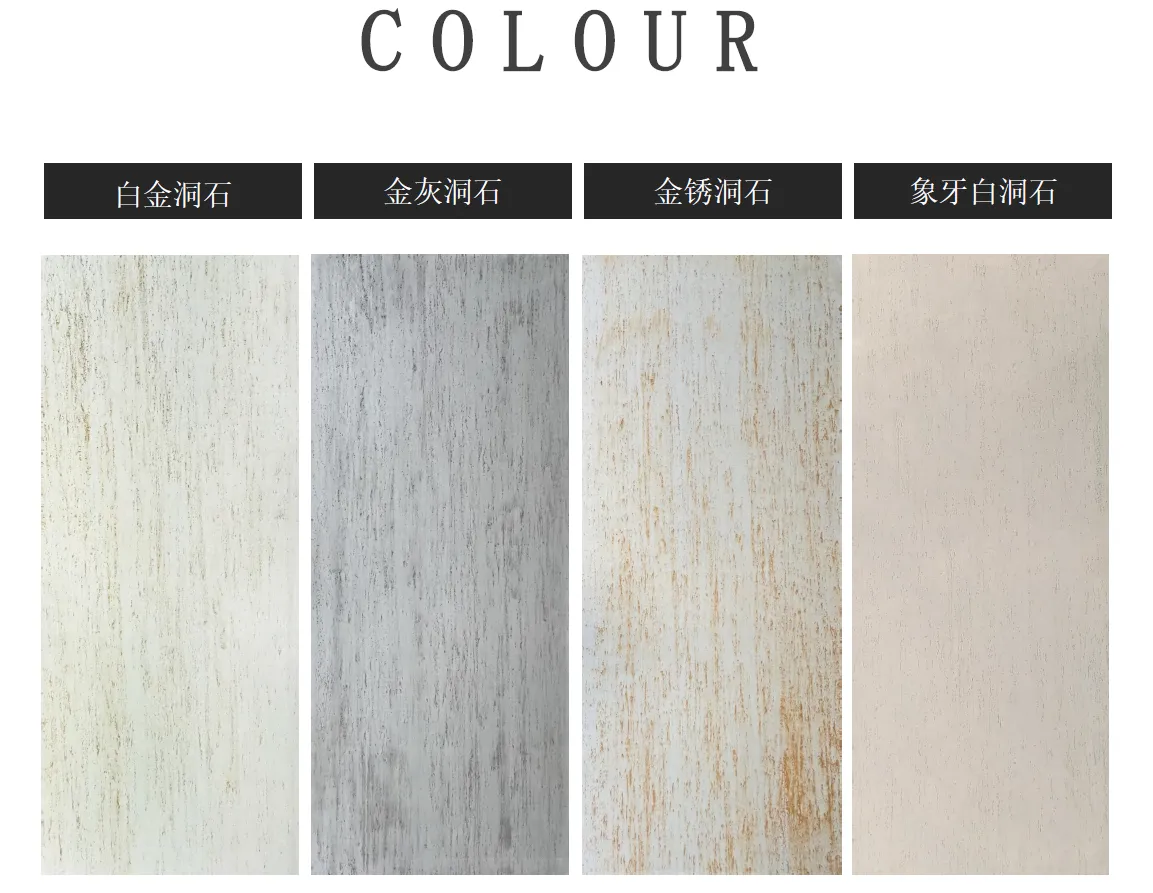
linear travertine (claybank)
for a subtle, earthy stripe. For a bold statement, there's
rust square line stone
—a pattern inspired by the weathered metal accents of Roman aqueducts, printed in rich, oxidized hues.
| Aspect | Traditional Travertine Fabrication | MCM 3D Printed Travertine |
|---|---|---|
| Production Time | Weeks to months (hand-carving, curing) | Days to weeks (digital design + printing) |
| Customization | Limited (simple shapes, standard colors) | Unlimited (starry patterns, curves, mixed materials) |
| Material Waste | 30-40% (due to carving/ cutting) | <5% (additive manufacturing) |
| Weight | Heavy (requires structural support) | 60% lighter (flexible stone + hollow cores) |
| Durability | High (but brittle; prone to cracking) | High (flexible stone resists chipping/ bending) |
When the "New Pantheon" hotel opened in Rome's historic center, it faced a dilemma: honor the neighborhood's ancient architecture while standing out as a modern luxury destination. Their solution? MCM's 3D printed Roman huge travertine.
The lobby features a 12-meter archway printed with a travertine (starry blue) pattern, inspired by the Pantheon's oculus but updated with a cosmic twist. The guest rooms use boulder slab (vintage silver) headboards, their metallic sheen complementing the warm travertine walls. "Guests often run their hands over the walls—they can't believe it's 3D printed," says hotel manager Giovanni Lupi. "It feels like touching history, but with a modern pulse. That's the magic of MCM's work."
While Roman huge travertine is the star, MCM's 3D printing technology plays well with others. Pair travertine with foamed aluminium alloy board (vintage gold) for a luxe contrast, or mix in fair-faced concrete for an industrial edge. "We see materials as a palette, not silos," says Chen. "A restaurant in Paris combined our travertine (vintage black) with wood line textures—think Roman stone meets French countryside. The result? A space that feels both timeless and totally fresh."
MCM isn't stopping at 3D printing. Next up? AI-powered design tools that let clients upload a photo of a Roman ruin (or even a sketch on a napkin) and generate a custom 3D model in minutes. "Imagine an architect in New York wanting to replicate the texture of the Roman Forum's columns but add a gradient color rammed earth board accent," says Rossi. "AI will analyze the original stone's texture, suggest materials, and even predict how the design will age over time. It's like having a time-traveling design assistant."
And sustainability? MCM's process already uses 80% recycled travertine in its flexible stone mix, and the company is experimenting with carbon-negative polymers. "Ancient Romans built for centuries—we're building for millennia," Rossi adds. "Sustainability isn't a trend for us; it's part of honoring the stone's legacy."
Roman huge travertine has always been more than a building material—it's a storyteller. For 2,000 years, it's told tales of emperors, artisans, and civilizations. Now, MCM's 3D printing technology is giving it a new voice—one that speaks to modern designers' hunger for customization, sustainability, and soul. Whether it's a travertine (starry green) accent wall in a home or a boulder slab facade on a skyscraper, this isn't just stone—it's history, reimagined. And that, perhaps, is the greatest innovation of all: making the ancient feel new again.
Recommend Products












