
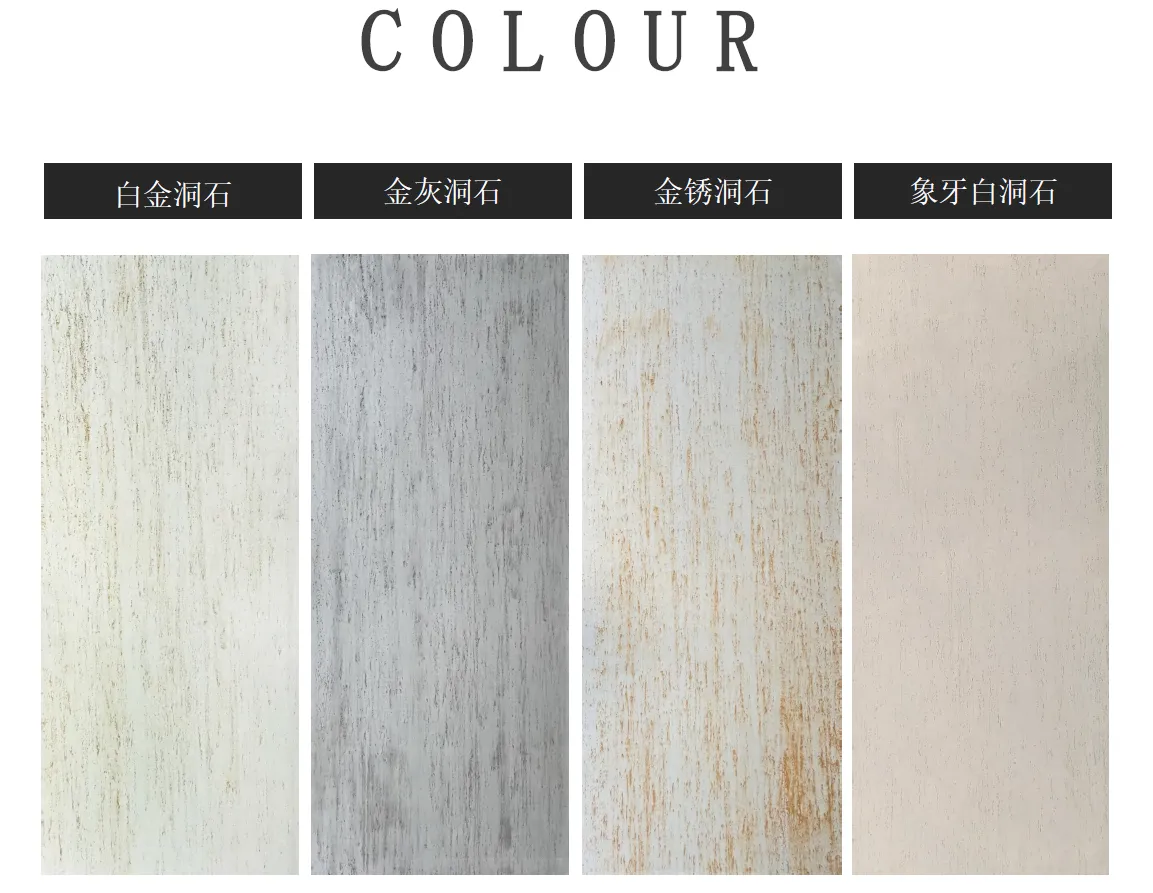
In the world of architecture and interior design, natural stone has long reigned as a symbol of timeless elegance. Roman huge travertine, with its rich history and organic veining, has been a staple in grand structures for centuries. Yet for modern designers, there's a hidden challenge beneath its beauty: color inconsistency. Picture a wall where each tile tells a different color story—beautifully chaotic, yet a nightmare for a cohesive design vision. This is where MCM steps in, redefining what's possible with materials that blend nature's inspiration with human precision. Today, we'll explore how MCM's color consistency outshines traditional Roman huge travertine, and why series like the MCM project board series are becoming the go-to choice for designers worldwide.
For Maria Gonzalez, a senior designer at a leading hospitality firm, the allure of Roman huge travertine once seemed unbeatable. "We specified it for a luxury resort lobby—imagine warm, golden tones that evoke the Italian countryside," she recalls. "But when the tiles arrived, half had a pinkish hue, others leaned yellow, and a few even had gray streaks. The client was devastated; the cohesive 'sunlit villa' vibe we'd promised fell apart." Maria isn't alone. Natural stone, formed over millennia by minerals, water, and geological shifts, is inherently variable. Each quarry, each block, even each inch of a slab, carries the unique fingerprint of its environment. Iron deposits might deepen a red, calcium could lighten a beige, and weather patterns during formation can create splotches or veins that disrupt uniformity.
These variations aren't just aesthetic nuisances—they're costly. Designers spend hours sorting tiles to create a "balanced" look, often discarding 10-15% of material as unusable. Contractors face delays, as mismatched batches require reordering. And clients? They pay for a vision that's never fully realized. "It's not that natural stone isn't beautiful," says James Chen, a commercial architect with 20 years of experience. "But in a world where brands demand consistency—where a hotel chain wants every location to feel 'on-brand,' or a retail store needs walls that mirror its logo's palette—natural stone can feel like a gamble."
Color is the silent storyteller of design. It sets moods: soft beiges calm, bold reds energize, muted grays signal sophistication. But when colors clash or shift unexpectedly, that story fractures. In healthcare settings, inconsistent wall tones can increase patient anxiety; in restaurants, a hodgepodge of tile hues can make a space feel uninviting. Even in residential projects, homeowners notice when their "warm cream" backsplash arrives with splotches of ivory and tan.
Consistency also impacts scalability. Imagine designing a flagship store in Paris and then replicating that design in Tokyo, New York, and Sydney. With natural stone, each location would have a slightly different color palette, diluting brand identity. "We once worked on a global café chain," says Lisa Wong, a brand strategist specializing in retail design. "Their signature look relied on a specific travertine tone. But when we expanded to Asia, the local travertine was darker, throwing off their entire visual language. Customers noticed—sales dipped, and we had to rebrand the Asian locations. It was a $2 million mistake."
For designers, consistency is also a matter of trust. "Clients hire us to deliver precision," Maria adds. "When we present renderings with a specific color scheme, they expect the final space to match. If it doesn't, they question our expertise. MCM changed that for me. With their materials, what you see in the sample is what you get—every time."
MCM, or Modified Composite Material, isn't just another synthetic alternative. It's a bridge between the organic charm of natural stone and the reliability of modern engineering. At its core is a simple promise: capture the texture, depth, and visual appeal of materials like Roman huge travertine, lunar peak silvery, or fair-faced concrete—without the color roulette.
How does MCM pull this off? It starts in the lab, not the quarry. MCM panels are crafted in controlled environments, where every variable is monitored: temperature, pressure, pigment ratios, and curing time. "We use advanced color-matching technology that analyzes natural stone samples down to the nanometer," explains Dr. Aisha Patel, lead materials scientist at MCM's R&D facility. "Then we replicate those colors using high-grade pigments and resins, ensuring each batch matches the master formula. It's like baking a cake with a recipe so precise, every slice tastes identical."
Take the MCM project board series, a favorite among commercial designers. Designed for large-scale installations—think office lobbies, airports, or convention centers—these panels are engineered for uniformity. "We tested them in our lab against Roman huge travertine," Dr. Patel says. "Natural travertine showed a color variance of 18% across a standard batch. MCM project board? Less than 2%. That's the difference between a wall that looks 'lived-in' and one that looks 'intentional.'"
But MCM doesn't stop at color. Its materials are also durable, lightweight, and eco-friendly. Unlike natural stone, which requires heavy machinery to quarry and transport, MCM panels are made with recycled aggregates and foamed polymers, reducing carbon footprints. "We're seeing a shift toward sustainability," James notes. "Clients want materials that look good and do good. MCM checks both boxes—no deforestation, no quarrying, just consistent, beautiful surfaces."
| Feature | MCM Flexible Stone (e.g., Project Board Series) | Roman Huge Travertine |
|---|---|---|
| Color Consistency | ±2% variance across batches; color-matched to exact specifications. | 15-20% variance; influenced by quarry location, mineral deposits, and geological shifts. |
| Manufacturing Control | Produced in climate-controlled facilities with AI-driven pigment mixing and quality checks. | Extracted from natural quarries; no two blocks are identical due to natural formation. |
| Installation Ease | Lightweight (3-5kg/m²); can be cut on-site with standard tools; minimal waste (≤2%). | Heavy (20-30kg/m²); requires specialized cutting equipment; 10-15% waste due to sorting. |
| Environmental Impact | Uses 80% recycled materials; reduces carbon emissions by 60% compared to quarrying. | Requires quarrying, which disrupts ecosystems; high transportation emissions due to weight. |
| Design Versatility | Available in 100+ colors/finishes (e.g., lunar peak silvery, fair-faced concrete); customizable for projects. | Limited by natural color range; custom hues impossible without dyeing (which fades). |
*Data sourced from MCM's 2024 Materials Sustainability Report and the International Stone Institute's "Natural Stone Variability Study" (2023).
For Ananya Mehta, founder of a boutique design studio in Mumbai, MCM was a game-changer. "We were working on a heritage hotel renovation—think 1920s architecture meets modern luxury. The client wanted 'old-world travertine' walls but insisted on consistency to match the original building's stonework. Natural travertine samples came in every shade of gold and cream; we couldn't find two slabs that matched. Then we tried MCM's travertine (vintage gold) from their project board series. It looked identical to the original stone, but every panel was the same. The client cried when she saw the finished lobby—she said it felt 'like the past and present shaking hands.'"
Over in Dubai, Ahmed Hassan, a retail designer, used MCM's 3D printing series for a high-end jewelry store. "The brand's logo is a gradient of gold to silver, and they wanted the walls to mirror that. With natural stone, gradients are impossible—you'd need to mix and match slabs, which looks messy. MCM's 3D printing technology let us create a seamless gradient across the entire space. Customers walk in and gasp; it's become a Instagram spot. Sales are up 30%."
Even in residential projects, MCM is making waves. "A client wanted a 'coastal calm' bathroom with travertine (starry blue) walls," says interior designer Zoe Liu. "Natural travertine in that shade is rare and wildly inconsistent. MCM's travertine (starry blue) panels arrived perfectly uniform—no surprises. The client called it 'the most relaxing room in the house.'"
MCM's lineup isn't just about solving problems—it's about inspiring possibilities. Let's dive into a few standout series that designers can't stop talking about:
Built for projects where size and consistency collide, the MCM project board series is a favorite for airports, stadiums, and corporate headquarters. Available in finishes like fair-faced concrete, lunar peak silvery, and boulder slab (vintage black), these panels are engineered to span vast surfaces without color shifts. "We used them for a convention center in Singapore," James Chen says. "The main hall is 100 meters long, and every panel matches. No 'this section is lighter' or 'that corner is darker'—just a smooth, cohesive expanse. It feels grand, not chaotic."
For designers craving texture without color compromise, the 3D printing series delivers. Using advanced additive manufacturing, MCM creates panels with intricate patterns—wave panels, thread, even wood grain—all in consistent hues. "I designed a restaurant with a 'forest floor' theme," Maria Gonzalez shares. "The walls needed to look like moss-covered stone, but in a uniform sage green. MCM's 3D printing series let me get that organic texture without the color chaos of real moss stone. Diners say it feels 'immersive, not disjointed.'"
Metallic finishes are trending, but natural metals oxidize and fade. MCM's foamed aluminium alloy boards (vintage silver, vintage gold, gold) solve that. "We used vintage gold for a hotel bar," Zoe Liu explains. "Traditional gold leaf or metal panels would tarnish unevenly, turning patchy. MCM's alloy boards stay bright and consistent, even in humid environments. The bar still looks brand-new after two years."
As design evolves, so do the demands on materials. Clients want spaces that are Instagram-worthy yet timeless, unique yet cohesive, beautiful yet sustainable. MCM doesn't just meet these demands—it redefines them. By eliminating the stress of color inconsistency, it frees designers to focus on what they do best: storytelling.
"With MCM, I can dream bigger," says Ahmed Hassan. "I no longer have to limit my vision to 'what natural stone can do.' I can design a wall that fades from lunar peak golden to lunar peak black, or mix textures like weaving (khaki) with travertine (starry red), knowing the colors will play nice. It's like painting with a full palette, not just the colors that happen to be in the tube that day."
Dr. Patel sees even more potential ahead. "We're working on AI-driven customization—designers will upload a color swatch, and our system will generate MCM panels that match it exactly, down to the undertones. Imagine a client saying, 'I want the color of my grandmother's old quilt,' and being able to replicate that in a wall panel. That's the future MCM is building."
Roman huge travertine will always hold a special place in design history. Its imperfections tell stories of the earth's journey, and for projects where "organic chaos" is the goal, it's irreplaceable. But for the modern designer—striving for precision, scalability, and sustainability—MCM is more than an alternative; it's a revolution. It turns the frustration of inconsistency into the freedom of possibility, proving that color consistency isn't about stifling creativity—it's about giving it room to breathe.
So the next time you walk into a space that feels "just right"—where the walls, floors, and surfaces sing in harmony—chances are, MCM is behind it. And for designers like Maria, James, and Ananya, that's the greatest reward: delivering a vision that's not just seen, but felt—consistently, beautifully, and unapologetically.
Recommend Products












