
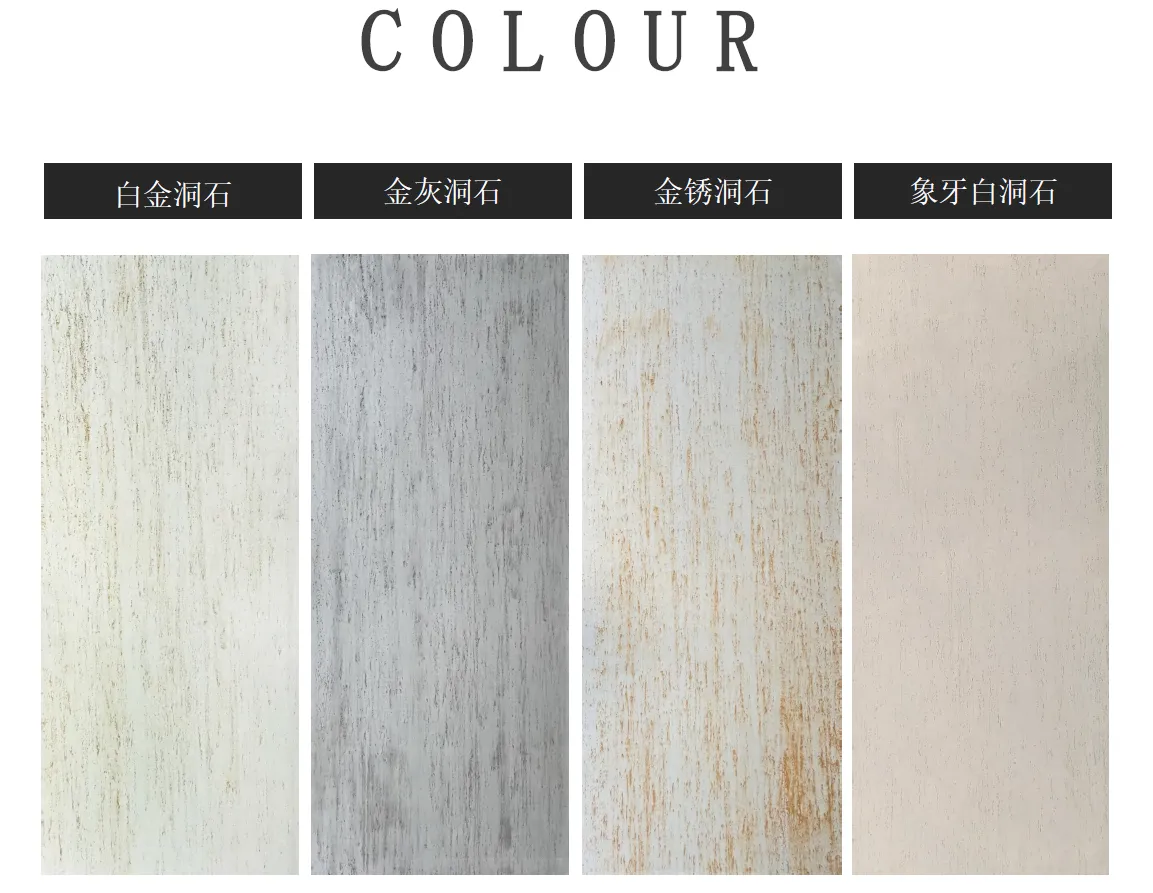
Walk through the ancient streets of Rome, and your fingers might brush against the weathered surface of travertine columns—stones that have stood for millennia, bearing the marks of time like a well-loved story. Their porous, honeycombed texture tells of volcanic origins and the slow dance of mineral-rich water, but that same texture has long been a headache for modern architects and builders. Roman huge travertine, with its iconic warmth and depth, is a material that designers crave for its ability to infuse spaces with history and character. Yet its natural porosity—those tiny, interconnected holes—makes it prone to water damage, staining, and premature aging. For decades, the industry has faced a dilemma: how to preserve travertine's timeless beauty while solving its practical flaws. Enter MCM, or Modified Composite Material, and its game-changing use of modified cement. This innovation isn't just a technical fix; it's a bridge between the past and the future, letting us hold onto the textures we love without sacrificing the durability we need.
To understand the challenge, let's start with the science of travertine. Formed in hot springs and limestone caves, travertine is a type of sedimentary rock built from calcium carbonate deposits. As water flows through the stone, it leaves behind mineral deposits, but it also carves out tiny voids—porosity. These pores are what give travertine its unique, breathable texture, but they're also its Achilles' heel. In a modern setting, where buildings face rain, pollution, and daily wear, porous travertine acts like a sponge: it soaks up water, which freezes and expands in cold climates, cracking the stone from the inside. It absorbs oil, coffee, and dirt, leaving permanent stains that mar its natural beauty. Even in dry environments, UV rays and wind erode the surface, turning sharp edges into soft, crumbling edges over time.
Architects and preservationists have tried countless workarounds. Sealing the stone helps temporarily, but sealants wear off, requiring frequent reapplication—a costly and labor-intensive process. Using denser, less porous stones means losing that signature travertine look. Thin veneers of natural travertine over concrete backings reduce weight but don't solve the porosity at the core. For years, the trade-off seemed inevitable: beauty or durability, tradition or practicality. That is, until MCM and modified cement entered the picture.
At the heart of MCM's solution is modified cement—a material engineered to mimic the look and feel of natural stone while addressing its weaknesses. Unlike traditional cement, which is dense and uniform, modified cement in MCM products is blended with polymers, mineral additives, and fiber reinforcements. This recipe transforms the material's microstructure, filling in those problematic pores without losing the visual depth that makes travertine so appealing. Think of it as preserving the "story" of the stone—the veining, the subtle color variations, the tactile texture—while rewriting the ending to include resilience.
How does it work? The modified cement matrix is designed to be both flexible and dense . During production, air bubbles are carefully controlled to replicate travertine's natural porosity visually, but they're isolated and sealed, preventing water or stains from penetrating. The result? A material that looks and feels like natural travertine—right down to the cool, matte finish and the play of light on its surface—but with a water absorption rate up to 90% lower than traditional stone. For builders, this means fewer callbacks for repairs. For designers, it means finally being able to use "travertine" in high-moisture areas like bathrooms, pool surrounds, or rainy-climate facades.
MCM doesn't offer a one-size-fits-all fix. Instead, it has crafted a range of products that leverage modified cement to solve porosity while catering to diverse design needs. Let's dive into the stars of the show:
One of the most innovative offerings is MCM flexible stone . Traditional travertine is rigid, making it tricky to install on curved surfaces, columns, or uneven walls. MCM flexible stone, however, can bend up to 90 degrees without cracking, thanks to its modified cement base reinforced with lightweight fibers. Imagine cladding a circular lobby with travertine (starry green) —those tiny, glittering mineral deposits that mimic a night sky—without worrying about the stone shattering during installation. Or wrapping a spiral staircase in lunar peak silvery , a finish that shimmers like moonlight on stone, all while the material conforms seamlessly to every curve. This flexibility doesn't just make installation easier; it unlocks design possibilities that were once impossible with natural travertine.
For large-scale projects—think hotel facades, museum walls, or commercial plazas— MCM big slab board series is a game-changer. Traditional travertine slabs are often limited by size (typically 60x60cm or smaller) due to their weight and brittleness. MCM big slabs, however, can reach up to 120x240cm, creating a seamless, monolithic look that minimizes grout lines and enhances visual impact. Take, for example, a modern art gallery using roman huge travertine -inspired MCM big slabs in travertine (vintage gold) . The large format makes the space feel expansive, while the modified cement ensures the golden hue won't fade or stain from sunlight or gallery visitors' foot traffic. Plus, because MCM slabs are lighter (up to 60% lighter than natural stone), they reduce structural load, cutting down on construction costs for foundations and support systems.
For projects demanding hyper-specific textures—like replicating the weathered surface of a historical ruin or creating a one-of-a-kind 3D art wall—the MCM 3D printing series shines. Using modified cement as the "ink," 3D printers can layer the material to build up textures that mimic everything from wave panels (rippling like water frozen in stone) to star gravel (tiny, raised pebbles that catch the light). The best part? These 3D-printed surfaces retain the modified cement's low porosity, so even the most intricate textures won't trap dirt or moisture. A boutique hotel in Bali, for instance, used MCM 3D printing to create bali stone -inspired wall panels with a rough, hand-chiseled look—perfect for evoking island charm—without the risk of mold growth in humid conditions.
Let's look at a case study that brings these innovations to life. The Museum of Modern History in Madrid faced a dilemma: it wanted to honor its neoclassical roots with a travertine facade but needed the material to withstand Spain's hot, dry summers and occasional heavy rains. Natural Roman travertine was beautiful but would require constant sealing; generic concrete was durable but lacked character. The solution? MCM big slab board series in travertine (starry blue) .
The museum's designers chose the starry blue variant for its deep, celestial hue—fitting for a space dedicated to exploring human progress. The MCM big slabs (100x200cm each) created a seamless, sky-like expanse, while the modified cement core ensured rainwater rolled off instead of soaking in. After two years, the facade still looks brand-new, with no stains or water damage. "We wanted the building to feel timeless, but we also needed it to last," says lead architect Elena Marquez. "MCM let us have both. The starry blue travertine looks like it was quarried yesterday, not manufactured—and that's the magic."
| Feature | Traditional Roman Travertine | MCM Modified Cement Travertine |
|---|---|---|
| Porosity Level | High (20-30% void space) | Low (≤2% void space, sealed) |
| Water Absorption Rate | 3-5% by weight (after sealing) | 0.3-0.5% by weight (no sealing needed) |
| Compressive Strength | 15-25 MPa | 40-50 MPa (2x stronger) |
| Weight per sqm | 25-30 kg | 8-12 kg (60% lighter) |
| Installation Complexity | High (requires skilled masons, heavy lifting) | Low (lightweight, flexible, can be cut on-site) |
| Maintenance Needs | Annual sealing, stain removal treatments | Minimal (occasional cleaning with water) |
While solving porosity is MCM's headline act, its modified cement base brings other benefits that make it a favorite among designers. For starters, sustainability. MCM products often use recycled aggregates in their modified cement mix, reducing the need for virgin stone quarrying. Take foamed aluminium alloy board (vintage silver) , a sister product to the travertine lines—it combines recycled aluminum with modified cement for a lightweight, industrial-chic finish that's 100% recyclable.
Then there's versatility. MCM offers an almost overwhelming range of finishes, from the earthy warmth of rammed earth board (matcha green) to the sleek modernity of fair-faced concrete . Want the look of wood grain board without the fire risk? MCM has you covered. Dreaming of a gobi panel that evokes desert landscapes? It's there. These options mean designers aren't limited to "fixed" stone types—they can mix and match to create truly unique spaces. A recent restaurant in Tokyo, for example, paired travertine (vintage black) with weaving (khaki) panels to blend industrial edge with natural warmth, all while ensuring both materials could handle the humidity of a sushi kitchen.
Roman huge travertine has been a building block of civilization for thousands of years, but its story isn't over. With MCM and modified cement, we're not replacing tradition—we're reimagining it. This technology lets us keep the textures, colors, and character that make travertine beloved while adding the durability and practicality that modern construction demands. It's a reminder that innovation doesn't have to erase the past; sometimes, it just gives it a better, longer-lasting voice.
For architects, builders, and designers, this means more freedom to dream. It means using travertine (starry orange) in a rooftop bar without fear of rain damage, or cladding a children's museum in semicircle board knowing it can withstand sticky fingers and frequent cleaning. It means that the next time someone runs their hand over a "travertine" wall, they'll feel history—and a future that's built to last.
Recommend Products












