
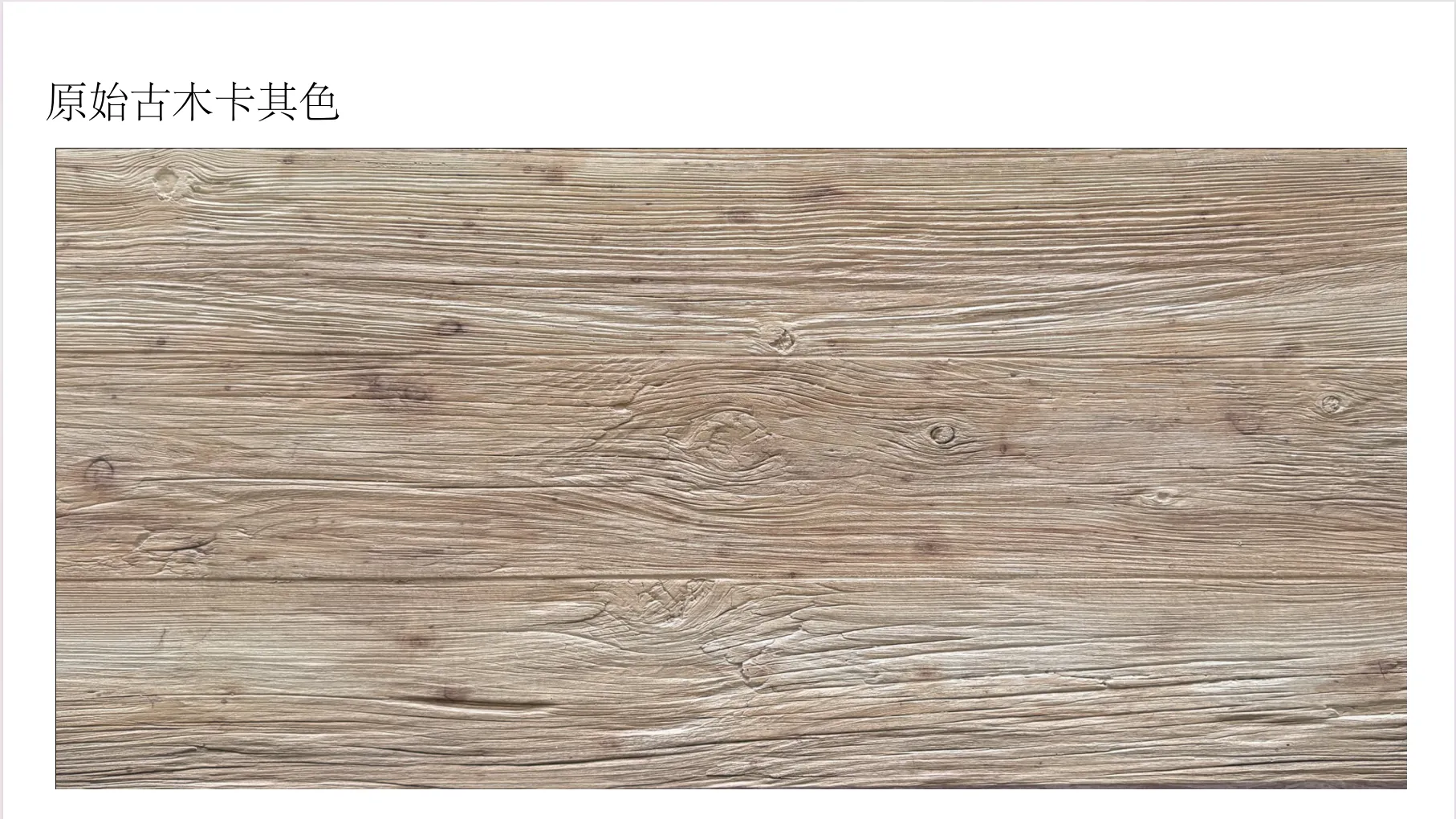
Walk through a centuries-old forest, and your fingers might brush against a gnarled oak trunk—its surface etched with growth rings, knots, and the soft wear of wind and rain. That texture, that story written in wood, has long been a designer's dream: warm, organic, and deeply human. But here's the conflict we face today: to bring that ancient beauty into our buildings, must we sacrifice the forests that hold it? MCM technology says no. More than just a material, it's a bridge between the past and the future—a way to honor the artistry of ancient wood while protecting the planet that created it.
Wood is more than a building material; it's a narrative. The swirl of a burl, the faint of a lightning-struck branch, the honeyed hue of aged cedar—these details aren't just aesthetic. They connect us to something primal: the rhythm of seasons, the patience of growth, the quiet resilience of nature. Architects and interior designers have chased this "soul" for decades, using reclaimed wood or rare timber to infuse spaces with history. But reclaimed wood is finite, and logging—even for "sustainable" hardwoods—carries a heavy cost: deforestation, habitat loss, and carbon emissions that weigh on our climate.
Enter ancient wood textures—not the wood itself, but its essence. MCM (Modified Composite Material) technology doesn't just copy the look of weathered planks or timeworn beams. It captures their feeling : the way light plays on a rough-hewn surface, the subtle variation in color where sap once flowed, the tactile warmth that makes a room feel like home. And it does this without felling a single tree.
At the heart of this replication is wood grain board —a star of MCM's lineup designed to mimic the most intricate details of natural wood. The process starts with observation: artisans study real ancient wood samples, documenting every nuance under high-resolution cameras and 3D scanners. A 200-year-old barn beam with nail holes and water stains? Its texture is digitized, pixel by pixel. A driftwood log smoothed by ocean waves? Its contours are mapped in 3D. These digital blueprints then guide MCM's manufacturing, where layers of eco-friendly resins, minerals, and recycled fibers are pressed and molded to recreate the texture, color, and even the slight irregularities that make real wood so unique.
What sets MCM apart is its base: MCM flexible stone . Unlike rigid traditional materials, flexible stone bends and adapts, allowing wood grain board to be shaped into curves, panels, or even custom designs without cracking. Imagine a restaurant wall that curves like a forest path, lined with wood grain board that looks and feels like it was hewn from ancient trees—except it's lightweight, water-resistant, and built to last decades. That's the magic of MCM: it marries the fragility of natural wood with the durability of modern engineering.
"We don't just replicate wood—we preserve its memory," says Elena Marquez, a materials scientist at MCM's research lab. "A single ancient oak might inspire 10,000 square meters of wood grain board. That's 10,000 square meters of space where people can feel connected to nature, without that oak ever leaving the forest."
Replication is only half the story. The real revolution is MCM's commitment to sustainability. Let's break it down:
To put this in perspective, let's compare MCM wood grain board to traditional options:
| Material | Environmental Impact | Durability | Maintenance | Aesthetic Range |
|---|---|---|---|---|
| Natural Wood Panels | High (requires logging, deforestation) | 5–15 years (prone to warping/rot) | Regular sealing, polishing, repairs | Limited by wood type/availability |
| Traditional Engineered Wood | Moderate (uses wood fibers, adhesives with formaldehyde) | 10–20 years (may delaminate) | Stain-resistant but not waterproof | Standard wood grains |
| MCM Wood Grain Board | Low (recycled materials, no logging) | 50+ years (resists moisture, UV, scratches) | Wipe clean; no sealing needed | Replicates ancient wood, driftwood, barn wood, and more |
It's one thing to talk about sustainability and replication—but how does this translate to real spaces? Take the Willow & Stone Boutique Hotel in Portland, Oregon. Designed to evoke a cozy mountain lodge, the hotel's lobby features a 20-foot fireplace wall clad in wood grain board that mimics the texture of 19th-century pine beams. The guest rooms use the same material for headboards and accent walls, paired with soft lighting that makes the "wood" glow like it's been warming hearths for generations.
"Guests often ask where we sourced the reclaimed wood," Emma Lee, the hotel's interior designer. "When we tell them it's MCM wood grain board, they're shocked—it feels so real. A couple even thought we'd imported old barn wood from Europe! But the best part? We achieved that 'rustic charm' without contributing to deforestation. Our carbon footprint for the lobby alone was 60% lower than if we'd used real wood."
Beyond hospitality, wood grain board is making waves in residential design. Homeowners in urban apartments use it to create "indoor forests"—walls or ceilings covered in wood textures that bring calm to busy city life. Architects are incorporating it into public spaces, too: a community library in Seattle features a reading nook with curved wood grain board benches that look like they're carved from a single ancient tree, inviting visitors to sit, relax, and lose themselves in a book.
MCM technology isn't just about replacing wood. It's about reimagining our relationship with nature. Ancient wood textures remind us of a time when humans lived in harmony with the environment—a time we can honor without sacrificing progress. Wood grain board, backed by MCM flexible stone, is a tool for that harmony: it lets us build spaces that feel rooted in history, while ensuring there are forests left for future generations to cherish.
So the next time you run your hand over a rough, warm surface that looks like it's been shaped by decades of sun and rain, pause. It might not be real wood—but that's the point. It's a promise: that beauty and sustainability don't have to be enemies. With MCM, we can have both—the story of ancient wood, and a planet that keeps writing new stories.
Recommend Products












