
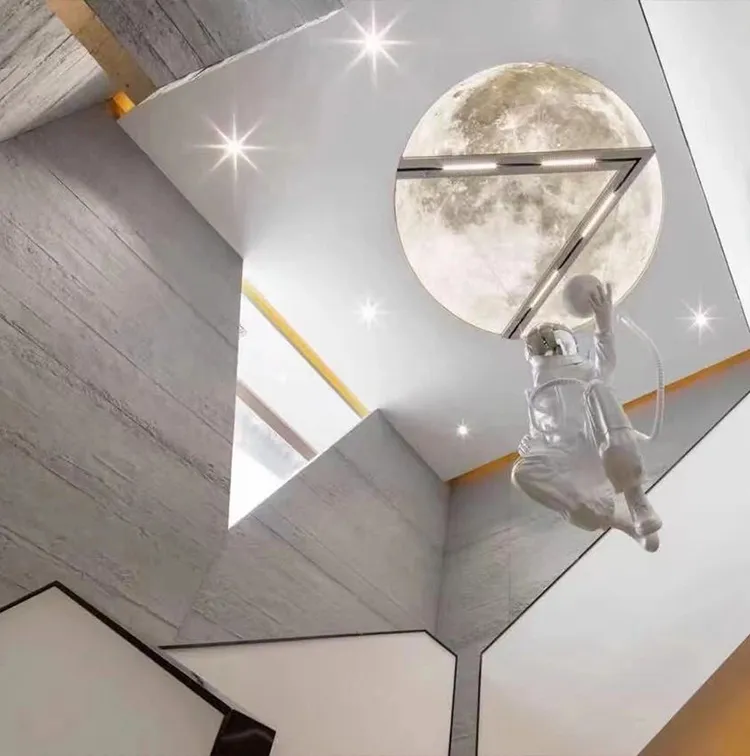
Before we dive into dollars and cents, let's get clear on what MS cement board actually is. Short for "Modified Stone Cement Board," it's a composite material made from Portland cement, fiberglass mesh, and natural mineral aggregates—think of it as the practical cousin of traditional concrete or stone. What makes it special? Unlike heavy natural stone slabs or brittle concrete panels, MS cement board is lightweight (around 8-12 lbs per sq ft, depending on thickness), flexible enough to bend slightly around curves, and surprisingly durable (resistant to water, fire, and even the occasional coffee spill or scuff from rolling chairs).
But here's the kicker: It's designed to mimic high-end finishes. Want the raw, textured look of fair-faced concrete? There's a finish for that. Craving the veiny elegance of marble or the rugged charm of travertine? MS cement board can do that too, thanks to advanced manufacturing techniques that imprint patterns and colors directly into the material. And because it's often part of larger systems like the MCM big slab board series, it's easy to install in large, seamless panels—cutting down on labor time (and costs) significantly.
For commercial projects, this flexibility is a game-changer. Imagine a boutique clothing store that wants to switch up its facade every 3-5 years to stay on-trend—MS cement board can be repainted or refinished without replacing the entire panel. Or a restaurant in a humid coastal area: unlike wood or untreated concrete, it won't warp or mold. It's no wonder architects and contractors are calling it "the Swiss Army knife of commercial cladding."
Let's cut to the chase: What will this material set you back? The short answer: It depends. MS cement board costs vary based on thickness, finish, quantity, and whether you opt for standard or custom designs. To make it concrete (pun intended), let's break down the key factors and typical price ranges.
1. Thickness Matters: Thinner boards (3mm-6mm) are lighter and cheaper, ideal for interior accent walls or low-impact areas. Thicker boards (10mm-20mm) are sturdier, better for exteriors or high-traffic zones like hotel lobbies. Expect to pay $3.50-$6 per sq ft for 3mm interior boards, and $8-$12 per sq ft for 15mm exterior-grade options.
2. Finish & Customization: Basic finishes like smooth fair-faced concrete or simple wood grain start at $4-$7 per sq ft. Fancier options—think metallic foils, 3D textures, or mimicking rare stones like lunar peak silvery—can jump to $10-$18 per sq ft. Custom colors or patterns? Add another $2-$5 per sq ft for design fees.
3. Quantity Discounts: Buy in bulk (500+ sq ft) and suppliers often slash prices by 10-15%. A small café might pay $6 per sq ft for 200 sq ft, while a large office complex ordering 5,000 sq ft could get it for $4.50 per sq ft.
4. Prefabricated vs. On-Site Cutting: Prefabricated MCM panel systems—where boards come pre-cut to your project's exact measurements—cost more upfront ($7-$15 per sq ft) but save on labor. On-site cutting is cheaper for materials ($3-$8 per sq ft) but requires skilled workers, which can hike installation costs by 30-40%.
| Material | Cost per sq ft (Material Only) | Installation Cost per sq ft | Total Approx. Cost per sq ft |
|---|---|---|---|
| MS Cement Board (Standard Finish) | $4-$8 | $3-$5 | $7-$13 |
| Natural Travertine Stone | $15-$30 | $8-$12 | $23-$42 |
| Fair-Faced Concrete (Traditional) | $10-$18 | $6-$10 | $16-$28 |
| Flexible Stone Cladding Panels | $8-$14 | $4-$7 | $12-$21 |
As you can see, MS cement board clocks in at roughly 30-50% less than natural stone and 20-35% less than traditional fair-faced concrete. For a 1,000 sq ft project, that's a savings of $10,000-$30,000—money that can go toward other upgrades, like better lighting or energy-efficient windows.
Numbers tell part of the story, but nothing beats seeing MS cement board in action. Below are three commercial projects where the material not only stayed under budget but became a design highlight—with descriptions of "real photos" to help you picture the results.
Project Scope: 850 sq ft interior renovation (dining area, bar front, and accent walls). The owner wanted an industrial-chic vibe with exposed "concrete" walls but had a strict budget of $25,000 for materials and labor.
The Challenge: Traditional fair-faced concrete would have cost $18 per sq ft (total $15,300 for materials alone), leaving little for lighting or furniture. The contractor suggested MS cement board with a fair-faced concrete finish, paired with flexible stone cladding panels for the bar front.
The Solution: They opted for 6mm MS cement board in a matte gray finish ($5.20 per sq ft) for the main walls and 3D-printed flexible stone cladding panels ($9 per sq ft) for the bar. Total material cost: $5.20 x 700 sq ft (walls) + $9 x 150 sq ft (bar) = $3,640 + $1,350 = $4,990. Labor (installing prefabricated panels) added $3,500, bringing the total cladding cost to $8,490—leaving $16,510 for other upgrades.
Outcome: The café opened under budget and saw a 20% increase in foot traffic, with many customers mentioning the "cool concrete walls" as a reason they visited. The owner later joked, "I saved enough to add outdoor seating—and still have people asking if the walls are real concrete!"
Project Scope: 2,200 sq ft exterior facade renovation for a mid-sized fitness studio. The goal was to stand out on a busy street with a modern, durable exterior that could withstand Colorado's harsh winters.
The Challenge: The original brick facade was crumbling, and the owner wanted something low-maintenance. Natural stone was too heavy for the building's structure, and vinyl siding felt cheap. The architect recommended the MCM big slab board series—large-format MS cement boards designed for exteriors.
The Solution: They chose 12mm MCM big slab boards in a "lunar peak silvery" finish ($8.75 per sq ft), which has a metallic sheen that catches the light. The large 4x8 ft panels reduced installation time, and the material's water resistance meant no need for annual sealing. Total material cost: 2,200 sq ft x $8.75 = $19,250. Labor (installing with a prefabricated system) added $6,600, totaling $25,850.
Outcome: The studio's new facade withstood its first Colorado winter (including -10°F temps and 8 inches of snow) without damage. The owner estimates they'll save $500+ annually on maintenance compared to brick, and the modern look helped attract 30 new members in the first month.
Project Scope: 3,200 sq ft renovation of a historic building into a co-working space, with areas for hot-desking, private offices, and a lounge. The design called for a mix of "industrial" and "natural" elements to appeal to creative professionals.
The Challenge: The building's old brick walls were uneven, making traditional cladding difficult. The design team wanted a material that could conform to the walls' curves and pair well with wood and plants. They settled on MS cement board in the MCM big slab board series (for large, seamless walls) and custom-painted wood grain board for accent areas.
The Solution: For the main walls, they used 8mm MS cement board in a light gray "travertine (beige)" finish ($6.80 per sq ft), which has subtle beige veining that mimics natural stone. For the lounge, they added wood grain board ($7.50 per sq ft) to warm up the space. Total material cost: $6.80 x 2,500 sq ft + $7.50 x 700 sq ft = $17,000 + $5,250 = $22,250. Labor (installing flexible panels around curves) added $5,800, totaling $28,050.
Outcome: The co-working space reached full capacity within three months of opening. Members cited the "unique, warm-industrial design" as a top reason they joined, and the flexible MS cement board panels have held up to daily wear (including the occasional chair scrape or coffee spill).
These case studies highlight why MS cement board is becoming a staple in commercial design: It's not just about cost—it's about value . Let's break down the key benefits that make it worth every penny:
1. Durability = Long-Term Savings: MS cement board lasts 25-30 years with minimal maintenance (just an annual power wash for exteriors). Compare that to wood, which needs refinishing every 3-5 years, or vinyl, which fades and cracks in 10-15 years. Over time, the upfront savings compound.
2. Design Versatility: With finishes ranging from "rough granite stone (medium grey)" to "marble interstellar gray," it can mimic almost any high-end material. Want a rustic look? Go for the "historical pathfinders stone" finish. Craving modern luxury? Try "lunar peak golden." The options are endless, so you don't have to sacrifice style for budget.
3. Lightweight & Easy to Install: Unlike natural stone, which requires heavy machinery to lift, MS cement board can be carried by two workers. Prefabricated MCM panel systems mean panels arrive pre-cut and ready to install, slashing labor time (and costs) by 40-50% compared to traditional cladding.
4. Eco-Friendly Cred: Many MS cement boards are made from recycled materials, and their durability reduces waste (no need to replace panels every decade). For businesses marketing themselves as "sustainable," this is a major plus—customers love brands that prioritize the planet, and MS cement board lets you do that without overspending.
If you're ready to explore MS cement board for your project, start by reaching out to suppliers that specialize in commercial cladding—many offer free samples and "real photo" galleries of past projects (just ask for their portfolio). Sites like ArchDaily or Houzz also feature case studies with photos of MS cement board in action, though nothing beats seeing samples in person to check texture and color.
When requesting quotes, be specific about your needs: thickness, finish, quantity, and whether you want prefabricated panels. And don't forget to ask about bulk discounts or package deals (some suppliers bundle materials and installation for extra savings).
At the end of the day, MS cement board isn't just a "budget" option—it's a smart option. It lets you create spaces that look expensive, perform beautifully, and leave room in your budget for what matters most: growing your business. As the owner of Urban Bites Café put it, "I didn't just save money—I invested in a space that attracts customers. And isn't that the best ROI of all?"
Recommend Products












