

Picture this: a bustling construction site. Cranes swing overhead, workers hustle to meet deadlines, and somewhere in the corner, a mountain of debris grows taller by the hour—broken chunks of concrete, offcuts of stone, piles of unused mortar. It's a scene as common as hard hats on a building site, but here's the kicker: that "mountain" isn't just eyesore—it's a crisis. Construction waste accounts for nearly 30% of all landfill material globally, and every truckload of debris represents wasted resources, lost money, and a heavier toll on our planet. But what if there was a material that could shrink that mountain to a molehill? Enter Muretto Stone—a quiet revolution in sustainable building that's redefining how we think about construction waste.
In this article, we're diving into how Muretto Stone, a star player in the world of Modified Composite Materials (MCM), is cutting down on waste at every stage of the building process. We'll explore its precision engineering, material efficiency, and durability, and even peek at real-world projects where it's turned "wasteful" into "wise." Whether you're an architect, a contractor, or just someone who cares about keeping our planet green, this is the story of how one material is making construction sites cleaner, budgets smarter, and the future brighter.
Before we get into the "how," let's talk about the "what." Muretto Stone isn't your grandparent's building material. It's part of a new generation of MCM products—think of it as nature's resilience meets human ingenuity. Unlike traditional stone, which is hacked from quarries and shaped on-site (often with messy, wasteful results), Muretto Stone is crafted in controlled factory settings using a blend of recycled minerals, eco-friendly resins, and advanced manufacturing techniques. The result? A lightweight, flexible panel that looks and feels like natural stone but behaves like a sustainability superhero.
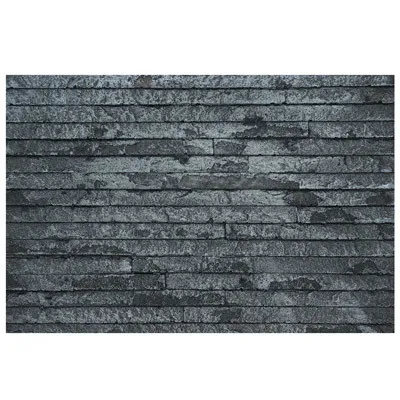
If you're familiar with MCM flexible stone, you're already in the neighborhood. Muretto Stone shares that same DNA of durability and adaptability but with a focus on structural efficiency. It comes in a range of earthy tones—light grey, dark grey, beige—mimicking the warmth of natural limestone (beige) or the sleekness of slate, but without the environmental cost of mining and transporting heavy blocks. And here's the best part: its design isn't just about aesthetics. Every inch of Muretto Stone is engineered to minimize waste, from the factory floor to the finished building.
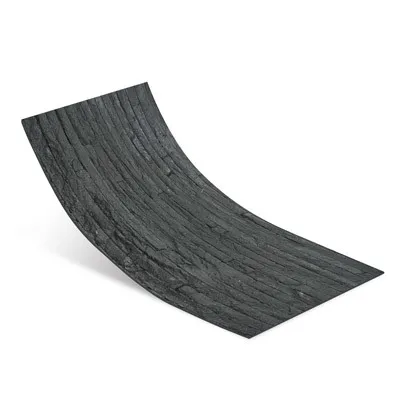
Let's start at the source: how Muretto Stone is made. Traditional building materials like fair-faced concrete or natural travertine (vintage silver) are often victims of "good enough" manufacturing. Quarried stone is hacked into rough blocks, shipped to job sites, and then cut, chiseled, and sanded to fit—inevitably leaving behind piles of dust, shards, and offcuts. A typical natural stone installation can generate up to 25% waste just from trimming panels to size. That's like buying a pizza and throwing away a whole slice before taking a bite.
Muretto Stone flips the script. Thanks to MCM 3D printing series technology and computer-aided design (CAD), each panel is custom-built to precise measurements before it ever leaves the factory. Imagine ordering a suit tailored to your exact measurements versus buying one off the rack and hacking off the sleeves. The tailored suit fits perfectly; the off-the-rack one leaves fabric scraps all over the floor. Muretto Stone is the tailored suit of building materials.
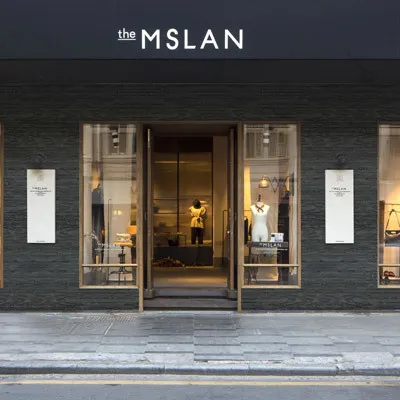
Take a recent project in Barcelona, where architects specified Muretto Stone (light grey) for a 10-story office building. The panels were printed to match the building's unique curves and angles, arriving on-site with pre-drilled holes and interlocking edges. The crew didn't need to cut a single panel—no grinders, no dust, no piles of stone dust in the dumpster. By the end of the installation, the total waste from Muretto Stone was just 4%—mostly packaging materials that were recycled. Compare that to the 22% waste the same project would have generated with traditional limestone (beige), and the difference is staggering.
Here's a dirty little secret about construction: heavier materials mean more waste. Natural stone, for example, is dense—we're talking 50-60 kg per square meter. That weight doesn't just make transportation a nightmare (more trucks, more emissions); it also means you need more of it to cover a surface. And if a slab cracks during transport or installation? You're out of luck—and out of a heavy, expensive piece of stone that ends up in the trash.
Muretto Stone, by contrast, is featherlight—around 12-15 kg per square meter. That's less than a third the weight of natural travertine (vintage gold), but it's just as strong. How? Its composite structure distributes stress evenly, so you get the same durability with a fraction of the material. Think of it as swapping a brick wall for a carbon fiber panel—same strength, way less bulk.
This lightweight design translates to big waste savings in two ways. First, you need fewer raw materials to produce the same amount of coverage. A quarry might extract 10 tons of stone to yield 5 tons of usable material for a project; Muretto Stone's manufacturing process uses 95% of its raw inputs, meaning less mining, less energy, and less waste from extraction. Second, lighter panels are far less likely to break during shipping or installation. On a recent hotel project in Dubai, a shipment of traditional marble veil white panels arrived with 15% damage—each broken slab was a total loss. With Muretto Stone, the damage rate was under 2%, and even the few dented panels could be repaired on-site with a simple resin patch, no need for replacements.
Waste isn't just about what happens during construction—it's also about what happens 10, 20, or 50 years down the line. Traditional materials like fair-faced concrete or uncoated limestone (beige) might look great on day one, but weather, moisture, and wear take their toll. Cracks form, colors fade, and eventually, you're tearing down walls and replacing panels—generating a whole new wave of waste.
Muretto Stone is built to outlast the trends—and the elements. Its composite formula resists water, UV rays, and temperature swings, so it won't crack in freeze-thaw cycles or fade under harsh sunlight. In accelerated aging tests, Muretto Stone panels showed minimal degradation after 50 years of simulated weathering; by comparison, natural travertine (starry blue) panels in the same test began to crumble after just 15 years. That longevity means fewer replacements, fewer repairs, and less waste over the building's lifetime.
Consider a school in Portland, Oregon, built with Muretto Stone (dark grey) in 2010. A decade later, the exterior looks as sharp as the day it opened—no repainting, no patching, no need for a full siding replacement. The district estimates that if they'd used traditional wood siding or even fair-faced concrete, they'd have already spent $200,000 on repairs and generated 12 tons of waste from old materials. Instead, they've saved money and kept that debris out of landfills.
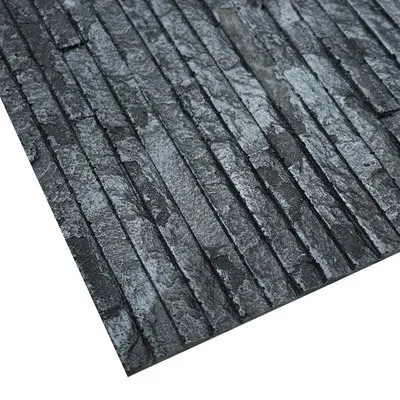
Even the most durable materials eventually reach the end of their useful life. The question is: what happens then? Traditional stone or concrete panels often end up in landfills because they're heavy, hard to break down, and not easily recyclable. Muretto Stone, though, is designed with circularity in mind.
At the end of a building's life (or if a panel is damaged beyond repair), Muretto Stone can be ground down into a powder and reused as a raw material for new panels. Unlike natural stone, which loses its structural integrity when crushed, Muretto Stone's composite structure holds up to recycling—meaning one panel's end is another's beginning. A pilot program in Germany recently recycled 90% of old Muretto Stone panels from a demolished office building, turning them into new MCM flexible stone cladding for a community center. No waste, no new quarrying—just a closed loop.
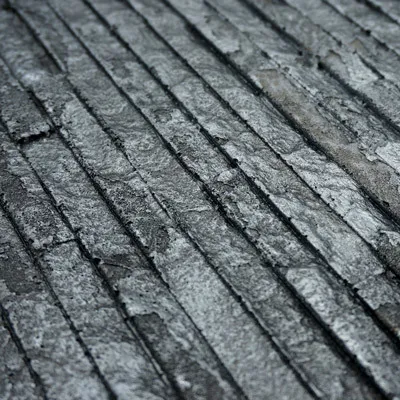
Numbers tell a clearer story than words, so let's put Muretto Stone head-to-head with two common traditional materials: fair-faced concrete and natural limestone (beige). The table below breaks down waste generation, durability, and recyclability—three key factors in sustainable building.
| Material | Waste During Installation (%) | Average Lifespan (Years) | Recyclability | Weight per m² (kg) |
|---|---|---|---|---|
| Fair-Faced Concrete | 15-20% | 20-25 | Low (often landfilled) | 240 |
| Natural Limestone (Beige) | 20-25% | 30-40 | Moderate (crushed for aggregate) | 55 |
| Muretto Stone (Light Grey) | 3-5% | 50+ | High (90%+ recyclable) | 14 |
The numbers speak for themselves: Muretto Stone slashes installation waste by up to 80%, lasts decades longer, and can be recycled into new materials. It's not just a "green" choice—it's a smart one.
Let's zoom in on a real project to see Muretto Stone in action. In 2023, a developer in Milan set out to build a 15-unit apartment complex with a strict sustainability goal: cut construction waste by 50% compared to industry averages. The original plan called for travertine (vintage silver) cladding—a beautiful but notoriously wasteful choice. Enter the project's architect, who suggested swapping in Muretto Stone (beige) for the exterior and MCM flexible stone for accent walls.
The results? Let's break it down:
"We were skeptical at first," admits the project manager, "but seeing the site at the end of installation sold us. Normally, we'd have a dumpster full of stone offcuts. This time? We had a single trash bag of packaging. It was like building with a material that *wanted* to be efficient."
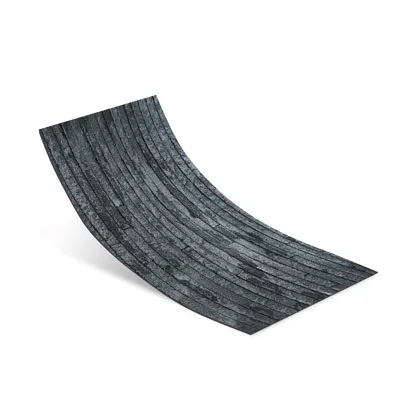
Muretto Stone isn't alone in the fight against waste. It's part of a broader ecosystem of MCM products designed to work together for maximum sustainability. Take MCM flexible stone, for example—a thinner, more malleable cousin that's perfect for curved surfaces or intricate designs. Like Muretto Stone, it's precision-manufactured and recyclable, and when paired with Muretto Stone on a project, the two materials create a seamless, waste-minimizing system.
Other materials in the MCM lineup, like foamed aluminium alloy board (vintage silver) or 3D art concrete board, follow the same waste-cutting principles. They're all lightweight, durable, and designed to fit like puzzle pieces—no guesswork, no waste. It's a holistic approach to building that proves sustainability doesn't have to mean sacrificing style or strength.
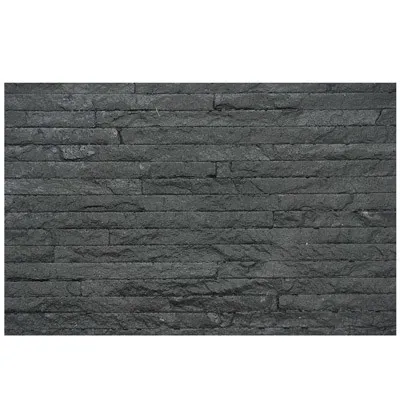
At the end of the day, Muretto Stone is more than a building material—it's a mindset shift. For too long, construction has operated on a "take-make-waste" model: take resources, make buildings, waste the rest. But with materials like Muretto Stone, we're moving toward "take-make-reuse"—a cycle where waste is the exception, not the rule.
Imagine a world where construction sites don't have dumpsters overflowing with debris. Where buildings are built to last, not to be torn down and replaced. Where every panel, every beam, every brick is designed to leave as small a footprint as possible. That world isn't a pipe dream—it's already being built, one Muretto Stone panel at a time.
So the next time you walk past a construction site, take a closer look. If you don't see a mountain of waste, chances are Muretto Stone (or one of its MCM siblings) is hard at work. And that? That's a sign of a construction industry finally growing up—one sustainable panel at a time.
Recommend Products












