
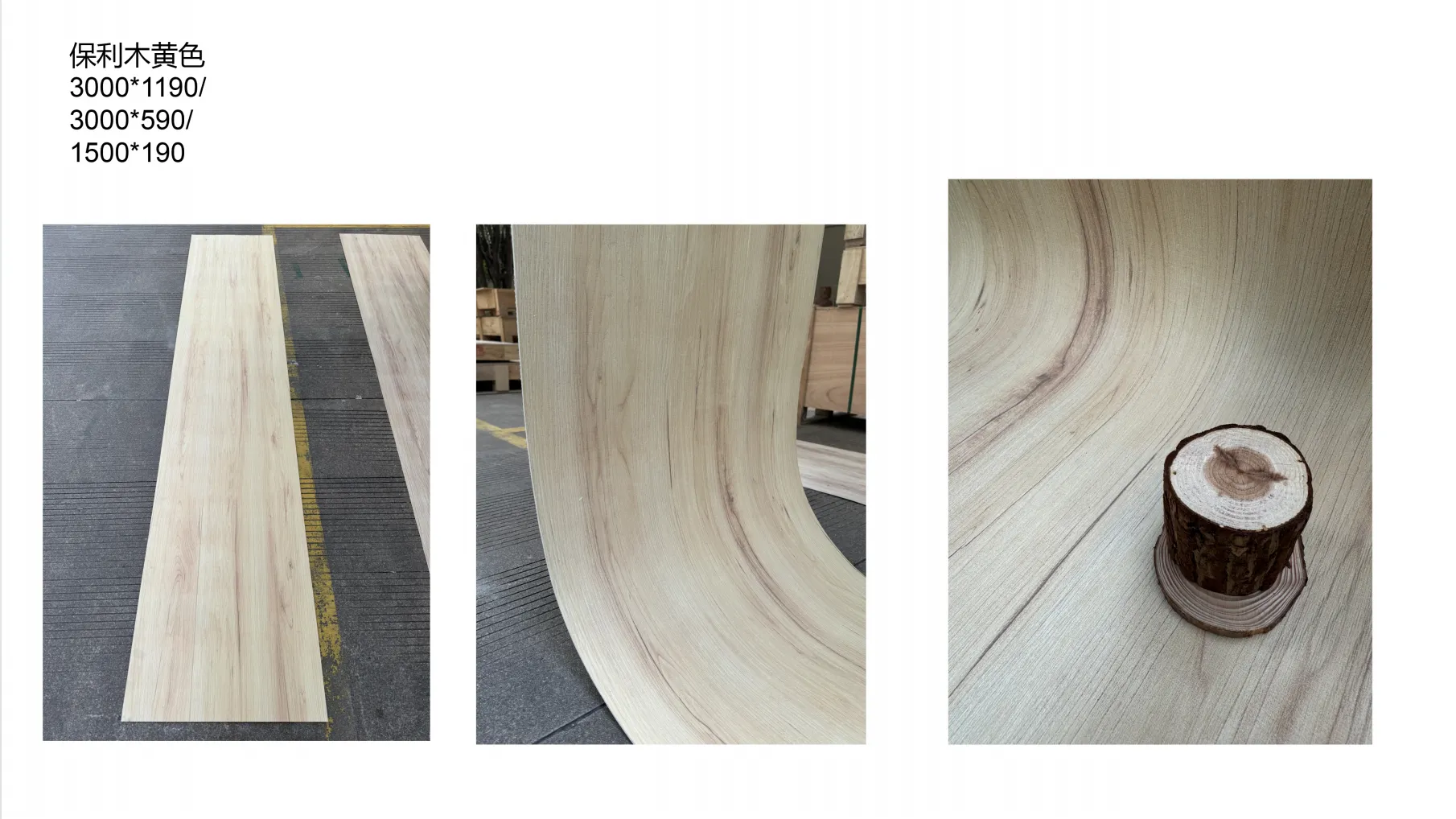
In a world where the race to combat climate change is more urgent than ever, net-zero energy buildings have moved from a niche concept to a critical necessity. These structures—designed to produce as much energy as they consume over a year—are pivotal in reducing our carbon footprint. But achieving net-zero isn't just about solar panels or wind turbines; it starts with the materials we choose to build with. Enter Poly Wood Board: a material that's quietly revolutionizing sustainable construction by blending performance, durability, and eco-friendliness in a way that traditional options often can't match. Let's dive into how this innovative material is becoming a cornerstone for architects, builders, and homeowners committed to net-zero goals.
At first glance, you might mistake Poly Wood Board for natural wood—its warm grain patterns and tactile texture are that convincing. But look closer, and you'll realize it's something entirely different: a composite material crafted from recycled wood fibers and plastic waste, fused together with eco-friendly binders. It's a product born from the idea that sustainability shouldn't mean sacrificing quality or aesthetics. Unlike solid wood, which requires harvesting trees, or pure plastic siding, which relies on virgin petroleum, Poly Wood Board takes what would otherwise end up in landfills—think discarded lumber scraps, plastic bottles, and packaging—and transforms them into a building material that's both functional and environmentally responsible.
Manufacturers of Poly Wood Board often prioritize low-impact production processes, too. Many facilities run on renewable energy, and the manufacturing itself generates minimal waste, with any byproducts being recycled back into the production cycle. The result? A material with a significantly lower embodied carbon footprint than many traditional building materials—something that matters deeply when calculating a building's overall net-zero potential.
To understand why Poly Wood Board is a net-zero all-star, we need to talk about embodied energy—the total energy consumed during a material's lifecycle, from raw material extraction to manufacturing, transportation, and disposal. Traditional building materials like cement board or solid wood often come with high embodied energy: cement production is a major source of CO2 emissions, while logging and processing wood require significant energy inputs, not to mention the environmental cost of deforestation.
Poly Wood Board flips the script. By using recycled materials, it skips the energy-intensive steps of extracting virgin resources. For example, recycling plastic saves up to 70% of the energy needed to produce new plastic, and reusing wood fibers eliminates the need for logging and milling. Some manufacturers even source their recycled materials locally, cutting down on transportation emissions. When you add it all up, Poly Wood Board typically has an embodied carbon footprint that's 30-50% lower than solid wood siding and up to 60% lower than standard cement board—a huge win for net-zero buildings, where every kilogram of CO2 counts.
A building's energy use for heating and cooling is often its biggest carbon contributor. That's where thermal efficiency comes in—and Poly Wood Board excels here, too. Thanks to its composite structure, it has natural insulating properties that help regulate indoor temperatures, reducing the need for constant heating or air conditioning.
Let's break it down: the wood fibers in Poly Wood Board trap small pockets of air, acting as a natural insulator, while the plastic component adds density that slows heat transfer. The result is a material with a higher R-value (a measure of thermal resistance) than many traditional siding options. For example, standard vinyl siding has an R-value of around 0.6, while solid wood siding might reach 0.8-1.0. Poly Wood Board, on the other hand, often hits R-values of 1.2-1.5, depending on thickness. That might not sound like a huge difference, but over the course of a year, it adds up. In a typical home, better insulation can reduce heating and cooling costs by 15-25%—which directly translates to lower energy use and a smaller carbon footprint.
In colder climates, this means furnaces cycle on less frequently, and in hotter regions, air conditioners don't have to work overtime to keep interiors cool. For net-zero buildings, where the goal is to balance energy consumption with on-site generation (like solar panels), every reduction in energy demand makes it easier to reach that balance.
Sustainability isn't just about what a material is made of—it's about how long it lasts. A building material that needs frequent replacement isn't truly green, no matter how recycled its components are. Poly Wood Board shines here, too, with a lifespan that outperforms many traditional options.
Unlike natural wood, which can warp, rot, or succumb to termites, Poly Wood Board is resistant to moisture, pests, and decay. It doesn't splinter, crack, or require painting or staining every few years. In fact, most manufacturers back their Poly Wood Board products with warranties of 25-50 years—and in real-world conditions, they often last even longer. Compare that to vinyl siding, which might need replacement after 20-30 years, or solid wood, which can start deteriorating in as little as 10-15 years without meticulous maintenance. Fewer replacements mean less material waste, lower transportation emissions from hauling old materials to landfills, and less demand for new resources—all of which support a building's net-zero goals over its entire lifecycle.
One of the biggest barriers to adopting sustainable materials is the perception that they're limited in style. Architects and homeowners don't want to compromise on design for the sake of the planet—and with Poly Wood Board, they don't have to. This material is surprisingly versatile, available in a range of colors, textures, and finishes that can complement almost any architectural style.
Want a modern, industrial look? Pair sleek charcoal Poly Wood Board siding with foamed aluminium alloy board accents in vintage silver for a striking contrast. Going for a rustic vibe? Opt for warm oak-toned Poly Wood Board with travertine (starry beige) flooring to bring in earthy, natural textures. Even traditional homes benefit—Poly Wood Board can mimic the look of cedar shakes or lap siding so closely that passersby won't know the difference. This flexibility means it can fit into net-zero projects of all kinds, from minimalist urban apartments to sprawling rural eco-homes, without sacrificing curb appeal.
Still wondering how Poly Wood Board compares to other common building materials? Let's take a look at the key metrics that matter for net-zero energy buildings:
| Material | Embodied Carbon (kgCO₂/m²) | Thermal Resistance (R-value, m²·K/W) | Lifespan (Years) | Recyclability |
|---|---|---|---|---|
| Poly Wood Board | 8-12 | 1.2-1.5 | 50+ | High (can be recycled into new boards) |
| Cement Board | 25-30 | 0.3-0.5 | 30-40 | Low (limited recycling options) |
| Foamed Aluminium Alloy Board | 18-22 | 0.2-0.4 | 40-50 | Medium (recyclable, but high energy for processing) |
| Solid Wood Siding | 15-20 | 0.8-1.0 | 15-25 (with maintenance) | Medium (biodegradable, but limited recycling) |
As the table shows, Poly Wood Board leads in embodied carbon, thermal resistance, and recyclability, with a lifespan that matches or exceeds the most durable options. For net-zero buildings, these advantages add up to lower energy use, reduced waste, and a smaller environmental footprint over time.
It's one thing to talk about the benefits of Poly Wood Board in theory—but real-world projects show just how impactful it can be. Take the GreenPointe Eco-Village in Portland, Oregon, a mixed-use development of 50 net-zero energy apartments. The developers chose Poly Wood Board for exterior siding and decking, citing its low embodied carbon and thermal performance as key factors. After a year of operation, energy monitoring showed that the buildings used 28% less energy for heating and cooling than similar structures with traditional siding. "We were blown away by how much the material itself contributed to our energy goals," says Maria Gonzalez, the project's lead architect. "It wasn't just the solar panels—Poly Wood Board was a silent workhorse, keeping interiors comfortable with minimal energy input."
Another example is the Horizon Elementary School in Boulder, Colorado, which aimed to be the first net-zero school in the state. The design team used Poly Wood Board for classroom walls and common areas, paired with energy-efficient windows and a rooftop solar array. Within six months of opening, the school was producing more energy than it consumed, thanks in part to the reduced heating load from the well-insulated walls. "Parents and teachers love it too," notes principal James Harrison. "The classrooms stay at a consistent temperature year-round, and the wood-like finish makes the space feel warm and inviting—nothing like the cold, sterile vibe of traditional cinder block schools."
As the demand for net-zero energy buildings grows, materials like Poly Wood Board will only become more important. Manufacturers are already innovating, experimenting with even higher recycled content (some are testing 90% recycled materials) and improved thermal properties by adding natural insulators like hemp fibers. There's also research into integrating phase-change materials into Poly Wood Board, which could store and release heat to further reduce energy use.
But perhaps the biggest impact of Poly Wood Board is the shift it represents: a move away from "sustainable or stylish" thinking and toward "sustainable and stylish." It proves that building materials can be kind to the planet without compromising on performance, durability, or design. For architects, builders, and homeowners, that's a game-changer. It means net-zero buildings don't have to look like experimental science projects—they can be beautiful, functional spaces that people are proud to call home or work in.
Net-zero energy buildings aren't just a trend—they're a necessity if we want to mitigate climate change and create a sustainable future. And while solar panels and energy-efficient appliances get a lot of attention, the materials we build with are just as crucial. Poly Wood Board is a shining example of how innovation in materials can make net-zero goals more achievable, one plank at a time.
By prioritizing recycled materials, reducing embodied energy, improving thermal efficiency, and offering long-lasting durability, Poly Wood Board isn't just a building material—it's a statement. It says that we can build in harmony with the planet, creating spaces that are comfortable, beautiful, and responsible. So the next time you walk past a building with warm, wood-like siding, take a closer look—it might just be Poly Wood Board, quietly helping to build a net-zero future.
Recommend Products












