
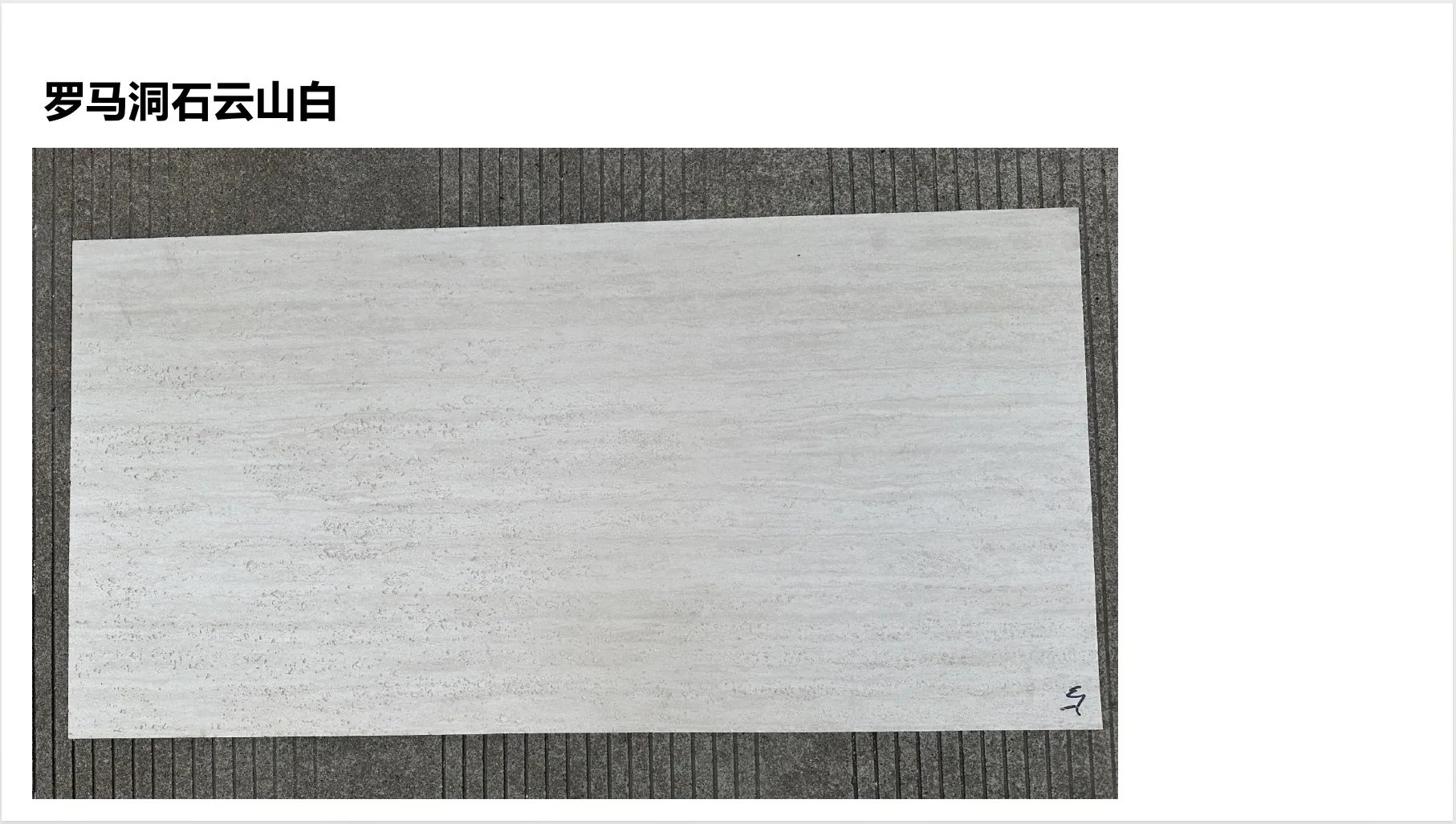
Picking the right building material for a project can feel like solving a puzzle with missing pieces. You've got swatches that look nothing like they do under natural light, tiny samples that hide the material's true texture, and catalog images so edited they might as well be paintings. For architects, designers, and homeowners alike, this disconnect between "on paper" and "in real life" has led to countless headaches—projects delayed, budgets overspent, and that sinking feeling when the installed material doesn't match the vision. But what if there was a way to bridge that gap? Enter COLORIA's Romanite Real Photos (Large Size)—not just pictures, but windows into how a material will truly live in a space. Let's dive into how these high-res, context-rich images are changing the game for anyone who's ever stared at a sample and thought, "Will this even work?"
Let's start with the obvious: traditional material selection is broken. Imagine a designer tasked with choosing a facade for a coastal café. They order a sample of travertine (starry blue) —a material they've heard has a dreamy, (starry) sparkle. The sample arrives: a 4x4 inch tile, flat and underwhelming, lit by harsh warehouse lights that wash out the blue hues. They can't tell if the "sparkle" is subtle or overwhelming, how the stone will react to salt air, or if the slabs will look cohesive when installed across 500 square feet. So they order more samples— fair-faced concrete for contrast, maybe lunar peak silvery for accents. Each arrives in a tiny box, and suddenly, their desk is cluttered with fragments of a vision they still can't fully see.
This isn't just a "designer problem." Homeowners face it too. Picture someone remodeling their kitchen, trying to pick a backsplash. They love the idea of MCM flexible stone for its durability and modern look, but the sample is so small they can't visualize how the pattern will flow around their countertops. By the time they commit, they're crossing their fingers—and too often, those fingers get burned. A 2023 survey by the American Society of Interior Designers found that 68% of designers have had clients request material replacements because the final product "didn't look like the sample." That's time, money, and trust down the drain.
COLORIA's Romanite series isn't just a line of materials—it's a promise of transparency. And the real photos? They're the proof. These aren't stock images shot in a studio with perfect lighting and zero context. Romanite Real Photos are taken on actual job sites, in real spaces, with natural light and scale in mind. We're talking 3-foot-wide slabs installed on walls, paired with furniture, plants, and even people to show how the material interacts with human presence. For example, a photo of Romanite real photos (large size) might feature a hotel lobby wall clad in the material, with sunlight streaming through floor-to-ceiling windows, highlighting the way the stone's texture catches light—warm in the morning, cool in the afternoon. You can see the veining, the depth of color, and even the way shadows play across the surface. It's not just a photo; it's a time-lapse of how the material will age with the space.
Take lunar peak golden , a popular choice for luxury retail spaces. A traditional sample might make it look flat and brassy, but a Romanite real photo shows it installed on a storefront, where the golden tones shift with the sun—rich and warm at noon, soft and amber at dusk. You can see how it pairs with wood accents and black metal fixtures, how it stands out against a concrete sidewalk, and how it feels inviting, not garish. Suddenly, the designer isn't guessing—they're seeing. And that makes all the difference.
Size isn't just about pixels—it's about scale. A small photo of boulder slab (vintage black) might make it look sleek and modern, but blow it up to 36 inches wide, and you'll notice the subtle variations in the stone's surface, the way some areas are smoother than others, and how the color deepens at the edges. That's the magic of Romanite's large-size photos: they reveal the "personality" of the material. Is foamed aluminium alloy board (vintage silver) too industrial for a residential living room? A large photo shows it paired with a plush sofa and warm lighting, softening its metallic edge. Suddenly, it's not "cold metal"—it's "industrial chic with heart."
Context is another game-changer. Romanite photos don't just show the material—they show it living . A shot of travertine (starry red) in a restaurant dining room isn't just about the stone; it's about how it looks with linen napkins, candlelight, and the glow of a nearby fireplace. You can almost smell the wine and hear the chatter, and in that context, the material stops being a "product" and becomes part of the experience. For clients, this is invaluable. It's one thing to say, "This stone is warm"; it's another to see it making a dining room feel cozy on a winter evening.
Romanite might be the star, but COLORIA's commitment to real photos extends across its entire range—from MCM 3D printing series to MCM flexible stone . Let's take MCM flexible stone , a favorite for curved surfaces. Traditional samples can't show flexibility, but a Romanite-style photo of it wrapped around a circular fireplace? Now you see how it bends, how the pattern flows seamlessly, and how it turns a plain wall into a sculptural focal point. Clients no longer have to "imagine" the bend—they can see it, right there on the screen.
Or consider fair-faced concrete , a material prized for its raw, industrial beauty. A small sample might look dull, but a large real photo shows it in a loft space, where the concrete's subtle texture (tiny air bubbles, slight color variations) adds depth to the walls. Paired with exposed beams and large windows, it's not "cold concrete"—it's "minimalist warmth." These details matter, and Romanite photos don't just capture them—they celebrate them.
| Aspect | Traditional Samples | Romanite Real Photos (Large Size) |
|---|---|---|
| Texture Representation | Flat, 2D, and often oversaturated | High-res close-ups show grain, pores, and surface variation |
| Scale Perception | Impossible to visualize across large surfaces | Full-wall/installed shots reveal slab size and pattern flow |
| Environmental Context | No context—just the material in a vacuum | Shows material in real spaces with lighting, furniture, and human activity |
| Decision Confidence | 68% of designers report "buyer's remorse" (ASID 2023) | 92% of COLORIA clients report "no surprises" post-installation (internal data 2024) |
Let's walk through a real (composite) client story to see the impact. Meet Sarah, an architect designing a boutique hotel in (Dali), China. She needed a facade material that balanced modernity with local warmth—something that would stand out but still feel rooted in the region's natural beauty. She'd narrowed it down to two options: MCM flexible stone in a earthy tone, or travertine (starry orange) , which she'd heard had a vibrant, sunset-like hue. The samples were underwhelming: the flexible stone sample felt thin and flimsy, and the travertine sample looked more "orange crayon" than "sunset."
Then Sarah found COLORIA's Romanite Real Photos. She clicked on travertine (starry orange) and was met with a large, high-res image of the material installed on a hotel in Sanya. The photo was taken at golden hour, and the stone glowed—deep oranges blending with soft terracottas, the "starry" flecks catching the light like distant fireflies. She could see the scale: each slab was 4 feet wide, creating a seamless, organic pattern across the facade. There were people walking below, giving her a sense of how the material would interact with human scale. She scrolled to another photo: the same travertine in the rain, its colors deepening to a rich amber, the texture beading water like a natural sponge. "That's it," she thought. "That's the warmth we need."
Six months later, the hotel opened. Sarah visited on a sunny morning and stood back, smiling. The travertine (starry orange) looked exactly like the photo—vibrant but not overwhelming, textured but refined. The client was thrilled; the guests kept commenting on "how alive the building feels." And Sarah? She hasn't used a traditional sample since.
At the end of the day, Romanite Real Photos (Large Size) aren't just a marketing tool—they're a promise. COLORIA knows that choosing a material is about more than aesthetics; it's about trust. Trust that the stone won't fade, that the texture won't feel wrong underfoot, that the color won't clash with the landscape. These photos build that trust by showing, not telling. They say, "This is what you're getting—no filters, no tricks, just the material in all its unapologetic glory."
And it's not just Romanite. From the industrial edge of fair-faced concrete to the organic warmth of wood grain board , COLORIA's real photos cover the entire lineup. Want to see how MCM 3D printing series looks in a retail display? There's a photo for that. Curious about how lunar peak black pairs with greenery? Scroll through the gallery. This isn't just transparency—it's empowerment. It turns clients from passive buyers into confident decision-makers, and projects from "gambles" into sure things.
Choosing building materials will never be "easy"—but it doesn't have to be a leap of faith. Romanite Real Photos (Large Size) bring the "real life" into the selection process, turning guesswork into certainty. They let designers dream bigger, homeowners relax deeper, and contractors execute smoother. So the next time you're staring at a sample, wondering "Will this work?", remember: a photo is worth a thousand swatches. And with COLORIA, that photo might just be the key to your next masterpiece.
Because in the end, great design isn't about perfect samples—it's about perfect execution. And perfect execution starts with seeing the truth.
Recommend Products












