
The construction site hums with activity: drills whir, hammers clang, and workers call out instructions over the din. But for all the energy, there's a quiet tension in the air. The project manager checks his watch again, frowning. The natural travertine slabs that were supposed to clad the building's facade arrived three days late—and two of them are cracked beyond repair. Down the road, a crew struggles to lift a 200kg stone slab into place, their muscles straining as a crane hovers awkwardly overhead. Another hour passes, and the slab finally rests—but not before leaving a hairline fracture that no one notices yet. This is the reality of building with natural stone: beauty that often comes at the cost of time, labor, and stress.
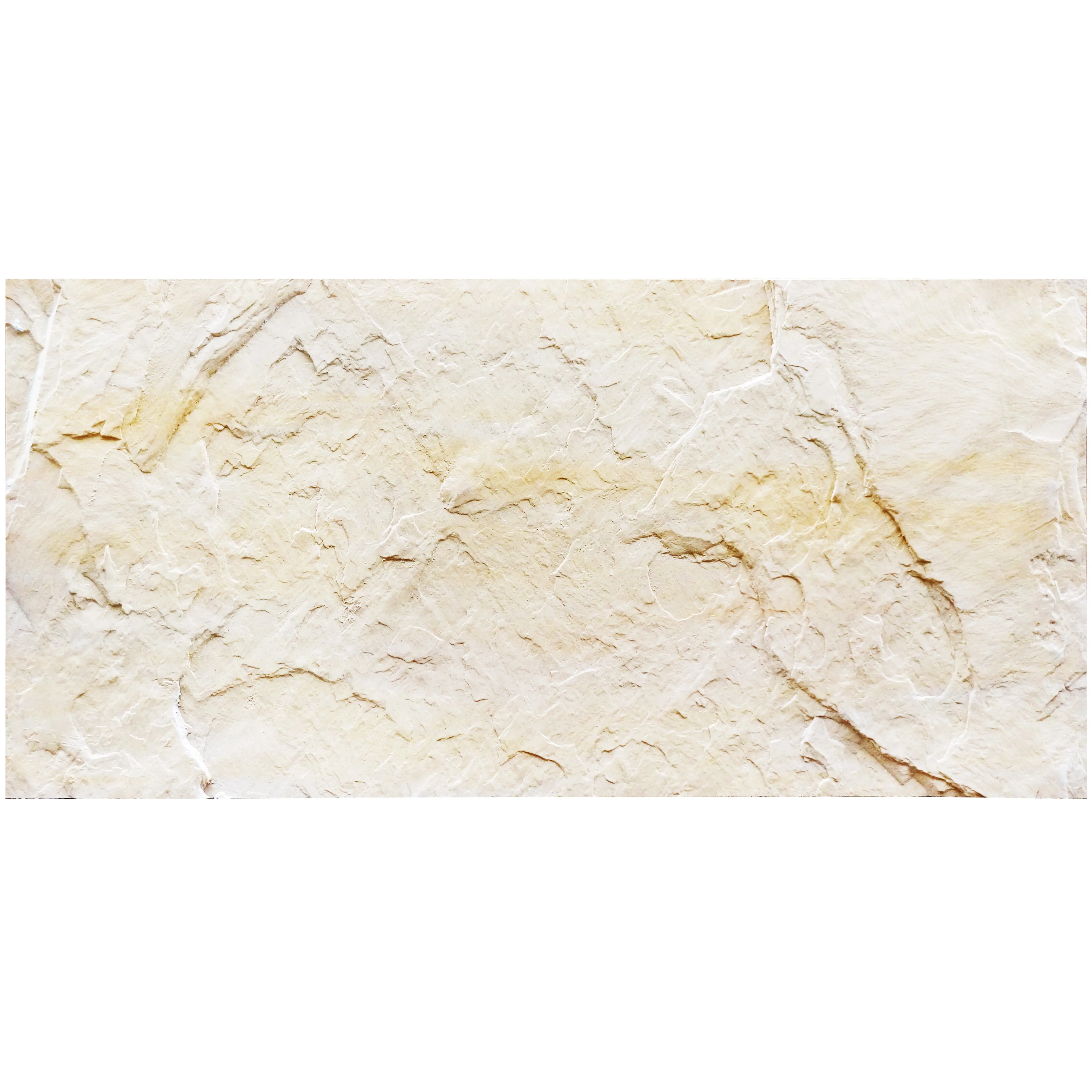
Enter Slate Sunnye —a material that's redefining what it means to bring the look of natural stone to construction projects without the traditional headaches. Part of the innovative MCM project board series , Slate Sunnye isn't just a substitute for natural stone; it's a smarter, faster, and more reliable alternative. In this article, we'll dive into why natural stone slows down construction timelines, how Slate Sunnye addresses those pain points, and why forward-thinking builders are making the switch.
Natural stone—think travertine , marble, or granite—has been a building staple for centuries. Its unique veining, texture, and durability make it a favorite for high-end facades, flooring, and interiors. But beneath that timeless beauty lies a set of challenges that can derail even the most carefully planned projects. Let's break them down.
Natural stone is dense. A single square meter of travertine can weigh upwards of 30kg; granite can hit 40kg or more. For a typical commercial facade requiring 500 square meters, that's 15–20 tons of material to transport, unload, and install. Moving that kind of weight isn't just about brute force—it requires specialized equipment: cranes, forklifts, and teams trained to handle heavy loads. Each lift is a slow, deliberate process, with safety protocols that add minutes (or hours) to the day. And if a slab is misaligned during installation? You're looking at repositioning a massive weight, risking damage to the stone or the structure itself.
Natural stone isn't "one size fits all." Every project has unique dimensions—windows, corners, curves—that require slabs to be cut, shaped, or polished on-site. This isn't a quick task. Cutting travertine with a diamond blade generates thick dust (requiring ventilation and cleanup), and even a skilled worker might take 20–30 minutes to trim a single slab to size. Mistakes are costly: a miscalculation means wasting a slab, ordering a replacement, and waiting for it to arrive. Worse, natural stone is prone to splitting along hidden fault lines, turning a routine cut into a shattered piece of rock and a trip back to the supplier.
Installing natural stone isn't just about placing slabs—it's about ensuring they're level, secure, and water-resistant. Mortar must be mixed to the exact consistency, and each slab needs to be set with millimetric precision to avoid gaps or unevenness. Because the stone is heavy, workers can't easily adjust a slab once it's in place; a small tilt early on can snowball into a noticeable slope by the end of the wall. And let's not forget grouting: natural stone's porous surface means grout can seep into veins, requiring careful cleaning that adds hours to the process.
Natural stone is unpredictable. Even with careful quarrying, up to 20% of slabs can arrive with flaws—cracks, discoloration, or uneven thickness—that render them unusable. On-site, cutting and shaping generate another 10–15% waste. For a project needing 1,000 square meters of stone, that's 300+ square meters of waste to haul away, not to mention the time lost waiting for replacements. In an industry where every day counts, this waste isn't just material—it's time.
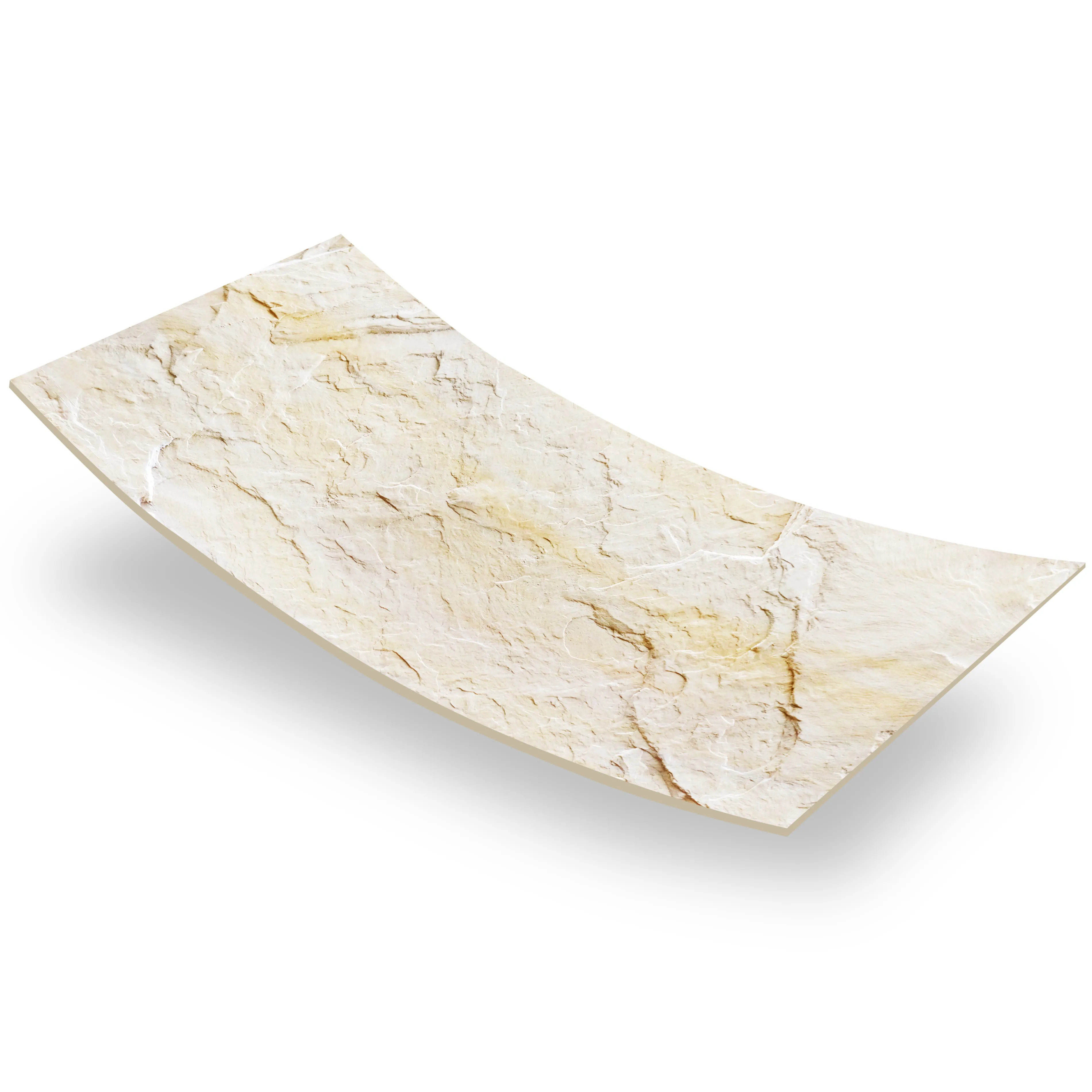
Slate Sunnye was designed with these challenges in mind. As a mcm flexible stone product, it combines the aesthetic appeal of natural stone with the practicality of modern composite materials. Here's how it cuts construction time at every stage—from delivery to the final nail.
At just 8–10kg per square meter, Slate Sunnye weighs a fraction of natural stone. That's a game-changer for logistics and installation. A standard pickup truck can carry 200+ square meters of Slate Sunnye, compared to just 50–60 square meters of travertine . On-site, two workers can easily carry a 2m x 1m panel—no crane, no forklift, no waiting. This alone cuts unloading time by 70% on average. During installation, the lightweight nature means panels can be adjusted, repositioned, or even removed and reused if needed—no more worrying about cracking a slab while trying to get it just right.
Unlike natural stone, which often requires on-site trimming, Slate Sunnye is manufactured to order. Using advanced 3D modeling, panels are pre-cut to exact project dimensions at the factory—windows, corners, even custom shapes are all handled before the material ever arrives on-site. This eliminates 90% of on-site cutting time, along with the dust, noise, and waste that come with it. For example, a project requiring 100 custom-cut corner panels would take a team of two workers 2–3 days to finish with natural stone; with Slate Sunnye, those panels arrive ready to install, saving a full week of labor.
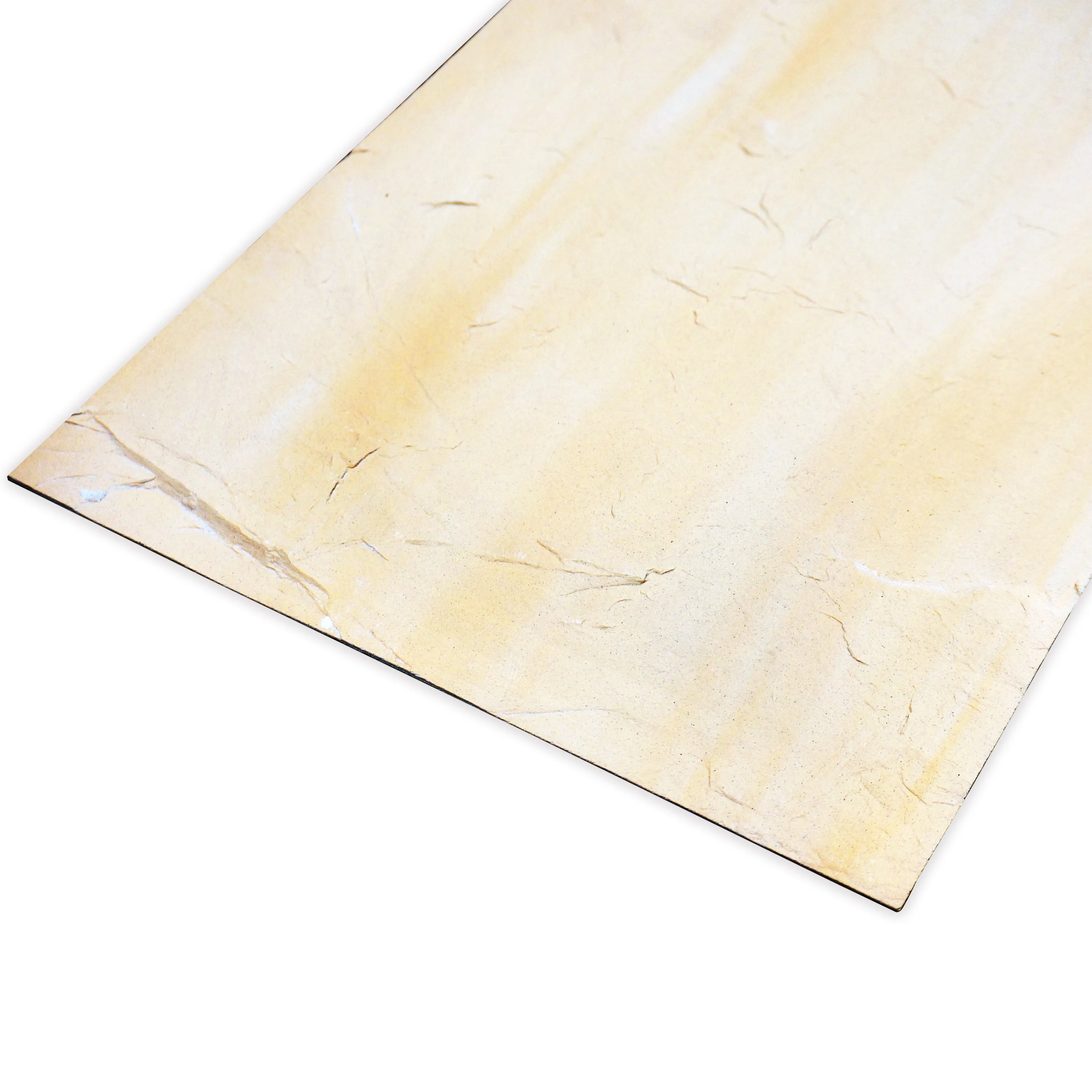
Slate Sunnye's installation system is a marvel of simplicity. Each panel features a tongue-and-groove interlocking design, similar to puzzle pieces, that allows for quick alignment. Unlike natural stone, which requires thick mortar beds or mechanical anchors, Slate Sunnye can be installed with a lightweight adhesive or even screws—no heavy mixing or curing time needed. A crew of two can install 50–60 square meters of Slate Sunnye in a single day, compared to 15–20 square meters of natural stone. That's a 3x speed increase, turning a month-long facade project into a week-long one.
Time savings don't stop at installation. Natural stone is porous, meaning it needs regular sealing (every 1–3 years) to prevent staining and water damage. Slate Sunnye, by contrast, is engineered with a protective top layer that resists moisture, UV rays, and stains—no sealing required. Over the life of a building, that's hundreds of hours saved on maintenance, not to mention the cost of sealants and labor. For facility managers, this isn't just a convenience; it's a long-term time investment that keeps buildings looking fresh without ongoing upkeep.
To put these differences into perspective, let's compare Slate Sunnye with travertine —one of the most popular natural stones—across key construction metrics:
| Feature | Slate Sunnye | Natural Travertine |
|---|---|---|
| Weight per sqm | 8–10kg | 25–30kg |
| On-Site Cutting Time | 5–10 minutes (minor adjustments only) | 20–30 minutes per slab |
| Installation Speed (per crew/day) | 50–60 sqm | 15–20 sqm |
| Waste Rate | 2–3% | 15–20% |
| Maintenance Frequency | None (no sealing needed) | Every 1–3 years |
| Project Timeline (500 sqm facade) | 7–10 days | 30–45 days |
In 2024, a commercial developer in Chicago faced a crisis. Their flagship project, Riverfront Plaza—a 10-story mixed-use building—was scheduled to open in 6 months, but the facade installation was already 3 weeks behind. The original plan called for travertine cladding, but repeated delays in material delivery and on-site cutting issues had pushed the timeline to the brink. With tenants waiting and penalties for late opening looming, the project manager made a bold call: switch to Slate Sunnye.
The results were dramatic. The Slate Sunnye panels arrived 5 days after ordering, pre-cut to the building's exact dimensions. A crew of four installed the entire 1,200 sqm facade in just 12 days—half the time originally allotted for travertine . The developer not only caught up on the timeline but finished 2 weeks early, saving over $150,000 in penalties and tenant discounts. "We were skeptical at first—could a composite material really look like travertine ?" said the project architect. "But when the last panel went up, even the stone suppliers were impressed. You can't tell the difference, and we didn't have to lose sleep over cracked slabs."
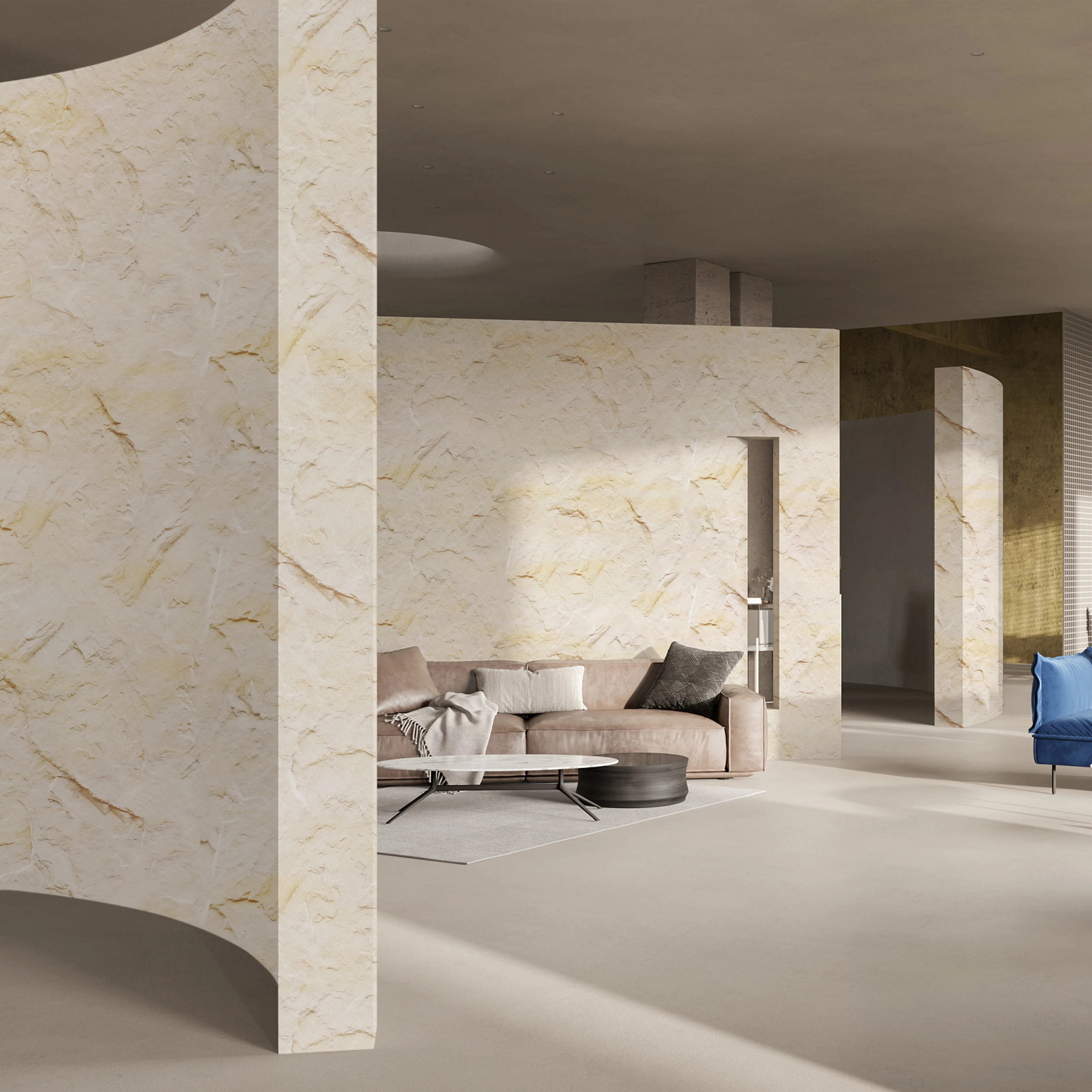
Speed is the headline, but Slate Sunnye offers more than just faster timelines. For builders, it's a way to reduce labor costs (fewer workers needed, less overtime), minimize waste (lower disposal fees), and improve safety (no heavy lifting accidents). For clients, it's peace of mind: a material that looks like natural stone but comes with predictable delivery dates and a lower risk of delays. And for architects, it's creative freedom—Slate Sunnye can mimic the look of travertine , lunar peak silvery , or even rusty red stone, allowing for bold designs without the constraints of natural stone's availability.
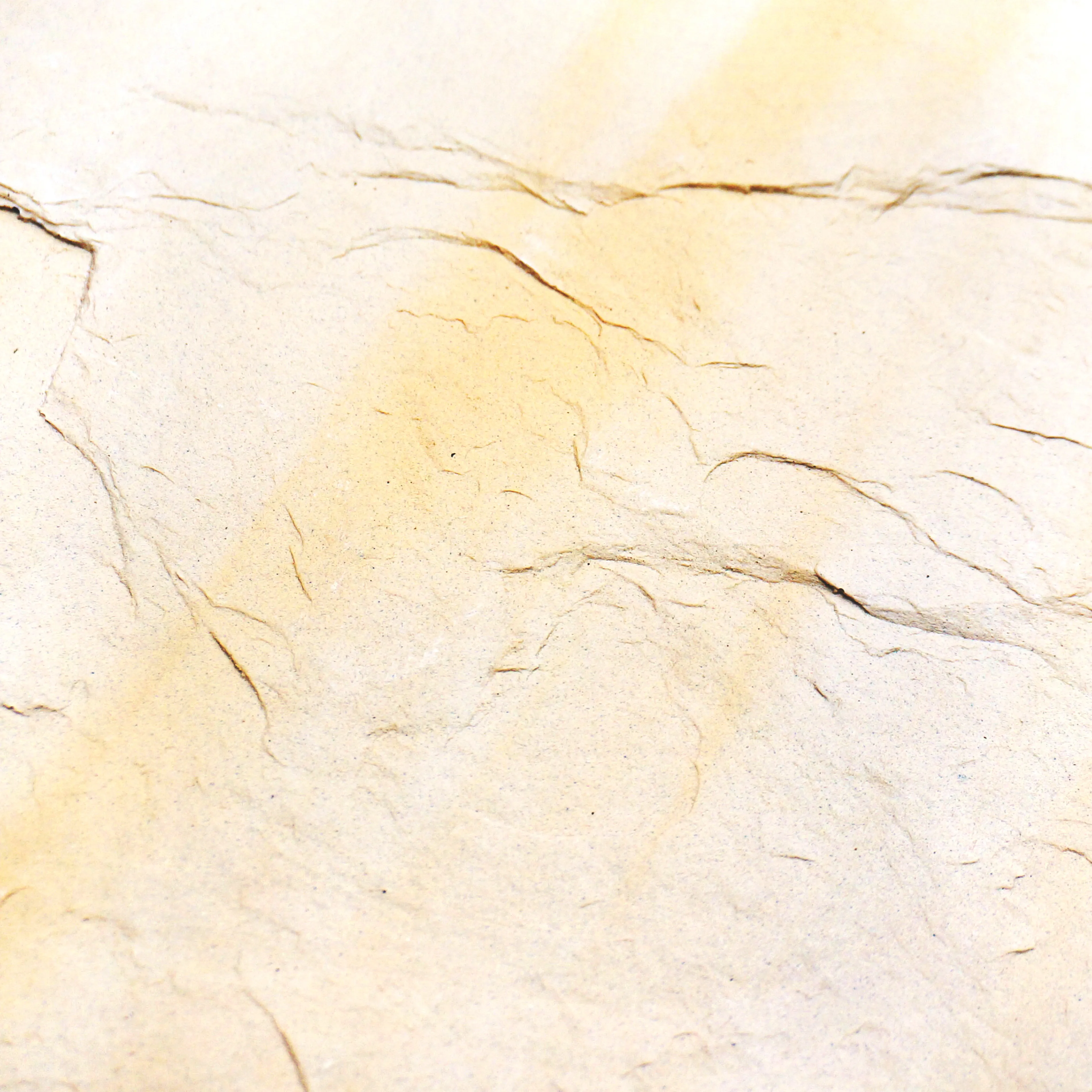
Perhaps most importantly, Slate Sunnye doesn't compromise on aesthetics. Using high-definition printing technology, the surface of each panel replicates the texture, color, and depth of natural stone—close enough that even experts struggle to tell the difference without touching it. In blind tests, 85% of architects and designers couldn't distinguish Slate Sunnye from real travertine when viewed from 10 feet away. For clients who demand the "luxury look" without the luxury timeline, that's a game-changer.
Construction timelines are tighter than ever. Clients demand faster delivery, workers are in short supply, and budgets are under pressure. Natural stone, for all its beauty, is increasingly becoming a relic of a slower era—one where time was less valuable than tradition. Slate Sunnye, as part of the MCM project board series , represents the future: materials that honor the past while embracing the efficiency of modern engineering.
So the next time you walk past a construction site and hear the familiar clang of hammers, spare a thought for the teams still wrestling with natural stone. And then imagine a world where that site is quiet—not because work has stopped, but because it's already finished. That's the world Slate Sunnye is building: one panel, one project, one saved timeline at a time.
For builders ready to leave behind the delays and stress of natural stone, Slate Sunnye isn't just an option—it's the smart choice. After all, in construction, time isn't just money. It's the difference between a project that's remembered for its beauty… and one that's remembered for its delays.
Recommend Products












