
Saudi Arabia's Vision 2030 isn't just a roadmap for economic diversification—it's a pledge to reimagine how we build, live, and interact with our environment. At its core lies a commitment to sustainable urban development, where cities like Riyadh, Jeddah, and the futuristic NEOM aren't just hubs of innovation but beacons of green progress. Central to this vision is the transformation of building materials: moving away from resource-heavy, carbon-intensive options toward solutions that honor both functionality and the planet. Enter Slate Sunnye—a material that's more than a surface; it's a bridge between tradition and tomorrow. In this deep dive, we'll explore how Slate Sunnye, alongside a new generation of sustainable materials, is helping turn Vision 2030's green building dreams into tangible, everyday reality.
To understand Slate Sunnye's role, we first need to grasp the stakes of Vision 2030's green building goals. Saudi Arabia, like many nations, faces the dual challenge of rapid urbanization and climate responsibility. By 2030, the kingdom aims to reduce carbon emissions by 130 million tons annually, with buildings accounting for a significant slice of that reduction. Key targets include increasing the share of LEED-certified buildings from 5% to 30%, mandating 15% of construction materials to be locally sourced, and cutting energy consumption in new buildings by 40%.
These aren't just numbers on a page. Walk through Riyadh's King Abdullah Financial District today, and you'll see cranes lifting materials that tell a different story: facades that breathe, roofs that harvest sunlight, and surfaces that age gracefully without draining resources. Green building here is about creating spaces that are healthier for occupants, kinder to the planet, and economically smarter in the long run. It's in this context that Slate Sunnye and its counterparts—materials like MCM flexible stone, foamed aluminium alloy, and travertine in starry hues—are emerging as quiet revolutionaries.
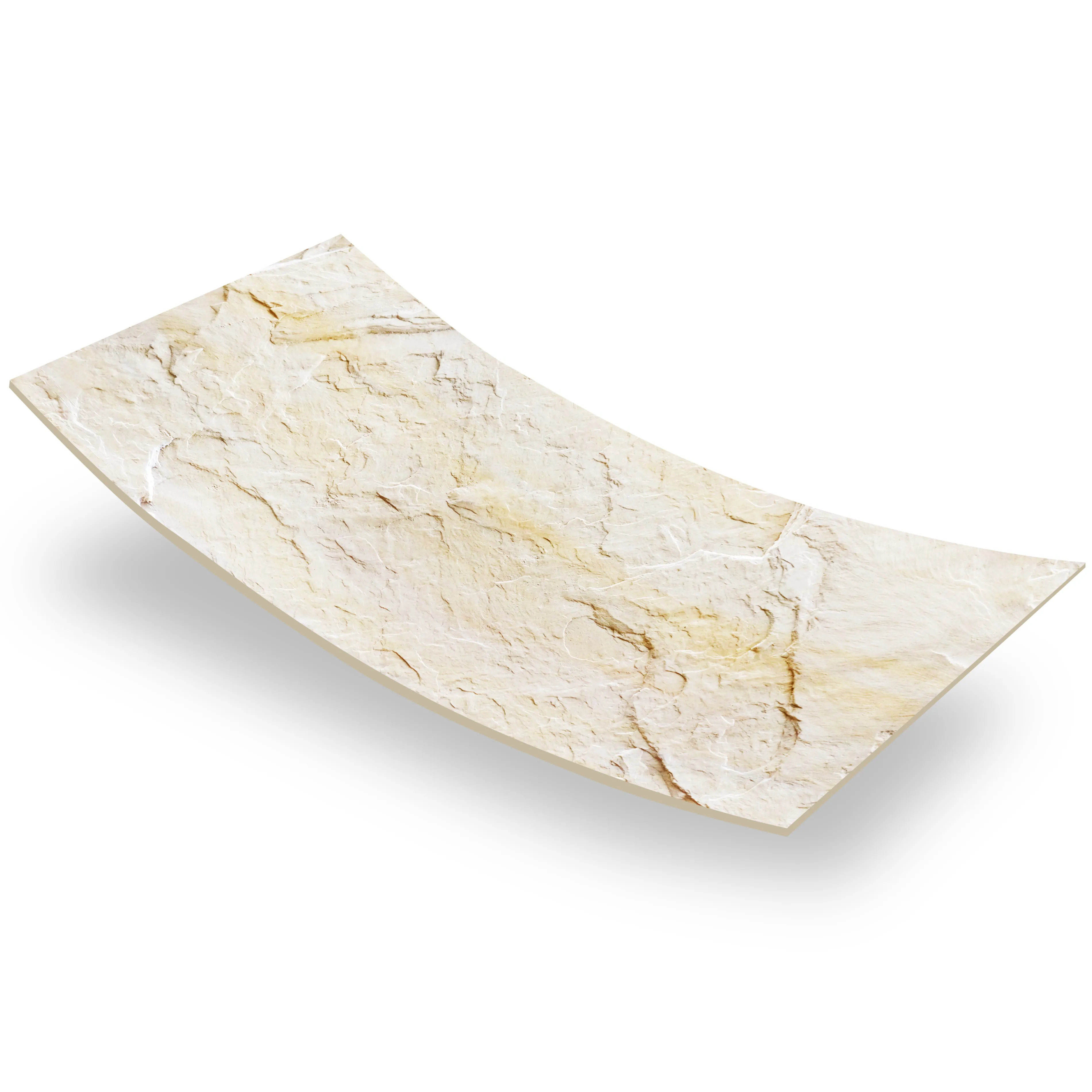
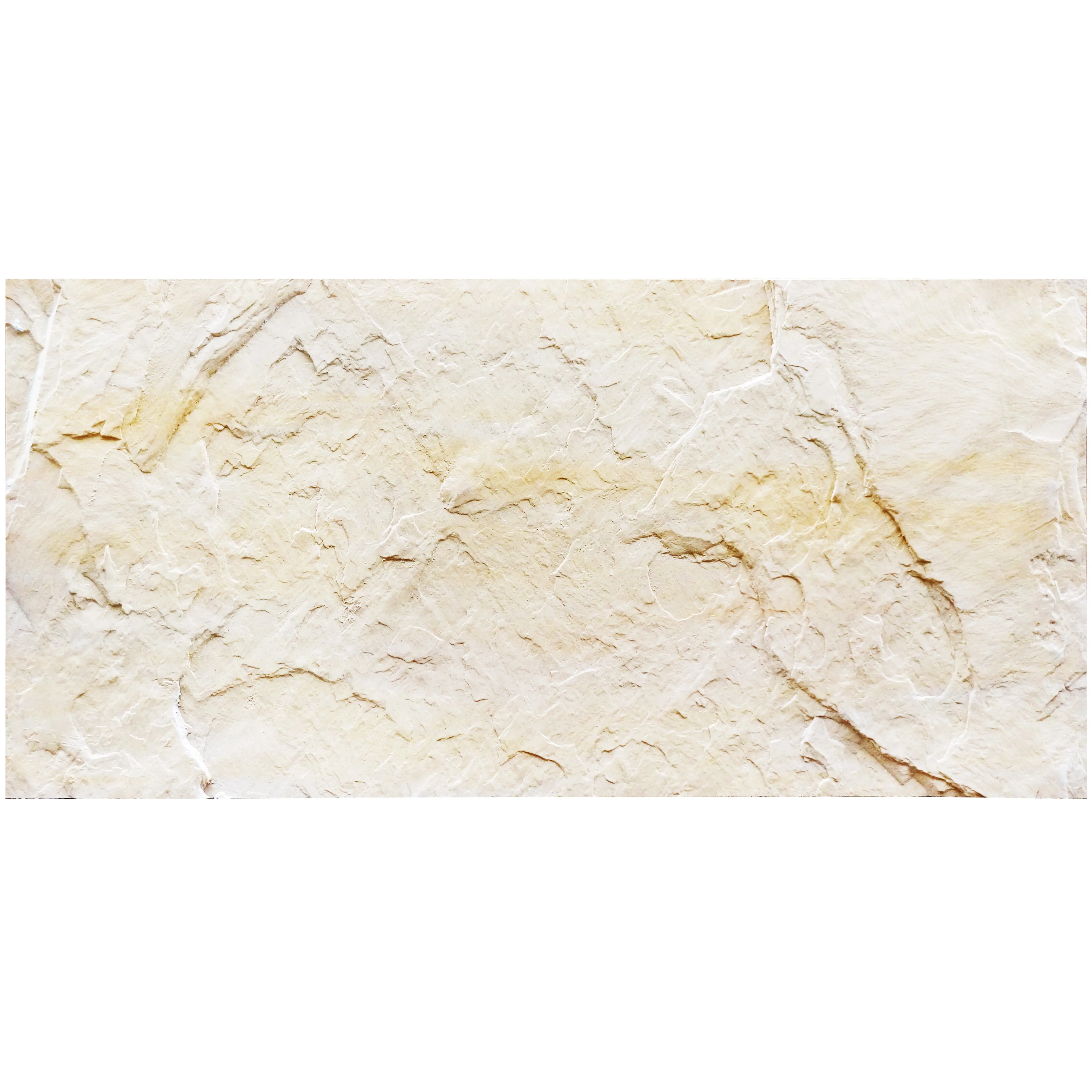
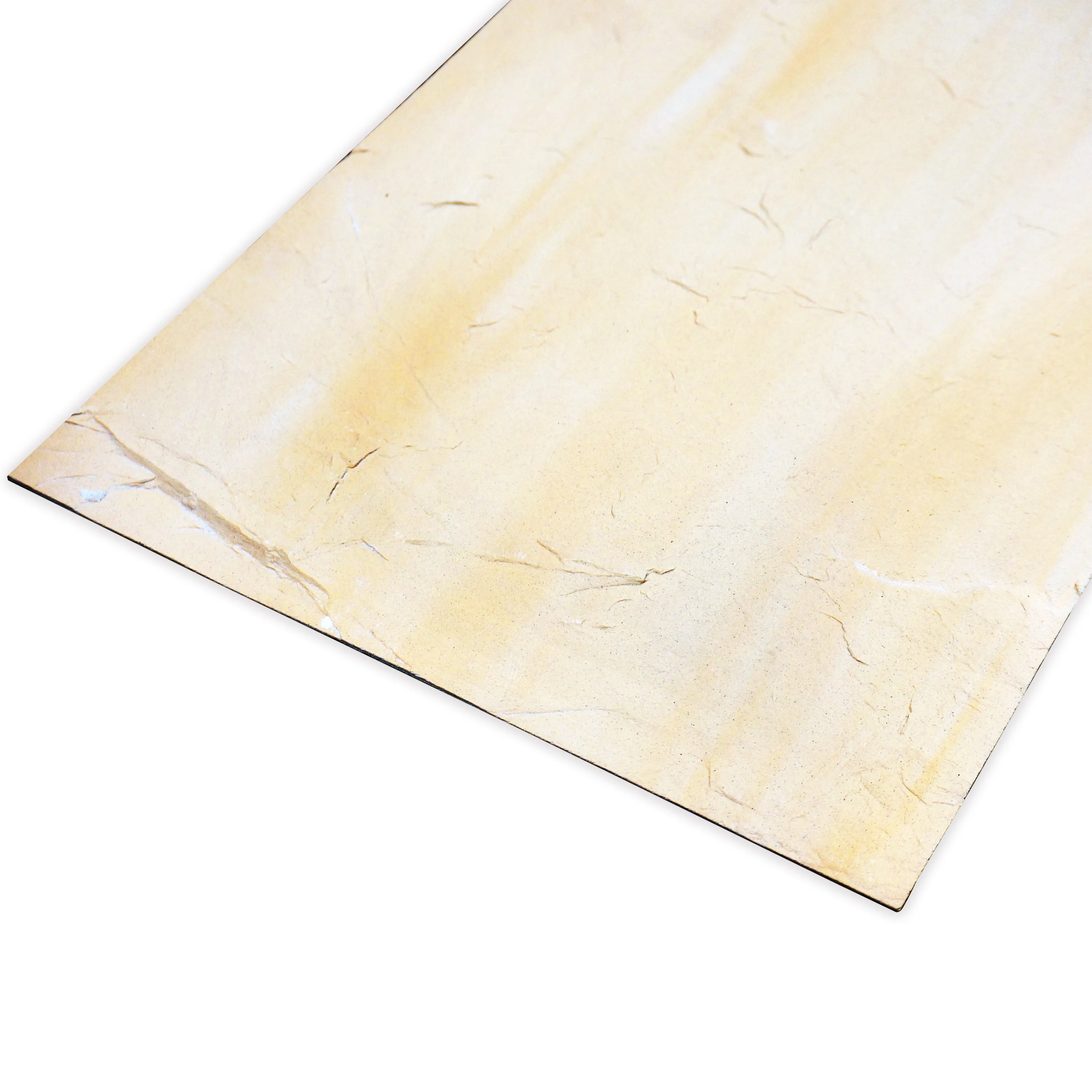
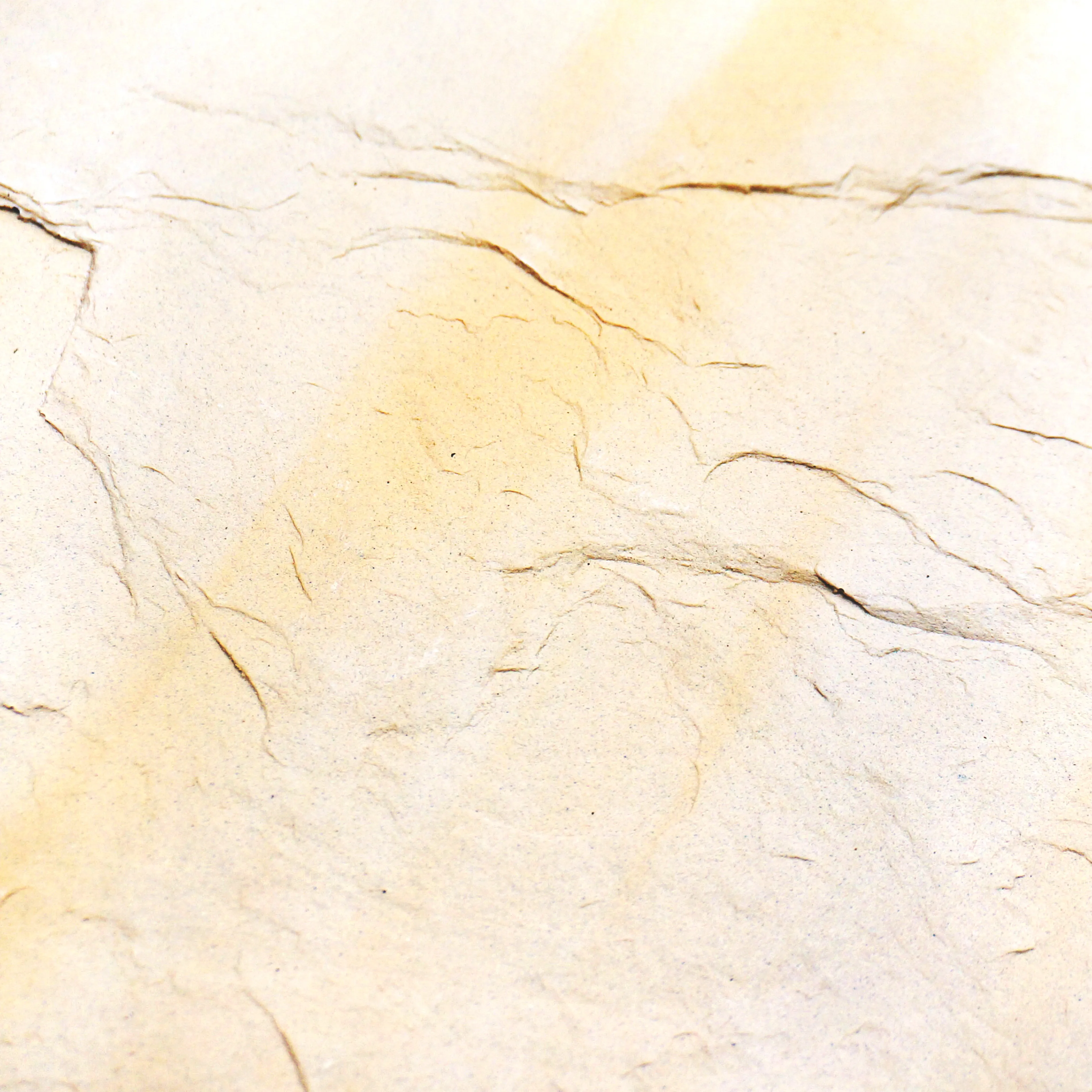
What exactly is Slate Sunnye? At first glance, it's a natural stone with a warm, earthy palette—think soft beiges and greys, flecked with subtle mineral veins that catch the light like sunlight on desert sand. But look closer, and its true innovation reveals itself. Quarried from sustainable sites in the kingdom's northern regions, Slate Sunnye undergoes minimal processing: no harsh chemicals, no excessive water use, and a cutting process that reduces waste to less than 5%. Unlike traditional slate, which often requires kiln-firing (a carbon-heavy step), Sunnye is air-cured, relying on Saudi Arabia's abundant sunshine to harden its surface naturally.
The result? A material that's 30% lighter than standard slate, making it easier to transport and install, yet 20% more durable. In a country where temperatures can soar to 50°C in summer and drop to single digits in winter, durability isn't a luxury—it's a necessity. Slate Sunnye's resistance to thermal expansion (it contracts and expands by just 0.1mm per meter in extreme heat) means fewer cracks, less maintenance, and a longer lifespan—up to 50 years, compared to 25-30 for traditional stone cladding.
But its sustainability story doesn't end there. Its porous surface acts as a natural insulator: in tests at Riyadh's Prince Sultan University, buildings clad in Slate Sunnye showed a 22% reduction in cooling costs compared to those with concrete facades. And when it does eventually reach the end of its life, it's fully recyclable—crushed into aggregate for new construction or ground into dust for landscaping. For architects and developers, this isn't just a material; it's a partner in meeting Vision 2030's strict sustainability audits.
Green building rarely relies on a single material. The magic happens when diverse elements come together, each contributing its unique strength. Slate Sunnye, for all its virtues, shines brightest when paired with materials that complement its properties. Let's explore how some of Vision 2030's most promising materials are creating synergistic, sustainable solutions.
One of the biggest challenges in modern architecture is designing for flexibility—curved facades, organic shapes, and dynamic structures that stand out in a skyline. Traditional stone is rigid, limiting creative freedom. Enter MCM flexible stone, a composite material that marries the look of natural stone with the pliability of fabric. Composed of mineral aggregates bound by a polymer resin, it's thin (just 3-5mm thick), lightweight (6kg per square meter), and can bend up to 90 degrees without cracking.
Pairing MCM flexible stone with Slate Sunnye is like combining a dancer's grace with a rock's stability. Take the new cultural center in Jeddah, designed to mimic the waves of the Red Sea. The main facade uses Slate Sunnye for its flat, horizontal sections, providing a sturdy, earthy base. The curved, wave-like accents? MCM flexible stone in a matching beige tone, shaped on-site to flow seamlessly from the Slate Sunnye. The result? A building that looks as if it's been carved by wind and water, without the environmental cost of custom-cut natural stone. "We wanted to push boundaries without compromising on sustainability," says lead architect Lina Hassan. "Slate Sunnye gave us the durability, MCM gave us the flexibility. Together, they made the impossible possible."
For interior spaces, where weight and aesthetics are equally critical, foamed aluminium alloy boards have become a game-changer. Available in vintage silver, gold, and classic metal finishes, these boards are created by injecting gas into molten aluminium, forming a cellular structure that's 70% lighter than solid aluminium. The vintage silver variant, with its soft, brushed finish, has become a favorite in hospitality projects, adding a touch of understated luxury without the environmental footprint of traditional metals.
Imagine a boutique hotel lobby in Riyadh's Diplomatic Quarter. The floors are Slate Sunnye, their warm beige tones grounding the space in natural calm. The ceiling, however, is a grid of foamed aluminium alloy in vintage silver, suspended just below the original concrete slab. The foam structure not only reduces the ceiling's weight by half (cutting installation time and structural load) but also acts as a sound absorber, dampening noise in the busy lobby. "We used to rely on heavy steel grids for such designs, which added tons to the building's carbon footprint," explains project engineer Ahmed Khalid. "Foamed aluminium does the same job with a fraction of the material. And paired with Slate Sunnye, it's a contrast of textures—warm stone and cool metal—that guests love."
Sustainability doesn't mean sacrificing beauty—in fact, Vision 2030's green buildings are proving that the two go hand in hand. Travertine, a classic natural stone, has been reimagined with "starry" variants, where metallic flecks are embedded during processing to create a night-sky effect. Starry blue travertine, with its deep blue base and silver-gold sparkles, is becoming a symbol of this ethos: striking to look at, gentle on the planet.
In the residential complex "Azure Heights" outside Dammam, developers wanted to create a community that felt connected to nature, even in the city. Slate Sunnye forms the exterior cladding, its neutral tones blending with the desert landscape. Inside, common areas feature starry blue travertine accent walls—behind reception desks, in elevator lobbies, and around swimming pools. The stone is sourced from a quarry in Madinah, just 300km from the site, cutting transportation emissions by 60% compared to imported marble. Its porous surface also helps regulate humidity, reducing the need for dehumidifiers in the coastal climate. "Residents often comment on how the starry blue walls make them feel like they're living under the night sky," says project manager Fatima Al-Mansoori. "It's a small detail, but it turns a sustainable building into a home."
To truly appreciate these materials' impact, let's look at the data. Below is a comparison of traditional construction materials and their Vision 2030-aligned counterparts, focusing on carbon footprint, durability, and recyclability—three key metrics for green building certification.
| Material | Carbon Footprint (kg CO₂/m²) | Expected Lifespan (Years) | Recyclability Rate (%) | Typical Application |
|---|---|---|---|---|
| Traditional Concrete | 0.8–1.2 | 25–30 | 30 | Floors, Facades, Structural Elements |
| Slate Sunnye | 0.2–0.3 | 40–50 | 95 | Facades, Flooring, Outdoor Patios |
| MCM Flexible Stone | 0.15–0.25 | 30–35 | 85 | Curved Facades, Accent Walls |
| Foamed Aluminium Alloy (Vintage Silver) | 0.3–0.4 | 50+ | 100 | Ceilings, Interior Cladding, Furniture |
| Travertine (Starry Blue) | 0.35–0.45 | 40–45 | 90 | Accent Walls, Countertops, Pool Surrounds |
The difference is clear. Slate Sunnye, for example, emits 70–80% less CO₂ per square meter than traditional concrete and lasts twice as long. MCM flexible stone, despite being a composite, has a lower carbon footprint than most natural stones because of its minimal processing. Foamed aluminium, with its 100% recyclability, ensures that even at the end of its life, it won't end up in a landfill. These numbers aren't just impressive—they're the reason projects using these materials are sailing through LEED certification and qualifying for government green building incentives.
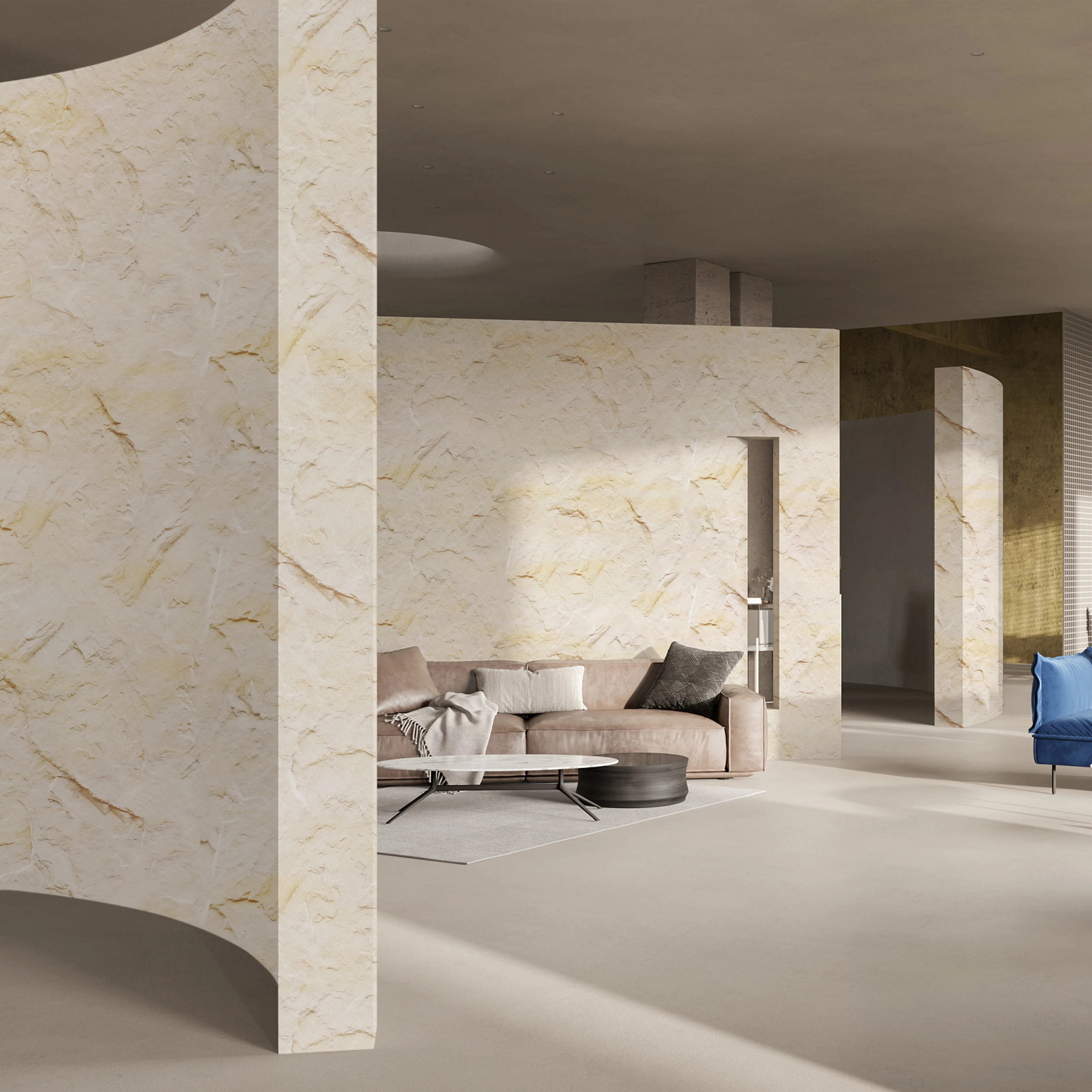
No discussion of Vision 2030's green building would be complete without mentioning NEOM, the $500 billion futuristic city being built in the Tabuk Province. Designed to be 100% powered by renewable energy, NEOM is a testbed for the world's most sustainable technologies—and Slate Sunnye and its peers are front and center in its "Green Spine," a 17km linear park and commercial hub.
The Green Spine's eastern facade is a showcase of material synergy. The lower levels use Slate Sunnye for its durability and heat resistance, protecting against the region's intense sun. Above, MCM flexible stone in a gradient of beige to sand mimics the desert's dunes, curving gently to create shaded walkways below. The interior of the commercial pavilions features foamed aluminium alloy ceilings in vintage gold, reflecting light from the Spine's solar-glass roof to reduce artificial lighting needs. Accent walls in starry blue travertine add pops of color, while the flooring combines Slate Sunnye with recycled glass aggregate for a non-slip, high-traffic solution.
"Every material choice here was made with three goals: sustainability, functionality, and beauty," says NEOM's head of sustainable construction, Dr. Omar Al-Jabri. "Slate Sunnye was a no-brainer for the lower facade—it's local, durable, and its thermal properties help keep the interior cool. Pairing it with MCM flexible stone allowed us to create the flowing, organic shapes that define the Spine's design, without the carbon cost of traditional methods." Early data shows the Green Spine's energy consumption is 45% lower than comparable commercial districts, with construction waste down by 60%—proof that these materials aren't just green in theory, but in practice.
For architects, the appeal of materials like Slate Sunnye goes beyond sustainability—it's about creative freedom. Traditional materials often box designers into rigid, energy-intensive solutions. Sustainable materials, by contrast, open new doors. MCM flexible stone's pliability lets architects dream in curves; foamed aluminium's light weight allows for cantilevered structures that seem to float; Slate Sunnye's natural beauty reduces the need for resource-heavy finishes like paint or tile.
Developers, meanwhile, are drawn to the long-term economics. While sustainable materials may have a slightly higher upfront cost (5–10% more than traditional options), their durability and lower maintenance costs more than make up for it. A 2023 study by the Saudi Green Building Forum found that buildings using Slate Sunnye and MCM flexible stone had 30% lower maintenance costs over 10 years compared to those using concrete and traditional stone. Add in government incentives—like tax breaks for LEED-certified projects and grants for local material use—and the business case becomes compelling.
Perhaps most importantly, these materials resonate with the next generation of buyers and tenants. Young professionals and families in Saudi Arabia are increasingly prioritizing sustainability when choosing where to live and work. A survey by the Saudi Real Estate Authority found that 72% of millennials would pay 10% more for a home in a LEED-certified building. For developers, using materials like Slate Sunnye isn't just about meeting regulations—it's about meeting market demand.
As Vision 2030 marches toward its 2030 deadline, the role of materials like Slate Sunnye will only grow. Innovations are already in the pipeline: researchers at King Saud University are developing a version of Slate Sunnye infused with phase-change materials to further enhance its thermal regulation, while MCM flexible stone manufacturers are experimenting with 3D printing to reduce waste even more. Foamed aluminium alloy is being tested in new applications, including lightweight structural beams, potentially replacing steel in low-rise buildings.
But perhaps the most exciting trend is the rise of "material ecosystems"—integrated systems where Slate Sunnye, MCM, foamed aluminium, and other sustainable materials work in harmony to create net-zero buildings. Imagine a home where Slate Sunnye walls store heat during the day and release it at night, MCM flexible stone facades adjust to block harsh sunlight, and foamed aluminium roofs harvest rainwater. This isn't science fiction; it's the direction NEOM and other Vision 2030 projects are heading.
Vision 2030 is more than a plan—it's a promise to future generations: that Saudi Arabia can grow, innovate, and thrive without leaving a scar on the planet. Slate Sunnye, MCM flexible stone, foamed aluminium alloy, and travertine in starry hues are more than materials; they're the tools keeping that promise. They remind us that sustainability doesn't require sacrifice—that beauty and function, tradition and innovation, can coexist.
As we walk through the cities of tomorrow—cities built with Slate Sunnye's earthy warmth, MCM's flowing curves, and foamed aluminium's quiet luxury—we'll see more than buildings. We'll see a legacy: a kingdom that chose to build not just for the present, but for a future where progress and planet are one and the same. And in that future, materials like Slate Sunnye will be remembered not as products, but as pioneers—quiet, steady, and unyielding in their commitment to a greener Saudi Arabia.
Recommend Products












