
A Deep Dive into the Quiet Revolution of Sustainable Building Materials
Every day, in homes, offices, and public spaces around the world, a silent battle rages. It's not between people, but between the buildings we inhabit and the environment outside. The enemy? Uncontrolled energy loss. We've all felt it—the drafty window in winter, the sweltering room in summer—that invisible thief of comfort and money. But what if the solution wasn't hidden in high-tech gadgets or complex systems, but in the very walls, roofs, and facades that define our buildings? Enter Slate Veil White MCM, a material that's quietly rewriting the rules of energy-efficient construction. Let's explore how this unassuming yet remarkable material is turning buildings from energy drains into energy savers.
Before we zoom in on Slate Veil White, let's get to know its family: Modified Composite Material, or MCM for short. You might be thinking, "Another building material? What makes this one different?" Here's the thing: MCM was born from a frustration with the status quo. Traditional materials like solid stone, brick, or even some modern composites often force a trade-off—durability vs. weight, aesthetics vs. sustainability, performance vs. cost. MCM flips that script.
At its core, MCM is a blend of natural minerals (think crushed stone, sand) and high-performance polymers, engineered to mimic the look and feel of natural materials while packing in superpowers. It's lightweight (up to 80% lighter than solid stone), flexible (can bend without cracking), and surprisingly tough (resistant to weather, impact, and even fire in some formulations). But perhaps most importantly, MCM is designed with intention—every layer, every component, serves a purpose. And within the vast MCM family, Slate Veil White stands out as a star player in the energy efficiency game.
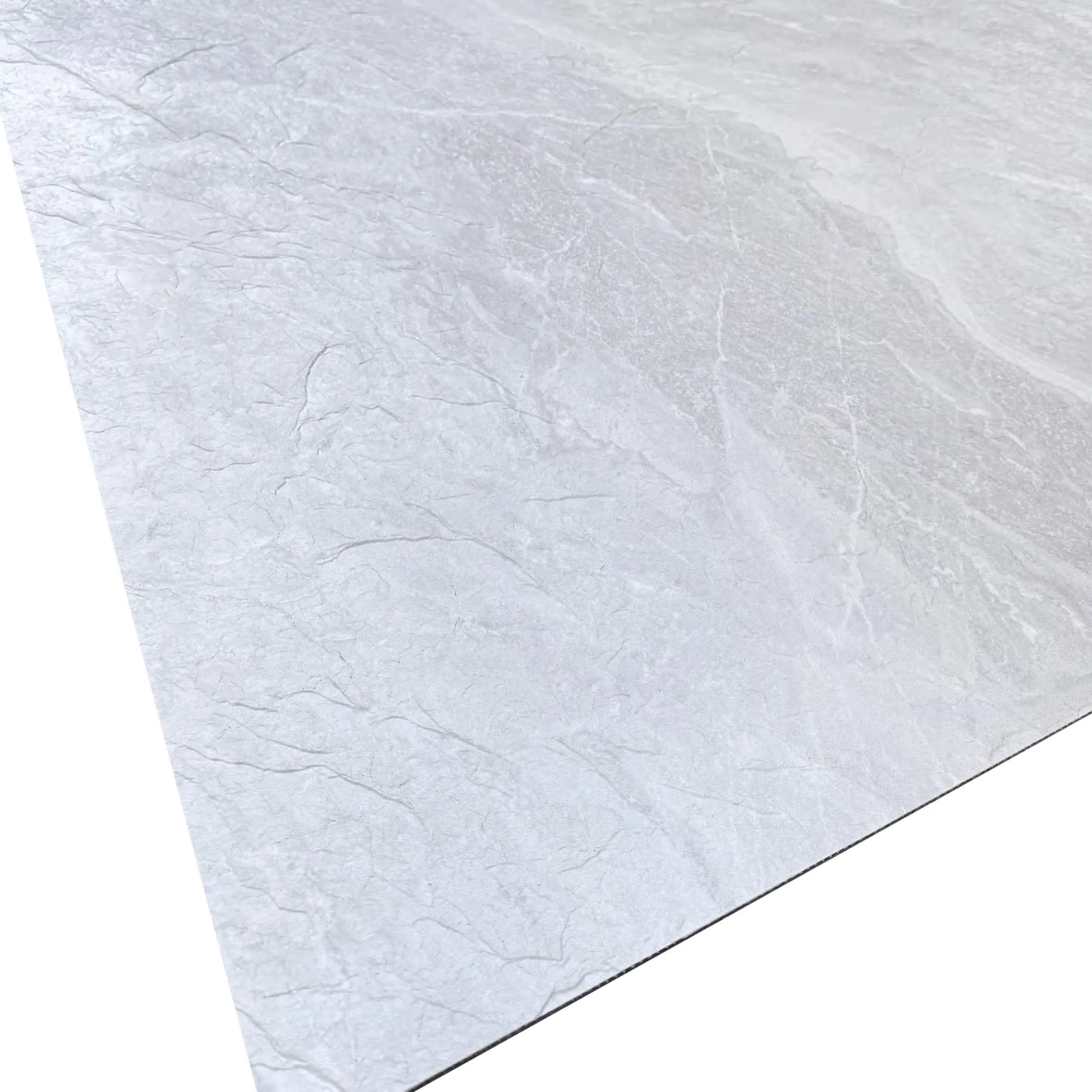
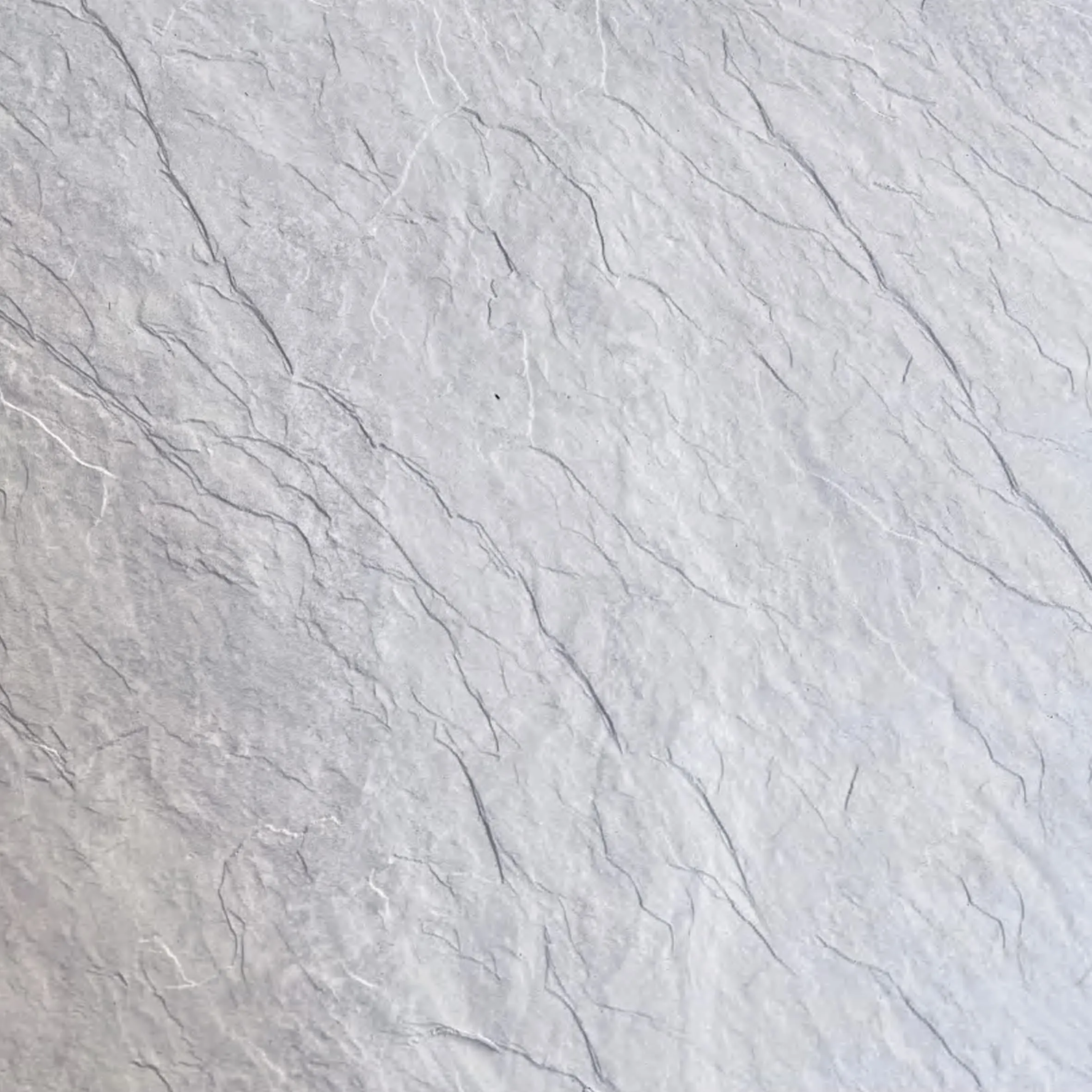
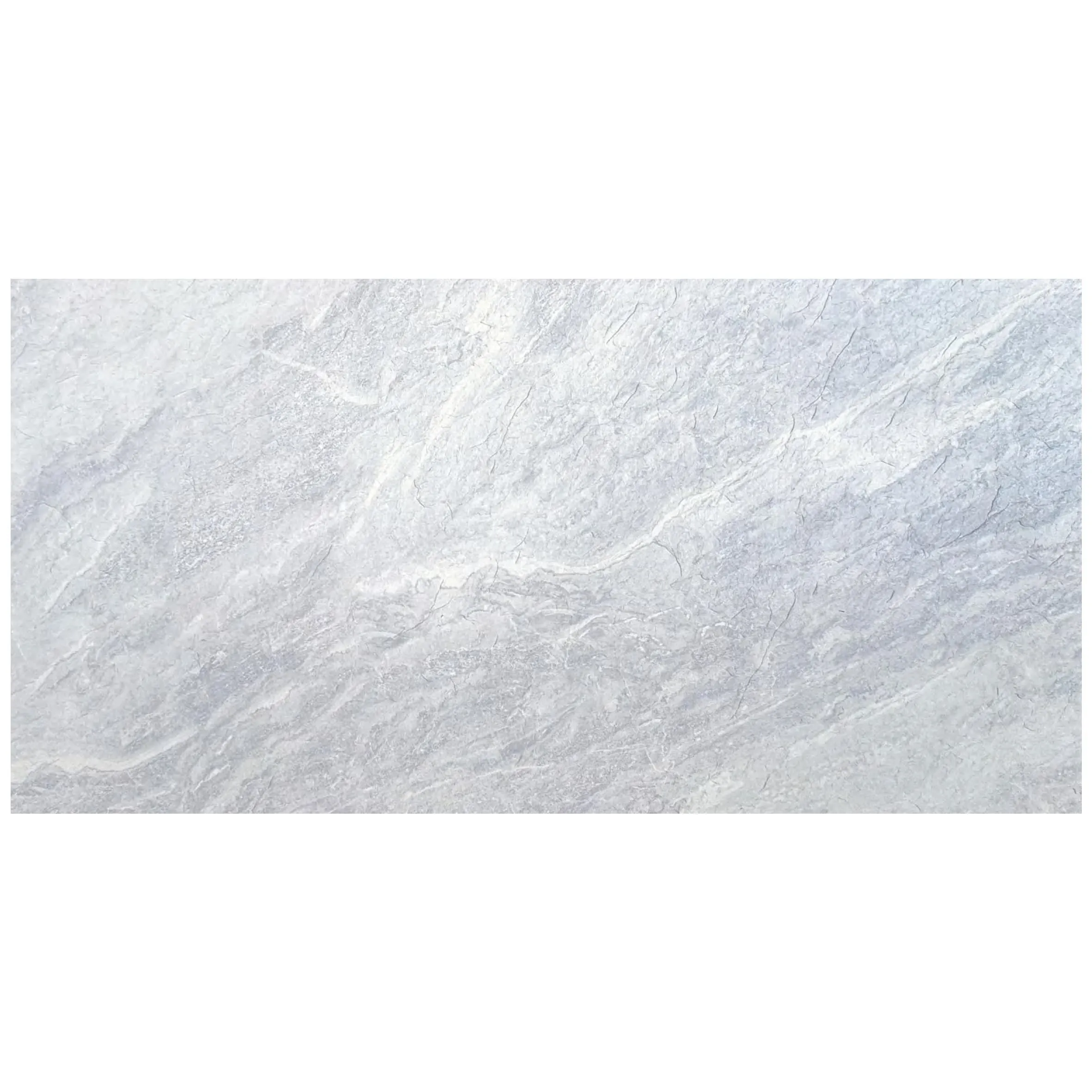
If you've ever walked through a historic district, you've probably admired the elegance of natural slate—its layered texture, the way light plays off its surface, the subtle variations that make each piece unique. Slate Veil White MCM draws inspiration from that timeless beauty, but with a modern twist. Imagine the soft, misty white of a mountain peak at dawn, veined with delicate gray streaks that mimic the natural layers of slate. That's the aesthetic Slate Veil White brings to buildings—but its true magic lies beneath the surface.
Unlike natural slate, which is heavy and prone to splitting, Slate Veil White MCM is crafted in thin, uniform panels. Its composition starts with a mineral-rich core, reinforced with a lightweight backing (often incorporating elements like foamed aluminium alloy board technology, though in a more refined form for this specific line), and finished with a specialized coating that enhances both durability and performance. The result? A material that looks like it was quarried from a mountain but behaves like a high-tech insulator.
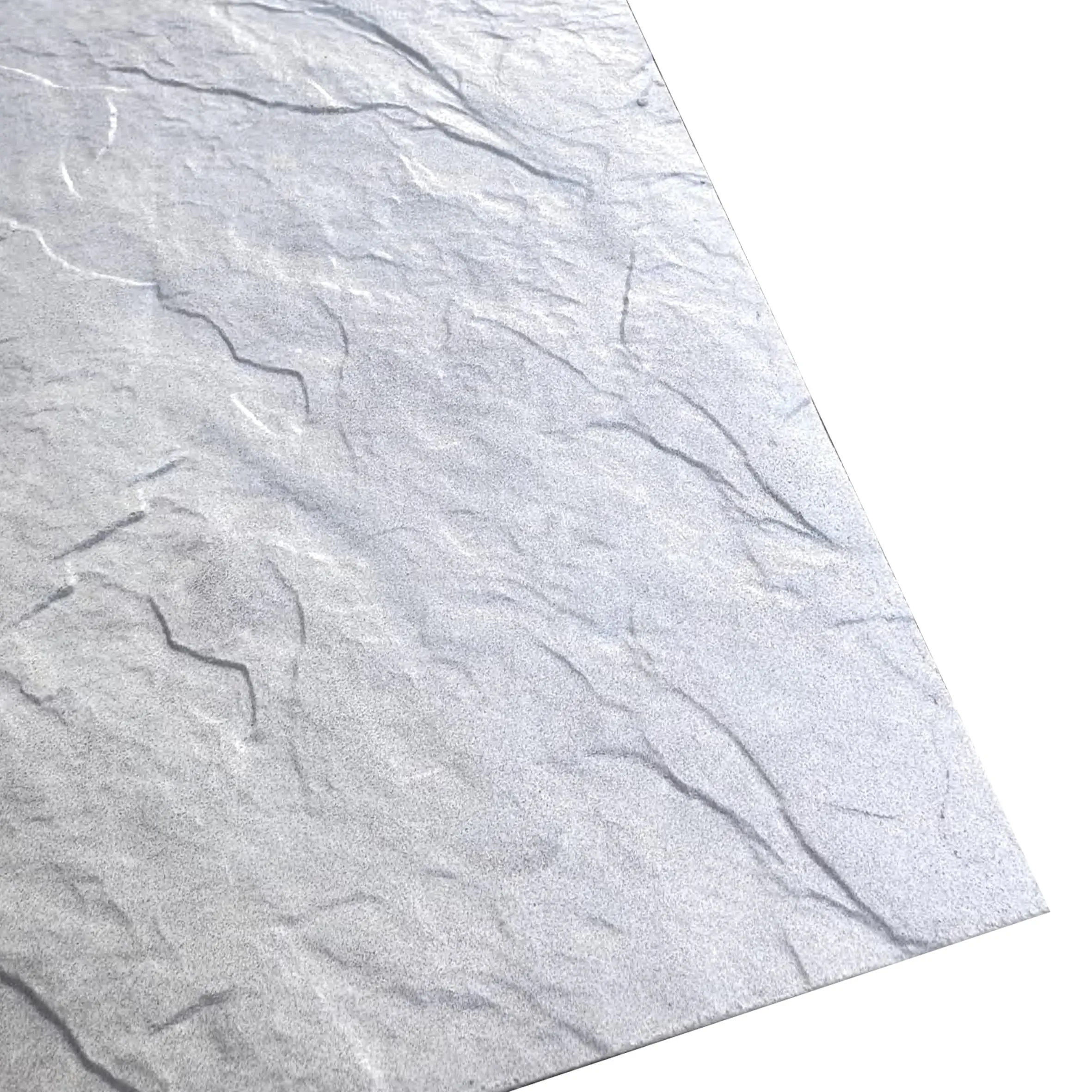
But let's talk about that "veil" in the name. The surface texture isn't just for show. Those subtle ridges and grooves aren't deep enough to trap dirt, but they do create tiny air pockets when the panels are installed. Think of it like a microscopic insulation blanket—air is one of the best natural insulators, and Slate Veil White leverages that to keep heat in (or out) without adding bulk.
Energy efficiency in buildings boils down to one key idea: reducing the need for artificial heating or cooling. Every degree your HVAC system has to work to maintain a comfortable temperature translates to energy used—and money spent. Slate Veil White MCM attacks this problem from three angles: thermal insulation, solar reflectivity, and long-term durability.
Let's start with the basics: heat moves from warm areas to cold areas. In winter, that means heat from inside your home escapes through walls, roofs, and floors. In summer, it's the opposite—heat from the sun beats down on your building, seeping in and forcing your AC to work overtime. Slate Veil White MCM disrupts this cycle with its unique structure.
Traditional materials like fair-faced concrete or even lime stone(beige) are dense, which means they conduct heat easily. A concrete wall, for example, acts like a bridge for heat transfer—on a hot day, the sun heats the exterior, and that heat travels straight through to the inside. Slate Veil White, by contrast, is engineered to resist that transfer. Its core contains millions of tiny air bubbles (a byproduct of its composite manufacturing process) that slow down heat movement. Think of it like a thermos for your building: the more air pockets, the harder it is for heat to pass through.
To put this in numbers: The thermal conductivity of Slate Veil White MCM is typically around 0.15 W/m·K (watts per meter-kelvin), a measure of how well heat passes through a material. Compare that to fair-faced concrete , which can have a thermal conductivity of 1.5–2.0 W/m·K, or even natural limestone (around 1.0 W/m·K). That's a 600–1200% improvement in insulation performance. For a homeowner in a hot climate, that could mean cutting AC usage by 20–30% during the summer months alone.
Color matters—especially when it comes to buildings. Dark surfaces absorb sunlight, turning it into heat. That's why black asphalt gets scorching hot in summer, and why a dark roof can make a building feel like an oven. Slate Veil White MCM, with its light, reflective surface, does the opposite: it bounces sunlight back into the atmosphere, rather than absorbing it.
The Solar Reflectance Index (SRI) is a scale that measures how well a material reflects solar heat, with higher numbers being better. Slate Veil White MCM typically scores an SRI of 85–90, putting it in the top tier of reflective building materials. For comparison, lime stone(beige) might score around 60–70, and traditional dark roof shingles often fall below 30. What does that mean for a building? A higher SRI means less heat is absorbed during the day, so the interior stays cooler. In one study, a commercial building in Phoenix replaced its dark exterior panels with Slate Veil White MCM and saw a 28% reduction in peak cooling demand during the summer. That's not just lower energy bills—that's a more comfortable space for everyone inside.
Energy efficiency isn't just about daily performance—it's about the long haul. A material that needs frequent repairs or replacement might seem cheap upfront, but the energy and resources required to fix or replace it add up over time. Slate Veil White MCM is built to last, and that longevity is a hidden energy saver.
Natural stone, for example, can crack under freeze-thaw cycles, requiring patching or replacement. Fair-faced concrete is durable but can develop cracks over time, letting moisture seep in and reducing insulation efficiency. Slate Veil White MCM, however, is resistant to moisture, mold, and temperature extremes. Its coating resists fading from UV rays, so that bright white finish stays bright for decades—not turning gray or yellow, which would lower its reflectivity. And because it's lightweight, installation is easier, requiring less structural support and fewer resources to transport and mount. All of this means fewer repairs, less waste, and a building envelope that keeps performing at peak efficiency year after year.
To really understand why Slate Veil White MCM stands out, let's compare it to three common building materials: fair-faced concrete , lime stone(beige) , and even its cousin, MCM flexible stone . The table below breaks down key factors that impact energy efficiency:
| Material | Thermal Conductivity (W/m·K) | Solar Reflectance Index (SRI) | Estimated Lifespan (Years) | Maintenance Frequency |
|---|---|---|---|---|
| Slate Veil White MCM | 0.15–0.20 | 85–90 | 30–40 | Minimal (annual cleaning) |
| Fair-Faced Concrete | 1.50–2.00 | 30–45 | 20–30 | Regular (sealing every 3–5 years) |
| Lime Stone (Beige) | 0.80–1.00 | 60–70 | 25–35 | Moderate (patching cracks, sealing) |
| MCM Flexible Stone | 0.25–0.30 | 50–75 (varies by color) | 25–35 | Minimal (similar to Slate Veil White) |
The numbers speak for themselves. Slate Veil White MCM outperforms in thermal conductivity (meaning better insulation) and SRI (meaning less heat absorption). While its lifespan is on par with lime stone, its maintenance needs are far lower, and it handily beats fair-faced concrete in every category. Even compared to MCM flexible stone —a versatile and sustainable option in its own right—Slate Veil White's higher reflectivity and lower thermal conductivity give it an edge in energy efficiency, especially in sunny climates.
Numbers on a page are one thing, but seeing how Slate Veil White MCM performs in the real world is where its impact truly hits home. Let's look at three case studies that showcase its energy-saving potential.
The Martinez family wanted to build a sustainable home in the Rocky Mountains, where winters are cold and summers are warm. Their architect recommended Slate Veil White MCM for the exterior walls and roof. "We were worried about the cost at first," says Maria Martinez, "but the energy savings have been incredible." In the first year, their heating bills dropped by 32% compared to their previous home (which had fair-faced concrete siding), and their summer cooling costs were 27% lower. "Even on the coldest days, the inside walls feel warm to the touch—no more drafty corners," Maria adds. The home's white exterior also stands out beautifully against the green landscape, a bonus they hadn't anticipated.
A commercial developer in Austin was struggling with high energy costs in their older office buildings. When they built a new 5-story structure, they opted for Slate Veil White MCM cladding. "Texas summers are brutal—our AC bills were through the roof in the old buildings," says project manager James Wilson. "With the new building, we saw an immediate difference. The interior temperature stays consistent, even on 100°F days, and our energy use for cooling is down 35%. We've even been able to reduce the size of the HVAC system, saving on upfront costs too." Employees have also reported feeling more comfortable, with fewer complaints about hot spots near windows.
Public buildings often have tight budgets, so energy efficiency is a top priority for cities. The Riverfront Community Center in Portland needed a durable, low-maintenance exterior that would also help keep operating costs down. Slate Veil White MCM was chosen for its combination of performance and affordability. "We serve over 10,000 people a month, so keeping the center comfortable year-round is a big job," says facility director Lisa Chen. "In the first year, we saved $12,000 on energy bills compared to our old brick building. Plus, the white exterior looks bright and welcoming, which has actually increased foot traffic—people comment on how 'fresh' the building feels."
Energy efficiency is a big win, but Slate Veil White MCM offers benefits that extend far beyond lower utility bills. Let's talk about sustainability—both in terms of the material itself and its impact on the planet. The production process for MCM uses significantly less water and energy than quarrying natural stone or manufacturing traditional concrete. Many MCM manufacturers also prioritize recycled materials in their backing layers, and Slate Veil White is no exception. Its lightweight design also reduces transportation emissions—fewer trucks are needed to deliver panels to job sites, cutting down on carbon footprints.
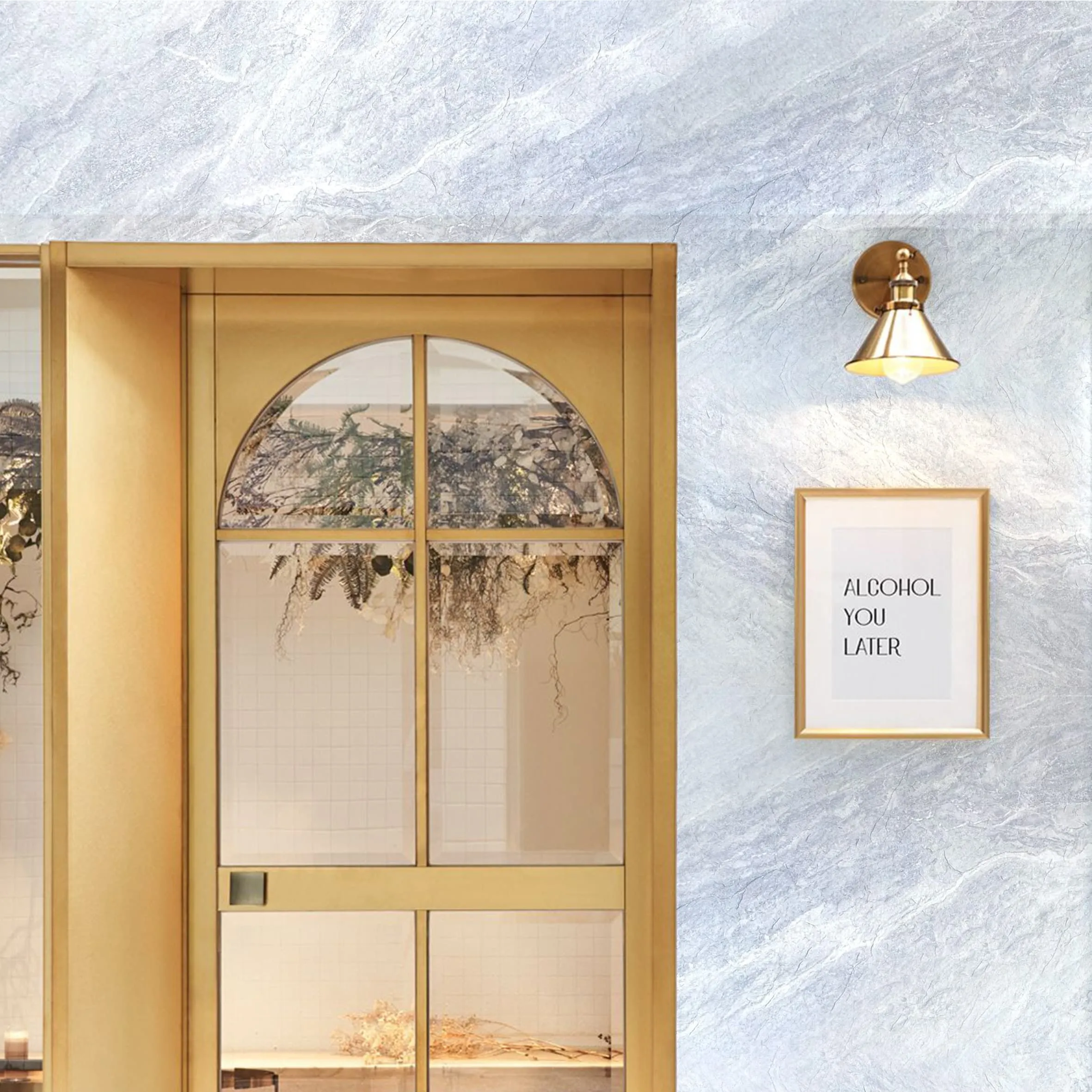
Then there's design flexibility. Architects and designers love working with Slate Veil White because it can be shaped, curved, or cut to fit almost any building style. Whether you're designing a modernist home with clean lines or a community center that blends with historic architecture, Slate Veil White adapts. It also pairs beautifully with other MCM series, like the MCM 3D printing series , which allows for custom textures and patterns. Imagine a building with Slate Veil White walls accented by 3D-printed decorative panels—functional and stunning, all while staying energy-efficient.
And let's not forget about indoor air quality. Unlike some traditional materials that can off-gas volatile organic compounds (VOCs), Slate Veil White MCM is low-VOC, contributing to healthier indoor environments. For schools, hospitals, or homes with allergy sufferers, that's a quiet but crucial benefit.
Buildings are more than just structures—they're the backdrop to our lives. They shelter us, inspire us, and shape how we experience the world around us. But in an era where climate change and rising energy costs are pressing concerns, the materials we choose for these buildings matter more than ever. Slate Veil White MCM isn't just a building material; it's a statement that sustainability and beauty don't have to be mutually exclusive.
From its ability to reflect sunlight and insulate like a pro to its durability and design flexibility, Slate Veil White MCM checks every box for modern, energy-efficient construction. It's a reminder that the best solutions often come from blending the old (inspiration from natural slate) with the new (advanced composite technology). Whether you're a homeowner building your dream house, an architect designing the next iconic structure, or a community leader looking to cut public costs, Slate Veil White MCM offers a path forward—one that keeps buildings comfortable, energy bills low, and the planet a little healthier.
So the next time you walk past a building with a bright, elegant white facade, take a closer look. It might just be Slate Veil White MCM—and behind that beautiful exterior, a quiet revolution in energy efficiency is underway.
Recommend Products












