

On today's construction sites, deadlines aren't just dates on a calendar—they're pressure points. A single day of delay can ripple into budget overruns, strained client trust, and frayed team morale. For architects racing to meet grand opening milestones, contractors juggling labor shortages, and project managers balancing quality with speed, the search for materials that can keep pace with accelerated timelines is constant. Enter Slate Veil White MCM: a material that doesn't just adapt to fast-track demands but actively redefines what's possible, turning tight schedules from sources of stress into opportunities for success.
Before diving into how Slate Veil White MCM transforms project timelines, let's clarify what makes this material unique. Part of the broader MCM flexible stone family, it's a modified composite material engineered to mimic the elegance of natural stone while packing in performance features that traditional materials can't match. Think of it as nature's beauty, reimagined for the urgency of modern construction. Its namesake "slate veil white" finish—soft, matte, with subtle veining that evokes sun-bleached stone—adds a touch of sophistication to any space, but its true power lies in how it streamlines the building process.
To appreciate Slate Veil White MCM's impact, it helps to first understand the hurdles of fast-track construction. Traditional building materials—natural stone, brick, even fair-faced concrete—often become bottlenecks. Natural slate, for example, is stunning but heavy, fragile, and requires on-site cutting that eats into hours. Fair-faced concrete, while durable, demands precise pouring conditions and curing times that can stretch schedules by weeks. Add in weather delays, labor gaps, and the need for multiple trades to coordinate, and even well-planned projects can veer off track.
The core issue? These materials were designed for a slower era, where construction timelines were measured in months, not weeks. Today, with clients expecting retail spaces to open in 12 weeks, hospitals to expand in 6 months, and offices to welcome tenants before quarter-end, the industry needs solutions that prioritize speed without sacrificing quality. That's where Slate Veil White MCM steps in—by addressing the root causes of delay: weight, installation complexity, and on-site customization.
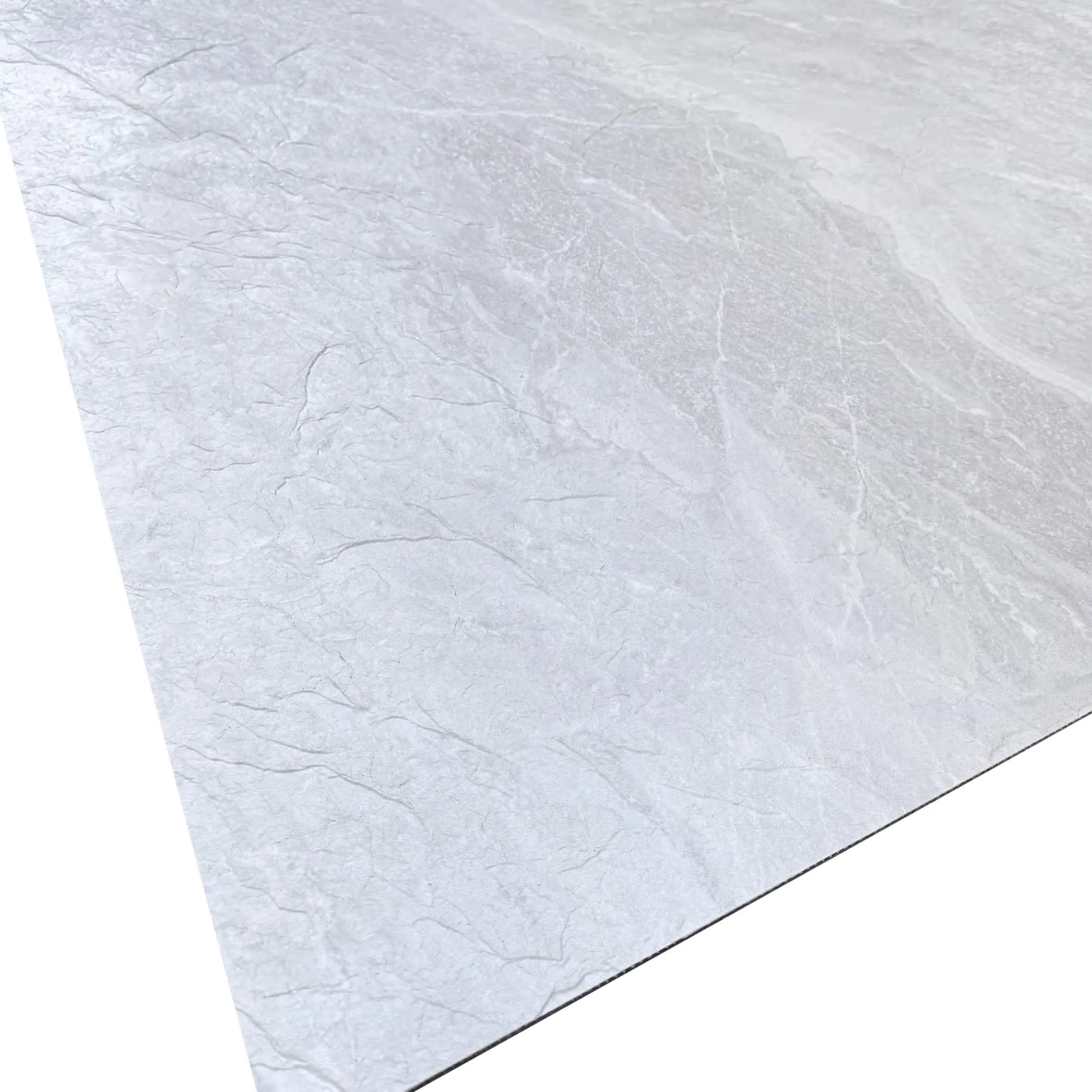
One of the most immediate ways Slate Veil White MCM accelerates projects is through its lightweight composition. Traditional natural stone panels can weigh 30–40 kg per square meter; even fair-faced concrete clocks in at 24–28 kg/m². Slate Veil White MCM, by contrast, tips the scales at just 8–10 kg/m². That might sound like a small difference, but on a 1,000 m² facade, it translates to 20–30 tons less material to transport, lift, and install—a game-changer for efficiency.
Consider transport first: lighter panels mean more units per truck. A standard flatbed can carry 200 m² of natural slate, but with Slate Veil White MCM, that number jumps to 500 m². Fewer deliveries mean fewer logistical headaches, lower fuel costs, and less time spent coordinating truck arrivals on-site. For projects in urban areas with tight delivery windows, this alone can shave days off the schedule.
On the installation side, the benefits multiply. With traditional stone, crews need cranes or heavy lifting equipment to maneuver panels into place—a process that's slow, expensive, and weather-dependent. Slate Veil White MCM panels, being lightweight flexible stone sheets, can be carried by two workers, no crane required. On a recent hotel renovation in Chicago, the contractor reported cutting facade installation time by 40% simply by switching to MCM panels: what took 10 days with natural stone took just 6 with Slate Veil White, freeing up the team to tackle interior work sooner.
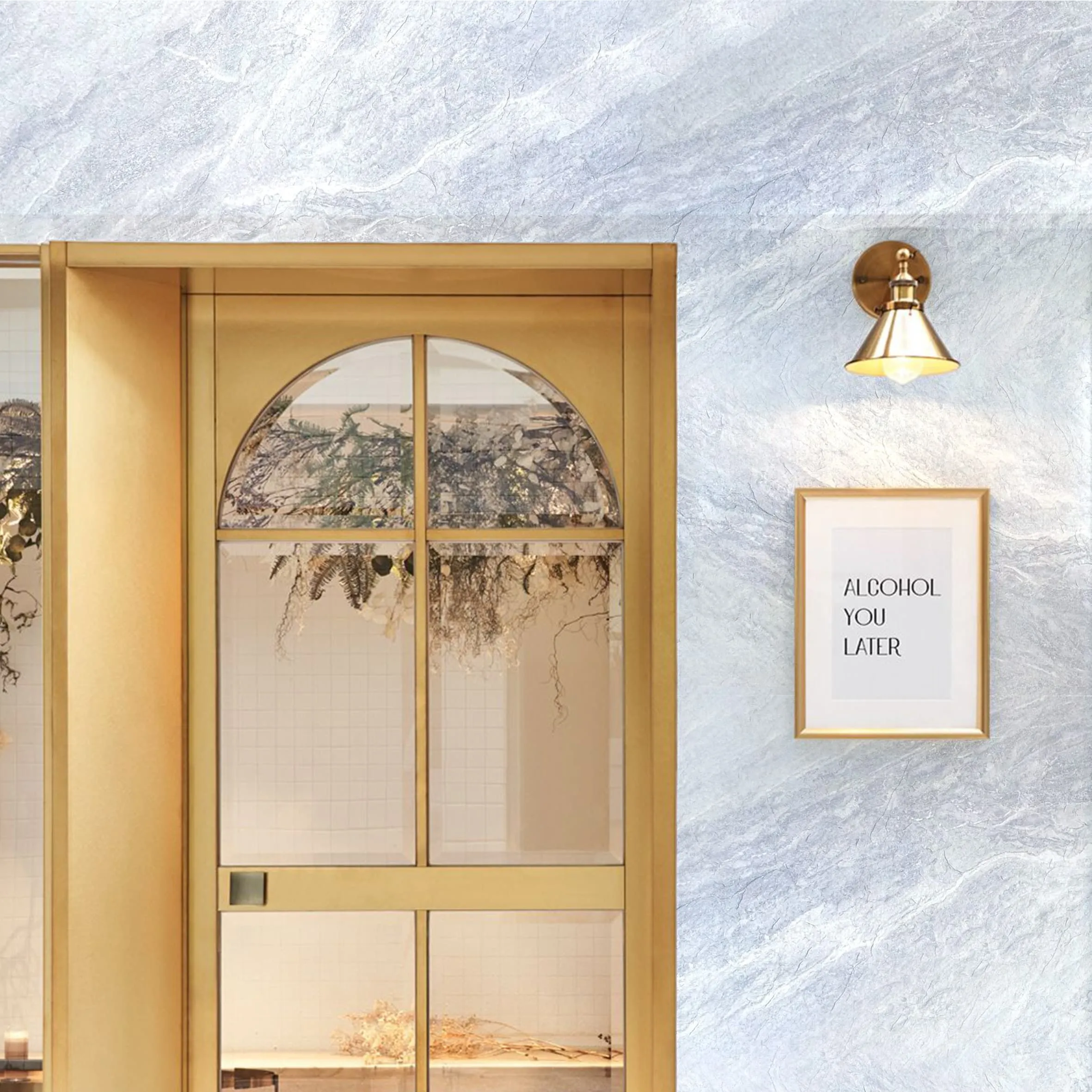
If lightweight design is Slate Veil White MCM's "quick win," prefabrication is its secret weapon. Unlike natural stone, which often arrives as raw slabs requiring on-site cutting, grinding, and finishing, Slate Veil White MCM comes as part of prefabricated MCM panel systems. Each panel is custom-cut, edge-finished, and ready to install right out of the box—no sawdust, no noise, no last-minute adjustments.
This prefabrication shifts work from the chaotic construction site to controlled factory environments, where precision is easier to maintain and delays are rare. For example, an architect designing a restaurant interior with a feature wall can send exact measurements to the MCM manufacturer, who then produces panels with cutouts for outlets, lighting, and signage—all pre-drilled and aligned. When the panels arrive on-site, installation becomes a matter of mounting them to the substrate with adhesive or mechanical fasteners, a process that takes hours instead of days.
The result? On-site labor demands plummet. A crew of two can install 100 m² of Slate Veil White MCM in a single day, compared to 30–40 m² with traditional stone (which requires cutting, sealing, and grouting). For a project with a 500 m² facade, that's a difference of 17 days vs. 5 days—time that can be redirected to other critical tasks, like electrical work or interior finishing.
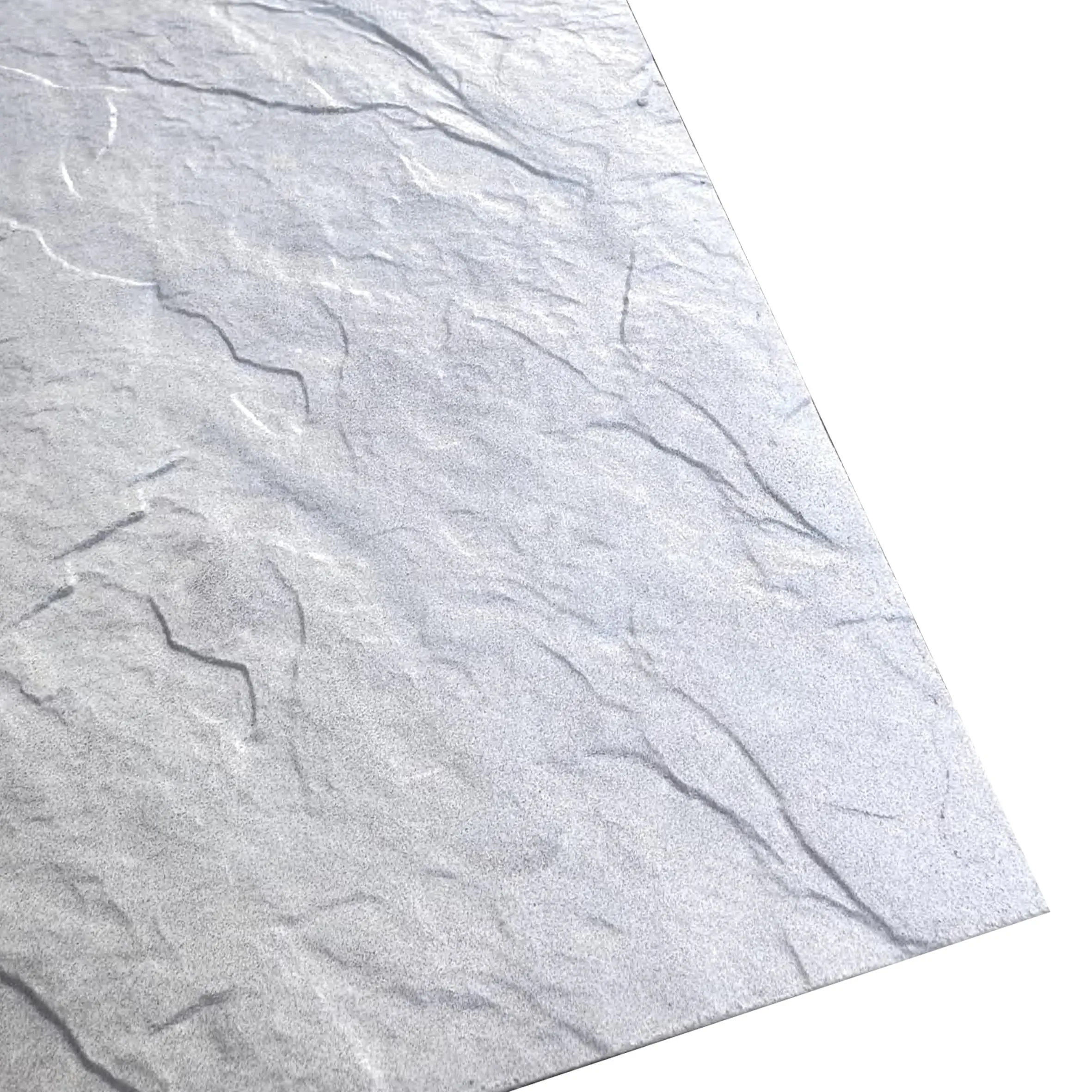
Fast-track construction can't afford shortcuts—and neither can Slate Veil White MCM. One of the biggest risks of rushing projects is rework: a scratch on natural stone, a crack in concrete, or water damage to untreated surfaces can force teams to tear out and replace sections, erasing days of progress. Slate Veil White MCM, however, is engineered to resist the wear and tear of fast-paced sites.
Its composite structure—blending mineral aggregates, fiberglass reinforcement, and polymer binders—makes it impact-resistant, moisture-proof, and UV-stable. Unlike natural slate, which can chip during installation, or fair-faced concrete, which stains easily if not sealed immediately, Slate Veil White MCM holds up to bumps from tools, rain during exterior installation, and even the occasional mishap with a ladder. This durability means fewer callbacks, no emergency repairs, and a finish that looks as good on day one as it does on day 100.
Consider a recent retail project in Miami, where Slate Veil White MCM was used for an exterior facade. A sudden rainstorm hit during installation, soaking the panels—but instead of halting work to dry and seal, the crew kept going. The panels repelled moisture, and once installed, required no additional treatment. With traditional stone, that storm could have delayed the project by 3–4 days. Here, it was a non-event.
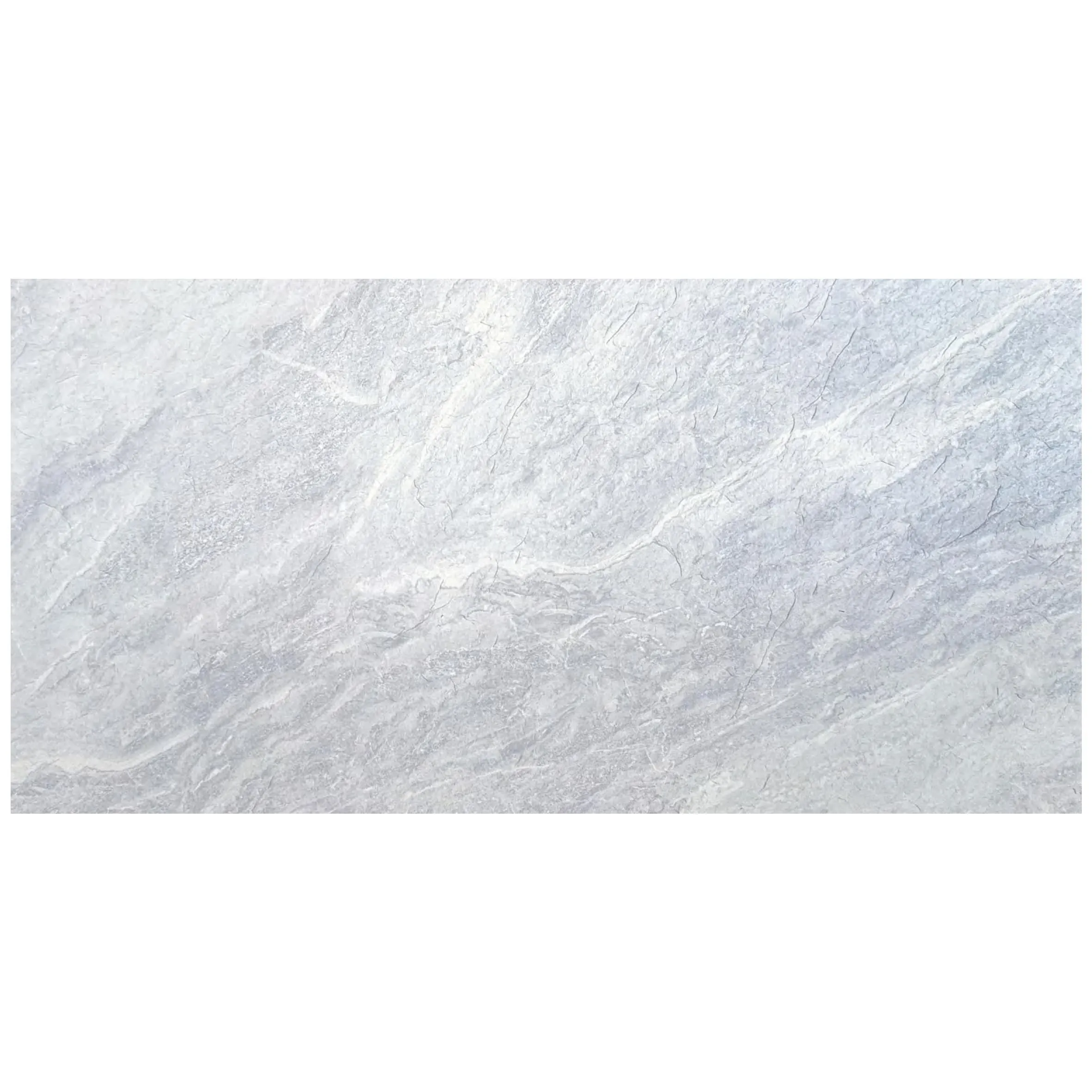
| Metric | Slate Veil White MCM | Natural Slate | Fair-Faced Concrete |
|---|---|---|---|
| Weight (kg/m²) | 8–10 | 25–30 | 22–25 |
| Installation Rate (m²/day/crew) | 80–100 | 30–40 | 40–50 |
| On-Site Cutting Required? | No (prefabricated) | Yes (significant) | Yes (minor) |
| Weather Sensitivity During Installation | Low (moisture/UV resistant) | High (requires dry conditions) | High (needs curing time) |
| Rework Risk | Low (impact/moisture resistant) | High (fragile, stains easily) | Medium (cracking, staining) |
When a regional hospital in Texas needed to expand its emergency department to meet post-pandemic demand, the stakes couldn't have been higher. The project had a hard deadline of 6 months—9 weeks shorter than the initial estimate—and any delay would mean turning away patients. The design called for a 1,200 m² exterior facade and 300 m² of interior accent walls, all requiring a clean, modern aesthetic that wouldn't clash with the existing building.
The original plan specified natural limestone, but early calculations showed it would take 12 weeks to source, cut, and install—too slow for the timeline. The team pivoted to Slate Veil White MCM, drawn to its lightweight design and prefabricated options. Here's how it played out:
The result? The emergency department opened 5 days early, with the Slate Veil White MCM facade earning praise for its clean, calming aesthetic. "We didn't just meet the deadline—we beat it, and the material still looks brand new a year later," said the project manager. "That's the power of choosing the right material for fast-track."
Fast-track projects often force architects to choose between speed and design vision—but Slate Veil White MCM erases that trade-off. Its versatility lets teams achieve complex looks without slowing down. Want a curved accent wall? The material's flexibility (it bends up to 30 degrees without cracking) makes it possible, with prefabricated curved panels that snap into place. Need to match existing finishes? Slate Veil White MCM's color consistency ensures every panel blends seamlessly, unlike natural stone, which can vary widely in hue and veining.
This flexibility extends to applications, too. It works indoors and out, on walls, ceilings, and even furniture. A boutique hotel in Colorado, for example, used Slate Veil White MCM for its lobby fireplace surround, bar front, and exterior cladding—all from the same material, ensuring design cohesion while cutting down on material sourcing time. Architects no longer need to juggle multiple suppliers or worry about coordinating delivery schedules for different products; one material, endless possibilities.
As construction timelines continue to shrink—driven by demand for faster project turnarounds, rising labor costs, and the need to reduce carbon footprints—materials like Slate Veil White MCM will only grow in importance. They represent a shift from "building fast" to "building smart," where speed and quality aren't opposing forces but partners.
For contractors, this means happier clients and more competitive bids. For architects, it means turning bold designs into reality without compromise. For project managers, it means fewer sleepless nights and more celebrations when the final punch list is checked off ahead of schedule. In the end, Slate Veil White MCM isn't just a material—it's a tool for turning the chaos of fast-track construction into a story of success.
So the next time a deadline looms and the pressure mounts, remember: the right material can make all the difference. Slate Veil White MCM doesn't just keep up with fast-track schedules—it leads the way.
Recommend Products












