
Saudi Arabia's architectural landscape is in the midst of a remarkable transformation. From the bustling streets of Riyadh to the coastal vistas of Jeddah, and the cultural heartlands of Medina, the kingdom is redefining what modern architecture can be—blending age-old traditions with cutting-edge innovation. As skyscrapers reach for the clouds, heritage sites undergo careful restoration, and public spaces become hubs of community life, one challenge remains constant: finding exterior cladding materials that can withstand the harsh desert climate, honor cultural identity, and deliver breathtaking aesthetics. Enter Starmoon Stone, a standout in the MCM project board series , and a game-changer for architects and developers across Saudi Arabia.
To understand why Starmoon Stone is making waves, we first need to grasp the unique demands of Saudi Arabia's built environment. The kingdom's climate is unforgiving: scorching summers with temperatures exceeding 45°C, sandstorms that test durability, and occasional humidity along the coast. Traditional cladding materials—think heavy natural stone, concrete, or even wood—often fall short. Natural stone, while beautiful, is cumbersome to transport and install, prone to cracking under thermal expansion, and expensive to maintain. Concrete, though durable, lacks the warmth and texture that reflect Saudi Arabia's rich cultural heritage. Wood, meanwhile, succumbs quickly to moisture and pests in coastal areas like Dammam.
Add to this the growing demand for sustainable, eco-friendly building practices—aligned with Saudi Vision 2030's focus on green development—and the need for a versatile, resilient, and visually striking cladding solution becomes clear. This is where Modified Composite Material (MCM) steps in, and within this category, Starmoon Stone emerges as a leader, particularly when paired with innovations like MCM flexible stone technology.
Starmoon Stone isn't just a material—it's a bridge between the past and the future. Part of the MCM project board series , it's engineered to address the specific needs of Saudi projects while celebrating the kingdom's natural and cultural aesthetics. What sets it apart? Let's break it down.
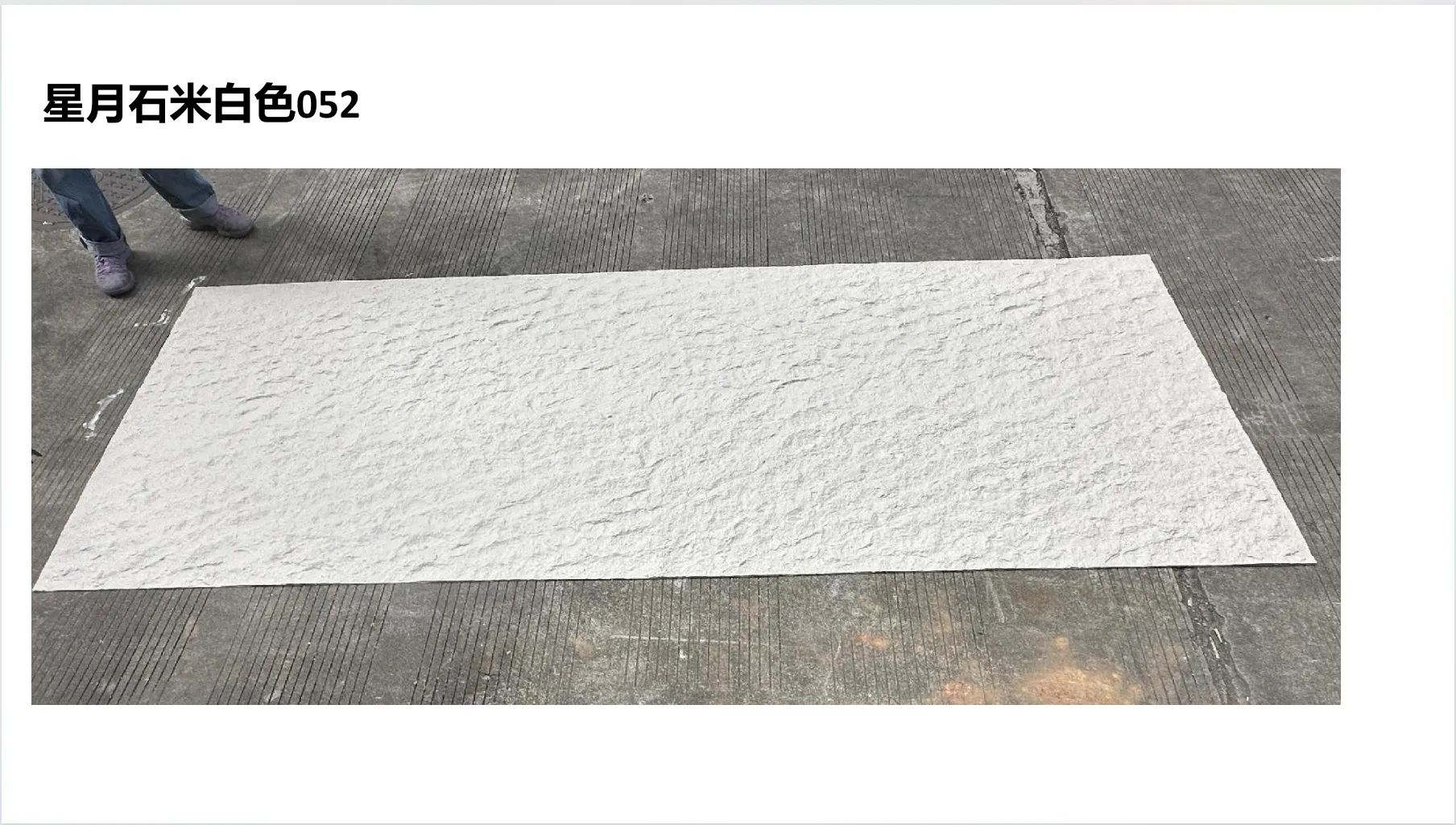
Walk through the deserts of Al-Ula or the rocky outcrops of the Asir Mountains, and you'll notice the play of light and shadow on stone—how the sun brings out warm golds and silvers, and the moon casts cool, silvery hues. Starmoon Stone captures this dynamic beauty. Its surface, available in finishes like travertine (starry green) , mimics the organic, (starry) patterns of natural travertine, with subtle veining that evokes the flow of desert winds. Unlike generic cladding, each panel feels unique, as if it was quarried from a one-of-a-kind desert formation—yet it's produced with the consistency and precision of modern manufacturing.
Starmoon Stone's MCM core is a triumph of engineering. Composed of a mineral-rich base, reinforced with fiberglass, and coated with a weather-resistant finish, it's lightweight (weighing up to 80% less than natural stone), making installation faster and reducing structural load on buildings—a critical advantage for high-rises in Riyadh's skyline. Its flexibility allows it to expand and contract with temperature changes, avoiding the cracks that plague traditional stone. And in Saudi Arabia's sandstorms? The material's non-porous surface repels dust and grit, meaning less maintenance and a longer lifespan.
Take, for example, the recent renovation of a heritage hotel in Makkah. The architects wanted to preserve the building's traditional mud-brick aesthetic but needed a cladding material that could withstand the city's high humidity and heavy foot traffic. Starmoon Stone, with its earthy travertine (starry green) finish, provided the perfect solution: it matched the warm tones of the original structure, resisted moisture, and required minimal upkeep—ensuring the hotel remains a cultural landmark for decades to come.
To put Starmoon Stone's benefits into perspective, let's compare it to common alternatives used in Saudi projects:
| Feature | Starmoon Stone (MCM) | Natural Travertine | Traditional Concrete |
|---|---|---|---|
| Weight (per sqm) | 12–15 kg | 50–80 kg | 20–25 kg |
| Installation Time | 30% faster (lightweight, easy to cut) | Slow (requires heavy machinery) | Moderate (needs formwork) |
| Weather Resistance | Excellent (resists UV, sand, moisture) | Poor (porous, prone to staining) | Good (but cracks in thermal cycles) |
| Aesthetic Versatility | High (multiple finishes: travertine (starry green) , lunar textures, etc.) | Limited (natural variation can be inconsistent) | Low (uniform, lacks texture) |
| Sustainability | Recyclable, low carbon footprint | High quarrying impact, energy-intensive | High cement production emissions |
Starmoon Stone's versatility shines in the diverse range of Saudi projects it's enhancing. Let's explore a few standout examples:
The newly opened Jeddah Cultural Center, designed to celebrate Saudi Arabia's literary and artistic legacy, features Starmoon Stone in travertine (starry green) across its facade. The material's subtle, star-like flecks echo the night skies over the Red Sea, while its warm green undertones pay homage to the date palm oases that have sustained communities for centuries. The lightweight panels allowed architects to create sweeping, curved walls—evoking the flowing lines of traditional Najdi architecture—without compromising structural integrity.
In Riyadh's Diplomatic Quarter, a 40-story office tower now stands out for its striking exterior: Starmoon Stone in a "lunar peak" finish, which shimmers like moonlight on desert sand. The MCM project board series here was chosen not just for aesthetics but for performance. The tower's location, exposed to frequent sandstorms, required a cladding that could resist abrasion and retain its luster. Starmoon Stone delivered, with its durable coating ensuring the building looks as impressive in 20 years as it does today.
In the coastal city of Khobar, a luxury villa complex uses Starmoon Stone to bridge indoor and outdoor spaces. The material's flexibility allowed designers to clad both the exterior walls and the poolside terrace, creating a seamless transition. Homeowners appreciate its resistance to saltwater corrosion and easy cleaning—no more scrubbing away sand or salt deposits after a day at the beach.
Saudi Vision 2030 isn't just about economic growth—it's about building a greener, more sustainable future. Starmoon Stone aligns with this vision in several key ways. First, its lightweight nature reduces transportation emissions; fewer trucks are needed to deliver materials to construction sites, cutting carbon footprints. Second, the MCM flexible stone manufacturing process uses recycled minerals and low-VOC (volatile organic compound) coatings, minimizing environmental impact. Third, its long lifespan—up to 50 years with minimal maintenance—reduces the need for frequent replacements, lowering waste.
For developers aiming to achieve LEED or Estidama certifications, Starmoon Stone is a valuable asset. A recent mixed-use development in Riyadh, which incorporated the material, reported a 15% reduction in construction-related emissions compared to using traditional stone—a significant step toward meeting the kingdom's sustainability goals.
As Saudi Arabia continues to build for the future—from NEOM's innovative smart cities to the restoration of UNESCO-listed sites like Al-Hijr—materials like Starmoon Stone will play a pivotal role. Its ability to adapt to diverse design needs, withstand extreme conditions, and reflect cultural identity makes it more than a cladding option; it's a tool for storytelling.
Imagine (oops, scratch that— Consider ) a future where every new building in Saudi Arabia tells a story: of desert nights, of ancient oases, of a nation proud of its past and confident in its future. Starmoon Stone, with its blend of artistry and engineering, is helping write that story—one panel at a time.
Starmoon Stone isn't just revolutionizing exterior cladding in Saudi Arabia; it's redefining what's possible in architecture. By combining the durability needed for the kingdom's harsh climate, the sustainability required for a greener future, and the aesthetic richness that honors Saudi culture, it's setting a new standard for building materials. Whether in the MCM project board series , paired with MCM flexible stone , or finished in stunning variants like travertine (starry green) , Starmoon Stone is more than a product—it's a partner in building spaces that inspire, endure, and reflect the soul of Saudi Arabia.
For architects, developers, and homeowners alike, the message is clear: when it comes to cladding, the future is flexible, resilient, and undeniably beautiful. And that future is here, in the form of Starmoon Stone.
Recommend Products












