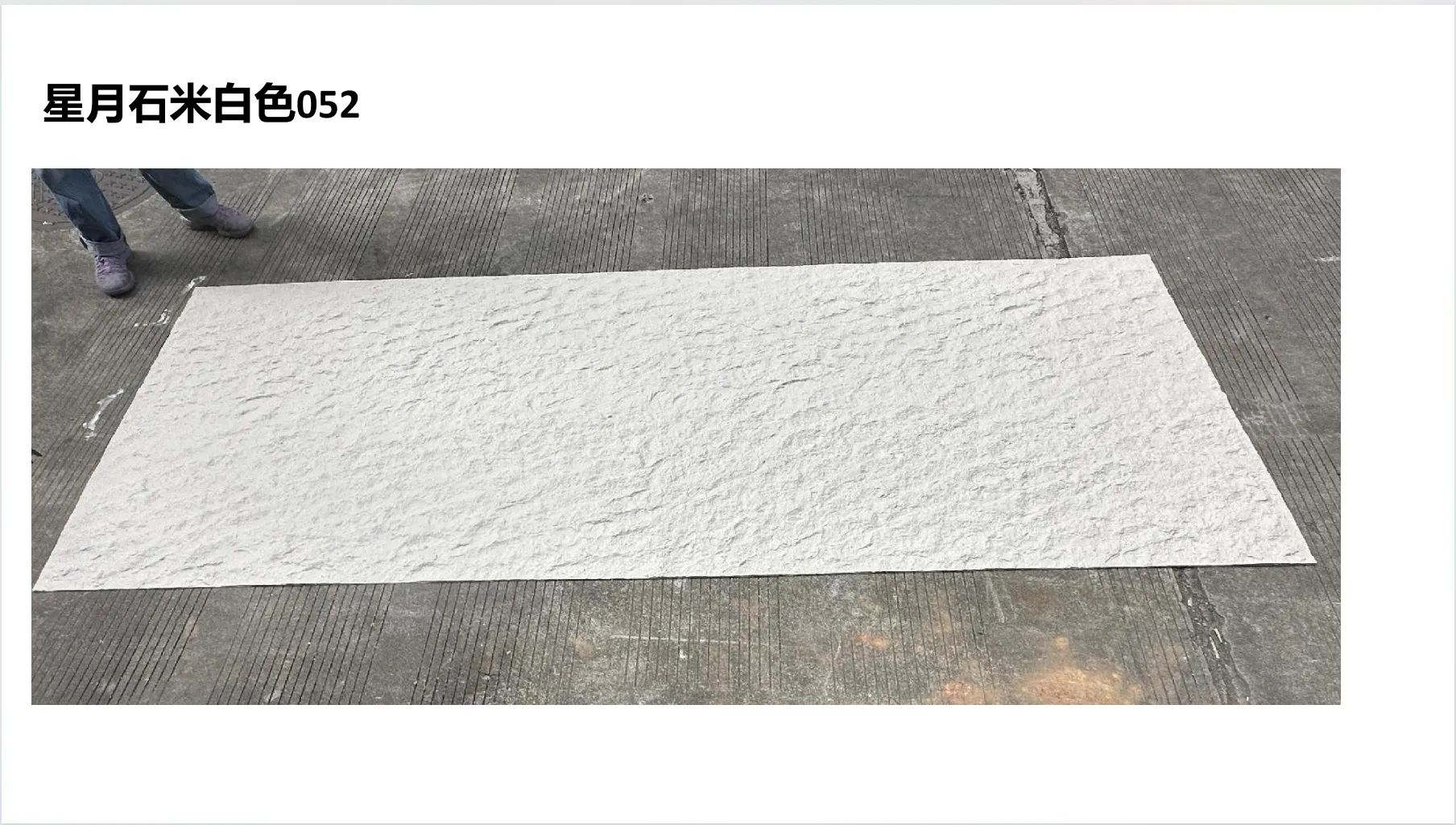
At first glance, Starmoon Stone might look like any other high-end wall panel or flooring material. But scratch the surface (metaphorically, of course—its durability is one of its best features), and you'll discover a material built for the demands of modern branding. Here's why it's become a favorite among architects, interior designers, and brand managers alike:
1. Flexibility That Bends to Your Brand's Vision
Starmoon Stone is part of the
MCM flexible stone
family—a technology that revolutionizes how stone can be used. Unlike rigid, heavy natural stone slabs that limit design possibilities, MCM (Modified Composite Material) flexible stone is lightweight, thin, and surprisingly malleable. This means it can be curved around corners, applied to uneven surfaces, or even used to create 3D art installations—all without compromising on strength. For brands that want to break free from boxy, generic interiors, this flexibility is a game-changer. Imagine a yoga studio with a curved accent wall clad in Starmoon Stone, its soft, flowing lines mirroring the brand's focus on balance and harmony. Or a tech company's reception area with geometric 3D panels that reflect its innovative spirit—all made possible by the material's adaptability.
2. A Color Palette as Diverse as Brand Personalities
Brands don't fit into one-size-fits-all color schemes, and neither should their materials. Starmoon Stone comes in a spectrum of hues that cater to every brand voice, from bold and energetic to calm and sophisticated. Take
Travertine (starry blue)
, for example—a deep, rich shade with subtle metallic flecks that catch the light like a night sky. It's perfect for a creative agency that wants to signal innovation and out-of-the-box thinking. Then there's
Lunar Peak Silvery
, a sleek, cool-toned option with a matte finish that feels modern and minimalist—ideal for luxury tech brands or high-end fashion boutiques aiming for understated elegance. Whether your brand thrives on warm, earthy tones or cool, futuristic shades, Starmoon Stone has a color that doesn't just match your logo—it amplifies your brand's emotional core.
3. Textures That Tell a Story
Color is just one part of the equation; texture adds the depth that makes a space memorable. Starmoon Stone offers a range of tactile finishes, from smooth and polished (think a high-end jewelry store) to rough and organic (perfect for a rustic café). Run your hand over a Starmoon Stone panel, and you'll feel the difference: some have the subtle pockmarks of natural travertine, others the sleek uniformity of modern concrete, and still others the iridescent shimmer of metallic accents. These textures aren't just aesthetic—they're psychological. A rough, textured surface might evoke a sense of heritage and authenticity (great for a heritage brand), while a smooth, glossy finish could signal precision and cutting-edge quality (ideal for a luxury automotive showroom). In short, Starmoon Stone's textures don't just look good—they
feel
like your brand.
4. Durability That Keeps Up with Busy Brands
Let's be real: commercial spaces take a beating. From coffee spills in cafés to scuff marks in retail stores, the materials need to withstand daily wear and tear without losing their appeal. Starmoon Stone checks this box, too. Thanks to its MCM composition, it's resistant to scratches, stains, and even moisture—making it suitable for high-traffic areas like lobbies, hallways, and restaurant dining rooms. And unlike natural stone, which can fade under harsh lighting, Starmoon Stone retains its color vibrancy for years. For brands that want their interiors to look as fresh on day 1,000 as they did on day 1, this longevity is invaluable.