
Stand before the Colosseum, and you'll feel it—the quiet grandeur of stone that has weathered two millennia. The travertine blocks, once crisp and pale, now glow with warm, honeyed hues, their surfaces etched with the stories of rain, wind, and time. That look —the soft fade, the subtle pitting, the depth of color—is patina. It's not just aging; it's character. It's history made visible. For architects and designers today, recreating that Roman travertine patina isn't just about aesthetics—it's about infusing modern spaces with the soul of the past. But how do you capture time in a material? Enter MCM technology, a bridge between ancient craftsmanship and cutting-edge innovation.
Patina is nature's love letter to durability. It forms when materials interact with their environment over decades—sunlight bleaches color, moisture seeps into pores, minerals in rain leave subtle deposits. For travertine, this process softens sharp edges, deepens earthy tones, and creates a texture that feels lived-in, not brand-new. It's why a 2,000-year-old Roman column feels more "alive" than a freshly quarried slab; patina turns stone into a storyteller.
In a world of mass-produced, cookie-cutter materials, patina matters because it's authentic. It resists the "perfect" sterility of modern design, offering instead a sense of warmth and rootedness. A wall clad in patinated travertine doesn't just look good—it feels like it belongs, like it has been part of the landscape forever. But here's the catch: natural patina takes centuries to develop. And in fast-paced modern construction, patience isn't always a luxury.
Traditional methods of achieving patina are a labor of love—and often a gamble. Quarried travertine can be left to weather outdoors for years, but results are unpredictable; one slab might develop rich amber tones, another could streak or fade unevenly. Chemical treatments can speed up aging, but they risk damaging the stone's integrity or creating a "fake" look that feels forced. Worse, natural travertine is heavy, porous, and prone to cracking, making it impractical for many modern builds. Designers were stuck: choose durability and convenience, or chase the character of aged stone—rarely both.
This is where MCM (Modified Composite Material) changes the game. Developed to mimic the look and feel of natural stone while addressing its flaws, MCM is a lightweight, flexible alternative that marries sustainability with versatility. At the heart of this innovation is MCM flexible stone —a composite material that combines natural mineral aggregates with advanced polymers. It's thin (as little as 4mm), lightweight (up to 80% lighter than natural stone), and resistant to water, fire, and impact. But most importantly, MCM can be engineered to replicate the exact patina of Roman travertine—without the wait, waste, or risk.
Creating Roman huge travertine patina with MCM isn't just about "copying" old stone—it's about reinterpreting it. Here's how the magic happens:
The foundation is Roman huge travertine , a premium grade of the stone known for its dense, uniform structure and warm base tones. MCM artisans grind this travertine into a fine powder, preserving its natural mineral composition—the "DNA" that gives it that authentic look. This powder is then blended with eco-friendly polymers and additives to create a flexible, moldable matrix. Unlike pure stone, MCM's composite structure allows for precise control over texture and color, ensuring every panel tells a consistent "story."
Enter MCM 3D printing series —a technology that transforms digital designs into physical texture with microscopic accuracy. Using high-resolution scans of ancient Roman travertine (think Colosseum fragments or Hadrian's Villa ruins), designers map out every pit, groove, and color variation. The 3D printer then layers the MCM mixture, recreating these details with stunning precision. Want the subtle wave-like patterns of a travertine slab that once faced a Roman courtyard? Or the starry pitting of stone exposed to volcanic ash? The 3D printer delivers—no two panels are identical, just like natural aging.
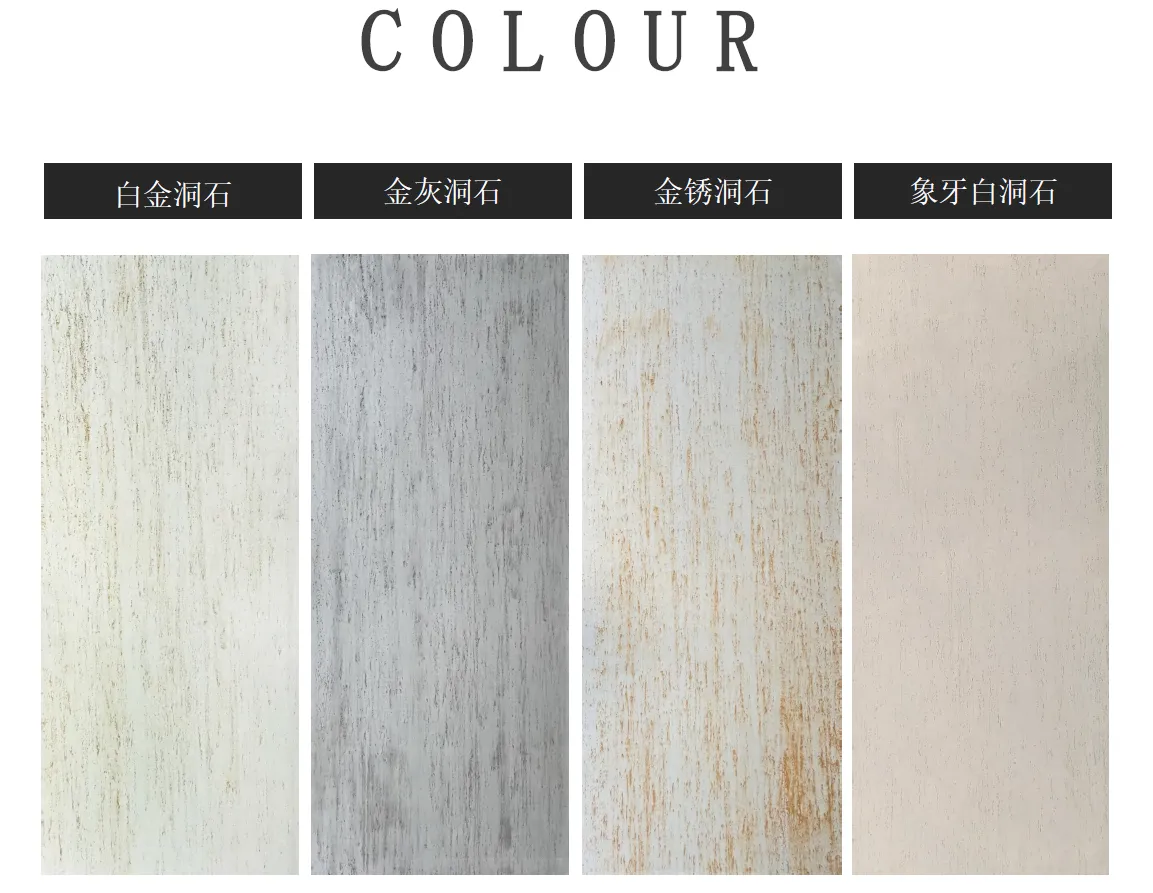
This is where the "patina magic" happens. MCM's aging process combines art and science. First, the 3D-printed panels undergo controlled "weathering": exposure to UV light to mimic sun bleaching, misting with mineral-rich solutions to replicate rain deposits, and gentle acid etching to create that coveted pitted texture. For unique effects, artisans might add touches like travertine (starry green) —a technique where tiny, iridescent particles are embedded into the surface, mimicking the mineral deposits that give ancient travertine its occasional "sparkle."
Color layering is equally nuanced. Starting with a base of warm ivory (the color of fresh Roman travertine), layers of amber, gold, and soft brown are applied in thin washes. Some areas are left lighter (as if sheltered from the elements), others deeper (like stone that absorbed more moisture). The result? A gradient that feels organic, not painted—just like time itself left its mark.
Finally, the panels are sealed with a clear, breathable coating that locks in the patina while protecting against stains and fading. Unlike natural travertine, which requires frequent sealing, MCM's polymer matrix repels water and dirt, ensuring the patina stays vibrant for decades. The result is a material that looks like it's been aging for centuries— but performs like it's brand-new.
| Criteria | Traditional Natural Travertine | MCM Roman Huge Travertine |
|---|---|---|
| Time to Achieve Patina | Decades to centuries | Weeks (controlled aging process) |
| Weight | Heavy (20-30 kg/m²) | Lightweight (4-6 kg/m²) |
| Durability | Porous, prone to cracking/staining | Water/fire/impact resistant; low maintenance |
| Customization | Limited (natural variation is unpredictable) | Highly customizable (3D printing allows for specific textures/patterns) |
| Eco-Friendliness | High quarrying waste; heavy transportation emissions | Recycled materials; low carbon footprint; lightweight = less transport energy |
While Roman huge travertine is a star, MCM's aging technology shines across its collections, offering designers endless ways to blend heritage with modernity. Take the Lunar Peak series— Lunar Peak silvery , golden , and black —which mimics the weathered metallic sheen of ancient Roman armor or gilded mosaics. Pair a Lunar Peak golden accent wall with MCM's patinated travertine, and you've got a space that feels both imperial and intimate.
For a more industrial twist, foamed aluminium alloy board (vintage silver) adds a sleek, aged metal contrast to travertine's warmth. Imagine a restaurant interior where Roman-inspired travertine columns meet vintage silver panels—history and modernity in perfect harmony.
MCM's Roman huge travertine patina isn't just for grand public spaces—it's for any project that craves soul. Here are a few ways designers are using it:
MCM technology isn't just about replicating the past—it's about reimagining it sustainably. By using recycled stone aggregates and reducing transportation costs (thanks to its lightweight design), MCM cuts down on construction's carbon footprint. And because it's so durable, it reduces the need for frequent replacements, further lowering environmental impact.
Looking ahead, MCM's 3D printing capabilities will only grow more sophisticated, allowing for even finer control over patina details. Imagine scanning a specific Roman ruin and recreating its exact patina for a client halfway around the world. Or blending travertine (starry green) with Lunar Peak black to craft a custom "galactic" patina for a futuristic museum. The possibilities are as endless as the stories we want our spaces to tell.
Roman huge travertine patina isn't just a look—it's a feeling. It's the comfort of knowing your space has depth, that it's connected to something larger than itself. With MCM aging technology, we no longer have to choose between the past and the future. We can build with the soul of ancient Rome, the durability of modern materials, and the creativity to make each project uniquely ours. So the next time you walk into a room clad in MCM's patinated travertine, pause. Let your fingers brush the surface. You'll swear you can feel the centuries in every groove—and that's the magic of MCM: it doesn't just replicate time. It honors it.
Recommend Products












