
Walk into a bustling downtown café. The walls, clad in a soft, textured stone that catches the morning light, immediately make you feel welcome. Step into a sleek tech office, and the polished, industrial-inspired panels behind the reception desk signal innovation and forward-thinking. These aren't just random design choices—they're intentional selections of MCM marble series, a material that can transform a commercial space from "functional" to "unforgettable." Choosing the right MCM marble isn't about picking something pretty; it's about aligning the stone's character with your project's identity, audience, and practical needs. Let's dive into how to navigate this process, ensuring your commercial space tells the right story—one that resonates with visitors and stands the test of time.
Every commercial space has a purpose, and that purpose should guide your marble choice. A high-end boutique selling luxury watches needs a different vibe than a casual co-working space for freelancers. A hotel lobby aiming for "grand elegance" will lean into different textures than a neighborhood brewery going for "rustic charm." Before scrolling through catalogs, ask: What emotion do I want visitors to feel when they enter? and What message does my brand or space need to communicate?
Let's take a hospitality project, for example—a boutique hotel in a coastal town. The goal is to evoke "calm luxury," blending the relaxed vibe of the beach with upscale comfort. Here, a stone like travertine (starry blue) could shine. Its subtle, star-like veining in deep blue-grey hues mimics the night sky over the ocean, adding a touch of whimsy without feeling over-the-top. Paired with light wood accents, it creates a space that feels both sophisticated and serene—perfect for guests looking to unwind.
On the flip side, consider a corporate headquarters for a financial firm. Trust and stability are key here. A material like fair-faced concrete might seem counterintuitive at first—after all, concrete is often associated with industrial spaces—but its clean, unadorned finish communicates transparency and reliability. When polished to a smooth sheen, fair-faced concrete takes on a modern, understated elegance that says, "We're professional, but we don't need flash to prove our worth."
If you're new to MCM marble, you might be wondering: What makes it different from traditional marble or stone cladding? The answer lies in its core: MCM flexible stone is a modified composite material designed to combine the beauty of natural stone with the practicality of modern engineering. Unlike heavy, brittle natural marble, MCM flexible stone is lightweight (often 70% lighter than traditional stone), flexible (it can bend to fit curved surfaces), and durable (resistant to scratches, moisture, and fading). For commercial projects, these traits are game-changers.
Imagine installing stone on a curved wall in a shopping mall atrium. Traditional marble would require custom cutting, heavy machinery, and a structural support system to hold the weight—driving up costs and installation time. MCM flexible stone, however, bends easily, cutting installation time in half and reducing the need for extra structural work. For a retail chain rolling out a new store design across multiple locations, this efficiency translates to faster openings and lower overhead. And because it's resistant to stains and UV damage, it stays looking fresh even in high-traffic areas like hotel lobbies or airport terminals—no constant re-polishing or repairs required.
But MCM flexible stone isn't just about practicality; it's about versatility. It comes in a range of finishes, from rough-hewn "natural" textures that mimic quarried stone to smooth, polished surfaces that rival high-end marble. This means whether your project calls for "ancient ruins" or "futuristic minimalism," there's an MCM flexible stone to match.
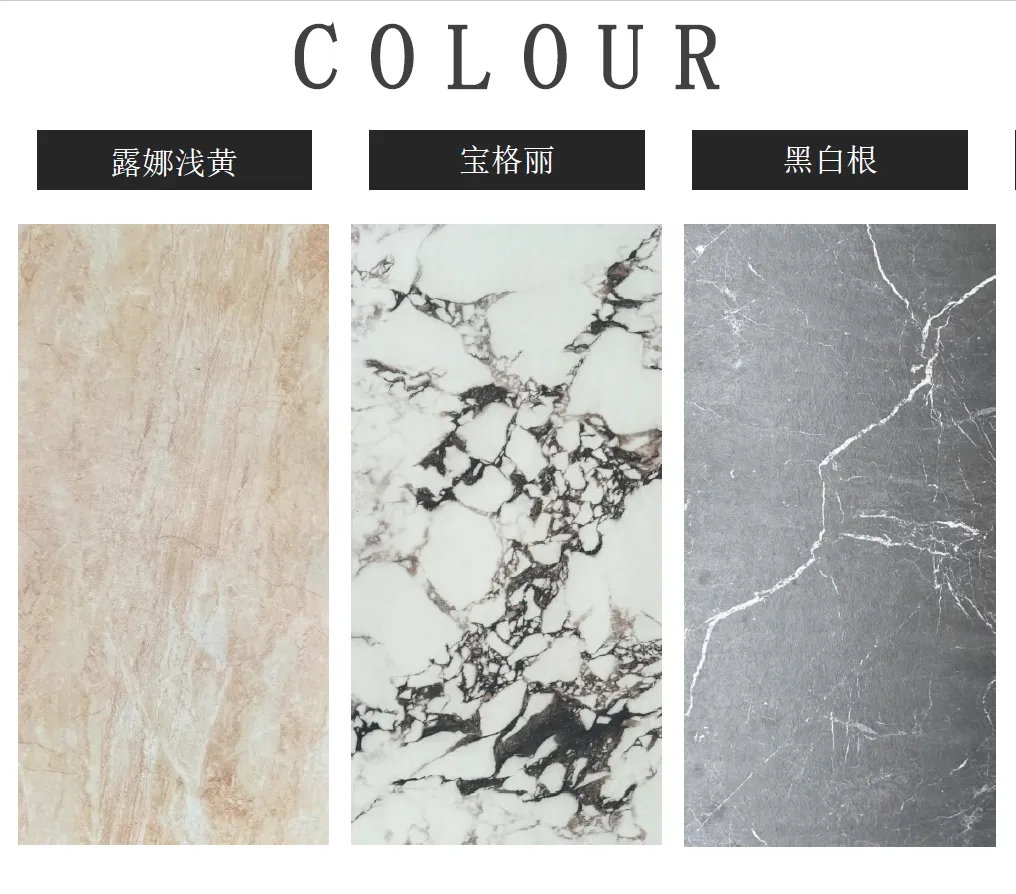
Once you've nailed down your project's identity, it's time to dive into the fun part: aesthetics. MCM marble series offer a spectrum of colors, textures, and finishes, each with its own personality. Let's break down how to match these elements to your desired mood.
If your project needs to feel "welcoming yet upscale"—think a hotel lobby, a fine-dining restaurant, or a luxury spa— lunar peak golden is a standout choice. This stone features warm, honeyed tones with subtle metallic flecks that catch the light, creating a sense of warmth without being overly bold. It's the kind of material that makes a space feel "luxe" without screaming "expensive." In a hotel lobby, imagine it on the main reception wall, paired with brass fixtures and soft pendant lighting: it immediately says, "You're in good hands." In a restaurant, it adds a touch of sophistication to booth backs or accent walls, making guests feel special without distracting from the food.
For projects that want to make a statement—like a trendy cocktail bar, a creative agency office, or a flagship retail store— boulder slab (especially in vintage black or silver) is hard to beat. These slabs are designed to look like massive, hewn stones, with rough edges and deep, rich colors that demand attention. A boulder slab accent wall in a restaurant's dining area becomes an instant conversation starter; guests will snap photos and share them on social media, turning your space into a "must-visit" spot. In a tech startup's office, a boulder slab (vintage silver) behind the meeting room table adds an edgy, industrial vibe that aligns with a culture of innovation. Just be mindful of balance: boulder slab is bold, so pair it with neutral walls or soft lighting to avoid overwhelming the space.
For spaces that thrive on creativity—art galleries, children's museums, or boutique bookstores—don't sleep on travertine (starry blue) . This stone takes the classic travertine look (porous, with natural pits and grooves) and adds a playful twist: tiny, iridescent "stars" embedded in the stone, catching light and creating a subtle, magical glow. Imagine a children's museum where the walls look like a night sky—kids will be mesmerized, and parents will appreciate the thoughtfulness of the design. In a café that hosts poetry readings or live music, travertine (starry blue) behind the stage sets a dreamy, intimate mood, making performers and audience members alike feel like they're in a special, otherworldly space. It's a reminder that commercial design doesn't have to be "serious"—sometimes, a little whimsy goes a long way.
Let's circle back to lunar peak golden for a moment, because its versatility is worth highlighting. Unlike some trendy colors that might feel dated in five years, lunar peak golden has a timeless quality. Its warm, earthy tones work with a range of design styles: paired with wood and leather, it leans traditional; with glass and steel, it feels modern; with greenery and natural fibers, it becomes bohemian. For a bank or financial institution, it adds a touch of trustworthiness (gold has long been associated with stability and prosperity). For a luxury car dealership, it elevates the space, making the vehicles on display feel even more premium. It's the kind of stone that grows with your project—adapting to refreshes in furniture or decor without needing to be replaced.
A stone might look perfect on paper, but if it can't handle the realities of your commercial space, it's not the right choice. Let's break down the practical factors that should influence your decision.
High-traffic areas—think hotel hallways, retail store floors, or airport lounges—need stones that can handle constant foot traffic, scuffs from rolling luggage, and the occasional spill (coffee, wine, soda). Here, fair-faced concrete is a workhorse. Its dense, non-porous surface resists scratches and stains, and a quick wipe with a damp cloth is usually enough to clean up spills. For outdoor spaces like restaurant patios or mall courtyards, MCM flexible stone is ideal: it's slip-resistant (even when wet) and UV-stable, so it won't fade in the sun. Avoid highly polished stones in these areas—they look beautiful, but they're slippery when wet and show scratches easily.
Low-traffic areas, like private office suites or hotel spa treatment rooms, can afford more delicate options. Travertine (starry blue) , with its porous surface, might need a sealant to prevent stains, but in a quiet spa where foot traffic is minimal, the extra maintenance is worth the aesthetic payoff. Just be sure to factor in sealing costs and schedules when budgeting—some stones need re-sealing every 1–2 years, which adds to long-term upkeep.
Commercial projects often work within tight budgets and timelines, so installation ease and cost matter. MCM flexible stone shines here: its lightweight nature reduces shipping costs, and its flexibility cuts down on installation time (no heavy lifting or custom cutting required). For example, cladding a 500 sq. ft. wall with traditional marble might take a team of 4 workers 3 days; with MCM flexible stone, the same job could be done by 2 workers in 1 day. That's a significant savings in labor costs.
Boulder slab, while stunning, can be pricier due to its size and weight—though the vintage finishes (silver, gold, black) often come at a similar cost to standard MCM options. If budget is a concern, consider using boulder slab as an accent (e.g., a 10 ft. x 8 ft. feature wall) rather than covering entire rooms. Fair-faced concrete is another budget-friendly option; it's widely available and requires minimal finishing, making it a go-to for projects looking to maximize impact without overspending.
Still overwhelmed by choices? Let's simplify with a comparison table of some popular MCM marble series, highlighting their best uses, moods, and maintenance needs:
| Stone Type | Best For | Mood | Maintenance Level |
|---|---|---|---|
| Travertine (starry blue) | Creative spaces (art galleries, cafes, children's museums) | Whimsical, magical, intimate | Medium (seal yearly to prevent staining) |
| Lunar peak golden | Luxury spaces (hotel lobbies, high-end boutiques, fine dining) | Warm, elegant, timeless | Low (resistant to scratches; wipe clean with mild soap) |
| Boulder slab (vintage black) | Statement walls (restaurants, tech offices, retail accent walls) | Bold, industrial, edgy | Low (dense surface resists stains; minimal upkeep) |
| Fair-faced concrete | Modern/industrial spaces (offices, co-works, breweries) | Clean, understated, reliable | Very low (non-porous; wipe spills immediately) |
| MCM flexible stone (neutral tones) | Multi-location retail, curved surfaces, high-traffic areas | Versatile (adapts to modern, rustic, or classic designs) | Low (lightweight, durable, easy to clean) |
Before signing off on a stone, run through this checklist to ensure you've covered all bases:
Let's wrap up with a real-world example. A new farm-to-table restaurant in a historic downtown wanted to blend "rustic charm" with "modern sophistication." Their space included a large dining area, a bar, and a private event room. Here's how they chose their MCM marble:
For the dining area walls: They opted for MCM flexible stone , in a warm beige tone with a rough, "hewn" texture, to mimic the look of an old barn. This added rustic charm without the weight or cost of real barn stone. For the bar front: They went bold with boulder slab (vintage black) , creating a striking contrast against the light wood bar top and gold fixtures—adding modern edge to the rustic vibe. For the private event room: To elevate the space for special occasions, they chose lunar peak golden on the walls, paired with soft, warm lighting. The result? A space that feels cozy yet upscale, with each area telling a part of the restaurant's story: "We honor tradition, but we're not stuck in the past."
Choosing an MCM marble series for your commercial project is about more than picking a material—it's about crafting an experience. Whether you opt for the whimsy of travertine (starry blue) , the elegance of lunar peak golden , the durability of fair-faced concrete , or the boldness of boulder slab , the right stone will do more than cover walls: it will welcome visitors, reinforce your brand, and create memories. So take your time, align your choice with your project's identity, and don't be afraid to mix and match—after all, the best commercial spaces are those that feel uniquely "you."
Now, go transform that space. The right MCM marble is waiting to help you tell your story.
Recommend Products












