
In the world of architecture and design, every project tells a story. Whether it's a boutique hotel aiming to evoke tropical serenity or a corporate headquarters striving for modern elegance, the materials chosen play a starring role in bringing that narrative to life. This is where Modified Composite Material (MCM) products shine—not just as functional building materials, but as canvases for creativity. Among the most exciting ways to elevate MCM is through customization using weaving real photos: high-fidelity images that capture the intricate textures, patterns, and warmth of woven materials, from bamboo mats to artisanal textiles. When paired with MCM's versatility, these photos transform ordinary panels into storytellers, creating spaces that feel personal, authentic, and deeply connected to a client's vision.
Before diving into customization, let's ground ourselves in what makes MCM products so indispensable. MCM, or Modified Composite Material, is a lightweight, durable, and highly adaptable cladding solution composed of a mineral-filled core bonded between two layers of aluminum. Its magic lies in its flexibility—both in form and function. Unlike traditional stone or concrete, MCM can be shaped into curves, embossed with textures, or printed with high-resolution images, all while remaining resistant to weather, fire, and fading. This makes it ideal for both interior and exterior applications, from feature walls to facades.
One standout in the MCM lineup is MCM flexible stone . True to its name, this variant mimics the look and feel of natural stone—think the rugged charm of travertine or the smooth elegance of marble—but with the bendability to wrap around columns, arches, or any curved surface. It's a favorite among designers for its ability to blend organic aesthetics with modern practicality. And when combined with weaving real photos, MCM flexible stone becomes even more dynamic: suddenly, a stone-like panel can carry the soft (wénlù—texture) of a handwoven basket or the geometric precision of a textile pattern, bridging the gap between nature and craftsmanship.
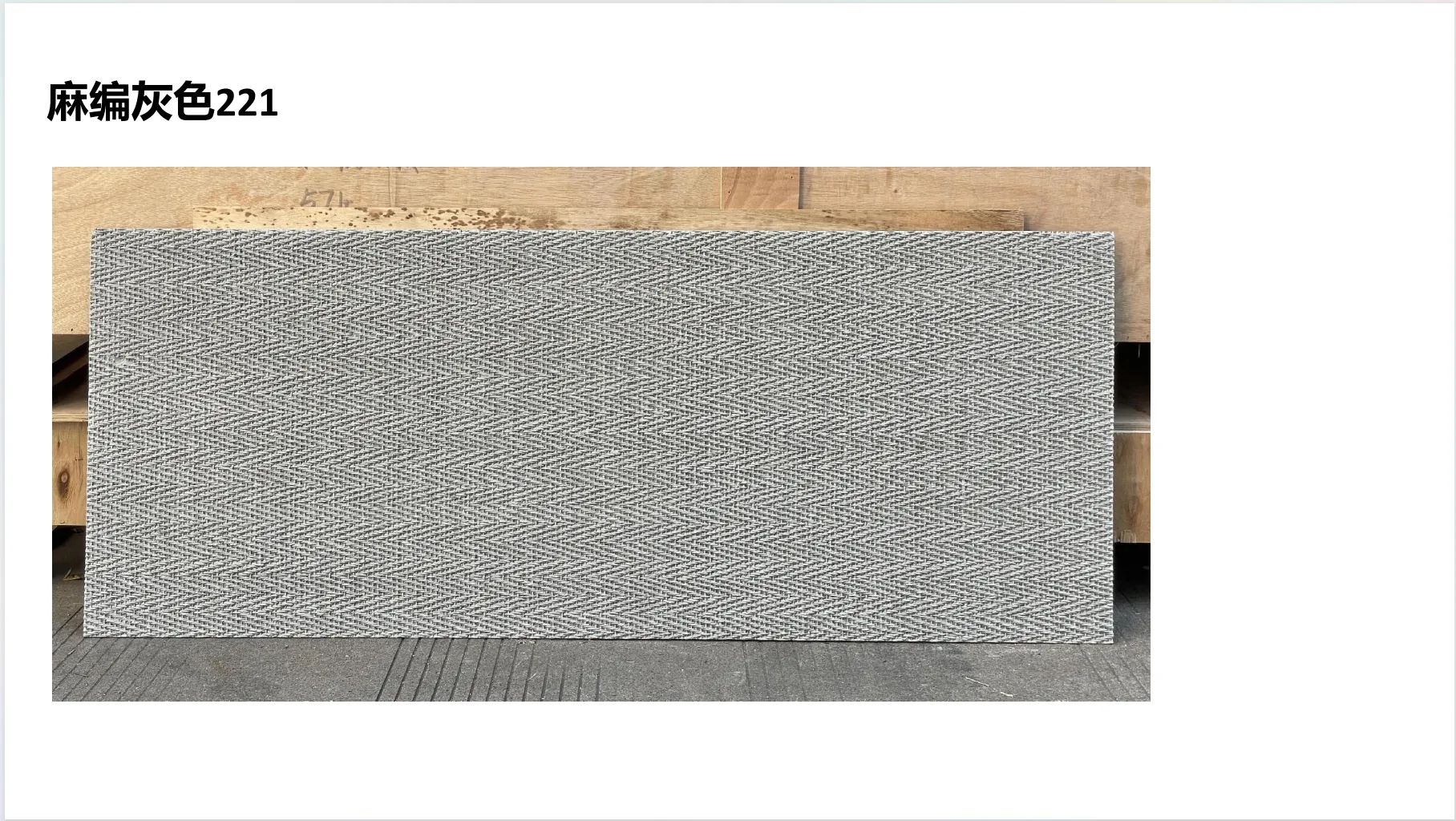
Weaving real photos are not just snapshots; they're digital artifacts of tactile beauty. These images are taken with specialized cameras that capture the depth, color variation, and (xìwēi—subtle) details of woven materials. Imagine the way sunlight filters through a bamboo mat, casting dappled shadows; the way threads of a jacinth-colored textile intersect to create a rich, warm pattern; or the way a grey woven rug's fibers catch the light, creating soft gradients. Weaving real photos preserve these nuances, turning them into digital files that can be printed, embossed, or even 3D-printed onto MCM panels.
Why does this matter? In an era where clients crave uniqueness, generic "stone-look" or "wood-look" panels can feel impersonal. Weaving real photos add a layer of authenticity: a hotel in Bali, for example, might use photos of local bamboo weaving to infuse its lobby with a sense of place, making guests feel instantly transported to the island's lush landscapes. A tech startup might opt for photos of sleek, minimalist thread patterns on foamed aluminium alloy board (vintage silver) to reflect its innovative brand identity. These photos don't just decorate MCM—they give it meaning.
Customizing MCM with weaving real photos is a collaborative journey between designer, client, and manufacturer. It requires careful planning, attention to detail, and a willingness to iterate. Here's a step-by-step breakdown of how it typically unfolds:
Every customization project starts with a conversation. The first step is to sit down with the client and unpack their vision: What emotion do they want the space to evoke? Are there cultural or personal references they want to honor? What existing elements (furniture, lighting, landscaping) will the MCM panels interact with? For example, a client designing a wellness retreat might express a desire for "calm, earthy vibes," mentioning their love for traditional Japanese tatami mats. This cues the designer to source weaving real photos of tatami textures—think straw-like weaves in neutral tones—to pair with MCM flexible stone, creating a serene, grounded feel.
It's also critical to discuss practicalities: Will the panels be indoors or outdoors? How much foot traffic or weather exposure will they face? For exterior applications, UV resistance and water durability are key, so the chosen weaving photos must be printed with fade-proof inks. For high-traffic interiors, the MCM base might need a scratch-resistant coating to protect the photo's integrity.
Next comes the fun part: matching MCM substrates with weaving real photos. The goal is harmony—where the MCM's base texture and the photo's pattern complement, rather than compete with, each other. Let's explore a few pairings that work beautifully:
To help visualize these pairings, here's a comparison of common MCM materials and weaving photo themes, along with their best-use cases:
| MCM Material | Weaving Photo Theme | Best Application | Key Benefit |
|---|---|---|---|
| MCM Flexible Stone | Bamboo Mat Weave | Residential Interiors (Living Rooms, Bedrooms) | Blends natural stone aesthetics with organic, tropical warmth |
| Foamed Aluminium Alloy Board (Vintage Gold) | Jacinth Textile Weave | Luxury Retail Facades, Hotel Lobbies | Metallic base enhances the richness of warm, reddish-orange tones |
| Travertine (Starry Blue) | Silver Thread Patterns | Hospitality Exteriors, Cultural Center Feature Walls | Celestial stone look paired with delicate threads creates an ethereal, storytelling effect |
| Fair-Faced Concrete MCM | Khaki Woven Rug | Industrial-Chic Cafés, Office Break Rooms | Rugged concrete texture softens with the cozy, neutral tones of khaki weaving |
Once the material and photo theme are selected, the next step is editing the weaving real photos to ensure they translate flawlessly onto MCM. This isn't just about cropping or resizing—it's about optimizing the image for the specific properties of the MCM panel. For example:
No customization process is complete without prototyping. Before full-scale production, manufacturers create small samples of the MCM panel with the woven photo applied. This step is non-negotiable: it allows the client and designer to test how the panel looks in different lighting (natural vs. artificial), how the colors hold up, and whether the texture feels as intended. For example, a prototype of foamed aluminium alloy board (vintage silver) with grey weaving photos might reveal that the pattern is too subtle under bright sunlight, prompting a tweak to increase contrast.
Prototyping also tests durability. If the panel is for an exterior application, the sample might be exposed to simulated rain, UV rays, or extreme temperatures to ensure the photo doesn't peel, fade, or warp. For high-traffic interiors, a scratch test can confirm that the printed surface holds up to daily wear and tear.
Once the prototype is approved, production begins. MCM panels are cut to size, and the weaving real photo is applied using state-of-the-art printing or embossing techniques. For digital printing, UV-cured inks are used to ensure longevity; for embossing, a custom die is created based on the photo's texture map, pressing the pattern into the MCM surface.
Installation is the final act. MCM panels are lightweight, so they're easier to handle than traditional stone or concrete, but precision is still key. Installers must ensure panels align seamlessly, especially if the weaving pattern spans multiple panels (imagine a bamboo weave that suddenly shifts mid-wall—an easy mistake, but one that breaks the illusion of continuity). Proper mounting also protects against moisture and wind, ensuring the customized panels look stunning for decades.
To see this process in action, let's look at a real-world example: a boutique hotel in Ubud, Bali, aiming to celebrate local culture while offering modern comfort. The client's vision? "A space that feels like a Balinese home—warm, textured, and rooted in tradition—but with the durability to withstand our tropical climate."
Step 1: Consultation. The design team learned the client wanted to highlight Bali stone (a local sedimentary rock with warm, earthy tones) but feared it would feel too heavy for the hotel's open-air lobby. They suggested MCM flexible stone as a lightweight alternative, paired with weaving real photos of Balinese bamboo mats—an iconic local craft.
Step 2: Material and Photo Selection. The team chose MCM flexible stone in a lime stone (beige) base, which mimicked Bali stone's natural color. For the weaving photos, they collaborated with a local artisan to photograph her handwoven bamboo mats, capturing the way the bamboo strips overlapped to create a honeycomb pattern.
Step 3: Editing and Prototyping. The photos were edited to enhance the bamboo's golden hues, ensuring they popped against the beige MCM base. A prototype was created and installed in the lobby for a week, where it was tested under Bali's intense sunlight and frequent rain showers. The result? The UV inks held fast, and the flexible stone's texture—combined with the bamboo pattern—created a warm, inviting atmosphere.
Step 4: Production and Installation. Over 50 MCM panels were produced, each printed with the bamboo weave photo. Installers mounted them on the lobby's feature wall, curving some panels to follow the wall's organic shape (made possible by MCM flexible stone's bendability). The final result? A lobby that feels both authentically Balinese and refreshingly modern—guests often comment on how the bamboo pattern makes them feel "right at home."
While customizing MCM with weaving real photos is rewarding, it's not without challenges. Here are a few common hurdles and how to overcome them:
As technology advances, the possibilities for customizing MCM with weaving real photos are only growing. Here are a few trends to watch:
Customizing MCM products using weaving real photos is more than a design trend—it's a shift in how we think about building materials. No longer just functional, MCM becomes a medium for storytelling, allowing clients to infuse their spaces with personal meaning, cultural heritage, or artistic vision. Whether it's a residential project using MCM flexible stone with family heirloom textile photos or a commercial space using travertine (starry blue) with celestial thread patterns, the result is always the same: spaces that don't just look beautiful, but feel meaningful.
So, the next time you're tasked with a client-specific project, consider the power of weaving real photos and MCM. It's not just about creating a wall or a facade—it's about creating an experience. And in design, experiences are what make spaces unforgettable.
Recommend Products












