
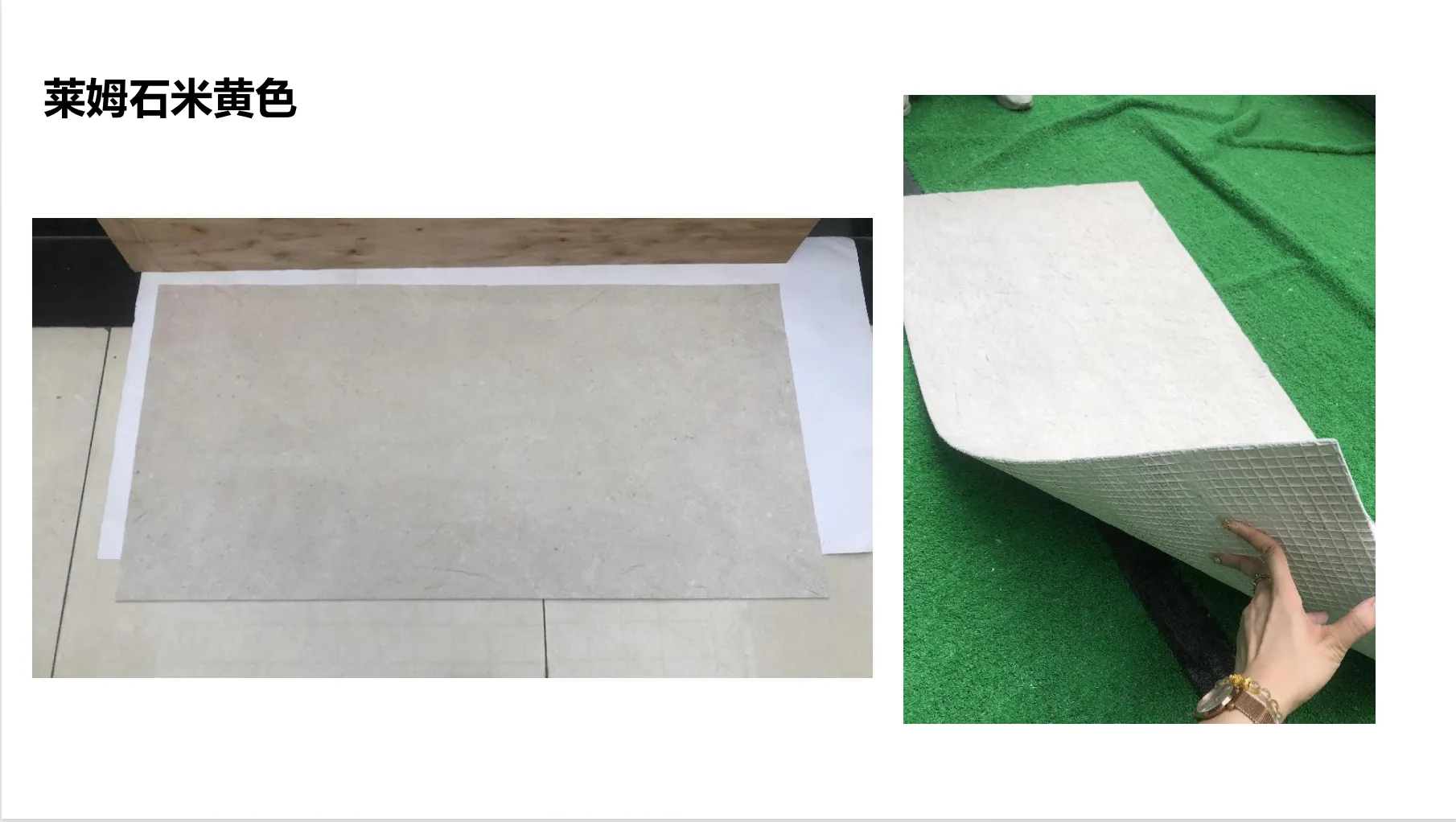
Building design is as much about feeling as it is about function. Every material tells a story, and lime stone (beige)—with its warm, earthy tones and timeless texture—often takes center stage. But how do you know if the "real photo" a supplier sends actually reflects the stone you'll get? That's where the art of identifying high-quality lime stone real photos comes in. It's not just about pixels; it's about trust, accuracy, and ensuring your vision translates from screen to structure.
Ordering lime stone (beige) based on a photo that makes it look bright and uniform, only to receive slabs with uneven veining and a dull, grayish hue, isn't just a disappointment—it's a problem that ripples through your entire design. Mismatched materials can throw off color palettes, clash with adjacent surfaces like wood grain board, and even delay construction when reorders are needed. High-quality real photos act as a bridge between supplier and designer, turning vague descriptions into tangible expectations. They let you "test drive" the stone before committing, ensuring what you see is what you'll build with.
Not all real photos are created equal. A standout lime stone (beige) photo does more than document the stone—it communicates it. Here's what to look for:
Lime stone's beauty lies in its natural imperfections: tiny pores that hint at its marine origins, subtle ridges from centuries of geological pressure, and soft, irregular edges. A high-quality real photo captures this texture so vividly, you'll swear you can feel it. Run your eyes over the image—do you see depth in the surface, or does it look flat and airbrushed? For example, a close-up should reveal the stone's porous structure, not a smooth, plastic-like finish. If the photo makes the lime stone (beige) look more like a painted wall than a natural material, it's likely hiding the texture you need to evaluate.
"Beige" is a spectrum, and lime stone (beige) spans warm creams to soft taupes, often with hints of gold or gray. High-quality photos resist the urge to oversaturate or filter—they show the stone as it is, in varied lighting. Check for consistency across multiple shots: Does the beige shift dramatically from photo to photo, or does it maintain a natural, subtle variation? Avoid images where the color looks "off"—too bright (like a neon sand) or too muted (like a dirty white). Those are red flags for heavy editing. A trustworthy photo will even include notes: "Photo taken in north-facing natural light" or "Slight color variation due to natural veining"—small details that build confidence.
Bad lighting can turn a stunning lime stone slab into a forgettable gray blob. Good lighting? It's like a spotlight on the stone's best features. Look for photos with soft, diffused light—think morning sun through a window, not a harsh flash. This kind of lighting grazes the surface, highlighting every bump and groove without creating harsh shadows or washed-out spots. Avoid photos with uneven lighting (e.g., half the slab is bright, half is dark) or overly dramatic "mood lighting" that obscures details. Remember: You need to see the stone as it will look in your space, not a staged studio with perfect conditions.
A slab of lime stone (beige) might look stunning in a close-up, but how big is it, really? High-quality real photos include a reference to help you gauge size—a hand, a tape measure, or even a small object like a water bottle placed next to the slab. This matters because texture and veining can look very different up close versus at full scale. For example, a tiny pit that looks charming in a macro shot might become a distracting flaw on a 10-foot wall. Without scale, you're guessing—and guessing is risky when designing spaces.
The best real photos don't just show the stone—they show it in action . A lime stone (beige) accent wall in a living room, paired with wood grain board flooring; a kitchen backsplash catching afternoon light; an outdoor patio weathered gently by rain. Context helps you imagine the stone in your own design: Does the beige warm up a minimalist room, or does it clash with cool-toned fixtures? A photo of the stone installed (not just on a warehouse floor) answers these questions. Suppliers who skip context often have something to hide—maybe the stone looks great alone but awkward in a space. Don't settle for isolated slabs; ask for "in-situ" photos if they aren't already provided.
To better understand what sets high-quality lime stone (beige) photos apart, let's compare them to another popular material: wood grain board. Both rely on texture and color, but their real photos highlight different priorities.
| Feature | High-Quality Lime Stone (Beige) Photo | High-Quality Wood Grain Board Photo |
|---|---|---|
| Texture Focus | Pores, natural veining, and irregular ridges | Grain lines, knots, and subtle plank seams |
| Color Story | Warm beige with subtle gold/gray undertones; slight variation across slabs | Rich browns, tans, or grays; consistent grain pattern with natural color shifts |
| Lighting Sweet Spot | Soft, diffused light to highlight porosity | Directional light to emphasize grain depth |
| Scale Reference | Slab with a hand or ruler to show size | Planks installed horizontally/vertically to show length/width |
| Context Clues | Indoor walls, outdoor patios, or kitchen countertops | Accent walls, cabinetry, or flooring with furniture for scale |
Even with these tips, some photos will try to fool you. Watch for these warning signs:
When in doubt, ask the supplier for raw, unedited photos. A quick snapshot taken with a smartphone in their warehouse, in natural light, no filters. It might not be "pretty," but it will be real. You'll see the stone's true color, texture, and any imperfections—and that's exactly what you need to make an informed decision. A supplier who hesitates? That's your cue to walk away.
Identifying high-quality lime stone (beige) real photos isn't about becoming a photography expert—it's about being a savvy designer who values authenticity. By focusing on texture, color accuracy, lighting, scale, and context, you'll cut through the noise and find photos that truly represent the stone you'll love. After all, building design is about creating spaces that feel real, and it starts with choosing materials that live up to their promise. So next time you're scrolling through a gallery, take your time. Zoom in. Ask questions. And remember: The best real photo is the one that makes you think, "Yes—that's the lime stone (beige) I've been imagining."
Recommend Products












