
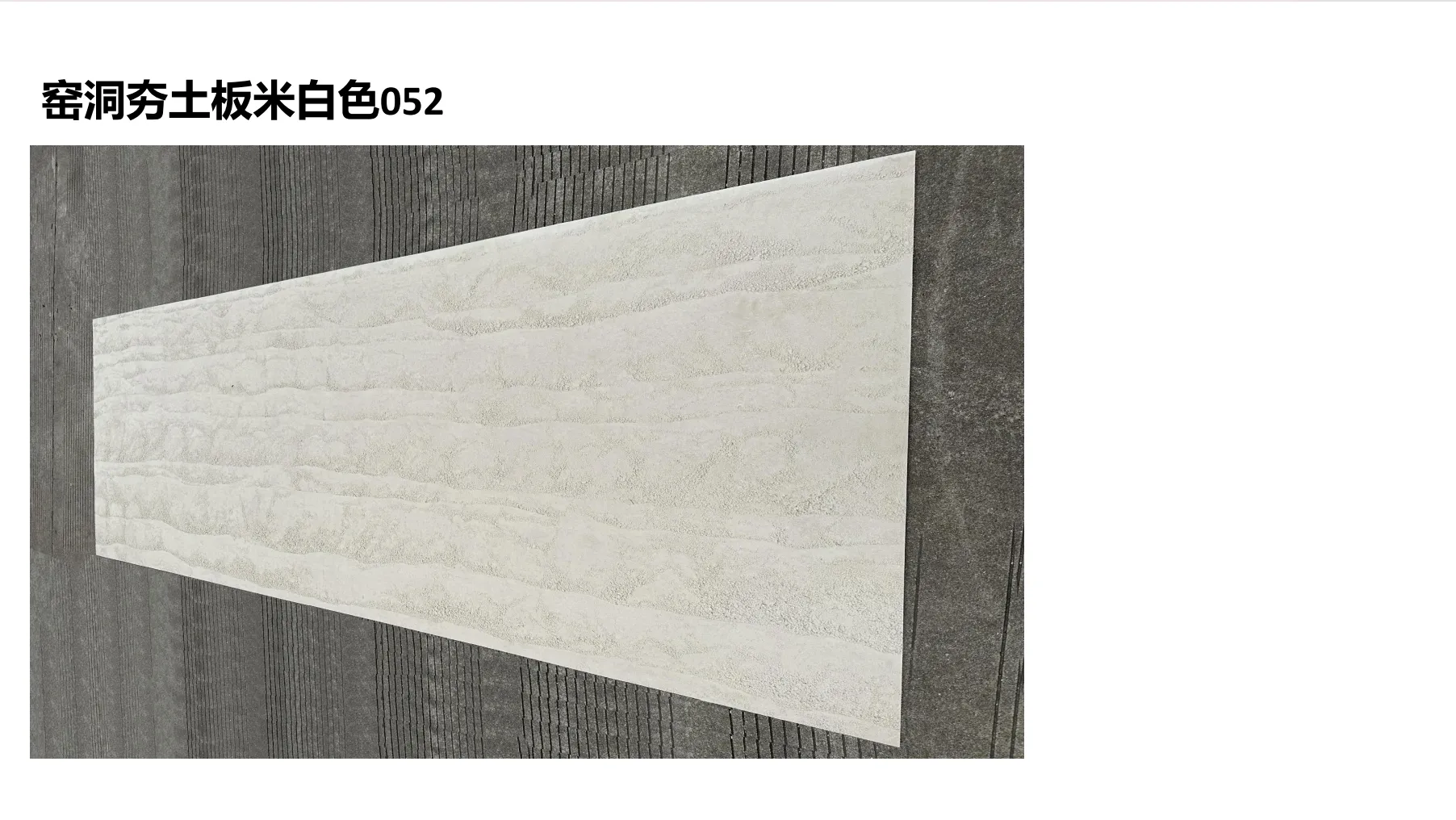
There's something deeply human about gradient color rammed earth boards. Their soft, shifting hues—think sunbaked terracotta melting into sage, or blush fading to clay—feel less like construction material and more like a living, breathing story. But even the most stunning solo act needs a supporting cast. Let's explore how to pair this earthy star with other materials to create spaces that feel intentional, balanced, and full of heart.
Before we dive into pairings, let's take a moment to appreciate what makes gradient color rammed earth so special. Unlike uniform siding or synthetic panels, it carries the memory of its making: layers of pigmented soil tamped by hand or machine, each stroke leaving a subtle variation in tone. It's organic, imperfect, and warmly tactile—qualities that make it a favorite for spaces aiming to feel rooted in nature, yet fresh with modern design.
But here's the thing: gradient rammed earth doesn't just "exist" in a space. It interacts. It responds to light, to neighboring textures, to the mood of the room. Pair it with the wrong material, and its magic can feel muted. Pair it with the right one, and you'll create moments that make people pause and think, "This feels like home."
Natural stone and rammed earth are old friends—both born from the earth, both rich in texture. But not all stones play the same tune. Let's start with two standouts: travertine (starry green) and the lunar peak series (silvery, golden, black).
Starry green travertine is a quiet stunner. Its soft, mossy base is dotted with tiny, iridescent flecks that catch the light like dewdrops on leaves—hence the "starry" name. When paired with gradient rammed earth, it's like adding a second verse to the same song. Imagine a gradient wall shifting from warm terracotta at the bottom to cool sage at the top; now, run a band of starry green travertine horizontally across the middle. The travertine's green echoes the sage in the gradient, while its pitted texture contrasts gently with the rammed earth's smoother, denser surface.
This combo shines in outdoor spaces: think a garden pavilion where the walls are gradient rammed earth (blush to olive) and the floor is laid with large-format starry green travertine tiles. The effect? A space that feels like an extension of the landscape, where man-made materials blend so seamlessly with nature you can't tell where one ends and the other begins.
If travertine is a duet, the lunar peak series is a bold harmony. These stones—with their polished, almost metallic finishes—feel otherworldly compared to rammed earth's earthiness. Take lunar peak silvery : its cool, moonlit sheen pairs stunningly with a gradient that warms up from pale gray to terracotta. The silver acts as a "cooling agent," balancing the gradient's heat and adding a touch of modern elegance.
For drama, try lunar peak black. A gradient rammed earth wall in soft peach to muted terracotta, accented with black lunar peak stone around windows or door frames, creates a striking contrast—like a sunset against a night sky. And lunar peak golden? It's pure luxury. Imagine a home exterior with a gradient from sand to amber, trimmed with golden lunar peak stone. It feels opulent, but not flashy—like a treasure buried just beneath the earth's surface, now brought to light.
| Material Pairing | Color Story | Texture Vibe | Best For |
|---|---|---|---|
| Gradient Rammed Earth (Terracotta → Sage) + Starry Green Travertine | Earthy greens and warm neutrals | Smooth rammed earth + pitted travertine | Garden pavilions, sunrooms |
| Gradient Rammed Earth (Pale Gray → Terracotta) + Lunar Peak Silvery | Cool silver + warm gradient | Dense earth + polished stone | Modern home exteriors, office lobbies |
| Gradient Rammed Earth (Peach → Amber) + Lunar Peak Golden | Warm amber + rich gold | Matte gradient + metallic stone | Luxury villas, boutique hotels |
Pro Tip: When mixing gradient rammed earth with stone, keep the color palette tight. If your gradient has 3-4 dominant hues, pick a stone that shares at least one of them. This ensures the pairing feels cohesive, not chaotic.
Metals and rammed earth might seem like an unlikely pair—one cool and industrial, the other warm and organic—but when done right, they create magic. Enter foamed aluminium alloy board (vintage silver) : a lightweight, porous metal with a soft, weathered finish that feels both modern and timeless.
Foamed aluminium's charm lies in its texture: tiny, irregular pores that give it a sponge-like appearance, softening the harshness often associated with metal. When paired with gradient rammed earth, it's a study in contrasts that somehow works. Imagine a commercial space—a café, perhaps—where the back wall is gradient rammed earth (cream to terracotta) and the ceiling is clad in vintage silver foamed aluminium panels. The rammed earth grounds the space with warmth, while the aluminium adds height and a touch of industrial edge. Sunlight filters through the café windows, hitting the aluminium and casting dappled shadows on the rammed earth walls—like sunlight through leaves, but with a modern twist.
For exteriors, try using vintage silver foamed aluminium as an accent: a gradient rammed earth facade (sandy beige to muted olive) with aluminium trim around the entryway or as a decorative screen. The metal's cool tone plays off the gradient's warmth, and its porous surface adds visual interest without overwhelming the rammed earth's subtle beauty.
Concrete and rammed earth might seem like "too much of the same," but hear us out: fair-faced concrete —with its raw, unpolished finish and subtle gray tones—is the perfect neutral partner for gradient rammed earth. It's like adding a quiet bassline to a melody: it doesn't steal the spotlight, but it makes everything else sound better.
Fair-faced concrete's strength lies in its simplicity. Its uniform gray (sometimes with faint aggregate flecks) acts as a blank canvas, letting the gradient rammed earth's colors take center stage. For example, a home interior with gradient rammed earth walls (soft pink to warm taupe) and fair-faced concrete floors. The concrete's cool gray balances the gradient's warmth, creating a space that feels calm and grounded. Add a few wooden accents, and you've got a trio that feels both modern and cozy.
In commercial design, try a gradient rammed earth feature wall (clay to slate) in a lobby, flanked by fair-faced concrete columns. The concrete adds structure and solidity, while the gradient adds movement and life. It's a pairing that says, "We're forward-thinking, but we respect the past."
Wood and rammed earth are a match made in design heaven—both warm, tactile, and deeply connected to nature. While not in our keyword list, bamboo mat board and poly wood board (durable, low-maintenance wood alternatives) deserve a shoutout for how beautifully they complement gradient rammed earth.
Bamboo mat board, with its thin, woven strips, adds texture and softness. Imagine a bedroom with gradient rammed earth walls (cream to light brown) and a headboard made of bamboo matting. The bamboo's natural pattern echoes the gradient's flow, and its light color keeps the space feeling airy. It's like sleeping in a forest cabin, but with a modern, curated edge.
Poly wood board, on the other hand, is great for high-traffic areas. Its synthetic wood look (complete with grain and knots) is durable enough for outdoor use, making it perfect for a patio with gradient rammed earth walls (terracotta to olive) and poly wood decking. The wood's warm tones enhance the gradient's earthiness, creating a space that feels like a cozy retreat, even in the middle of the city.
At the end of the day, integrating gradient color rammed earth with other materials isn't just about aesthetics—it's about storytelling. Each material brings its own personality: the earthy warmth of rammed earth, the cosmic cool of lunar peak stone, the industrial edge of foamed aluminium, the quiet strength of concrete, the cozy charm of wood. When paired thoughtfully, they don't just coexist—they create a narrative.
So experiment. Mix a little metal with a little stone, throw in some concrete, and let the gradient rammed earth tie it all together. The best spaces aren't just designed—they're felt. And with gradient rammed earth as your guide, you're already halfway there.
Recommend Products












