
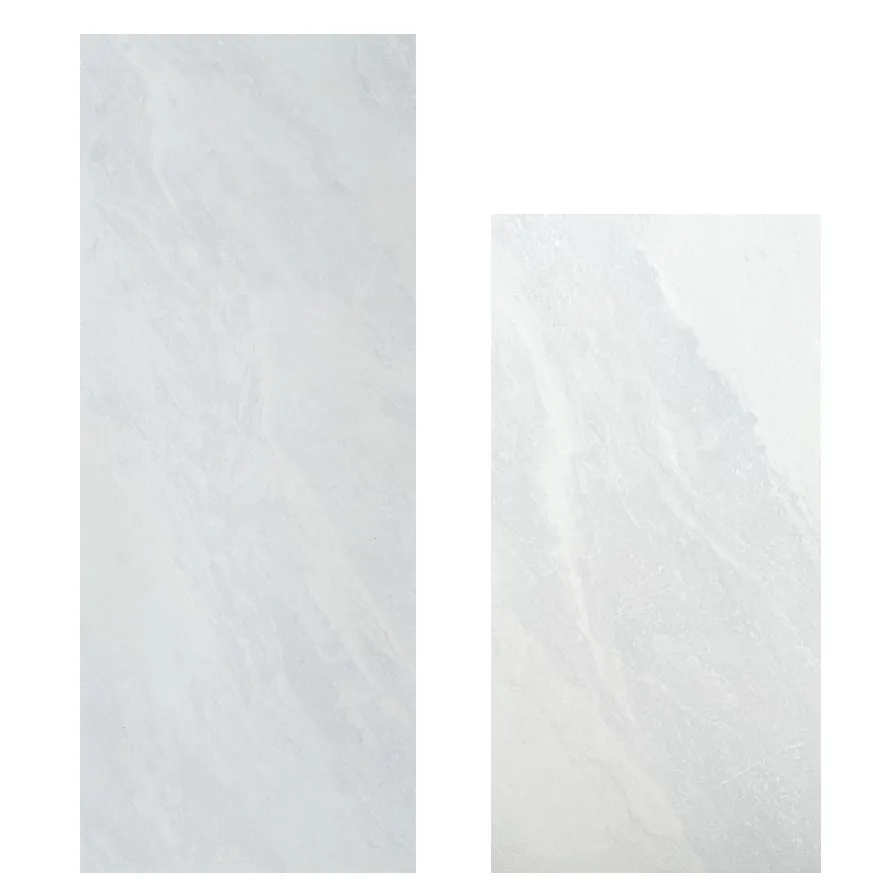
Picture this: You're knee-deep in a new commercial project, and the client's vision hinges on a specific aesthetic—clean, timeless, with that subtle marble veining that elevates any space. You've heard about Marble Veil White MCM materials, but where do you even start sourcing something that lives up to the hype? If you've found yourself asking that question, you're in the right place. Let's walk through the process step by step, from understanding what makes Marble Veil White special to vetting suppliers and avoiding common pitfalls.
Before we dive into Marble Veil White specifically, let's get clear on MCM. Short for Modified Composite Material, MCM has been a quiet revolution in the construction and design world—especially with products like MCM flexible stone . Think of it as nature's beauty meets modern engineering. Traditional marble is stunning, no doubt, but it's heavy, fragile, and can be a logistical nightmare (ever tried lifting a 200kg slab by hand?). MCM changes the game by mimicking the look and feel of natural stone but with a lightweight, flexible core. That means it can bend around curves, resist cracks, and cut installation time in half. For architects and designers, it's like getting the best of both worlds: luxury without the hassle.
Marble Veil White isn't your average "marble-look" material. Let's talk about the aesthetics first. It has this soft, off-white base—think "ivory with a hint of warmth"—that serves as the perfect canvas for delicate gray veining. The veins aren't harsh or uniform; they flow like watercolor, some thin as thread, others thicker, creating that organic, natural marble effect that feels alive. I've had clients run their hands over it and say, "It's like holding a piece of art," and honestly? They're not wrong.
But here's where it gets even better: performance. Traditional marble stains if you so much as look at it with a coffee cup, and it scratches easily. Marble Veil White MCM? It's got a protective topcoat that repels liquids (I've spilled red wine on a sample and wiped it off with a cloth—no trace left). It's also UV-resistant, so that soft white won't yellow in sunlight, and it's fire-retardant, which is a big plus for commercial projects. For high-traffic areas—think hotel lobbies, retail storefronts, or office reception areas—this stuff is a lifesaver. It looks high-end but can handle the chaos of daily life.
Sourcing quality MCM isn't just about Googling "Marble Veil White supplier" and picking the first result. It's about being a detective—checking details, asking tough questions, and not settling for "good enough." Let's break down the non-negotiables:
You'd think thickness would be standard, but I've seen samples from less reputable suppliers where one edge is 4mm thick and the other is 6mm. Why does this matter? Because uneven thickness leads to installation headaches—gaps, uneven surfaces, and frustrated contractors. A good supplier will have strict quality control, ensuring every panel is within ±0.2mm of the specified thickness. When you request samples, measure them with a caliper (yes, really). It's a small step that saves big problems later.
Marble Veil White's veining is part of its charm, but "natural variation" can be a double-edged sword. If you're covering a large wall, you don't want one panel with thick, bold veins and the next with faint, sparse ones—it'll look patchy. Ask suppliers for "batch samples"—panels cut from the same production run. Most reputable companies will send 3-5 samples from the same batch so you can see the range of variation. Pro tip: Lay them out on the floor in the order they'll be installed. If it looks cohesive, you're good. If it looks like a marble-themed puzzle gone wrong, keep shopping.
Remember, MCM flexible stone is supposed to be flexible. So grab that sample and give it a gentle bend—don't go full yoga instructor, but a 15-degree curve should be easy. If it cracks, creases, or feels rigid, that's a red flag. Flexibility is what allows MCM to be used on curved surfaces (hello, statement walls with arches!) and makes handling easier. A stiff panel is a sign of cheap core material—steer clear.
Here's the truth: Not all MCM suppliers are created equal. For every 10 suppliers, maybe 3 are truly reliable. So how do you separate the pros from the pretenders? Let's start with the basics:
Any supplier worth their salt will have certifications—ISO 9001 (quality management), ISO 14001 (environmental management), or LEED (if they're eco-focused). But don't just take their word for it—ask for a copy of the certificate and check the issuing body's website to confirm it's valid. I once had a supplier send me a "fake" ISO certificate—turns out, the organization didn't even exist. Oops.
Google reviews are a start, but they can be skewed. Instead, ask the supplier for references from clients who've ordered Marble Veil White specifically. Call those references and ask: Did the material arrive on time? Was the quality consistent with the samples? How was the customer service when there was a problem (because there's always a problem)? A supplier who hesitates to share references is a supplier to avoid.
If your project is large enough (say, 500+ sqm), it's worth visiting the supplier's factory. You'll see firsthand how they manufacture the panels—are the production lines clean? Do workers follow safety protocols? Is there a dedicated quality control station? I visited a factory once where panels were stacked haphazardly, with no protection between them—scratches everywhere. Needless to say, we didn't order from them.
| Supplier Type | Best For | Pros | Cons |
|---|---|---|---|
| Direct Manufacturer | Large projects (1000+ sqm) | Lower cost, custom options, full control over production | High MOQs (often 500+ sqm), longer lead times (4-6 weeks) |
| Distributor | Small to medium projects (100-500 sqm) | Lower MOQs (20-100 sqm), faster delivery (2-3 weeks) | Higher cost (markup), limited custom options |
| Specialized MCM Retailer | Designers/DIYers (small orders) | Samples available, easy ordering, customer support | Highest cost, limited stock |
Never, ever, ever order a large batch without testing a sample. I can't stress this enough. When you get that sample, do these 5 tests:
Marble Veil White is a team player—it looks amazing on its own, but pairing it with complementary materials takes your design to the next level. Here are a few combos I've seen work wonders:
Fair-faced concrete has that raw, textured look—think exposed aggregate, subtle pores, and a matte finish. Pair it with Marble Veil White, and you've got a match made in modern design heaven. The smooth, veined marble softens the concrete's roughness, while the concrete adds edge to the marble's elegance. I used this combo in a tech startup office last year, and the clients couldn't stop raving about how "approachable yet sophisticated" the space felt.
For spaces where you want that "wall of marble" effect without the grout lines, architectural big slab solutions are the way to go. Suppliers like ArchiSlab offer Marble Veil White in slabs up to 3000x1500mm—huge, seamless panels that make a statement. I used these in a hotel lobby, and guests often mistake them for real marble slabs (until I tell them how light they are!). Pro tip: Use hidden fasteners for a truly floating effect—no visible screws, just pure, uninterrupted beauty.
I've made my share of sourcing mistakes over the years, so let me save you the pain:
If a supplier is offering Marble Veil White for $20/sqm when everyone else is charging $40-$50, ask why. Chances are, they're using inferior raw materials (like recycled plastic instead of high-grade polymers) or skipping quality control steps. You'll end up with panels that warp, fade, or delaminate—and then you'll have to redo the entire project. Trust me, saving $20/sqm isn't worth the headache.
MCM production isn't instant. Even if a supplier says "2 weeks," add a buffer—delays happen (customs hold-ups, production bottlenecks, weather). I once had a project where the supplier promised 3-week delivery, and the panels arrived 6 weeks late. The client was furious, and we had to pay rush fees for other materials to compensate. Build in 2-3 extra weeks—your sanity will thank you.
At the end of the day, sourcing quality Marble Veil White MCM is about patience, attention to detail, and not cutting corners. It's about finding a supplier who understands your vision and is willing to work with you to make it a reality. Remember, this material isn't just a building product—it's the foundation of a space that will be experienced, lived in, and loved. So take the time to do it right. Your clients (and your future self) will be glad you did.
Now go out there and source some amazing Marble Veil White MCM. And if you hit a snag? Come back and re-read this—you've got this.
Recommend Products












