
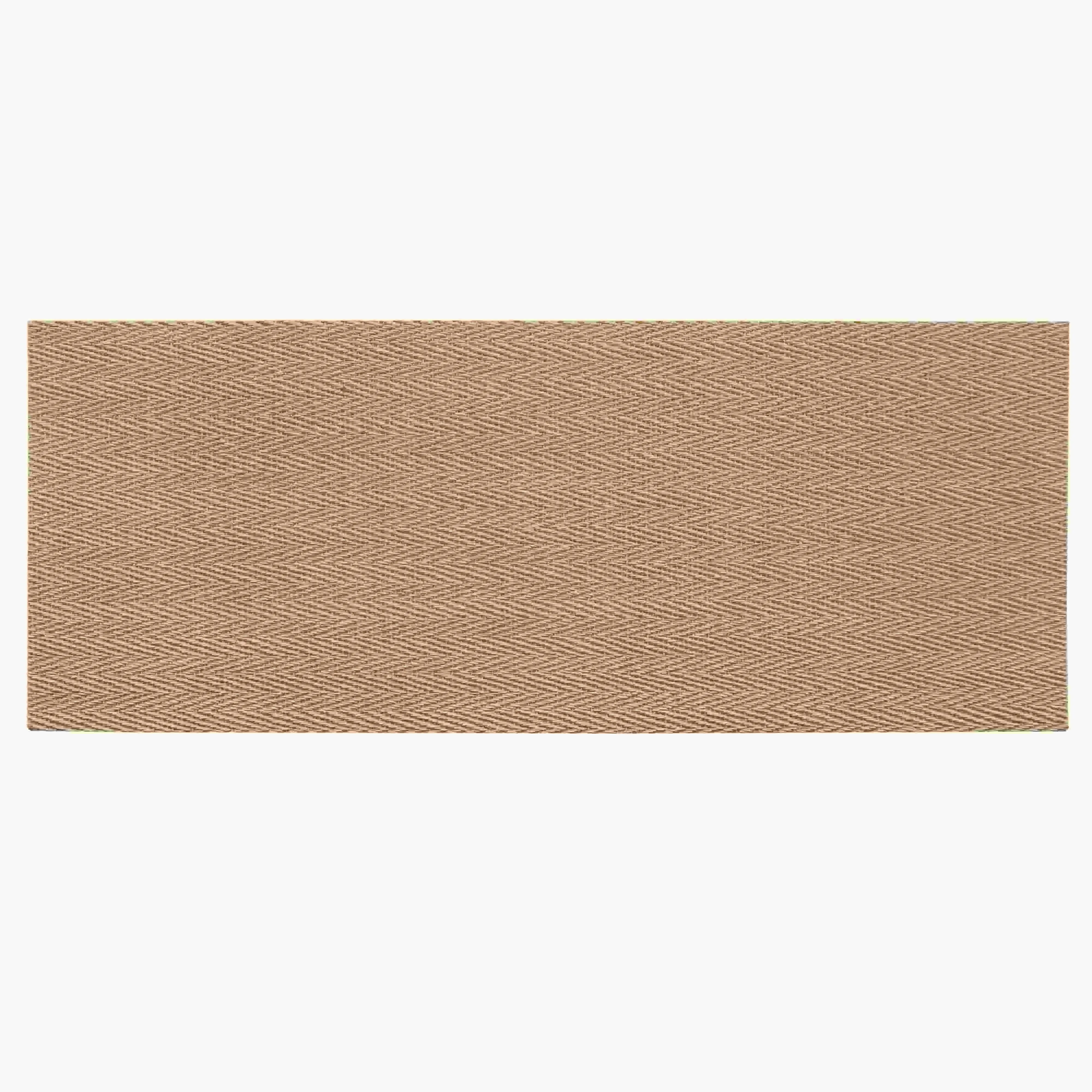
Architecture has always been a language—but in recent years, that language has shifted. No longer content with generic facades or cookie-cutter interiors, today's designers and clients crave spaces that tell a unique story. They want buildings that feel human —crafted, intentional, and deeply personal. This shift has put a spotlight on materials that don't just serve a structural purpose, but act as collaborators in the creative process. Enter Weaving (Khaki) MCM, a material that's quietly redefining what's possible in custom architecture. More than just a cladding option, it's a tool that bends, adapts, and elevates design visions, making even the most ambitious concepts feel within reach.
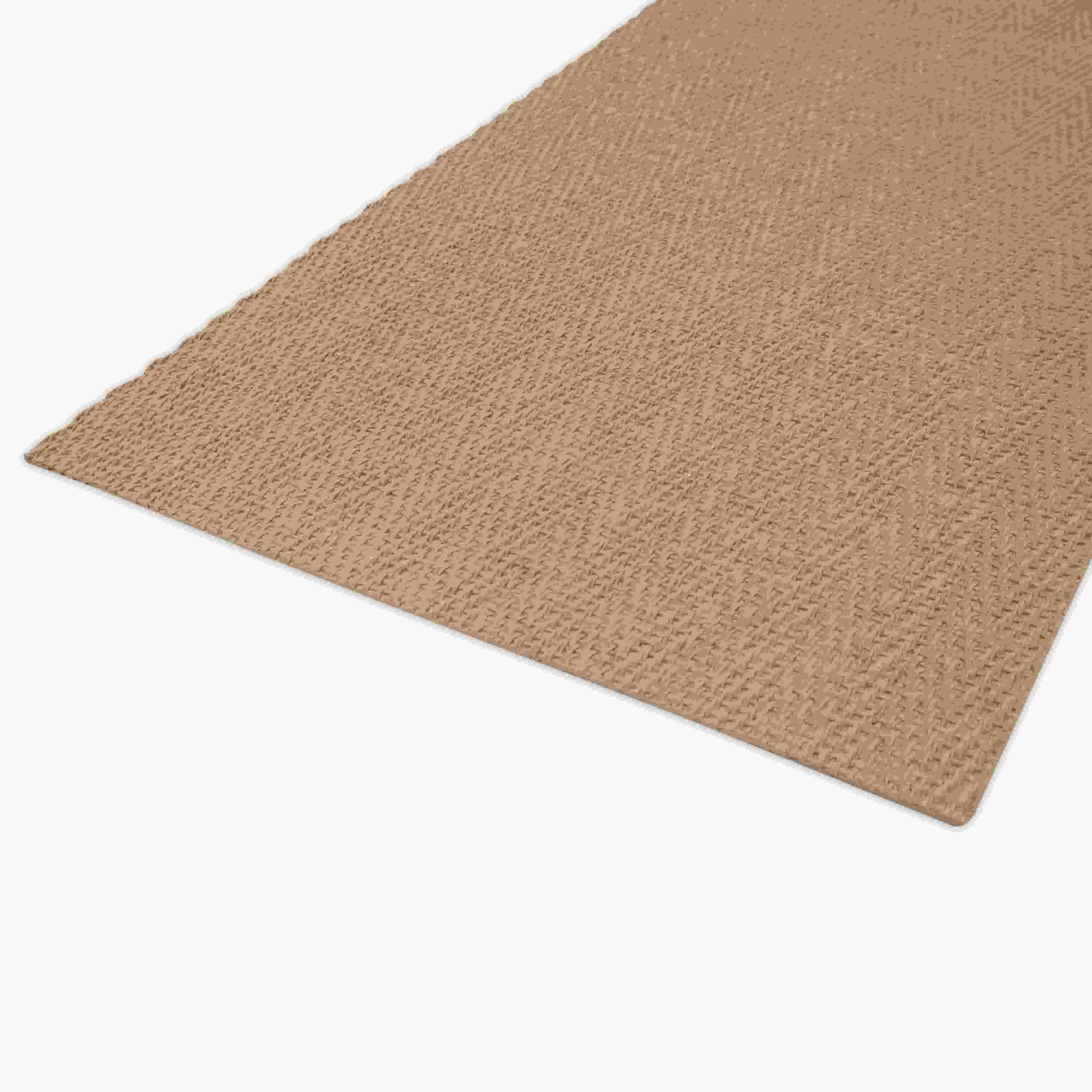
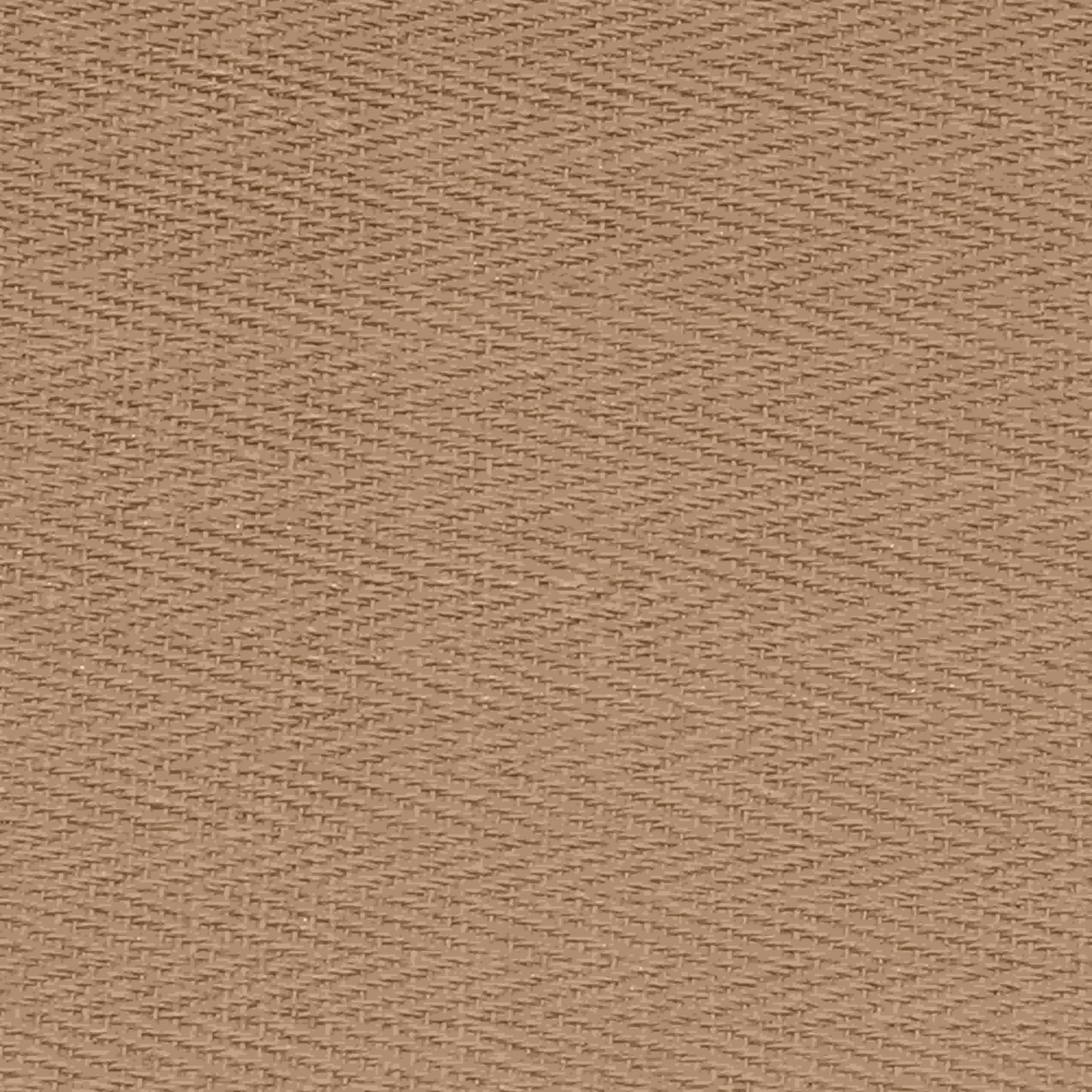
Let's start with the basics. Weaving (Khaki) MCM belongs to the broader family of MCM flexible stone, a category of modified composite material panels designed to mimic the look and texture of natural materials while offering unmatched versatility. The "weaving" in its name isn't just a marketing term—run your hand over its surface, and you'll feel it: a subtle, tactile pattern that evokes the soft crisscross of natural fibers, as if a master weaver spent hours crafting each panel. The khaki hue, warm and earthy, sits somewhere between sand and sage, a neutral that doesn't shout but grounds —making it a chameleon in design palettes.
But don't let its gentle appearance fool you. Underneath that woven texture lies serious engineering. Weaving (Khaki) MCM is lightweight (around 3-4 kg per square meter, compared to 20+ kg for traditional stone), yet surprisingly durable. It resists scratches, moisture, and UV fading, making it suitable for both interior accent walls and exterior facades. And because it's part of the MCM family, it inherits the core benefits of the line: flexibility, sustainability, and compatibility with modern construction methods. Think of it as nature's warmth meets industrial innovation.
To understand why Weaving (Khaki) MCM is a game-changer, let's first unpack the "custom architecture" trend. In a world saturated with mass-produced spaces, clients—whether they're boutique hoteliers, tech startups, or luxury retailers—want something that sets them apart. A restaurant might want its interior to evoke the cozy chaos of a Moroccan souk; a corporate headquarters might aim for a facade that feels both futuristic and rooted in nature. These visions demand materials that can adapt to specific forms, textures, and narratives—not the other way around.
Traditional materials often fall short here. Natural stone is heavy and rigid, limiting its use in curved or irregular designs. Wood, while warm, can warp or degrade in harsh climates. Even modern options like fair-faced concrete, for all its industrial charm, lacks the softness and adaptability needed for intimate, custom spaces. Weaving (Khaki) MCM steps into this gap, offering the best of both worlds: the aesthetic depth of natural materials and the technical flexibility of engineered composites.
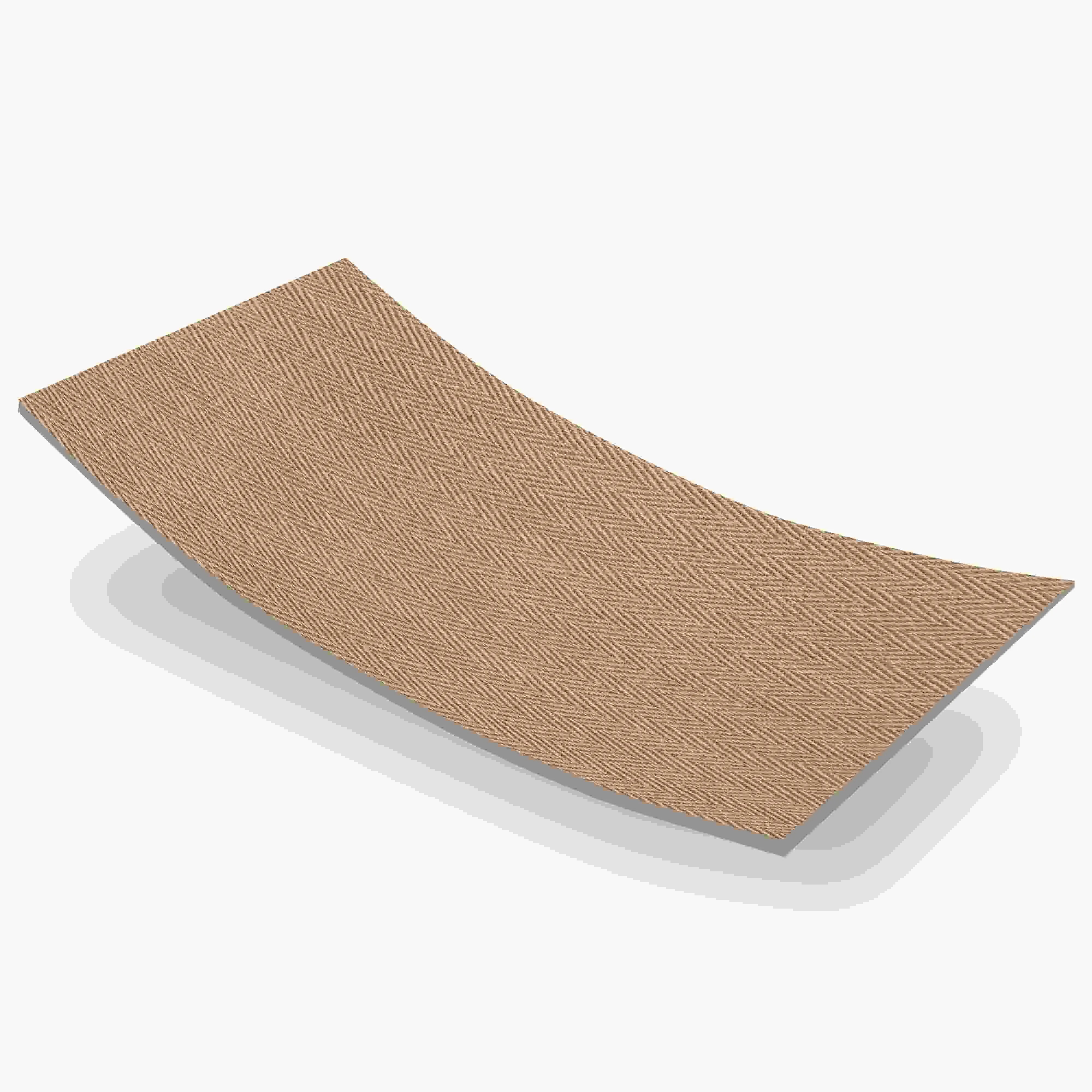
Imagine trying to wrap a rigid slab of marble around a curved staircase. It's possible, but costly, time-consuming, and often results in visible seams that break the illusion of continuity. Weaving (Khaki) MCM, by contrast, thrives on curves, angles, and irregular shapes. Thanks to its flexible core (a key trait of MCM flexible stone), it can be bent to a radius as tight as 30cm without cracking or losing structural integrity. This makes it ideal for projects like:
The result? Spaces that feel organic, as if they were "grown" rather than built. When a material can bend to the architect's vision, the design itself becomes more expressive.
Custom architecture isn't just about how a space looks —it's about how it feels . Weaving (Khaki) MCM leans into this by making texture a central part of the design conversation. Its woven pattern isn't uniform; under different lighting, the crisscross lines catch shadows, creating a dynamic, almost alive surface. This texture can be used to reinforce a project's narrative:
Take, for example, a museum exhibit on ancient trade routes. The curators wanted the entrance hall to evoke the tactile experience of a desert caravan—rough, weathered, and rich with history. The design team used Weaving (Khaki) MCM for the hall's walls, pairing it with gobi panel (another MCM variant with a sandy, wind-eroded texture). Together, the materials told a story of movement and time, making visitors feel as if they were stepping into the past before even viewing the exhibits.
Or consider a tech startup's office in Austin, Texas. The brand prides itself on "blending innovation with tradition," so the architect chose Weaving (Khaki) MCM for the reception area. The woven texture nodded to the city's craft heritage, while the material's modern durability (resistant to scuffs from daily foot traffic) spoke to the company's forward-thinking ethos. It's a small detail, but one that resonates with anyone who walks through the door.
Custom design rarely relies on a single material. It's about layering textures, colors, and finishes to create depth. Weaving (Khaki) MCM excels here because it plays well with others—specifically, other members of the MCM family. This synergy allows designers to build cohesive palettes that feel intentional, not haphazard.
For instance, a luxury spa in the Maldives wanted its interior to evoke "earthy elegance." The design team combined Weaving (Khaki) MCM with bali stone (a smooth, cream-colored MCM variant with subtle veining) and bamboo mat board (which adds a natural, fibrous texture). The result? A space that feels grounded (thanks to the khaki hue), serene (from the bali stone), and organic (via the bamboo matting). Each material complements the others, creating a unified sensory experience.
Another example: a retail flagship in Dubai aiming for a "modern desert chic" vibe. The exterior uses MCM big slab board series in a warm, sandstone-like finish for the main facade, while the entranceway is clad in Weaving (Khaki) MCM. The contrast between the big slab's bold, solid presence and the weaving texture's ( xìnì—delicate) pattern creates visual interest, drawing the eye to the entrance. Inside, the team continued the theme by pairing Weaving (Khaki) MCM with travertine (starry orange)—a material with a speckled, celestial texture—adding a touch of whimsy to fitting rooms.
To illustrate how well Weaving (Khaki) MCM integrates with other MCM materials, here's a breakdown of common pairings and their design effects:
| Weaving (Khaki) MCM + | Design Effect | Ideal Project Type |
|---|---|---|
| Wood Grain Board | Warm, organic contrast; balances woven texture with linear wood patterns | Residential interiors, boutique hotels |
| MCM Big Slab Board Series | Bold vs. (delicate); creates focal points in facades or lobbies | Commercial exteriors, retail flagships |
| Travertine (Starry Blue) | Earthy meets celestial; adds a playful, unexpected pop of color | Restaurants, art galleries |
| Fair-Faced Concrete | Soft texture vs. industrial edge; balances warmth with modernity | Corporate offices, co-working spaces |
Today's clients don't just want custom design—they want responsible custom design. With green building materials becoming a non-negotiable for many projects, Weaving (Khaki) MCM checks a crucial box: it's eco-friendly. As a modified composite material, it requires less energy to produce than natural stone (which often involves heavy mining and transportation) and generates minimal waste during manufacturing. It's also 100% recyclable at the end of its lifecycle, aligning with circular economy principles.
Take the case of a LEED-certified community center in Portland, Oregon. The project's goal was to create a space that "serves the community and the planet." The design team chose Weaving (Khaki) MCM for the center's exterior cladding, not just for its aesthetic appeal, but for its sustainability credentials. The material's lightweight nature also reduced the building's overall weight, allowing for a lighter foundation and lower carbon emissions during construction. Today, the center's facade—warm, textured, and eco-friendly—stands as a testament to how custom design and sustainability can go hand in hand.
Custom architecture isn't just about looks—it's about longevity. A one-of-a-kind facade or interior detail loses its impact if it fades, cracks, or wears down within a few years. Weaving (Khaki) MCM addresses this by combining beauty with brawn. Its composite core is resistant to moisture, UV rays, and temperature fluctuations, making it suitable for both indoor and outdoor use. In coastal areas, where saltwater can corrode traditional materials, it holds up; in busy urban environments, it resists scratches and stains from foot traffic or graffiti.
A beachfront restaurant in (Sanya) learned this firsthand. The owners wanted a custom exterior that would withstand the harsh coastal climate (high humidity, salt spray) while maintaining a "relaxed, bohemian" vibe. They chose Weaving (Khaki) MCM for the outdoor dining area's walls, paired with lime stone (beige) for the floors. Five years later, the woven texture still looks fresh, with no signs of fading or degradation. "We get compliments on the design all the time," the restaurant manager notes. "And the best part? We've never had to replace a single panel."
To truly understand Weaving (Khaki) MCM's impact, let's dive into a real-world project: the "Heritage Hub," a cultural center in Cairo, Egypt, designed to celebrate the city's rich history while embracing modernity. The client's brief was clear: "Create a space that feels like a bridge between past and present—something that honors our heritage but doesn't feel stuck in it."
The architect, Amina Hassan, envisioned a building with a facade that told a story of layers—much like Cairo itself, where ancient mosques stand steps from glass skyscrapers. She wanted the main entrance to feature a large, curved wall that would serve as the centerpiece. "I needed a material that could curve smoothly, but also had the texture to evoke the worn stone of historic Cairo," Hassan recalls. "We tested several options—traditional travertine, even 3D-printed concrete—but nothing felt right until we tried Weaving (Khaki) MCM."
Hassan's team used Weaving (Khaki) MCM for the curved entrance wall, which rises 12 meters high and wraps around the lobby. The woven texture mimics the intricate patterns of Islamic textiles, a nod to Cairo's artistic heritage, while the material's flexibility allowed for the wall's gentle curve, symbolizing the flow of time. To reinforce the "past meets present" theme, the team paired the weaving panels with MCM 3D printing series elements—custom-printed geometric shapes that add a modern, sculptural element to the facade.
Inside, the lobby continues the narrative. The ceiling features a grid of foamed aluminium alloy board (vintage gold), which adds a touch of modern luxury, while the floors use historical pathfinders stone (an MCM variant with a weathered, fossil-like texture). Weaving (Khaki) MCM reappears in the exhibition halls, where it lines the walls of a gallery dedicated to traditional Egyptian crafts. "The material's softness makes the exhibits feel more approachable," Hassan explains. "It's not just a backdrop—it's part of the storytelling."
The result? The Heritage Hub has become a beloved landmark, praised for its ability to make visitors feel connected to Cairo's past while inspiring them to imagine its future. And at the heart of that success? A material that refused to limit the architect's vision.
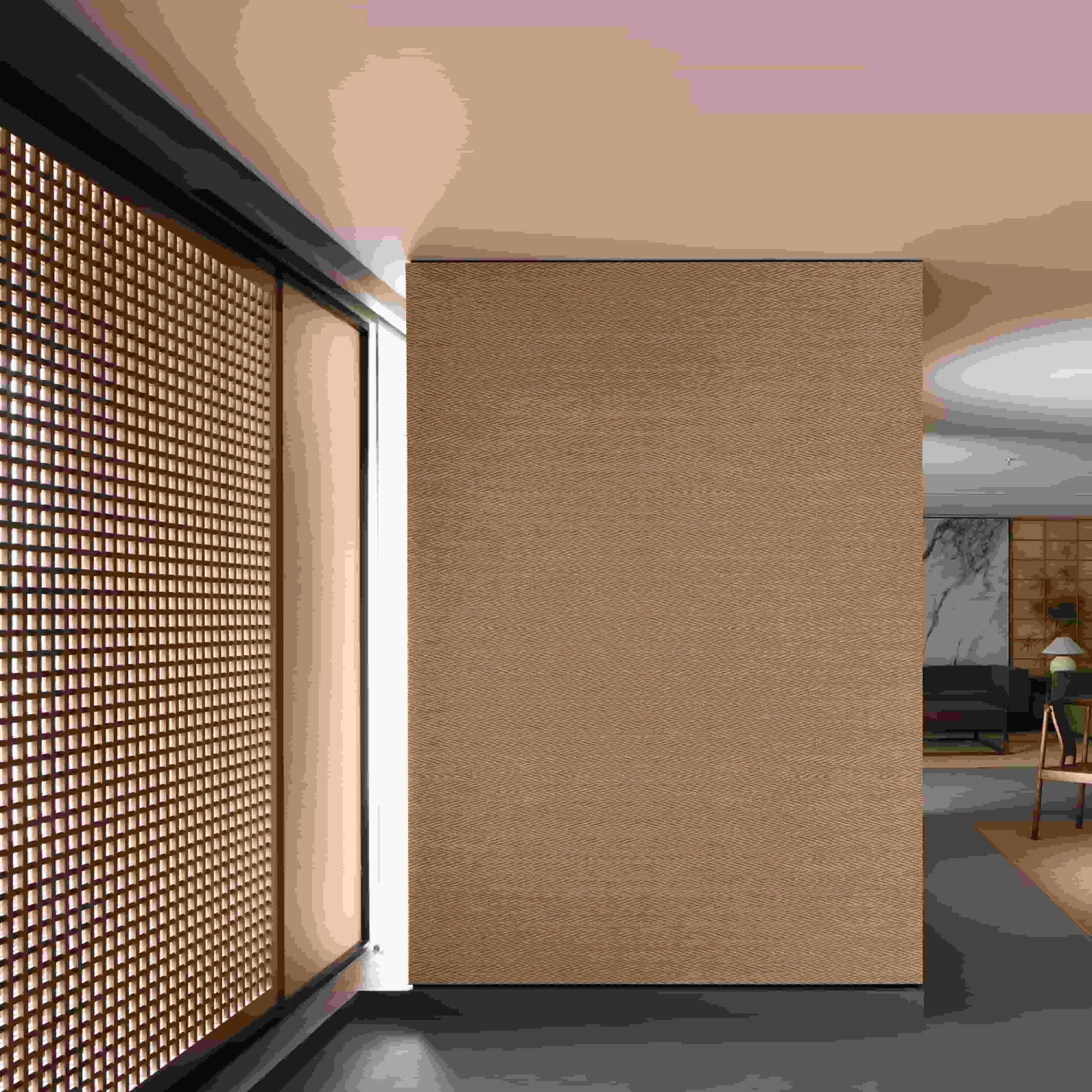
Custom architecture is about more than just creating something unique. It's about creating something meaningful —spaces that resonate, inspire, and endure. Weaving (Khaki) MCM supports this mission not by imposing rules, but by removing barriers. It bends so designs can flow; it textures so stories can be felt; it endures so legacies can be built.
For architects and designers, this is transformative. It means no longer compromising on vision to fit a material's limitations. It means being able to say "yes" to the client who wants a curved, woven wall; to the brand that needs a facade that feels both ancient and modern; to the community that deserves a space that reflects them .
In the end, Weaving (Khaki) MCM is more than a cladding option. It's a reminder that the best architecture isn't just built—it's crafted . And in a world that craves authenticity, that's a powerful thing.
Recommend Products












