
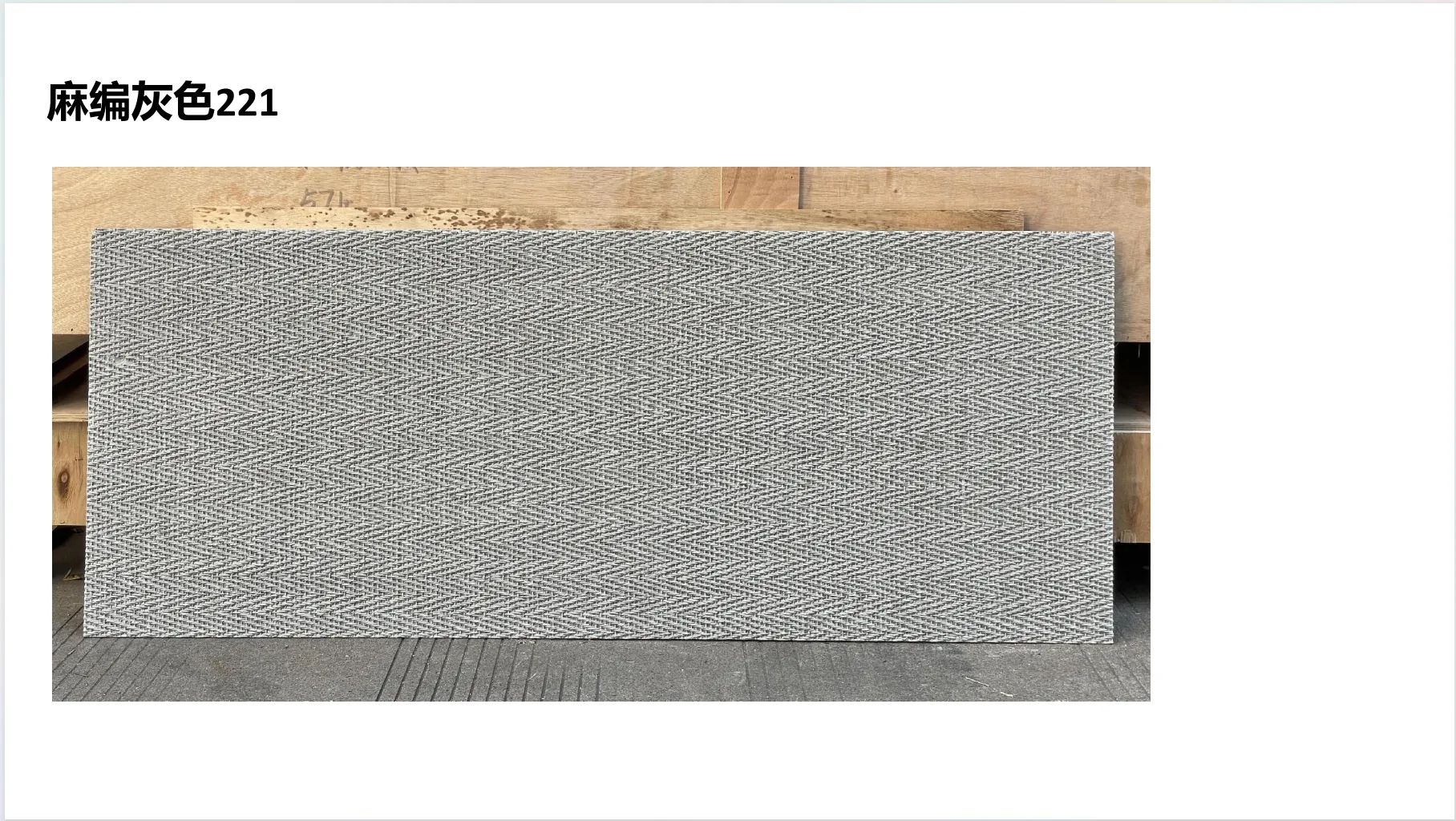
Walk into any modern building today, and you'll likely notice a quiet revolution unfolding on its walls, floors, and facades. Gone are the days when construction materials were chosen solely for strength—today, they're expected to tell a story, too. This shift has given rise to a fascinating intersection of artisanal craftsmanship and cutting-edge engineering: modified cementitious materials (MCM) infused with textures inspired by weaving real photos. But here's the twist: these materials aren't just pretty to look at. The very same weaving patterns that evoke warmth and nostalgia are secretly hard at work, making the materials stronger, more flexible, and longer-lasting than ever before. Let's dive into how this marriage of aesthetics and durability is reshaping the future of construction.
To understand why weaving textures matter, we first need to talk about the workhorses of construction: cementitious materials like concrete, mortar, and traditional stone panels. For decades, they've been valued for their compressive strength—able to bear heavy loads without crumbling. But scratch the surface, and you'll find a list of frustrations that have plagued architects and builders for generations.
Take traditional concrete, for example. It's tough, but it's also brittle. A small crack from thermal expansion or ground movement can quickly spiral into a major issue, compromising structural integrity. Then there's the aesthetic problem: plain concrete is… well, plain. It lacks the warmth of wood, the depth of natural stone, or the character of handwoven textiles. To dress it up, builders often add coatings or veneers, but these layers can peel, chip, or fade over time, leaving the material vulnerable to moisture and wear.
Natural stone panels, while beautiful, come with their own set of challenges. They're heavy, making installation labor-intensive and limiting their use in high-rise buildings or retrofits. Many are also porous, absorbing water that freezes and thaws in cold climates, leading to cracks. And let's not forget cost: sourcing large slabs of rare stone like travertine or marble is expensive, and cutting them to size generates significant waste.
Enter modified cementitious materials—products like mcm flexible stone and modified composite material panels . These innovative blends of cement, polymers, and natural fibers aim to fix the brittleness and weight issues. But early iterations still struggled with one key problem: how to make them both durable and visually compelling. That's where weaving real photos came in.
When we say "weaving real photos," we're not talking about printing a picture of a woven rug onto a wall panel (though that's possible). Instead, it's about digitizing the intricate patterns of handwoven textiles—think the crisscross of a weaving (khaki) basket, the tight loops of a woolen tapestry, or the loose weave of a jute mat—and translating those patterns into the surface texture of the material itself. It's a process that starts with high-resolution photography of actual woven fabrics, then uses 3D modeling to carve those patterns into molds. The result? A material that doesn't just look woven—it acts woven, too.
Why does this matter? Because woven structures are nature's own solution to balancing flexibility and strength. Think about a spider's web: delicate, yet able to absorb the impact of a flying insect without breaking. Or a woven basket: it bends when dropped but doesn't shatter. By mimicking these patterns, engineers realized they could address two critical flaws in traditional cementitious materials: brittleness and poor stress distribution.
| Feature | Traditional Cementitious Materials (Concrete/Stone) | MCM with Weaving Textures |
|---|---|---|
| Flexibility | Brittle; prone to cracking under stress | Flexible; can bend up to 30° without damage |
| Weight | Heavy (20-30 kg/m² for stone panels) | Lightweight (4-6 kg/m² for mcm flexible stone) |
| Moisture Resistance | Porous; absorbs water, leading to freeze-thaw damage | Low porosity; woven texture channels water away from the surface |
| Aesthetic Versatility | Limited; requires additional coatings for texture | Unlimited; replicates weaving patterns, wood grain, stone, and more |
| Installation Ease | Labor-intensive; requires heavy machinery | Lightweight; can be cut on-site and installed with basic tools |
At first glance, a woven texture might seem like a purely visual choice. But under a microscope, you'll see a sophisticated network of peaks, valleys, and interlocking ridges—each designed to enhance the material's performance. Let's break down the key ways this works.
Imagine stacking two pieces of paper: they slide apart easily. Now crumple one piece and stack them again—the crinkles create friction, making them harder to separate. That's the power of mechanical interlock, and it's exactly how weaving textures work in modified cementitious materials. The woven pattern creates tiny grooves and protrusions on the material's surface, which "grip" the layers above and below (like the polymer matrix or substrate). This interlock prevents the layers from sliding or delaminating under stress, a common failure point in traditional coated panels.
In mcm flexible stone , for example, the weaving pattern isn't just on the surface—it's integrated throughout the material. When the panel bends (say, during an earthquake or high winds), the interlocking fibers and grooves distribute the force across the entire structure, rather than concentrating it in one spot. This "give" prevents the material from snapping, much like a woven rope stretches before breaking.
Traditional concrete fails because stress (like tension or bending)s in small, weak areas. Weaving textures, with their repeating over-under pattern, act like a built-in shock absorber. Each "weave" creates a mini buffer zone that disperses stress across a larger area. Think of it as a grid of tiny springs: when pressure is applied, the pattern flexes slightly, absorbing the energy before it can cause a crack.
Engineers at MCM manufacturers have tested this extensively. In one study, panels with a tight weaving texture (inspired by weaving (khaki) textiles) were subjected to 10,000 cycles of bending and stretching—far more than the average building experiences in a decade. The result? Minimal wear and zero cracking, compared to traditional stone panels, which showed significant damage after just 2,000 cycles.
Water is the enemy of most building materials. It seeps into cracks, carries salts that erode concrete, and freezes to expand and break stone. Weaving textures combat this in two ways. First, the raised ridges of the pattern act like tiny dams, channeling rainwater away from the surface instead of letting it pool. Second, the texture itself reduces the amount of surface area in direct contact with water. Smooth panels allow water to spread out and soak in; woven panels, with their peaks and valleys, limit absorption to small, isolated areas.
This is especially important for materials like fair-faced concrete , which is left exposed without coatings. When fair-faced concrete is cast with a weaving texture, it not only looks more interesting but also lasts longer in humid or rainy climates. Builders in coastal areas, where saltwater spray is a constant threat, have reported up to 50% fewer repairs on textured panels compared to smooth ones.
Numbers and lab tests are great, but nothing tells the story like real buildings. Let's look at two projects where weaving textures in modified cementitious materials made all the difference.
In Portland, a city known for its rainy winters and frequent freeze-thaw cycles, developers wanted to build a 12-story apartment complex with a warm, organic aesthetic. They initially considered traditional brick and stone, but the weight and cost were prohibitive. Instead, they chose mcm flexible stone panels with a weaving texture inspired by local Pacific Northwest basketry.
The panels, which mimicked the look of woven cedar bark, were lightweight enough to install without reinforcing the building's structure—a huge cost-saver. Five years later, the building has weathered countless rainstorms and below-freezing temperatures with zero cracking or water damage. Residents love the texture, too: the woven pattern catches the light differently throughout the day, giving the facade a dynamic, ever-changing appearance. "It feels like living in a giant, cozy basket," one tenant joked.
When the Boston Textile Museum decided to expand, they wanted the new wing to honor the institution's focus on fabric and craftsmanship. The architects specified wood concrete board (a modified composite material blending wood fibers and cement) with a texture that replicated the look of antique handwoven textiles. The challenge? The museum is located in a historic district with strict weight limits for new construction.
The solution: wood concrete boards with a woven texture, which reduced the panel weight by 40% compared to traditional wood cladding. The weaving pattern not only added visual interest but also improved the material's fire resistance (a key safety requirement for museums). During a recent heatwave, the textured panels also proved better at reflecting sunlight, keeping the interior cooler and reducing energy costs. "It's like the building itself is telling the story of textiles," the museum's curator noted.
While durability is the star here, we can't overlook the other benefits of weaving textures in modified cementitious materials. For architects, it's a dream come true: endless aesthetic possibilities without sacrificing performance. Want a facade that looks like woven silk? Done. Need flooring that mimics a rustic jute rug? No problem. Weaving real photos allow designers to scan actual textiles, from ancient tapestries to modern street art, and replicate their patterns with stunning accuracy.
This versatility is a game-changer for commercial spaces, where brand identity matters. A coffee shop might use panels with a loose, cozy weave to feel inviting, while a tech office could opt for a sleek, geometric weave to convey innovation. And because the texture is integral to the material (not a coating), it won't fade, scratch, or wear off—meaning the space looks fresh for decades.
There's also an environmental upside. Modified composite material panels, by nature, use less raw material than traditional stone or concrete. Adding weaving textures further reduces waste, as the patterns can be printed directly onto the material, eliminating the need for additional layers or treatments. Many MCM manufacturers also use recycled materials (like crushed stone or reclaimed wood fibers) in their blends, making the panels a greener choice than virgin stone or concrete.
Plus, because these panels are lightweight and easy to install, they reduce the carbon footprint of construction. Fewer trucks are needed to transport them, and less labor means lower energy use on-site. It's a win-win: buildings that last longer, look better, and leave a smaller environmental footprint.
As we look ahead, the trend toward materials that marry durability and aesthetics shows no signs of slowing down. Weaving textures are just the beginning—manufacturers are experimenting with other natural patterns, from the grain of wood concrete board to the ripples of water. But there's something uniquely powerful about weaving. It's a craft that dates back thousands of years, a symbol of human ingenuity and patience. By integrating that heritage into modern modified cementitious materials, we're not just building stronger buildings—we're building ones with soul.
So the next time you walk past a building with a textured facade, take a closer look. That "woven" pattern isn't just there to catch your eye. It's working hard, day in and day out, to keep the structure standing, the elements at bay, and the space feeling like home. And in a world where we demand more from our buildings—more beauty, more resilience, more meaning—that's a revolution worth celebrating.
Recommend Products












