
Walk down any city street, and you'll notice something: buildings aren't just boxes anymore. They're canvases. Exterior surfaces, once chosen solely for durability, now carry the weight of storytelling—reflecting a brand's identity, a community's character, or even the quiet poetry of nature. But here's the catch: light is the unsung director of this visual narrative. A surface that looks rich and dynamic at noon might flatten into a dull blur by dusk, or glare harshly under streetlights at night. For architects and designers, the challenge isn't just picking a material—it's crafting one that dances with light, not fights it. Enter MCM (Modified Composite Material) panels, and more specifically, the game-changing addition of weaving real photos. These high-resolution, texture-rich images embedded into MCM surfaces are redefining how we think about light reflection, turning static facades into living, breathing works of art.
Before diving into weaving real photos, let's talk about the star of the show: MCM materials. Short for Modified Composite Material, MCM panels are a triumph of modern engineering—lightweight yet incredibly strong, flexible enough to curve around architectural nuances, and durable enough to withstand harsh weather, UV rays, and the test of time. But what truly sets MCM apart is its versatility. From the earthy warmth of wood grain board to the cosmic allure of travertine (starry blue), MCM mimics natural textures with uncanny precision, all while being easier to install and more sustainable than traditional stone or concrete. Yet, even with this range, early MCM panels sometimes fell short in one critical area: light interaction. A flat, uniform texture might look sleek on paper, but in reality, it could reflect light unevenly—creating hot spots, dull patches, or a surface that felt "dead" under changing light conditions. That's where weaving real photos stepped in, adding a layer of micro-detail that transforms how light behaves.
To understand why weaving real photos make such a difference, let's break down how light interacts with surfaces. When sunlight (or artificial light) hits a material, two things happen: some light is absorbed, and some is reflected. The way it reflects—whether it's a mirror-like glare (specular reflection) or a soft, diffused glow (diffuse reflection)—depends on the surface's texture. A perfectly smooth surface (think polished marble) reflects light in a single direction, which can be striking but also harsh, creating glare that strains the eye. A rough surface scatters light in all directions, softening the reflection but sometimes making the surface look flat or muddy. The sweet spot? A surface with controlled texture—microscopic peaks and valleys that scatter light just enough to add depth, without losing the warmth of natural glow. This is where weaving real photos excel: they replicate the irregular, organic textures of nature (think woven fabrics, weathered wood, or the pitted surface of travertine) at a scale so precise that light can't help but interact with it dynamically.
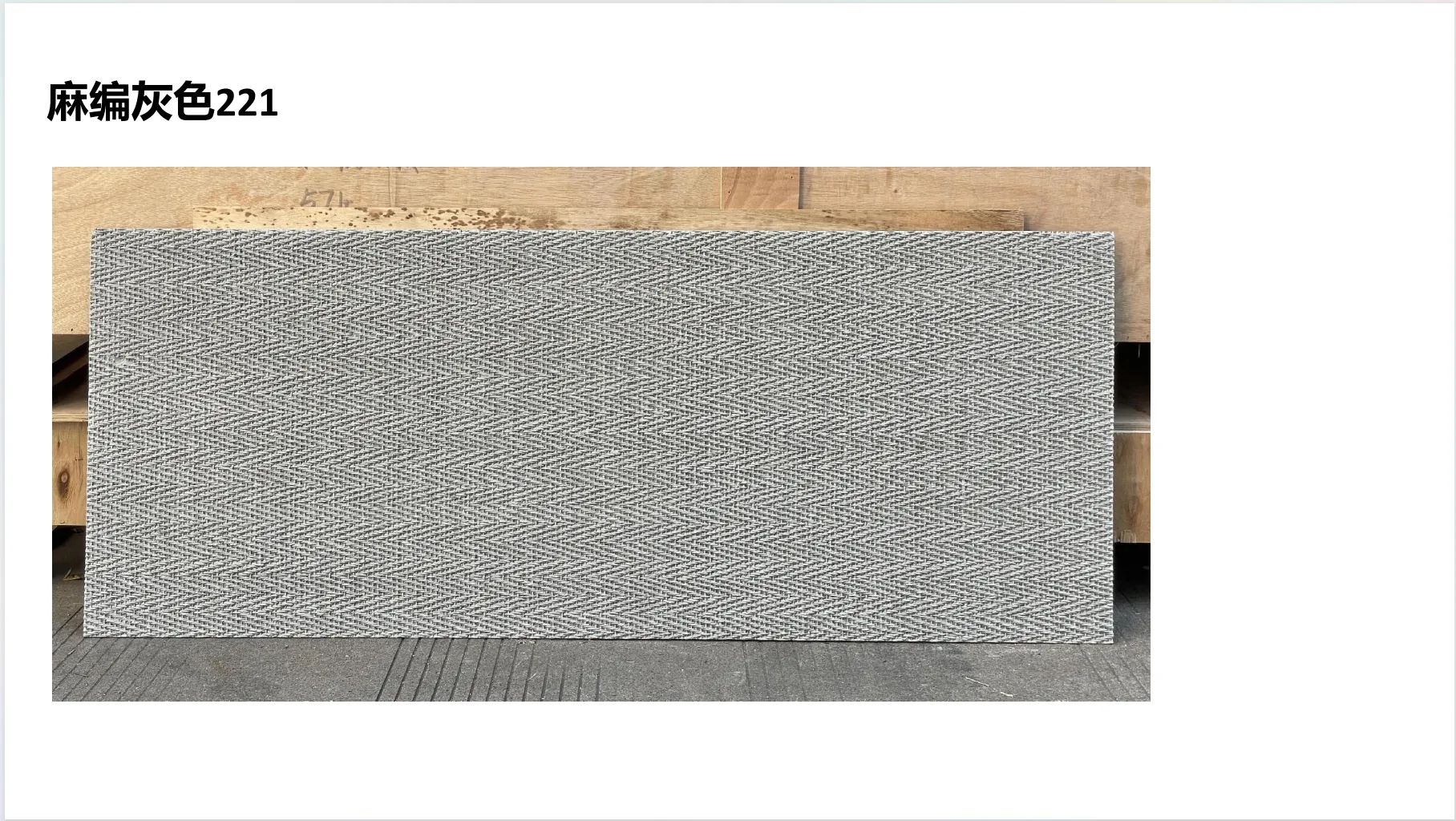
Weaving real photos aren't just "pictures" printed on panels. They're high-resolution, 3D-printed or UV-cured images of actual textures—think close-ups of handwoven textiles, the grain of reclaimed wood, or the starry pockmarks of travertine (starry blue). These images are embedded into the MCM panel during manufacturing, becoming an integral part of the material's surface. The result? A texture that's both visually and tactilely convincing, with variations so subtle and natural that light treats it like the real thing. Let's take travertine (starry blue) as an example. Traditional MCM travertine might mimic the stone's color and general pitting, but weaving real photos capture the exact density of those pits, the way some are deeper than others, and even the faint veining that runs through the stone. When sunlight hits this surface, each pit and vein becomes a tiny light diffuser: some light bounces off the peaks, others is trapped and softly reflected from the valleys, creating a surface that shimmers with depth, not just shine.
Another standout example is wood grain board. Without weaving real photos, MCM wood grain might look convincing from a distance, but up close, the pattern can feel repetitive or flat—like a sticker over plastic. With weaving real photos, the board carries the exact texture of real wood: the slight warping of grain, the tiny knots, even the way the wood's pores catch and release light. In the morning, when the sun is low, these details cast soft, shifting shadows, making the surface look like it's breathing. At noon, the same board reflects light warmly, without the harsh glare of a smooth finish. And in the evening, under golden hour light, the wood grain seems to glow from within, as if the material itself is radiating the warmth of a sunlit forest.
While the visual appeal is undeniable, the benefits of weaving real photos go beyond making buildings look beautiful. Let's talk practicality. Take fair-faced concrete, a material beloved for its industrial-chic vibe but often criticized for feeling cold or monotonous. When paired with weaving real photos—say, images of woven burlap or rough-hewn linen—the concrete's surface gains micro-texture that softens light reflection. This means less glare for pedestrians walking below, and a warmer, more inviting appearance for the building itself. In urban areas, where light pollution can make exteriors look washed out, this controlled diffusion helps buildings maintain their character even at night. For commercial spaces, this is a game-changer: a storefront with MCM panels featuring weaving real photos won't just attract attention—it will do so without blinding customers or clashing with neighboring buildings.
Durability is another unexpected win. Because weaving real photos are embedded into the MCM panel during production (not applied as a topcoat), they're resistant to fading, scratching, or peeling. Traditional painted or printed textures can wear off over time, leading to uneven light reflection as the surface degrades. Weaving real photos, however, become part of the material's DNA, ensuring that the light-reflective properties remain consistent for decades. This longevity is especially important for large-scale projects, where maintenance costs can add up quickly. Imagine a hotel facade clad in travertine (starry blue) with weaving real photos: 20 years down the line, it will still catch the light the same way it did on day one, preserving the building's original vision.
To truly appreciate the impact, let's compare a few popular MCM materials with and without weaving real photos. The table below breaks down how light reflection changes, and why it matters:
| MCM Material | Without Weaving Real Photos | With Weaving Real Photos | Key Light Reflection Benefit |
|---|---|---|---|
| Travertine (Starry Blue) | Uniform pitting, flat color; light reflects in broad, indistinct patches. | Irregular pit depth, subtle veining; light scatters to create "starry" sparkle at dawn/dusk. | Dynamic visual interest that changes with the sun's position. |
| Wood Grain Board | Repetitive grain pattern; light reflects evenly, lacking warmth. | Natural knotting, pore variation; light diffuses to mimic real wood's glow. | Soft, inviting reflection that feels organic, not manufactured. |
| Fair-Faced Concrete | Smooth, gray surface; harsh glare in direct light, dull in low light. | Woven texture (burlap/linen); light scatters to reduce glare, add warmth. | Reduced eye strain for pedestrians, more balanced appearance day/night. |
| Marble Veil White | Flat veining, high gloss; prone to hot spots under bright light. | 3D veining with micro-roughness; light reflects softly, highlighting vein depth. | Elegant, museum-like quality without overwhelming shine. |
As architects push for more sustainable, visually striking buildings, the demand for materials that work with light—not against it—will only grow. Weaving real photos, paired with MCM's inherent strengths, are leading this charge. Imagine a skyscraper clad in MCM flexible stone with weaving real photos of desert sand dunes: as the sun rises, the surface shifts from warm gold to soft rose, mimicking the Gobi Desert's morning glow. Or a school with wood grain board featuring weaving real photos of local forest wood, creating a facade that feels like a hug from nature, even in the heart of the city. These aren't just pipe dreams—they're projects already taking shape around the world.
What's next? Advances in 3D scanning and printing could allow even more precise texture replication, capturing not just the look of natural materials but their tactile feel. Imagine running your hand over an MCM panel and feeling the exact roughness of travertine (starry blue) or the smoothness of polished wood grain, all while the surface plays with light in ways traditional materials never could. Weaving real photos are also opening doors for customization: a hotel in Bali might use weaving photos of local bamboo, while a museum in New York could feature images of woven steel, blending industrial heritage with modern design.
At the end of the day, architecture is about connection. A building's exterior is the first handshake it offers the world, and light is the medium through which that handshake is felt. MCM materials have already revolutionized what's possible in exterior design, but weaving real photos are taking it a step further—turning surfaces into storytellers. They're not just improving light reflection; they're making light an active participant in the building's narrative. Whether it's the starry twinkle of travertine (starry blue) at dusk, the warm glow of wood grain board at dawn, or the soft diffusion of fair-faced concrete under streetlights, these surfaces don't just sit there—they interact. They change. They breathe. And in doing so, they remind us that the best architecture isn't just built to last—it's built to live, in light and shadow, for years to come.
Recommend Products












