
In the bustling world of construction and design, there's a quiet crisis unfolding behind the scenes: material waste. Every year, manufacturers of Modified Composite Material (MCM) products—from the sleek lines of fair-faced concrete to the rustic charm of foamed aluminium alloy board (vintage silver) —grapple with piles of discarded materials. A misjudged texture here, a mismatched color there, or a client's last-minute change of heart can turn perfectly good slabs, panels, and boards into scrap. But what if there was a way to hit "pause" on that cycle? Enter weaving real photos: a deceptively simple tool that's quietly revolutionizing how MCM products are designed, approved, and produced—one pixel-perfect image at a time.
Sustainability isn't just a buzzword in construction anymore; it's a mandate. Clients demand eco-friendly solutions, regulators tighten waste guidelines, and manufacturers face the dual pressure of cutting costs and reducing their carbon footprint. Yet for years, the industry relied on a costly, wasteful dance: create a physical sample, ship it to the client, wait for feedback, revise, repeat. By the time a design was finalized, countless square feet of MCM flexible stone , 3D printing series prototypes, or even fair-faced concrete panels had already been consigned to the dumpster. Weaving real photos is changing that narrative, turning digital precision into tangible sustainability.
To understand why weaving real photos matters, let's step into the shoes of an MCM designer. Picture Maria, a senior designer at a mid-sized manufacturer, staring at a half-dozen physical samples of travertine (starry green) on her desk. The client wanted "something that feels like moonlight on water," but the first three samples were too matte, the next two too glossy, and the sixth? "Close, but not quite," the client emails. Maria sighs—those six samples represent 40 square feet of material, hours of production time, and a growing pile of waste in the factory's back lot. "If only they could see exactly what it would look like on their building before we cut a single slab," she thinks.
Maria's frustration is universal. In traditional MCM production, waste creeps in at every stage:
It's a cycle that's not just bad for the planet; it's bad for business. Waste means higher costs, longer lead times, and frustrated clients. But weaving real photos is starting to flip the script.
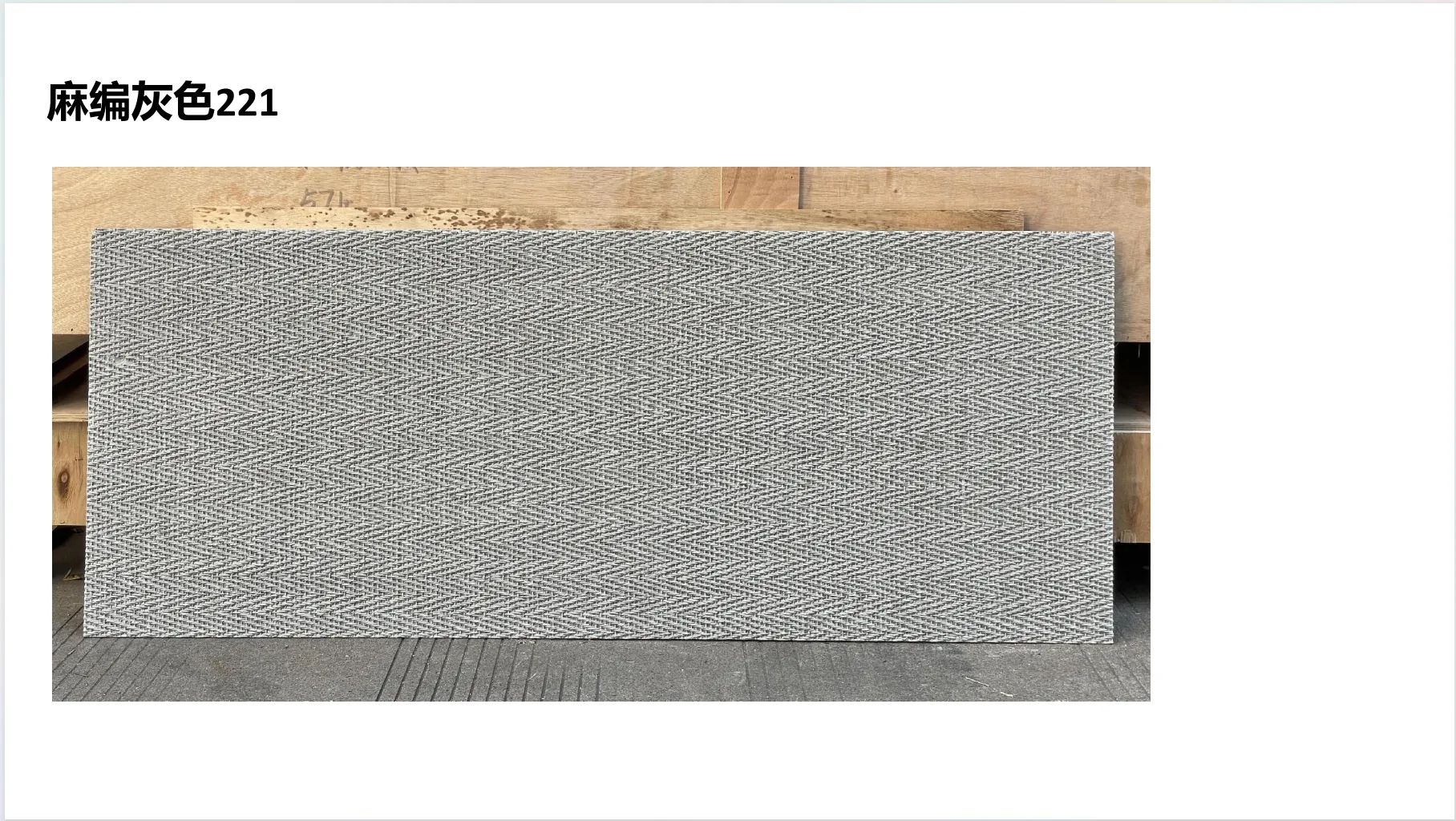
At its core, weaving real photos is exactly what it sounds like: high-resolution, hyper-detailed images of MCM materials that capture every nuance—from the rough grain of MCM flexible stone to the metallic sheen of foamed aluminium alloy board (vintage silver) . But these aren't just stock photos. They're taken in real-world lighting conditions, scaled to actual size, and often overlaid onto 3D models of the client's project. The result? A visualization so lifelike, it's nearly indistinguishable from the finished product.
"It's like giving clients a window into the future," says Raj Patel, a project manager at a leading MCM manufacturer. "Last year, we were working on a hotel lobby using our 3D printing series panels. The client kept asking for 'softer edges,' but we couldn't nail it. We sent five physical samples—all wasted—before we switched to weaving real photos. We uploaded three versions with subtle edge variations, and they picked the second one. No more guesswork, no more scrap."
So how exactly does this reduce waste? Let's break it down.
Traditional design relies on 2D drawings and vague descriptions, leaving too much room for interpretation. Weaving real photos, however, lets designers and clients collaborate in a shared visual language. For example, when working with fair-faced concrete , a material prized for its raw, unpolished look, a weaving real photo can highlight how light hits the surface at different times of day—something a sketch or swatch can never fully convey. This clarity means fewer revisions, and fewer revisions mean less material wasted on trial runs.
Take the case of a recent office building project in Chicago. The design team initially planned to use standard concrete panels but switched to fair-faced concrete after seeing weaving real photos that showcased its texture. Because the client could visualize the final result, they signed off in days instead of weeks, and the manufacturer avoided producing 12 test panels that would have ended up as waste.
Physical prototypes are the single biggest source of waste in MCM production. Creating a small sample of 3D printing series panels, for instance, requires cutting, shaping, and finishing material—all of which is wasted if the client rejects it. Weaving real photos eliminate the need for most prototypes by letting clients "test" materials digitally.
Consider foamed aluminium alloy board (vintage silver) , a popular choice for modern facades. Its unique foam structure and metallic finish are hard to replicate in small samples. With weaving real photos, clients can zoom in to see the texture, compare it to other finishes (like vintage gold or plain metal), and even visualize it alongside other materials like wood or glass—all without a single sheet of aluminium being cut.
One of the biggest causes of post-production waste is client disappointment. A material that looked "warm" in a sample might read "dull" on a full wall, leading to rework and discarded materials. Weaving real photos solve this by setting clear expectations from the start.
"We had a client who wanted MCM flexible stone for their restaurant exterior," recalls Patel. "They loved the sample, but when the first batch went up, they said it looked 'too orange.' Turns out, the sample was under fluorescent lights, and the actual building gets afternoon sun. With weaving real photos, we could show them how the stone would look in morning, noon, and evening light. They adjusted their color choice upfront, and we didn't waste a single slab."
Even after design and approval, production errors cause significant waste. Misreading measurements or misjudging how a material will look at scale leads to off-cuts and rejections. Weaving real photos, when paired with 3D modeling, give manufacturers precise guidelines for cutting and installation.
For example, when producing 3D printing series panels for a retail store, the manufacturer used weaving real photos overlaid on the store's 3D model to map out exactly where each panel would go. This allowed them to optimize the cutting layout, reducing off-cut waste by 35% compared to a similar project using traditional 2D drawings.
To quantify the impact, let's compare traditional MCM production with processes that use weaving real photos. The table below, based on data from three leading manufacturers, shows just how much waste can be avoided:
| Aspect of Production | Traditional Method | Weaving Real Photos Method | Estimated Waste Reduction |
|---|---|---|---|
| Design Revisions | 5–7 physical samples per revision; 3–4 revisions on average | 0 physical samples; revisions done digitally | 95% reduction in prototype waste |
| Client Approval Time | 2–3 weeks (waiting on samples, shipping, feedback) | 3–5 days (digital reviews) | Reduced lead time lowers risk of outdated materials |
| Production Off-Cuts | 15–20% waste due to misaligned designs | 5–8% waste (precision cutting via digital guides) | ~60% reduction in production waste |
| Post-Installation Rework | 10–15% of projects require rework due to misalignment with vision | 2–3% rework rate | 80% reduction in rework-related waste |
These numbers aren't just abstract—they translate to tangible savings. One manufacturer reported saving over 200,000 square feet of material in a single year after adopting weaving real photos, cutting costs by 18% and reducing their carbon footprint by 12%.
To truly understand the difference weaving real photos make, let's dive into two projects that highlight their transformative power.
A luxury hotel chain in Miami wanted to revamp its lobby with 3D printing series panels, aiming for a "modern industrial" vibe. Initially, the design team relied on 2D renderings and small foam models. The client approved, and production began on 100 custom panels. But when the first 10 were installed, the client was horrified: "They look cheap," the project manager said. "The texture is too uniform—it doesn't feel 'artisanal.'"
Panic set in. The remaining 90 panels were put on hold, and the team scrambled to fix the issue. They produced 15 new prototypes with varying textures, wasting 300 square feet of material in the process. Finally, a designer suggested using weaving real photos. They photographed the original panels in the lobby's actual lighting, then overlaid images of revised textures (more organic, less uniform) onto the 3D model. The client approved the third iteration—digitally—and production resumed with confidence. In the end, only the initial 10 panels were wasted, instead of all 100. "If we'd used weaving real photos from the start, we might have avoided those 10 entirely," the manufacturer's sustainability director noted.
A tech company in Seattle wanted its new headquarters to feature foamed aluminium alloy board (vintage silver) on the exterior—a bold choice, but one that came with risks. The material's unique foam structure can look drastically different in sunlight vs. shade, and the client was worried about "patchiness." Traditionally, the manufacturer would have produced 8–10 full-size panels, installed them on a test wall, and waited for the client to sign off. But with weaving real photos, they took high-res images of the material in morning, midday, and evening light, then mapped them onto the building's 3D model. The client could "walk through" the virtual building at different times of day, zooming in on problem areas. They requested a slightly darker vintage silver tone, which was adjusted digitally. When production began, every panel fit perfectly, and there were zero off-cuts. "We saved 20 sheets of foamed aluminium—each weighing 15 pounds—from the scrap heap," the project lead said. "That's not just waste; that's time and money we got back."
As the construction industry shifts toward sustainability, tools like weaving real photos are becoming less of a "nice-to-have" and more of a necessity. Materials like fair-faced concrete , MCM flexible stone , and foamed aluminium alloy board (vintage silver) are already marketed as "green" options due to their durability and recyclability—but their environmental impact is only as strong as the production process behind them. Weaving real photos don't just reduce waste; they make these materials truly sustainable from start to finish.
And the benefits extend beyond the environment. Clients get clearer communication, faster approvals, and projects that match their vision. Manufacturers save money on materials and labor, boosting their bottom line. Workers on the factory floor spend less time cleaning up scrap and more time creating. It's a win-win-win that starts with a simple idea: show, don't tell.
So the next time you walk past a building with stunning MCM flexible stone or sleek fair-faced concrete , take a closer look. Chances are, those materials didn't just happen—they were visualized, approved, and produced with the help of weaving real photos. And in that quiet precision, there's a story of waste avoided, resources preserved, and a construction industry taking one small, powerful step toward a greener future.
In the end, weaving real photos are more than a tool—they're a reminder that sustainability in construction doesn't have to mean sacrificing beauty or innovation. It means working smarter, not harder; visualizing clearly, not guessing blindly; and respecting the materials we use by ensuring they end up where they belong: on buildings, not in landfills. For Maria, the designer with the travertine (starry green) samples? She now starts every project with a folder of weaving real photos. "I used to dread client meetings because I knew half the samples would end up in the trash," she says. "Now? I look forward to showing them exactly what they're getting. No more guesswork, no more waste. Just results."
Recommend Products












