
Sarah, a commercial construction project manager, stares at her laptop screen, fingers drumming on the desk. The deadline for the downtown retail complex is six weeks away, but the architect just sent another revision—they're unhappy with how the facade materials "read" in the renderings. The contractors are waiting on material samples, the client is asking for "something warmer" than the fair-faced concrete initially proposed, and the clock is ticking. Sound familiar? For anyone in commercial construction, this dance of delays—miscommunication, slow approvals, and on-site adjustments—feels like an unavoidable part of the job. But what if there was a way to cut through the chaos? Enter Weaving Real Photos Technology, a game-changer that's turning stressed timelines into success stories, one project at a time.
Let's start with the basics: This isn't your average 3D rendering. Weaving Real Photos Technology uses ultra-high-resolution imaging, advanced texture mapping, and immersive 3D visualization to create hyper-accurate representations of building materials in their actual context. Think of it as a "digital twin" for your project's facade—so detailed, you can almost feel the rough grain of a poly wood board or the cool smoothness of fair-faced concrete through the screen. It's not just about making things look pretty; it's about eliminating guesswork. Stakeholders see exactly how materials like flexible stone or MCM project board series panels will interact with light, shadow, and surrounding architecture—before a single brick is laid.
For Sarah, this would mean no more back-and-forth about "warmer tones" or "more texture." The architect could tweak the design in real time, swapping travertine (starry blue) for rustic red with a click, and the client could sign off with confidence—because they're not imagining the final look; they're seeing it, down to the last vein in the stone.
To understand why Weaving Real Photos Tech is a lifesaver, let's unpack the silent time thieves in commercial construction:
These might seem like small hurdles, but they add up. A 2023 industry report found that design-related delays alone account for 23% of commercial construction timeline overruns. That's where Weaving Real Photos Tech steps in—not just to fix these issues, but to make them disappear entirely.
Let's get concrete (pun intended). Here's how this technology slashes weeks off construction timelines, using real-world scenarios and the materials you know—like MCM project board series and flexible stone .
Remember Sarah's client who wanted "warmer tones"? With Weaving Real Photos Tech, the design team could upload high-res images of travertine (vintage gold) and golden travertine (white golden) into the visualization tool, then overlay them onto the building's 3D model. The client could toggle between options, see how the stone would glow at sunrise vs. sunset, and even "walk" around the virtual facade. What once took 6–8 weeks of revisions now takes 2–3 days. One project manager we spoke to called it "like giving stakeholders a crystal ball—they trust their decision because they've already 'seen' the future."
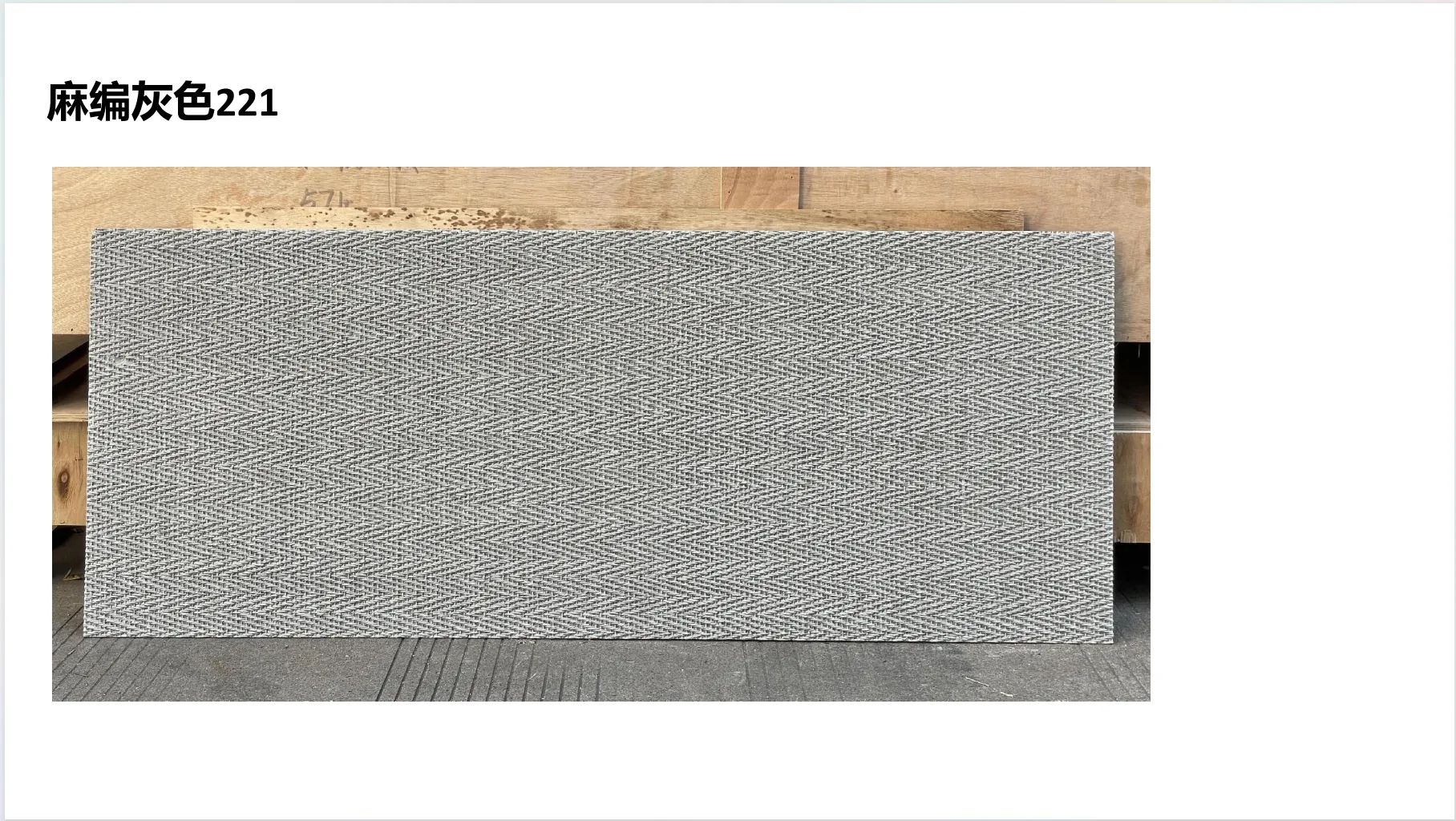
Gone are the days of waiting for a rough granite stone (medium grey) sample to arrive via FedEx, only to find it's too light. Weaving Real Photos Tech lets teams browse a digital library of every material under the sun—from foamed aluminium alloy board (vintage silver) to bamboo mat board —with color accuracy that's within 2% of the real thing. Compare stream limestone (dark grey) vs. dolomitic travertine (claybank) side-by-side on the actual building model. It's like having a material showroom in your laptop, open 24/7. This alone can cut material selection time from 4–6 weeks to 1–2 weeks.
Prefabricated MCM panel systems are a game-changer for speed—but only if they're built to precise specs. Weaving Real Photos Tech gives manufacturers exact measurements, texture details, and color codes, so panels arrive job-ready. No more "oops, this rust square line stone panel is 2 inches too short." One contractor in Texas reported that using the tech reduced prefabrication errors by 89%, cutting manufacturing time by 35%. When panels fit perfectly, installation becomes a breeze.
Imagine your crew arriving to install flexible stone panels. With traditional methods, they might spend hours double-checking measurements, trimming panels to fit, or fixing misalignments. With Weaving Real Photos Tech, every panel is pre-cut to match the digital model. Installation becomes a matter of "click and place"—literally. A California retail project using MCM project board series panels visualized with the tech cut on-site installation time from 8 weeks to just 4. The foreman joked, "It was like putting together a giant, beautiful puzzle—with the box art right there to guide us."
| Stage of Construction | Traditional Timeline | With Weaving Real Photos Tech | Time Saved |
|---|---|---|---|
| Design Approval | 6–8 weeks | 2–3 weeks | 4–5 weeks |
| Material Selection | 4–6 weeks | 1–2 weeks | 3–5 weeks |
| Prefabrication | 8–10 weeks | 5–6 weeks | 3–4 weeks |
| On-Site Installation | 6–8 weeks | 3–4 weeks | 3–4 weeks |
| Total Project Time* | 24–32 weeks | 11–15 weeks | 13–17 weeks |
*Based on a mid-sized commercial facade project (10,000–15,000 sq ft). Results may vary, but time savings of 30–50% are common.
Let's zoom in on a real example. The Harbor View Office Tower in Seattle was a 12-story project with a facade featuring prefabricated MCM panel systems in travertine (starry green) and rust board granite . Initially projected to take 30 weeks, the team adopted Weaving Real Photos Technology mid-design.
- Design Approval: Stakeholders signed off in 2 weeks instead of 7 after seeing the travertine (starry green) panels visualized against Puget Sound light.
- Material Selection: Swapped rough granite stone (dark grey) for dolomitic travertine (claybank) in days, using the digital library—no sample shipping delays.
- Installation: Prefabricated panels arrived with precise fitment, cutting on-site work from 8 weeks to 4.
Total timeline? 18 weeks. That's 12 weeks saved—enough to avoid costly liquidated damages and open the building 3 months early. "It wasn't just about speed," said the project architect. "It was about confidence. Everyone knew what we were building, and that made every step smoother."
Let's talk about what really matters: people. Construction is a high-stress industry, and delays don't just cost money—they drain teams. Weaving Real Photos Tech eases that burden. Project managers like Sarah stop losing sleep over stakeholder indecision. Foremen stop yelling over misaligned panels. Clients stop fretting about "what if."
There's also the sustainability angle. When prefabricated MCM panel systems are built to exact specs, there's less waste. Fewer on-site adjustments mean fewer trucks idling, less material in landfills, and a smaller carbon footprint. It's a win-win: faster timelines and a greener build.
If you're working on a commercial project with a facade that uses materials like flexible stone , MCM project board series , or prefabricated panels , the answer is almost certainly yes. Even smaller projects benefit—imagine a boutique restaurant using bamboo mat board or charcoal burnt wood board ; the tech ensures the design matches the owner's vision, avoiding costly rework.
And the cost? It's an investment, but one that pays for itself in saved time and reduced delays. Think of it as insurance against the unknown—and in construction, the unknown is expensive.
Weaving Real Photos Technology isn't just a tool—it's a mindset shift. It's about trusting that technology can bridge the gap between vision and reality, turning "I hope this works" into "I know this works." For commercial construction, where every day counts, it's the difference between watching deadlines slip and celebrating early completions.
So, to all the Sarahs out there—staring at Gantt charts, juggling stakeholders, and dreaming of a stress-free build—this one's for you. With Weaving Real Photos Tech, the future of construction isn't just faster. It's better.
*Materials mentioned are examples of common applications. Always consult with your material supplier for project-specific options.
Recommend Products












