
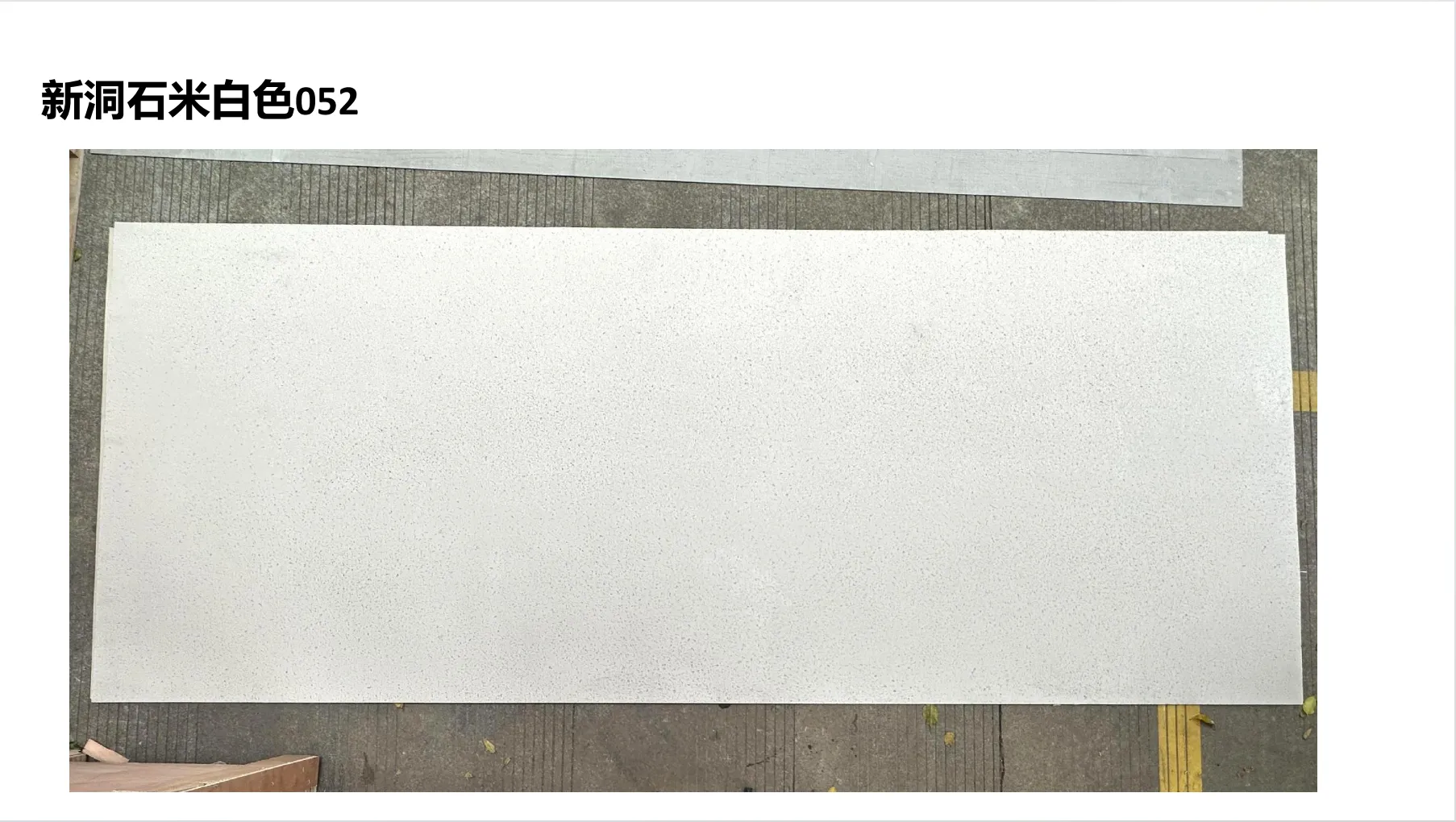
In today's construction landscape, the phrase "green building" has shifted from a buzzword to a fundamental requirement. As cities grow and environmental concerns take center stage, architects, developers, and builders are increasingly turning to sustainable solutions that don't just meet functional needs but also minimize ecological footprints. At the heart of this movement lies LEED certification—a globally recognized symbol of excellence in sustainable building design and operation. But what exactly makes a building "LEED-worthy"? While energy-efficient HVAC systems and solar panels often steal the spotlight, the choice of building materials plays an equally critical role. Enter White Travertino MCM, a material that's quietly revolutionizing how we approach sustainable construction. Let's dive into how this innovative cladding solution aligns with LEED standards, and why it's becoming a go-to choice for projects aiming for that coveted certification.
Before we unpack White Travertino MCM's role, let's clarify what LEED certification entails. Developed by the U.S. Green Building Council (USGBC), LEED (Leadership in Energy and Environmental Design) is a rating system that evaluates buildings based on six key categories: Sustainable Sites, Water Efficiency, Energy and Atmosphere, Materials and Resources, Indoor Environmental Quality, and Innovation in Design. Each category awards points, and buildings earn certifications (Certified, Silver, Gold, Platinum) based on their total score.
For architects and developers, LEED isn't just about environmental responsibility—it's a strategic investment. LEED-certified buildings often command higher rental rates, lower operational costs, and stronger market appeal. For occupants, they mean healthier indoor spaces, better natural light, and reduced energy bills. But here's the catch: achieving LEED credits isn't easy. Every material choice, from flooring to cladding, must be scrutinized for its sustainability credentials. That's where materials like White Travertino MCM come into play.
If you're not deep in the world of construction materials, "MCM" might sound like just another industry acronym. Let's break it down: MCM stands for Modified Composite Material, a cutting-edge cladding solution designed to mimic the look and feel of natural stone, wood, or metal—without the environmental drawbacks. At its core, MCM is a blend of mineral aggregates, polymers, and fibers, engineered to be lightweight, durable, and incredibly versatile. And White Travertino MCM? It's a specific variant that replicates the soft, porous texture and elegant white hue of natural travertine, a classic stone long beloved for its timeless appeal.
But here's what sets it apart: unlike quarried travertine, which requires heavy mining, transportation, and processing (all energy-intensive steps), White Travertino MCM is manufactured using a high percentage of recycled materials and a low-energy production process. Think of it as travertine's eco-smart cousin—same beauty, but with a fraction of the environmental impact. And let's not forget its most lauded feature: mcm flexible stone technology. This flexibility means the material can bend and curve around architectural details, eliminating the need for custom cutting (and the waste that comes with it). It's a game-changer for both sustainability and design freedom.
To understand how White Travertino MCM supports LEED certification, let's start with its sustainability "resume." From manufacturing to installation to long-term performance, this material checks boxes that many traditional cladding options can't. Let's walk through the key areas where it shines:
Traditional building materials often leave a heavy footprint. Quarrying natural travertine, for example, involves stripping land, using massive machinery, and transporting heavy blocks long distances—all of which contribute to carbon emissions. Fair-faced concrete, another common cladding choice, requires significant water and energy to produce, and its production releases CO2. White Travertino MCM, by contrast, is manufactured with recycled stone aggregates and mineral powders, cutting down on the need for virgin materials. Its production facilities also prioritize energy efficiency, using low-temperature curing processes that reduce greenhouse gas emissions. For architects aiming to score points in LEED's "Materials and Resources" category, this sustainable manufacturing story is gold.
Ever watched a crew install natural stone cladding? It's backbreaking work, requiring cranes, heavy lifting equipment, and precise cutting—all of which add to a project's carbon footprint and waste. White Travertino MCM changes the game here, too. Thanks to its lightweight composition (typically 3–5 kg per square meter, compared to 20–30 kg for natural stone), it's easier to transport, handle, and install. No need for oversized trucks or industrial cranes; even small teams can maneuver the panels on site. This not only speeds up construction timelines but also reduces fuel use and labor costs. And because mcm flexible stone can be curved or shaped on site without cracking, there's far less waste from off-cuts. Less waste means fewer materials ending up in landfills—a direct win for LEED's "Construction Waste Management" credit (MR Credit 5).
Sustainability isn't just about what happens during construction—it's about how a building performs over decades. A material that needs frequent replacement is rarely green, no matter how eco-friendly it is upfront. White Travertino MCM excels here with its impressive durability. It's resistant to moisture, UV rays, and temperature fluctuations, meaning it won't fade, crack, or warp in harsh weather. Unlike natural travertine, which is porous and prone to staining, MCM panels are sealed during manufacturing, making them easy to clean and maintain. This longevity translates to fewer replacements over a building's lifetime, reducing the demand for new materials and the associated environmental impact. For LEED's "Durable Building Materials" credit (a subset of MR credits), this is a significant advantage.
LEED certification is all about accumulating points across categories, and White Travertino MCM contributes to multiple credits. Let's map out exactly how it helps projects inch closer to that Platinum rating:
LEED's Materials and Resources category rewards projects that use sustainable, recycled, or regionally sourced materials. White Travertino MCM hits several notes here:
-
Recycled Content (MR Credit 4):
Many MCM manufacturers use up to 40% recycled stone aggregates and industrial byproducts in their panels. This high recycled content can earn projects 1–2 LEED points, depending on the percentage used.
-
Regional Materials (MR Credit 5):
If the MCM is produced within 500 miles of the construction site (a common practice for large manufacturers), it qualifies for regional materials credits, reducing transportation emissions.
-
Construction Waste Management (MR Credit 5):
As mentioned earlier, the lightweight, flexible nature of
mcm flexible stone
minimizes on-site waste. Projects that divert at least 75% of construction waste from landfills can earn 1–2 points here.
A building's cladding plays a big role in its energy performance, and White Travertino MCM's properties make it a secret weapon for energy efficiency:
-
Thermal Insulation:
MCM panels have inherent insulating properties, reducing heat transfer through walls. When paired with proper insulation, they can lower a building's heating and cooling loads, contributing to EA Credit 1 (Optimize Energy Performance).
-
Reflective Properties:
The light color of White Travertino reflects sunlight, reducing the "urban heat island" effect (a key concern in dense cities) and lowering the need for air conditioning. This can support EA Credit 7 (Heat Island Reduction) for non-roof surfaces.
LEED prioritizes indoor spaces that promote health and well-being, and White Travertino MCM delivers here, too:
-
Low VOC Emissions:
Unlike some paints, sealants, or adhesives, MCM panels are manufactured with low volatile organic compounds (VOCs), which means they don't off-gas harmful chemicals into indoor air. This supports IEQ Credit 4 (Low-Emitting Materials).
-
Daylighting:
The bright, reflective surface of White Travertino maximizes natural light penetration, reducing reliance on artificial lighting. This aligns with IEQ Credit 8 (Daylight and Views), which rewards projects that provide daylight to 75% of occupied spaces.
For projects pushing sustainability boundaries, LEED's Innovation in Design category offers extra points for creative solutions. Using mcm flexible stone in novel ways—like curved facades, integrated solar shading, or zero-waste installation techniques—can qualify for 1–2 innovation points. Some manufacturers even offer Environmental Product Declarations (EPDs) or Health Product Declarations (HPDs) for their MCM panels, providing transparent data on environmental and health impacts, which can strengthen innovation credit applications.
| Feature | Natural Travertine | Fair-Faced Concrete | White Travertino MCM |
|---|---|---|---|
| Carbon Footprint | High (quarrying, transport) | Moderate (energy-intensive production) | Low (recycled materials, efficient manufacturing) |
| Weight (kg/m²) | 20–30 | 15–25 | 3–5 |
| Installation Waste | High (custom cutting, breakage) | Moderate (formwork waste) | Low (flexible, pre-cut panels) |
| LEED Credit Potential | Limited (recycled content rare) | Moderate (regional sourcing possible) | High (multiple MR, EA, IEQ credits) |
Talk is cheap—let's look at a project that put White Travertino MCM to work. The Riverfront Innovation Center, a 12-story office building in Portland, Oregon, aimed for LEED Platinum when it broke ground in 2023. The design team wanted a cladding material that matched the building's modern aesthetic while aligning with strict sustainability goals. After comparing options like natural stone, fair-faced concrete, and metal panels, they settled on White Travertino MCM for the facade.
Why? The material's lightweight nature reduced the building's structural load, allowing for a lighter steel frame and cutting embodied carbon by 12%. Its high recycled content (35%) contributed to MR Credit 4, and since the panels were manufactured in Washington State (within 500 miles), they earned MR Credit 5 for regional materials. The light color of the travertino also boosted daylighting in offices, reducing artificial lighting use by 20% and contributing to EA Credit 1. By the end of construction, the project had diverted 82% of waste from landfills (thanks to minimal MCM off-cuts) and earned an innovation point for using
mcm flexible stone
in a curved facade design. In 2024, the Riverfront Innovation Center was awarded LEED Platinum—proof that smart material choices like White Travertino MCM can make a tangible difference.
As the construction industry shifts toward net-zero carbon goals, materials like White Travertino MCM are becoming less of an "alternative" and more of a standard. LEED certification, while influential, is just one measure of sustainability—and MCM is already evolving to meet stricter standards. For example, some manufacturers are experimenting with bio-based polymers in MCM production, further reducing reliance on fossil fuels. Others are integrating photovoltaic cells into MCM panels, turning facades into energy-generating surfaces.
What does this mean for architects and builders? It means the bar for sustainability is rising, but so are the tools to meet it. White Travertino MCM, with its blend of aesthetics, durability, and eco-friendliness, is a preview of what's possible when materials are designed with the planet in mind. It's not just about checking boxes for LEED—it's about building spaces that are kind to the environment, healthy for people, and beautiful to behold.
At the end of the day, LEED certification is about more than a plaque on the wall—it's a commitment to building a better future. White Travertino MCM supports that commitment by proving that sustainability and beauty don't have to be trade-offs. Its recycled content, low-impact manufacturing, and energy-saving properties help projects earn critical LEED points, while its flexibility and durability make it a practical choice for builders.
Whether you're designing a LEED Silver office park or chasing Platinum for a landmark project, the materials you choose matter. White Travertino MCM isn't just a cladding option—it's a statement that your project cares about the planet, the people who use it, and the legacy it leaves. In a world where green building is no longer optional, that's a statement worth making.
Recommend Products












