
Bridging the gap between imagination and reality in material selection
For architects, few decisions feel as weighty as choosing the right materials for a residential project. It's a balance of aesthetics, functionality, durability, and the intangible "feel" that turns a house into a home. Yet for years, this process has been fraught with frustration: tiny samples that fail to capture scale, flat catalog images that miss texture, and the nagging doubt of whether that "perfect" stone or panel will truly shine in the light of a living room or the shadow of a balcony. Enter woven real photos—a game-changing tool that's transforming how architects explore, evaluate, and fall in love with MCM (Modified Composite Material) products. More than just high-quality images, these photos weave together detail, context, and emotion, making material selection not just easier, but deeply human.
Let's start with a familiar scenario: An architect sits at their desk, surrounded by swatches of stone, metal, and composite panels. They're designing a modern coastal home, aiming for a blend of warmth and resilience. A client mentions they want "something that feels organic but stands up to salt air"—vague, but specific enough to send the architect digging through samples. They pick up a small chip of bamboo mat board ; it's textured, but the 3x3-inch square can't convey how it would look spanning an entire accent wall. They flip through a catalog and pause at a photo of travertine (starry blue) —the color is striking, but the lighting in the catalog is studio-perfect, nothing like the soft morning glow of the home's east-facing rooms. Even worse, a sample of fair-faced concrete feels cold in hand, but the architect wonders: Will it warm up when paired with wood accents? Samples and catalogs, for all their utility, are incomplete stories. They lack context, scale, and the lived-in energy that makes a material feel right.
This gap isn't just about aesthetics—it has real consequences. Misjudging how MCM flexible stone interacts with natural light can lead to a facade that feels dull instead of dynamic. Choosing a texture based on a tiny sample might result in a surface that's too rough for a child's playroom or too smooth for a high-traffic hallway. Architects don't just need to see materials; they need to imagine them in relationship —to space, to light, to the people who will call that space home. And that's where woven real photos step in.
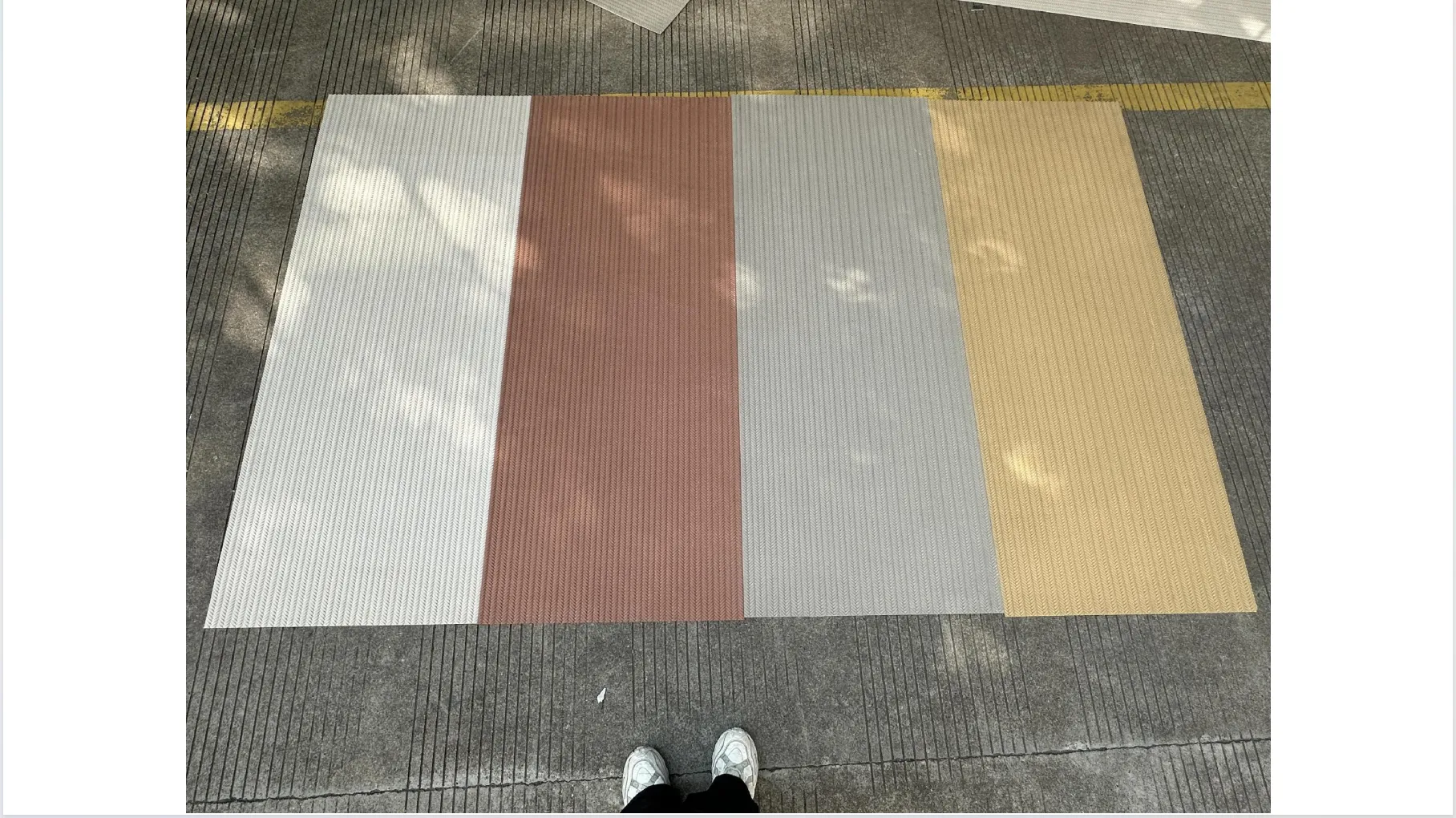
Woven real photos aren't your average product shots. They're meticulously crafted visual narratives, designed to mimic how materials behave in real-world settings. Think of them as a bridge between the lab and the living room: high-resolution, multi-angle images that capture not just color, but texture, depth, and even "personality." A woven real photo of travertine (starry blue) might show the material in three contexts: close-up, to highlight the subtle sparkle of its "starry" finish; mid-range, spanning a fireplace surround with a vase of dried grass on the mantel; and wide, integrated into a sunlit bedroom where the blue shifts from deep indigo at dawn to soft teal at noon. These photos "weave" together macro details and micro-stories, letting architects see not just what the material is, but how it lives .
Take foamed aluminium alloy board (vintage silver) , for example. A standard catalog photo might show it as a flat, metallic sheet, but a woven real photo could capture it installed as a backsplash in a kitchen, where light from under-cabinet LEDs dances across its textured surface, creating shadows that change with the time of day. Another shot might show it outdoors, raindrops beading on its surface, proving its durability without a single technical spec. These photos don't just inform—they evoke. They make architects think, "I can picture my client making coffee here, the light hitting that aluminium, and smiling." That's the power of weaving reality into imagery.
Why "Woven"? The term "woven" speaks to the way these photos blend multiple elements: macro texture shots, contextual installations, and lifestyle details. It's not just a single image, but a tapestry of perspectives that together tell the full story of a material. For MCM products—many of which are engineered to mimic natural materials with enhanced performance—this woven approach is critical. It shows that 3D printing series panels aren't just "technical"; they're artistic. That rust square line stone isn't just "industrial"; it's full of character.
MCM's versatility is one of its greatest strengths, spanning everything from lightweight flexible stone that bends around curves to rigid boulder slab (vintage gold) that anchors a facade with boldness. But with so many options— lunar peak silvery for a futuristic vibe, historical pathfinders stone for a rustic touch—how does an architect narrow it down? Woven real photos act as a curated gallery, inviting exploration without overwhelm. Let's walk through how these photos bring some standout MCM lines to life.
MCM flexible stone is a revelation for architects who crave the look of natural stone but need something lightweight and adaptable. Imagine a woven real photo series dedicated to this line: One image shows a close-up of travertine (starry red) , its surface pitted with tiny "stars" that catch the light like scattered embers. Another shot zooms out to reveal the same stone wrapped around a curved staircase, its flexibility evident in how it hugs the bend without cracking. A third photo places it in a bathroom, where steam from a shower clings to its porous surface, giving it a soft, misty glow. For an architect designing a home with curved walls or custom niches, these photos answer the question: "Can it really do that?" with a resounding "Yes—and it will look beautiful doing it."
MCM's 3D printing series pushes the boundaries of what composite materials can do, offering intricate patterns and textures that mimic hand-carved stone or artisanal metalwork. Woven real photos here are less about "does it work" and more about "what can I create with it?" A photo of wave panel might show it installed as a headboard, its undulating surface casting soft shadows on the wall behind the bed—suddenly, a technical product becomes a focal point of intimacy. Another image could feature thread pattern panels in a home office, their linear texture adding depth to a minimalist space without overwhelming it. These photos don't just showcase the product; they spark ideas. An architect might look at the wave panel and think, "What if we used that on the ceiling of the entryway, backlit to welcome guests?" That's the magic of seeing materials in context—they stop being "products" and start being collaborators in design.
Not every project calls for cutting-edge 3D designs. Sometimes, clients crave the comfort of tradition, but with a durability upgrade. Woven real photos shine here, too, by showing how MCM reimagines classics. Take fair-faced concrete : Long associated with cold, industrial spaces, MCM's version is warmer, with subtle variations in tone that feel hand-poured. A woven real photo might show it in a family room, paired with white wood beams and a plush rug—the concrete walls grounding the space, not chilling it. Or consider lunar peak golden , a stone-inspired panel with a metallic sheen that evokes moonlight on mountain tops. A woven photo could capture it at dusk, the golden flecks catching the last light of day, turning a simple exterior wall into a canvas of light and shadow. These images don't just sell materials; they sell moods —cozy, grand, serene, bold—and architects thrive on mood.
| Aspect | Traditional Methods (Samples/Catalogs) | Woven Real Photos |
|---|---|---|
| Realism | Limited by size (samples) or studio lighting (catalogs); fails to show material behavior in real spaces. | Captures materials in actual environments—natural light, shadows, and context—making it easy to visualize in a project. |
| Texture Detail | Samples show texture up close, but lack scale; catalogs flatten texture into 2D. | Macro shots highlight texture (e.g., the roughness of gobi panel or the smoothness of polish concrete ), while wide shots show how texture plays at scale. |
| Contextual Understanding | Requires architects to "imagine" how a material fits; often leads to mismatched expectations with clients. | Places materials in relatable settings (kitchens, bedrooms, exteriors) so architects and clients can "walk through" the space mentally. |
| Collaboration Ease | Clients struggle to connect small samples to the final design; discussions get stuck on "it looks different in the catalog." | Shared photos become a common language—clients can point to a woven photo of travertine (starry orange) and say, "I love how that glows at sunset!" |
| Emotional Resonance | Clinical and transactional; materials feel like "products" rather than part of a home's story. | Evokes emotion through context—seeing bamboo mat board in a child's room with toys scattered nearby makes it feel "lived-in" and safe. |
Architects don't work in isolation—they collaborate with clients, contractors, and builders, each with their own vision and concerns. Woven real photos aren't just tools for the architect; they're bridges to understanding. Let's say an architect presents a design to a client who's hesitant about rust board granite . "It looks too industrial," the client says. Instead of defending the sample, the architect pulls up a woven real photo: the granite is installed as a kitchen island, paired with warm wood cabinets and pendant lights that cast a soft glow over its surface. "See how the rust tones complement the wood?" the architect asks. "And here's a shot of it at night—those flecks of metal catch the light, making the kitchen feel cozy, not cold." Suddenly, the client isn't just seeing a material—they're seeing their future dinner parties, their morning coffee routine. Woven real photos turn abstract concepts into shared dreams.
Contractors benefit, too. A woven real photo of foamed aluminium alloy board (vintage gold) can show not just how it looks, but how it's installed—its lightweight nature making it easy to mount on exterior walls, or its interlocking edges simplifying the construction process. This clarity reduces miscommunications, delays, and costly rework. When everyone is on the same page, the project moves faster, and the final result is truer to the original vision.
At the end of the day, architecture is about people. It's about creating spaces where memories are made, where comfort and beauty coexist. Woven real photos honor this by infusing material selection with humanity. They remind architects that they're not just choosing panels or stones—they're choosing the backdrop for a child's first steps, a couple's anniversary dinner, a family's quiet Sunday mornings. When an architect scrolls through woven real photos of epoch stone and thinks, "This would make the perfect hearth for my client's grandmother to sit by," that's the human touch in action.
Consider historical pathfinders stone , a material designed to evoke the weathered charm of ancient streets. A woven real photo might show it in a backyard patio, with a wooden bench, potted herbs, and a birdbath. It's not just stone anymore—it's a place where someone will sit and read, where rain will leave dark streaks that dry to a warm patina, where time will add character. That's the promise of woven real photos: They don't just show materials—they show life .
Choosing materials for a residential project is an act of storytelling. Architects are storytellers, and materials are their words. For too long, the tools to craft that story—samples, catalogs, even 3D renderings—have been incomplete, leaving gaps between vision and reality. Woven real photos fill those gaps, turning words into vivid scenes, and scenes into emotions. They let architects see travertine (starry blue) not as a color, but as a mood; bamboo mat board not as a texture, but as a hug; MCM flexible stone not as a product, but as a promise of resilience and beauty.
As MCM continues to evolve—offering more textures, colors, and applications than ever before—woven real photos will remain an essential companion. They're not just changing how architects work; they're changing how we all imagine home. And in the end, isn't that the point? To create spaces that feel not just designed, but lived in —spaces where materials don't just exist, but belong.
Recommend Products












