
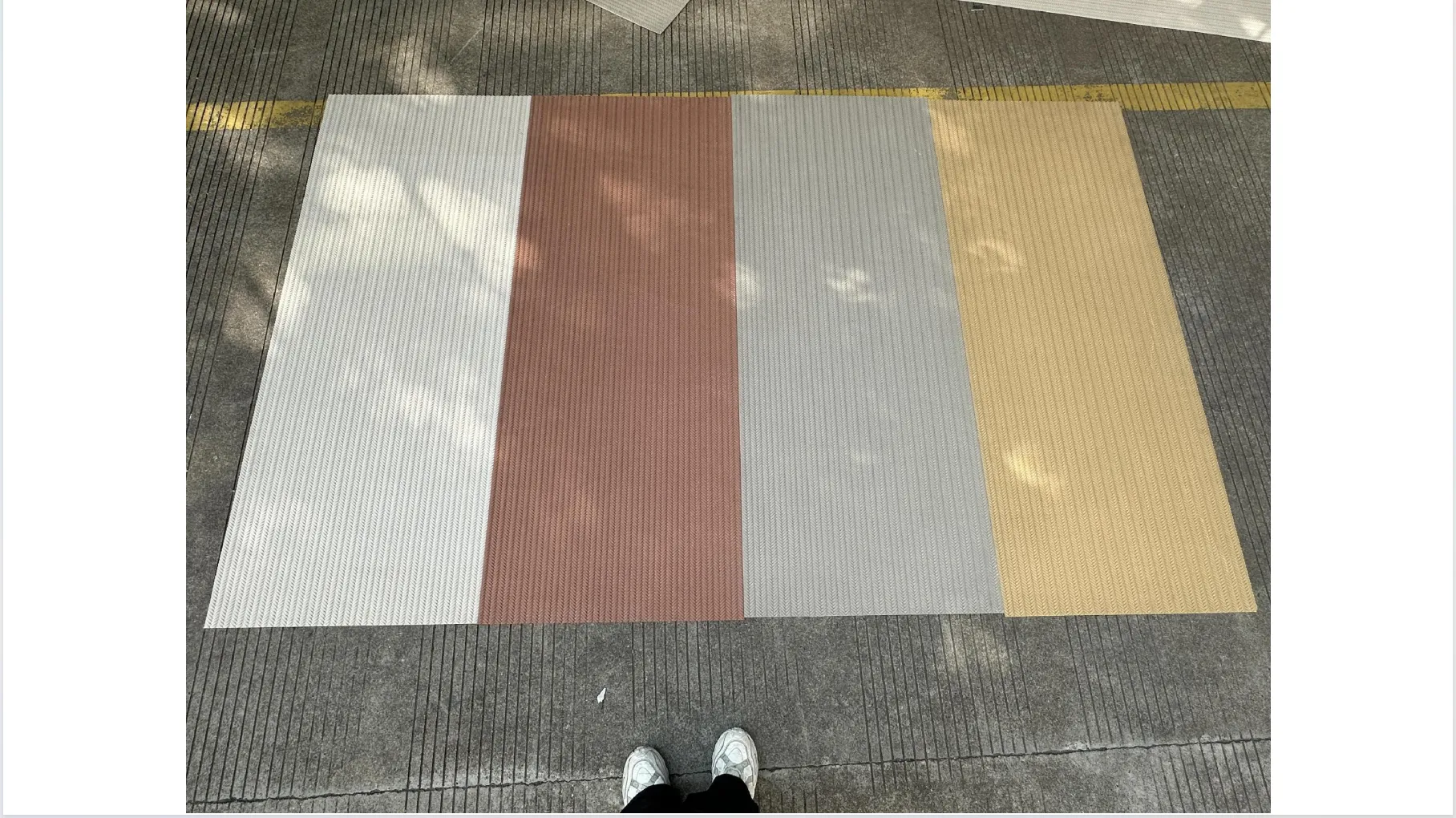
For contractors tasked with cladding a high-rise building, choosing the right exterior material is more than a design decision—it's a high-stakes balancing act. The material must withstand decades of harsh weather, complement the building's architectural vision, fit within budget constraints, and even meet sustainability goals. In recent years, Modified Composite Material (MCM) has emerged as a front-runner, thanks to its versatility, durability, and lightweight properties. But with dozens of MCM variants—from MCM flexible stone to MCM big slab board series , and finishes ranging from fair-faced concrete to travertine (starry blue) —how do contractors cut through the noise and pick the perfect fit? Enter woven real photos: a game-changing tool that bridges the gap between catalog images and real-world performance.
Walk into any contractor's office, and you'll likely find shelves lined with material samples—small swatches of stone, metal, and composite panels. For years, these samples, paired with glossy catalogs and basic 3D renders, have been the go-to for material selection. But high-rise exteriors demand more than a 10x10cm swatch can deliver. Here's why traditional methods often leave contractors in the dark:
Texture in isolation: A small sample of MCM flexible stone might feel smooth to the touch, but how does that texture translate when scaled up to cover a 50-story facade? Catalog images flatten texture, making it impossible to visualize how sunlight will catch the weave of weaving (khaki) or the granularity of star gravel from street level or 300 meters up.
Color under pressure: Lighting changes everything. A lunar peak silvery panel might glow warmly in a catalog's studio lighting but appear stark and washed out under the harsh midday sun of a desert city like Dubai. Similarly, rust square line stone could shift from rich amber to dull brown in urban smog—details no swatch can capture.
Scale blindness: MCM big slab board series panels, often measuring 1.2m x 2.4m, create a bold, seamless look. But when viewed as a tiny sample, contractors struggle to imagine how the repetition of these slabs will flow across a building's curves or interact with its windows and balconies. Will the pattern feel cohesive, or will the seams create an unintended stripe effect?
Compatibility guesswork: High-rises rarely use a single material. A project might pair foamed aluminium alloy board (vintage gold) with travertine (starry red) accents. But how do these materials complement (or clash with) each other in real life? Catalogs and samples exist in isolation, making it impossible to preview combinations in context.
These gaps often lead to costly mistakes: a material that looks perfect in the office but underwhelms on-site, client disputes over "unexpected" color shifts, or last-minute redesigns that derail timelines. For contractors, the need for a more accurate, context-rich way to evaluate materials has never been clearer.
Woven real photos aren't just fancy stock images. They're high-resolution, professionally curated photographs that capture MCM materials in real-world settings . Unlike catalog shots—staged in ideal lighting with no context—woven real photos are taken on actual construction sites, at different times of day, and from multiple angles (ground level, aerial, close-up). They show materials installed on full-scale mock-ups or completed buildings, capturing details like:
Think of them as a "virtual site visit"—but better. Contractors can zoom in to inspect the weave of weaving (jacinth) or pan out to see how gobi panel looks on a 30-story facade. Some woven real photo libraries even include time-lapse sequences, showing how materials change from dawn to dusk or in different weather conditions.
MCM's beauty lies in its texture—and nowhere is that more critical than in high-rise exteriors, where texture adds depth and visual interest to large, flat surfaces. Take MCM flexible stone : variants like pine bark board mimic the rough, organic texture of tree bark, while wave panel features undulating lines that mimic ocean swells. But a 10cm sample of pine bark board can't convey how that texture will "read" from 50 meters away.
Woven real photos solve this by capturing texture in context. For example, a photo of wave panel installed on a coastal high-rise might reveal that the undulations create striking shadow patterns at low tide, adding movement to the facade. Conversely, a photo of semicircle board on a sunlit urban building could show that its curved edges reflect light unevenly, creating a busy, distracting effect—something a small sample would never reveal.
Contractors working on a project in Riyadh recently used woven real photos to compare thread and linear travertine (claybank) for a luxury residential tower. The swatches looked similar, but the photos showed that thread 's fine, crisscross pattern disappeared from street level, while linear travertine 's bold, horizontal lines maintained their definition—making it the clear choice for a building designed to stand out in the skyline.
Color is the first thing people notice about a building—and the hardest to get right. A travertine (starry orange) panel that looks vibrant in a catalog might fade to peach in direct sunlight, while lunar peak golden could clash with the warm-toned stone of adjacent buildings. Woven real photos, taken on actual job sites, eliminate the guesswork by showing colors in the environments they'll live in.
Consider a contractor working on a high-rise in Singapore, where humidity and intense UV radiation are constant challenges. Woven real photos of travertine (vintage silver) installed on a similar building in Kuala Lumpur revealed that the silver finish developed a subtle, attractive patina over two years—adding character rather than looking worn. In contrast, photos of foamed aluminium alloy board (gold) in the same climate showed noticeable fading, prompting the contractor to opt for the more durable travertine.
Even subtle color variations matter. Dolomitic travertine (dark grey) and stream limestone (dark grey) might seem identical in swatches, but woven real photos highlighted that dolomitic travertine has a cooler, bluer undertone that clashed with the building's bronze window frames—while stream limestone's warmer grey complemented them perfectly.
High-rises are all about scale—and what works in a small sample can fail spectacularly when blown up. MCM big slab board series is designed to minimize seams, creating a sleek, modern look. But without seeing the slabs installed, contractors risk choosing a pattern that becomes repetitive or overwhelming at scale.
Woven real photos let contractors "test drive" scale. For example, a project in Chicago considered using linear travertine (claybank) with vertical striations. The sample looked elegant, but woven real photos of the material on a 40-story building showed that the vertical lines emphasized the building's height to the point of making it feel imposing. The contractor switched to dolomitic travertine (claybank) , which has a more organic, random pattern—softening the facade without losing visual interest.
Seams are another critical detail. Boulder slab panels, with their thick, stone-like edges, create bold, intentional seams that add rhythm to a facade. But how do those seams look when repeated 500 times? Woven real photos of boulder slab (vintage gold) on a Dubai high-rise showed that the seams created a subtle, upward-flowing pattern that enhanced the building's modern aesthetic—confirming it was the right choice.
Few high-rises rely on a single material. A project might combine foamed aluminium alloy board (vintage silver) for the lower floors with MCM flexible stone (travertine starry blue) above, or accent fair-faced concrete with rust mosaic stone panels. The risk? These combinations can clash in ways no swatch or catalog can predict.
Woven real photos let contractors preview material pairings in situ. Take a recent project in Sydney that wanted to blend marble interstellar gray with wood grain board for a warm-meets-cool aesthetic. Catalog images suggested they'd complement each other, but woven real photos of a similar pairing on a Melbourne tower revealed that the wood grain's warm browns clashed with the marble's cool grays under certain lighting. The solution? Switching to wood line , which has a lighter, more neutral tone that harmonized with the marble.
Even small accents matter. A contractor in Miami was considering rust board granite to accent a travertine (beige) facade. Woven real photos showed that the rust's orange undertones clashed with the building's terracotta roof tiles. By switching to granite portoro (a black granite with gold veins), the accents complemented both the travertine and the roof—all thanks to seeing the combination in a real-world setting.
High-rise exteriors must withstand decades of wear—from harsh sun and rain to pollution and saltwater (in coastal cities). While woven real photos can't replace lab tests, they offer valuable clues about how materials age. Many woven real photo libraries include images of MCM installations that are 5, 10, or even 15 years old, showing how well epoch stone resists fading or century stone holds up to urban pollution.
For example, a contractor in Mumbai was torn between polish concrete and fair-faced concrete for a waterfront high-rise. Woven real photos of a 10-year-old fair-faced concrete installation in Singapore showed minimal staining from saltwater, while photos of polish concrete in a similar setting revealed visible water spots and discoloration. The contractor opted for fair-faced concrete, confident it would stand the test of time.
Similarly, photos of foamed aluminium alloy board (vintage gold) in a coastal project showed that the vintage gold finish developed a subtle, uniform patina that actually enhanced its appearance—reassuring the contractor that minor wear wouldn't ruin the facade's look.
To see woven real photos in action, look no further than the Azure Tower, a 42-story mixed-use high-rise in downtown Dubai completed in 2024. The project's architect envisioned a facade that balanced modernity with warmth, specifying MCM big slab board series as the primary material. The contractor, however, faced a dilemma: choosing between travertine (vintage gold) and lunar peak golden for the main panels, with foamed aluminium alloy board (vintage silver) accents.
Traditional samples suggested both travertine and lunar peak would work, but woven real photos told a different story. Photos of travertine (vintage gold) on a similar Dubai high-rise revealed that the gold tone became overly bright in the city's intense sunlight, creating glare that bothered nearby residents. In contrast, lunar peak golden —with its softer, more muted finish—maintained warmth without the glare.
Woven photos also highlighted a potential issue with the foamed aluminium alloy (vintage silver) accents: when paired with lunar peak golden, the silver appeared cool and disconnected. The solution? Switching to foamed aluminium alloy (vintage gold) , as seen in woven photos of a Abu Dhabi tower, which created a cohesive, harmonious palette.
The result? Azure Tower's facade has been praised for its "effortless elegance," with critics noting how the lunar peak golden panels glow softly at sunset and the vintage gold accents add just the right amount of contrast. The contractor estimates that woven real photos saved them from at least two costly redesigns—and countless client meetings debating "what if."
Contractors don't just select materials for themselves—they have to sell those choices to clients, architects, and stakeholders. Woven real photos make that conversation infinitely easier. Instead of saying, "Trust me, rammed earth board (matcha green) will look great," contractors can show clients a photo of the material on a building of similar height and style. This builds trust and reduces pushback, as clients can visualize the end result long before construction begins.
For example, a client in London was hesitant to approve relic rammed earth board for their high-rise, fearing it would look "too rustic" for a modern building. Woven real photos of the material on a Copenhagen tower—paired with sleek glass windows—showed how the rammed earth's earthy tones and texture added warmth without sacrificing modernity. The client signed off immediately.
As MCM continues to dominate high-rise construction—thanks to its durability, sustainability, and design flexibility—woven real photos are becoming less of a luxury and more of a necessity. They transform material selection from a guessing game into a data-driven decision, ensuring that the facade a contractor chooses is the one that will look stunning, perform reliably, and satisfy clients for decades to come.
For contractors, the message is clear: in a world where high-rise exteriors are judged from every angle—by residents, passersby, and critics alike—woven real photos aren't just helpful. They're the key to building something that doesn't just reach for the sky, but stands the test of time.
| Traditional Selection Methods | Woven Real Photos |
|---|---|
| Small swatches that fail to show texture at scale | High-res images of full-scale installations, capturing texture from all angles |
| Catalog colors that don't account for real-world lighting | Photos taken in diverse lighting/weather, showing color shifts over time |
| Guessing how materials look on large facades | Panoramic views of materials on buildings of similar height/style |
| Isolated samples that make compatibility hard to judge | Side-by-side shots of material combinations in real settings |
| Limited insight into long-term durability | Time-lapse and aged installations showing wear and patina |
Recommend Products












